The big picture
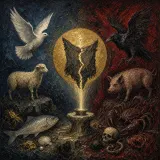
The priests' need to distinguish clean from unclean now leads to rules for the whole community. God speaks to Moses, Israel's leader, and Aaron, the chief priest. Israel, the people God brought from slavery, must observe distinctions among animals, birds, fish, and small creatures. Here clean means fit for specified uses under God's law. The chapter also explains what happens when people or household objects touch dead animals.
In this chapter
- Land Animals and Water Creatures Leviticus 11:1-12
God tells the leaders which land animals Israel can eat.
- Birds and Winged Insects Are Distinguished Leviticus 11:13-23
The law names birds and other flying creatures that Israel must not eat.
- Carcasses Affect People and Objects Leviticus 11:24-38
Touching or carrying certain dead animals makes a person ritually unclean until evening.
- Even Edible Animals Can Defile Leviticus 11:39-43
An animal from a permitted species can still make a person unclean if it dies on its own.
- These Distinctions Belong to God's People Leviticus 11:44-47
God gives the reason for these commands: he is holy, and the people who belong to him must be holy too.
Central truth
God gives Israel practical distinctions about creatures, food, and contact with death as part of belonging to him.
Scripture beside the summary
Leviticus · King James Version · 47Leviticus 11:1-12
Land Animals and Water Creatures
God tells the leaders which land animals Israel can eat. They must both have split hooves and chew the cud. An animal with only one of those features does not qualify, so the named examples include the camel and pig among those forbidden. People must not eat their flesh or touch their carcasses. Water creatures must have both fins and scales. The rules give visible ways to distinguish permitted food rather than leaving each household to choose for itself.
In everyday life
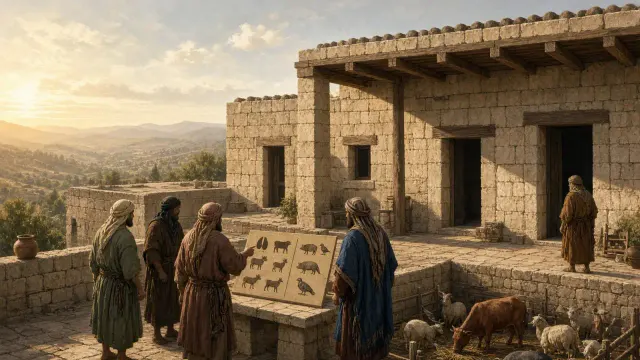
A fishmonger checks the species on a customer's written food list before filling the order. She sets one tray aside and weighs only the kinds the customer permits. The decision follows clear categories, not which fish looks freshest. Israel's categories are God's covenant commands, not an individual customer's diet.
Notice
Leviticus 11:7 The pig has a split hoof but fails the other stated test. Meeting one visible condition does not make an animal permitted food.
Leviticus 11:1-12
King James Version1And the LORD spake unto Moses and to Aaron, saying unto them,
2Speak unto the children of Israel, saying, These are the beasts which ye shall eat among all the beasts that are on the earth.
3Whatsoever parteth the hoof, and is clovenfooted, and cheweth the cud, among the beasts, that shall ye eat.
4Nevertheless these shall ye not eat of them that chew the cud, or of them that divide the hoof: as the camel, because he cheweth the cud, but divideth not the hoof; he is unclean unto you.
5And the coney, because he cheweth the cud, but divideth not the hoof; he is unclean unto you.
6And the hare, because he cheweth the cud, but divideth not the hoof; he is unclean unto you.
7And the swine, though he divide the hoof, and be clovenfooted, yet he cheweth not the cud; he is unclean to you.
8Of their flesh shall ye not eat, and their carcase shall ye not touch; they are unclean to you.
9These shall ye eat of all that are in the waters: whatsoever hath fins and scales in the waters, in the seas, and in the rivers, them shall ye eat.
10And all that have not fins and scales in the seas, and in the rivers, of all that move in the waters, and of any living thing which is in the waters, they shall be an abomination unto you:
11They shall be even an abomination unto you; ye shall not eat of their flesh, but ye shall have their carcases in abomination.
12Whatsoever hath no fins nor scales in the waters, that shall be an abomination unto you.
Leviticus 11:13-23
Birds and Winged Insects Are Distinguished
The law names birds and other flying creatures that Israel must not eat. The list includes large birds, hunting birds, and the bat. Most winged crawling insects are also forbidden. Certain kinds with legs for leaping are permitted, including locusts. The classification follows the creatures as people encounter them, rather than a modern scientific chart. Its purpose is to tell the community what belongs on the table and what must be refused under God's instructions.
In everyday life
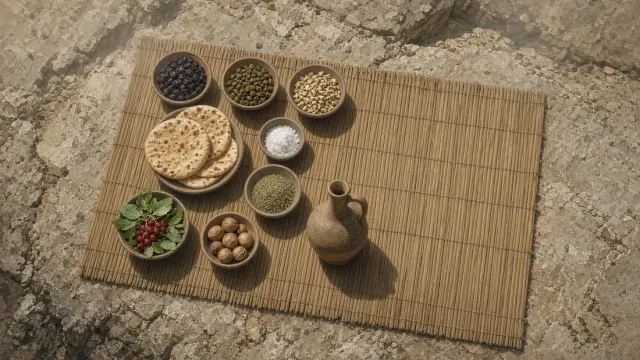
A nature-camp cook studies an approved ingredient sheet while a helper brings gathered food. She identifies each item before adding it to the pot and rejects anything outside the list. Familiar appearance does not settle the choice. These rules separate food for Israel's worshipping life, not a camp's foraging menu.
Notice
Leviticus 11:21 Leaping legs mark an exception among winged crawling creatures. The rule includes distinctions within a group, rather than forbidding every small flying creature together.
Leviticus 11:13-23
King James Version13And these are they which ye shall have in abomination among the fowls; they shall not be eaten, they are an abomination: the eagle, and the ossifrage, and the ospray,
14And the vulture, and the kite after his kind;
15Every raven after his kind;
16And the owl, and the night hawk, and the cuckow, and the hawk after his kind,
17And the little owl, and the cormorant, and the great owl,
18And the swan, and the pelican, and the gier eagle,
19And the stork, the heron after her kind, and the lapwing, and the bat.
20All fowls that creep, going upon all four, shall be an abomination unto you.
21Yet these may ye eat of every flying creeping thing that goeth upon all four, which have legs above their feet, to leap withal upon the earth;
22Even these of them ye may eat; the locust after his kind, and the bald locust after his kind, and the beetle after his kind, and the grasshopper after his kind.
23But all other flying creeping things, which have four feet, shall be an abomination unto you.
Leviticus 11:24-38
Carcasses Affect People and Objects
Touching or carrying certain dead animals makes a person ritually unclean until evening. Carrying them also requires washing clothes. The law names small creatures and explains what happens when their bodies fall on tools, clothing, containers, or food. Some objects can be washed; clay vessels must be broken. A spring or water pit remains clean, while contact with the carcass still matters. Dry seed and wetted seed receive different treatment. The rules follow contact into the details of household life.
In everyday life
A food-store cleaner finds a dead mouse beside an open sack and stops the shelf from being restocked. She checks what it touched, separates affected goods, and follows different rules for washable and disposable containers. The contact matters beyond the animal itself. Ritual uncleanness is not identical to modern food hygiene.
Notice
Leviticus 11:36 A water source is treated differently from the carcass within it. The law makes distinctions about contact rather than declaring every nearby thing unclean.
Leviticus 11:24-38
King James Version24And for these ye shall be unclean: whosoever toucheth the carcase of them shall be unclean until the even.
25And whosoever beareth ought of the carcase of them shall wash his clothes, and be unclean until the even.
26The carcases of every beast which divideth the hoof, and is not clovenfooted, nor cheweth the cud, are unclean unto you: every one that toucheth them shall be unclean.
27And whatsoever goeth upon his paws, among all manner of beasts that go on all four, those are unclean unto you: whoso toucheth their carcase shall be unclean until the even.
28And he that beareth the carcase of them shall wash his clothes, and be unclean until the even: they are unclean unto you.
29These also shall be unclean unto you among the creeping things that creep upon the earth; the weasel, and the mouse, and the tortoise after his kind,
30And the ferret, and the chameleon, and the lizard, and the snail, and the mole.
31These are unclean to you among all that creep: whosoever doth touch them, when they be dead, shall be unclean until the even.
32And upon whatsoever any of them, when they are dead, doth fall, it shall be unclean; whether it be any vessel of wood, or raiment, or skin, or sack, whatsoever vessel it be, wherein any work is done, it must be put into water, and it shall be unclean until the even; so it shall be cleansed.
33And every earthen vessel, whereinto any of them falleth, whatsoever is in it shall be unclean; and ye shall break it.
34Of all meat which may be eaten, that on which such water cometh shall be unclean: and all drink that may be drunk in every such vessel shall be unclean.
35And every thing whereupon any part of their carcase falleth shall be unclean; whether it be oven, or ranges for pots, they shall be broken down: for they are unclean, and shall be unclean unto you.
36Nevertheless a fountain or pit, wherein there is plenty of water, shall be clean: but that which toucheth their carcase shall be unclean.
37And if any part of their carcase fall upon any sowing seed which is to be sown, it shall be clean.
38But if any water be put upon the seed, and any part of their carcase fall thereon, it shall be unclean unto you.
Leviticus 11:39-43
Even Edible Animals Can Defile
An animal from a permitted species can still make a person unclean if it dies on its own. Touching its carcass brings uncleanness until evening; carrying or eating from it also requires washing clothes. Permission to eat a species does not make every dead specimen suitable food. God then forbids eating the small creatures that move along the ground, whether on their bellies or many feet. The people must not make themselves unclean through what they choose to consume.
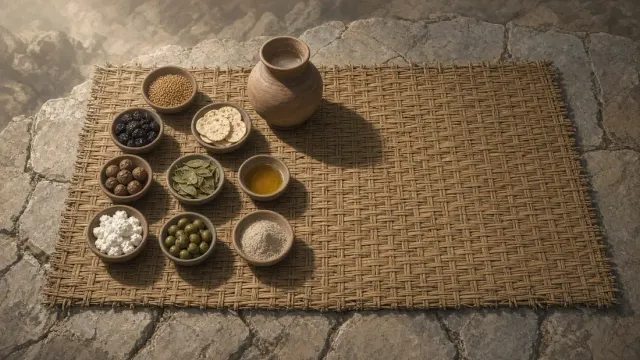
In everyday life
A poultry keeper finds one of her hens dead beside the feeder and removes it instead of sending it to the kitchen. The fact that hens are normally food does not make this carcass acceptable. She washes after handling it. A veterinary finding alone would not decide the ritual status God defines here.
Notice
Leviticus 11:39 The rule now concerns an animal normally allowed as food. Its manner of death still affects the person who touches its body.
Leviticus 11:39-43
King James Version39And if any beast, of which ye may eat, die; he that toucheth the carcase thereof shall be unclean until the even.
40And he that eateth of the carcase of it shall wash his clothes, and be unclean until the even: he also that beareth the carcase of it shall wash his clothes, and be unclean until the even.
41And every creeping thing that creepeth upon the earth shall be an abomination; it shall not be eaten.
42Whatsoever goeth upon the belly, and whatsoever goeth upon all four, or whatsoever hath more feet among all creeping things that creep upon the earth, them ye shall not eat; for they are an abomination.
43Ye shall not make yourselves abominable with any creeping thing that creepeth, neither shall ye make yourselves unclean with them, that ye should be defiled thereby.
Leviticus 11:44-47
These Distinctions Belong to God's People
God gives the reason for these commands: he is holy, and the people who belong to him must be holy too. He is the Lord who brought them out of Egypt, the country where they were enslaved, to be their God. They must therefore avoid what he calls unclean. The closing lines gather the rules for land, water, and flying creatures. Knowing the difference between permitted and forbidden food is part of living as the people he has claimed.
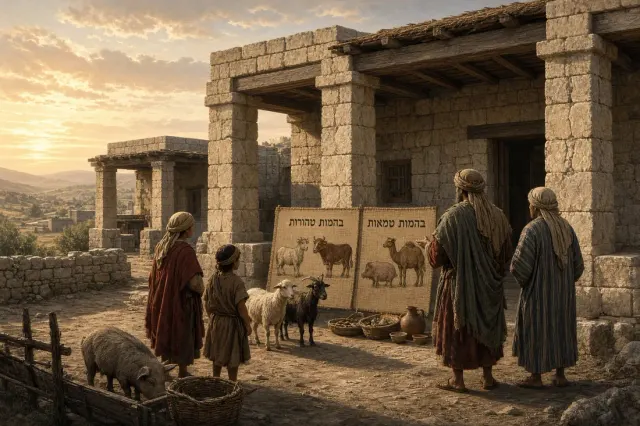
In everyday life
A monastery's new kitchen volunteer checks the community's food practice before planning supper. She learns that the menu expresses a shared way of life, not only individual appetite. Cooking now belongs to the commitments of the household she serves. Israel receives these distinctions directly as commands from its God.
Notice
Leviticus 11:45 God connects the food rules with bringing Israel out of Egypt. The commands are rooted in his relationship with the people, not offered as isolated dietary advice.
Leviticus 11:44-47
King James Version44For I am the LORD your God: ye shall therefore sanctify yourselves, and ye shall be holy; for I am holy: neither shall ye defile yourselves with any manner of creeping thing that creepeth upon the earth.
45For I am the LORD that bringeth you up out of the land of Egypt, to be your God: ye shall therefore be holy, for I am holy.
46This is the law of the beasts, and of the fowl, and of every living creature that moveth in the waters, and of every creature that creepeth upon the earth:
47To make a difference between the unclean and the clean, and between the beast that may be eaten and the beast that may not be eaten.
Details worth noticing
The opening image
Leviticus 11:1 begins with “And the LORD spake unto Moses and to Aaron, saying unto them,”
Where the chapter turns
Leviticus 11:24 forms a natural hinge: “And for these ye shall be unclean: whosoever toucheth the carcase of them shall be unclean until the even.”
The final note
Leviticus 11:47 leaves the reader with “To make a difference between the unclean and the clean, and between the beast that may be eaten and the beast that may not be eaten.”
A word trail through the chapter
The words unclean, carcase, abomination, kind, creeping, earth help reveal the chapter’s repeated concerns.
KJV words made clear
- clovenfooted
- Having a hoof divided into two distinct parts.
- carcase
- The dead body of an animal or other creature.
Music and video connected to the passage
Related media appears when its Scripture reference overlaps this study. Music and video can illuminate a theme while the biblical text remains the foundation.