
Leviticus

27 Chapters
Leviticus: The Whole Book, Chapter by Chapter
A Call from Inside the Tabernacle
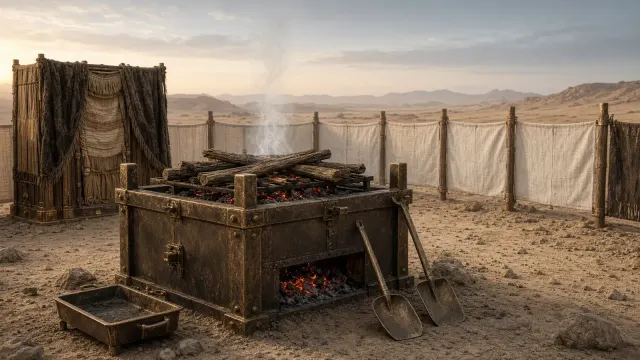
Leviticus opens not with another journey but with a voice from inside the completed tabernacle. The LORD’s nearness now creates the need for an ordered approach, and the burnt offering is the first answer. Herd animal, flock animal, and bird are handled differently because they are different bodies, yet each route ends at the same altar and with the same language of acceptance. The worshipper is not a spectator. With larger animals, he kills, flays, cuts, and washes while the priests handle blood, fire, and altar placement. The chapter’s repetition does legal work: a smaller permitted offering is not treated as a smaller welcome, and detailed procedure keeps devotion from becoming improvisation. The opening chapter makes access concrete: doorway, hand, blood, fire, and preparation all belong to the approach.
One complete chapter pageOpen chapter →
Flour, Oil, and the Salt of the Covenant
Leviticus 2 brings cultivated food into the sanctuary: flour, oil, frankincense, cakes, wafers, grain, and salt. The KJV’s “meat offering” contains no animal meat, and the chapter carefully separates what is burned from what is presented and what becomes priestly food. Different kitchens and cooking methods remain legitimate within one offering law. Leaven and honey are excluded from altar burning, but that does not make them inherently sinful in every setting; firstfruits may be presented without being burned, and later offerings can include leavened bread. Salt, by contrast, must not be missing. The chapter keeps returning to one idea: material can vary in form while its sacred allocation remains exact. Even the chapter’s restrictions work by placement and purpose, not by declaring every excluded ingredient morally corrupt.
One complete chapter pageOpen chapter →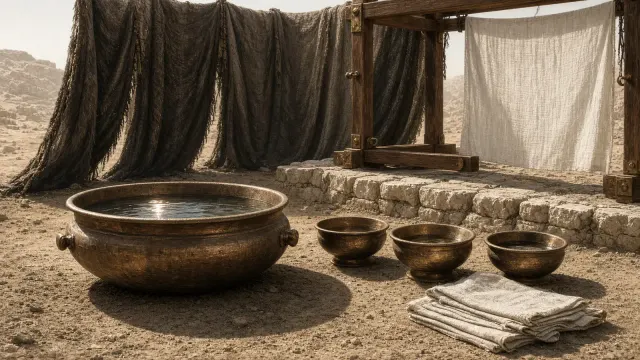
The Peace Offering and the Portion Reserved
The peace offering begins with familiar actions from the burnt offering, but its distribution is different. Male or female animals may be brought, hand-laying and blood application remain, and only specified portions are burned. Leviticus notices the actual animal: a lamb’s whole fatty tail belongs to the altar portion, while the goat instructions omit it. The repeated focus on fat establishes what is reserved to the LORD before later chapters explain the shared meal. Then the rule leaves the courtyard. Israel is forbidden to eat the designated fat or blood throughout its dwellings. An altar law therefore reaches the dinner table, tying household practice to the portions already marked out in sacrifice. The offering is shared only after Leviticus first establishes which parts cannot become ordinary food.
One complete chapter pageOpen chapter →
Responsibility Reaches from the Priest to the People
Leviticus 4 moves through an anointed priest, the whole congregation, a ruler, and an ordinary Israelite. Everyone can be liable for an offense committed through ignorance, but rank and role change the ritual reach. Blood for the priest and congregation enters the tabernacle and touches the inner altar; blood for ruler and common person remains at the outer altar. The chapter does not treat those differences as different grades of forgiveness. Each case is given an authorized response, and the ordinary person receives a procedure as fully articulated as the ruler does. Recognition matters throughout: when guilt becomes known, the law directs what happens next rather than pretending ignorance made the act disappear. Accountability reaches every level of the community without confusing civil status, priestly access, and the promise of forgiveness.
One complete chapter pageOpen chapter →
Guilt That Becomes Known, and an Offering Within Reach
This chapter shifts from classes of people to particular liabilities: withheld testimony, unnoticed contact with uncleanness, careless oaths, misuse of holy things, and offenses whose full circumstances may remain uncertain. Confession is tied to the actual matter, not a vague admission that everyone is imperfect. The offerings then descend an economic ladder. A person unable to bring livestock may bring birds, and someone unable to afford even those may bring flour, with forgiveness stated just as plainly. Holy property adds another dimension: the loss must be restored with an additional fifth. Sacrifice does not swallow the debt. Leviticus keeps guilt, affordability, restitution, and atonement in the same frame without letting one erase the others. The result is a chapter where responsibility becomes more specific at the same time that access to remedy becomes wider.
One complete chapter pageOpen chapter →
Restoration, Daily Fire, and the Priests’ Work
Leviticus 6 opens with deliberate property wrongs and closes deep inside priestly routine. Fraud, robbery, dishonest retention, and false swearing require the goods to go back to their owner with an added fifth, while a ram addresses the trespass before the LORD. Then the chapter notices the labor that keeps worship functioning: wood every morning, fire through the night, ashes moved in the right clothing, sacred food eaten in the right place, and cooking vessels handled according to material. A priest’s own grain offering is wholly burned even though he may eat portions of other offerings. The final distinction turns on blood: a sin offering whose blood enters the tabernacle is not eaten. Holiness has an aftercare. Nothing is too routine to fall outside the sanctuary’s order, including ashes, leftovers, stains, and pots.
One complete chapter pageOpen chapter →
Sacred Meals Have Portions and Deadlines
The opening offering laws now become a map of portions, eaters, places, and deadlines. Trespass-offering meat, burnt-offering hides, and several grain offerings are allocated to priests under different rules. Peace offerings add time to the equation: thanksgiving flesh must be eaten the same day, while vow and freewill offerings may extend into the next, but never the third. Uncleanness can disqualify meat or eater, and prohibitions on blood and sacrificial fat reach ordinary dwellings. The giver’s own hands still matter in presenting the designated portions, while breast and shoulder support the priesthood. The chapter ends by gathering these varied rites into one body of Sinai instruction without flattening the differences that make each offering what it is. Sacred meals are generous, but they are never casual about ownership, purity, or time.
One complete chapter pageOpen chapter →
The Priests Are Consecrated in Public
The regulations now become a public installation. Moses gathers the congregation, washes and clothes Aaron and his sons, anoints both sanctuary and priesthood, and performs sacrifices on their behalf. Aaron is not yet the officiant over every action because this is the ceremony that authorizes his office. Blood from the ram of consecration reaches right ear, thumb, and great toe, while designated food is placed in priestly hands before being offered. The ceremony is physical, visible, and slow. It does not end with one impressive moment. Aaron and his sons remain at the tabernacle entrance for seven days, eating what is prescribed, burning leftovers, and keeping the charge given to them. Office begins under command, not personal ownership. The seven days make clear that consecration is a process of sustained obedience, not a single ceremonial flash.
One complete chapter pageOpen chapter →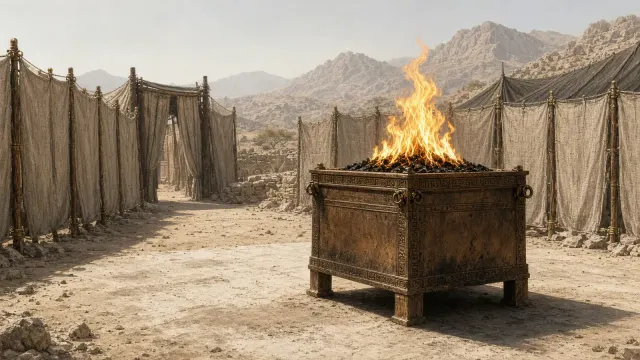
The First Ministry, and Fire Before the People
The eighth day finally puts Aaron into public ministry, but his first act is not to deal with everyone else. He must offer for himself before offering for the congregation. His sons assist in an ordered way, carrying blood and prepared portions while Aaron works at the altar. Then the people’s sin, burnt, grain, and peace offerings arrive in sequence, each retaining its own handling. The chapter is crowded with ordinary priestly work before anything spectacular happens. Only after slaughter, washing, blood application, burning, and presentation do Moses and Aaron bless the people, the LORD’s glory appears, and fire consumes the altar offering. The people shout and fall on their faces. Acceptance is public, but it comes after commanded service rather than replacing it.
One complete chapter pageOpen chapter →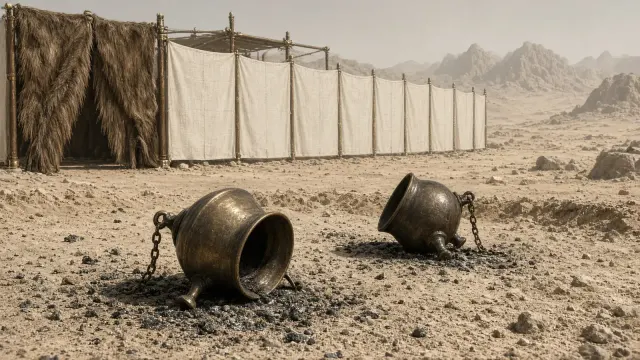
Two Deaths, Aaron’s Silence, and a Difficult Meal
Leviticus 10 shatters the triumph of the previous chapter. Nadab and Abihu use familiar sacred materials in an unauthorized act, and fire from before the LORD consumes them. The text does not explain every possible defect in their offering or supply hidden motives, so the stated issue remains enough: they brought what had not been commanded. Their deaths do not suspend the priesthood. Bodies are removed, Aaron and his remaining sons stay at their post, and new instruction links sober service with the ability to distinguish holy from common and clean from unclean. The chapter ends with a different kind of difficulty. Aaron explains why the sin-offering goat was burned rather than eaten, and Moses accepts his reasoning. Unauthorized improvisation and reasoned judgment are not treated as the same thing.
One complete chapter pageOpen chapter →
Clean and Unclean Reach the Table and the Household
The priestly duty to distinguish now spreads across Israel’s table and household. Land animals require the chapter’s paired signs, water creatures require fins and scales, flying creatures are handled through named categories, and certain leaping insects are specifically allowed. Then the focus shifts from what may be eaten to what happens when animals die. A permitted species can still leave an unclean carcass, and carcasses affect people, garments, vessels, ovens, water, and seed in different ways. The system is detailed precisely because impurity does not spread by one crude rule. The chapter’s own explanation arrives at the end: these distinctions belong to the holiness of the LORD who brought Israel out of Egypt. The final word is covenantal identity, not a modern nutrition theory.
One complete chapter pageOpen chapter →
Childbirth, Counted Days, and the Offering of the Poor
Leviticus 12 is short but exact about time. After childbirth, the mother enters periods of uncleanness and restricted access that differ after the birth of a son and a daughter. The chapter states the difference plainly and does not explain it, so speculation about health, worth, or female inferiority cannot be smuggled in as though it were part of the law. Circumcision of a son occurs on the eighth day, before the mother’s purification period is complete. When the appointed days end, offerings restore her ritual standing. The ordinary provision includes a lamb and a bird, but a woman unable to afford the lamb may bring two birds. Luke later names that less expensive provision in connection with Jesus’ presentation. The chapter is exact about the provision while remaining restrained about explanations it never gives.
One complete chapter pageOpen chapter →
The Priest Must Look Again
This long chapter is built around looking carefully and, when necessary, looking again. Suspicious marks on skin, scalp, beard, bald areas, garments, and leather do not all receive the same verdict. Depth, hair color, spread, raw flesh, fading, recurrence, and the history of an injury can change the classification. A seven-day separation often functions as deliberate uncertainty rather than a sentence already decided. Leviticus even pauses to say that ordinary baldness and some pale spots are clean. When uncleanness is established, the social cost can be severe, including life outside the camp, yet the category is not presented as proof of a particular moral offense. The priest’s work is diagnostic in the ritual sense: to distinguish clean from unclean without pretending every unusual appearance means the same thing.
One complete chapter pageOpen chapter →
The Way Back Begins Outside the Camp
After chapter 13’s exclusions, chapter 14 is about return. The priest first goes outside the camp to examine a person whose condition has already healed. Cleansing then unfolds through birds, washing, shaving, waiting, offerings, blood, and oil, with full restoration happening in stages rather than by one declaration. The ear, thumb, and toe reappear from priestly consecration, marking the seriousness of restored standing without turning the person into a priest. Poverty again receives a complete route, not a discounted half-ritual. The chapter then transfers the same attention to houses in Canaan. Suspicion leads to inspection, waiting, repair, and only then, if the affliction returns, demolition. A healed house can even receive atonement language, showing again that ritual cleansing is broader than forgiveness for personal wrongdoing.
One complete chapter pageOpen chapter →
Bodily Processes and the Limits of Sanctuary Access
Leviticus 15 places ordinary bodies beside the sanctuary. Ongoing male and female discharges receive longer processes involving contact rules, washing, counted days, and offerings after the condition ends. Ordinary semen emission and intercourse receive a shorter boundary, usually washing and uncleanness until evening. Menstruation has its own seven-day period, while a prolonged flow is treated differently and requires a post-recovery sequence. Beds, seats, garments, vessels, and people can all be affected, but the procedures are not identical. The chapter never needs to call every bodily process a moral offense in order to take ritual status seriously. Its closing explanation gives the stakes: the tabernacle stands among Israel, and uncleanness must be kept from defiling the LORD’s dwelling. Bodily life and sacred space are therefore managed in relation, not denial.
One complete chapter pageOpen chapter →
The Sanctuary Is Cleansed, and the Sins Are Carried Away
Leviticus 16 answers the danger left hanging after the deaths of Aaron's sons by giving the high priest an appointed way into the innermost sanctuary. The day is not merely about an individual's guilt. Israel's uncleanness, transgressions, and sins affect the holy place, the tabernacle, and the altar that stand in the midst of the people. Blood is carried where the congregation cannot go, while incense covers the mercy seat and Aaron first addresses his own household before acting for others. Then the chapter turns from cleansing sacred space to visibly removing confessed iniquities through the living goat sent into the wilderness. Even the men who complete the outward parts of the rite must wash before reentering the camp. One priest performs the central work, but the entire community keeps the day through self-affliction and complete rest, and the annual command continues beyond Aaron to his successors.
One complete chapter pageOpen chapter →
The Blood Is Given, Not Claimed
Leviticus 17 pulls sacrifice and blood away from private control. Sacrificial slaughter belongs at the tabernacle rather than in the open field, and the explicit concern is that Israel no longer direct sacrifices toward rival spiritual powers. The chapter then explains the blood prohibition through the connection between blood and life: the LORD says that he has given blood upon the altar for atonement. That makes blood neither ordinary food nor a human device for manipulating God. Hunting shows another side of the rule, because the blood of an edible wild animal is poured out and covered rather than carried to the altar. The final case distinguishes ritual uncleanness from further culpability: eating an animal that died naturally or was torn requires washing and temporary uncleanness, while refusing the required cleansing brings responsibility. One principle governs the chapter, but it does not erase the differences between sacrifice, hunting, food, and contact with death.
One complete chapter pageOpen chapter →
The Land Is Not Indifferent to What Happens Within It
Leviticus 18 opens by denying both Egypt and Canaan the right to define Israel's conduct. The chapter's standard is the LORD's judgments and statutes, not whatever practices belong to the land left behind or the land ahead. Its central prohibitions move through kinship, marriage, menstrual uncleanness, adultery, Molech worship, male same-sex intercourse, and sexual acts with animals without pretending that all these offenses are interchangeable. Family relationships create boundaries rather than automatic access, and relationships created by marriage count alongside those created by blood. The closing movement enlarges the consequences from household conduct to the land itself. Canaan is described as defiled and as vomiting out its inhabitants, and Israel is warned that possession does not create immunity. The same practices can bring the same expulsion, with the resident stranger also included under the law. Identity does not cancel responsibility, and geography does not become the standard simply because Israel has arrived there.
One complete chapter pageOpen chapter →
Holiness Reaches the Field, the Wage, and the Neighbor
Leviticus 19 takes the command "Ye shall be holy" and refuses to leave it near the sanctuary door. Reverence for parents, Sabbaths, sacrifices, field edges, wages, legal judgment, speech, resentment, clothing, fruit trees, mourning practices, spirit consultation, treatment of the aged, strangers, and commercial measures all appear under the recurring declaration, "I am the LORD." The chapter's famous command to "love thy neighbour as thyself" grows out of concrete restraints on partiality, talebearing, hatred, vengeance, and grudge-bearing rather than floating above them as a slogan. The same language of love is later extended to the resident stranger, with Israel's own life in Egypt given as the reason. Holiness here is measurable without becoming simplistic. It shows up in what a harvester leaves, when a worker is paid, whether a blind person is endangered, how an offense is handled, and whether the weight on the scale is honest.
One complete chapter pageOpen chapter →
The Prohibitions Have Stated Consequences
Leviticus 20 returns to several prohibitions from earlier chapters but changes the emphasis by naming consequences. The chapter distinguishes death penalties, being cut off, childlessness, bearing iniquity, and divine judgment rather than turning every forbidden act into one legal formula. Molech worship receives both communal punishment and the LORD's declared opposition, and the people themselves become accountable if they deliberately hide their eyes from the offense. Sexual prohibitions likewise receive specific sanctions, often naming both participants where the law assigns liability to both. The final movement reconnects those penalties to the land, to Israel's separation from surrounding peoples, and to the distinctions between clean and unclean. The chapter's closing verse then treats practitioners of spirit consultation separately from those who seek them. The result is severe but precise: Leviticus is not merely repeating that certain conduct is wrong. It is showing that different acts carry different stated consequences within Israel's covenantal law.
One complete chapter pageOpen chapter →
The Priestly Household Lives Under Narrower Boundaries
Leviticus 21 narrows the boundaries for the priestly household because priestly service brings particular obligations. Ordinary priests may become unclean for specified close relatives, but not for the dead generally, and their mourning practices and marriages are restricted in ways connected to their altar service. The high priest stands under a tighter rule still: even the exception for father or mother is withdrawn, and his marriage options are further limited. The final section turns from family and death to bodily qualifications for sanctuary duty. Priests with specified blemishes may not approach the altar or the veil, yet they remain priests by descent and continue to eat holy and most-holy food. Leviticus refuses both extremes. Bodily condition creates a real restriction on office, but it is not presented as proof of personal sin or as total exclusion from the priestly household's sacred provision.
One complete chapter pageOpen chapter →
Holy Food and Acceptable Gifts
Leviticus 22 asks two related questions: who may handle or eat holy things, and what may be accepted as an offering. Priestly descent is not enough by itself to permit immediate access to sacred food, because uncleanness can temporarily bar a priest until cleansing and sunset. Household status also matters, with lodgers, hired workers, purchased servants, daughters, widows, and divorced daughters treated according to defined relationships. The second half of the chapter turns to animals and again refuses simple categories. Bodily condition, type of offering, age, timing, and whether the gift fulfills a vow or is freely given can all change the rule. Even an otherwise acceptable animal has an earliest day, and a thanksgiving sacrifice has a latest time for eating. The chapter closes by returning these practical boundaries to the LORD's holy name and to the God who brought Israel out of Egypt.
One complete chapter pageOpen chapter →
The Year Becomes an Ordered Remembrance
Leviticus 23 turns Israel's calendar into an ordered pattern of rest, harvest, atonement, assembly, and remembrance. Weekly Sabbath stands at the front of the annual sequence, followed by Passover and Unleavened Bread, the first sheaf, the count of fifty days, the seventh-month trumpet observance, the Day of Atonement, and Tabernacles. The chapter is exact about dates and kinds of work without making every appointed day identical. First produce is presented before the new crop becomes ordinary food, and the later harvest celebration unexpectedly brings the field's unharvested corners back into view for the poor and stranger. Atonement imposes a stricter work prohibition and self-affliction, while Tabernacles combines gathered abundance with temporary booths recalling the exodus. Sacred time here is not private sentiment. It is publicly counted, announced, rested through, eaten within, and remembered across generations.
One complete chapter pageOpen chapter →
Continual Service, and a Case That Requires a Ruling
Leviticus 24 begins with quiet continuity and ends with a public judgment. Israel supplies oil and bread, the priests keep the lamps ordered, and twelve loaves are renewed before the LORD each Sabbath. Then the chapter turns abruptly to a man who blasphemes during a fight. Instead of inventing a penalty, the community holds him until the LORD's judgment is made known. The ruling that follows addresses both the divine name and human injury, with one legal standard for native-born and stranger. Killing a person, killing an animal, and causing bodily harm do not receive the same remedy. The "eye for eye" formula ties consequence to injury rather than opening the door to limitless retaliation. By returning at the end to the original case, the chapter connects general law to the concrete event that required a decision.
One complete chapter pageOpen chapter →
The Land Is the LORD’s, and Possession Has Limits
Leviticus 25 places agriculture, property, poverty, and service under long rhythms of rest and return. Every seventh year the land keeps a Sabbath, suspending ordinary cultivation while its spontaneous produce remains available for people and animals. Seven such cycles lead to Jubilee, when liberty is proclaimed and ancestral possession returns, which means land prices must reflect the number of harvests remaining rather than an imagined permanent transfer. The chapter answers the obvious food question with a promised sixth-year abundance and then gives the property rules their foundation: "the land is mine." Redemption protects a poor Israelite's threatened holding and freedom, but not every asset or servant follows the same rule. Walled-city houses, village houses, Levitical property, Israelite debt service, and foreign slaves are treated differently. The chapter limits permanent loss within Israel while also explicitly permitting hereditary foreign slavery, a boundary that must remain visible rather than being softened into universal release.
One complete chapter pageOpen chapter →
Blessing, Escalating Judgment, and a Covenant Remembered
Leviticus 26 sets obedience and refusal beside their covenant consequences with increasing intensity. The opening blessings join timely rain, abundant harvest, security, victory, fruitfulness, and the LORD's presence among the people. The reversals then answer those gifts one by one. Seed is eaten by enemies, fear replaces safety, labor fails, roads empty, food is rationed, cities and sanctuaries fall, and exile removes the people from the land. The warnings escalate after repeated refusal to listen, so the chapter describes judgment as a continuing covenant conflict rather than random disaster. Yet desolation produces an unexpected Sabbath: the abandoned land finally receives the rest previously denied it. The closing section then introduces confession, humbled hearts, and the remembered covenants with Jacob, Isaac, and Abraham. Judgment remains real, but it does not become the complete cancellation of the relationship. The LORD explicitly denies destroying Israel utterly or breaking his covenant.
One complete chapter pageOpen chapter →
A Vow Cannot Be Revised Into a Cheaper Promise
Leviticus 27 closes the book with valuation, redemption, and the limits of changing one's mind after something has been set apart. Persons under a singular vow receive fixed assessments by age and sex, with a priestly adjustment for someone too poor to pay the schedule. Sacrificial animals cannot simply be exchanged, while unclean animals and houses may be redeemed by adding a fifth to their valuation. Dedicated fields remain tied to the Jubilee calendar, and ancestral holdings differ from purchased fields because one person's vow cannot erase another family's right of return. Firstborn animals already belong to the LORD and therefore cannot be repackaged as new voluntary gifts. Devoted things form a more severe, irrevocable category, while produce tithes and livestock tithes follow different redemption rules. The book ends on a practical point with theological weight: a promise, a portion, or the tenth animal must retain the status already assigned to it.
One complete chapter pageOpen chapter →Source: eBible.org · eng-kjv2006