
The big picture
God speaks to Moses, Israel's leader, at Sinai, the mountain where he gives the people his laws. Israel, the community preparing to settle in the promised land, must learn that land and labour are not unlimited private possessions. The rules extend rest from days to years and provide ways for poor families to recover property and freedom. They also permit permanent slavery for foreigners, creating a sharp difference the chapter states openly.
In this chapter
- The Land Receives a Rest Year Leviticus 25:1-7
When the people enter the land, they can sow and prune for six years.
- Family Property Returns at the Jubile Leviticus 25:8-17
After seven sets of seven years, a trumpet announces the fiftieth year as a jubile, a year of release.
- God Promises Food During the Rest Leviticus 25:18-24
God promises security and fruitful land if the people obey.
- Land Can Return to a Poor Family Leviticus 25:25-34
If poverty forces a family member to sell land, a close relative can buy it back.
- Poor Israelites and Foreign Slaves Differ Leviticus 25:35-46
An impoverished neighbour must receive support without interest charged on money or food.
- An Israelite Sold Abroad Can Be Redeemed Leviticus 25:47-55
An Israelite who becomes poor and sells himself to a wealthy resident foreigner can be bought back by a close relative.
Central truth
God limits Israelite land sales and debt service through rest and release, while allowing a harsher status for foreign slaves.


Scripture beside the summary
Leviticus · King James Version · 55Leviticus 25:1-7
The Land Receives a Rest Year
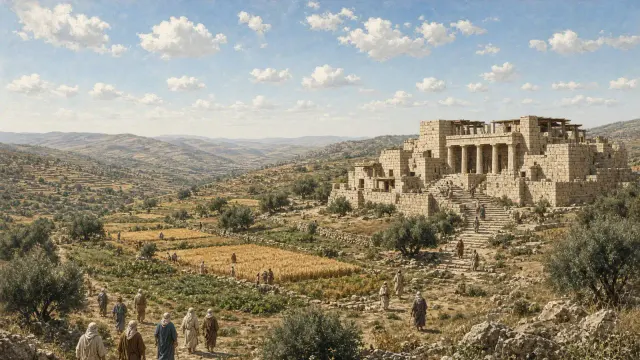
When the people enter the land, they can sow and prune for six years. In the seventh, the land must rest for the Lord. They must not sow fields, prune vines, or gather the self-grown crop as an ordinary harvest. What grows can provide food for the household, servants, hired workers, foreigners, livestock, and wild animals. Rest does not mean nobody eats. It changes how the land is worked and who shares in what it produces during that year.
In everyday life
A community-garden steward closes a plot to normal cultivation for a season and leaves its self-seeded produce available under the shared rules. Regular members, temporary helpers, and neighbours gather food without claiming a private harvest. The pause changes who benefits. Israel's land rest is a divine command for an entire seventh year.
Notice
Leviticus 25:6 Servants and resident foreigners share the food of the resting year. The owner is not the only person named as a beneficiary of the land's yield.
Leviticus 25:1-7
King James Version1And the LORD spake unto Moses in mount Sinai, saying,
2Speak unto the children of Israel, and say unto them, When ye come into the land which I give you, then shall the land keep a sabbath unto the LORD.
3Six years thou shalt sow thy field, and six years thou shalt prune thy vineyard, and gather in the fruit thereof;
4But in the seventh year shall be a sabbath of rest unto the land, a sabbath for the LORD: thou shalt neither sow thy field, nor prune thy vineyard.
5That which groweth of its own accord of thy harvest thou shalt not reap, neither gather the grapes of thy vine undressed: for it is a year of rest unto the land.
6And the sabbath of the land shall be meat for you; for thee, and for thy servant, and for thy maid, and for thy hired servant, and for thy stranger that sojourneth with thee,
7And for thy cattle, and for the beast that are in thy land, shall all the increase thereof be meat.
Leviticus 25:8-17
Family Property Returns at the Jubile
After seven sets of seven years, a trumpet announces the fiftieth year as a jubile, a year of release. People return to their family property, and the land rests again. Sales must therefore be priced by the number of harvests remaining until that return. More years mean a higher price; fewer years mean less. God forbids cheating in these transactions. A buyer is purchasing the use of coming crops, not an endless claim that erases the original family's place.

In everyday life
A holiday-site manager calculates the price of a lease from the seasons left before it expires. The buyer reads the return date before signing and pays for those years of use. Neither party pretends the purchase lasts forever. The jubile restores family land by God's command, not through a freely negotiated lease.
Notice
Leviticus 25:16 The price follows the number of harvests left. The land transaction is limited by the coming return, so treating it as permanent ownership would misprice it.
Leviticus 25:8-17
King James Version8And thou shalt number seven sabbaths of years unto thee, seven times seven years; and the space of the seven sabbaths of years shall be unto thee forty and nine years.
9Then shalt thou cause the trumpet of the jubile to sound on the tenth day of the seventh month, in the day of atonement shall ye make the trumpet sound throughout all your land.
10And ye shall hallow the fiftieth year, and proclaim liberty throughout all the land unto all the inhabitants thereof: it shall be a jubile unto you; and ye shall return every man unto his possession, and ye shall return every man unto his family.
11A jubile shall that fiftieth year be unto you: ye shall not sow, neither reap that which groweth of itself in it, nor gather the grapes in it of thy vine undressed.
12For it is the jubile; it shall be holy unto you: ye shall eat the increase thereof out of the field.
13In the year of this jubile ye shall return every man unto his possession.
14And if thou sell ought unto thy neighbour, or buyest ought of thy neighbour’s hand, ye shall not oppress one another:
15According to the number of years after the jubile thou shalt buy of thy neighbour, and according unto the number of years of the fruits he shall sell unto thee:
16According to the multitude of years thou shalt increase the price thereof, and according to the fewness of years thou shalt diminish the price of it: for according to the number of the years of the fruits doth he sell unto thee.
17Ye shall not therefore oppress one another; but thou shalt fear thy God: for I am the LORD your God.
Leviticus 25:18-24
God Promises Food During the Rest
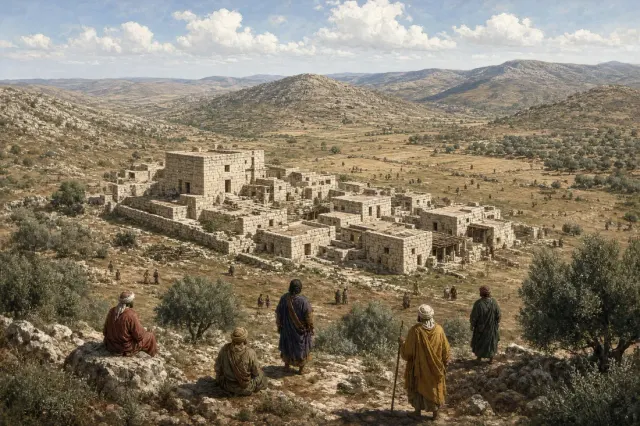
God promises security and fruitful land if the people obey. He also answers the practical question of food during the seventh year. The sixth year's crop will supply enough to carry them through the rest and into the next harvest cycle. They must not sell land permanently, because God says the land belongs to him. They live with him as tenants and guests. Every landholding must therefore allow redemption, the recovery of property through the payment the law permits.
In everyday life
The leaseholding farmer checks the grain bins before leaving a field unsown under a signed agreement. The owner has supplied the reserve promised for the gap. The pause depends on provision as well as a rule to stop. God promises an extraordinary sixth-year yield rather than transferring grain from another farm.
Notice
Leviticus 25:23 God identifies himself as the land's owner. The restriction on permanent sale rests on his claim, not only on concern for a poor family's finances.
Leviticus 25:18-24
King James Version18Wherefore ye shall do my statutes, and keep my judgments, and do them; and ye shall dwell in the land in safety.
19And the land shall yield her fruit, and ye shall eat your fill, and dwell therein in safety.
20And if ye shall say, What shall we eat the seventh year? behold, we shall not sow, nor gather in our increase:
21Then I will command my blessing upon you in the sixth year, and it shall bring forth fruit for three years.
22And ye shall sow the eighth year, and eat yet of old fruit until the ninth year; until her fruits come in ye shall eat of the old store.
23The land shall not be sold for ever: for the land is mine; for ye are strangers and sojourners with me.
24And in all the land of your possession ye shall grant a redemption for the land.
Leviticus 25:25-34
Land Can Return to a Poor Family
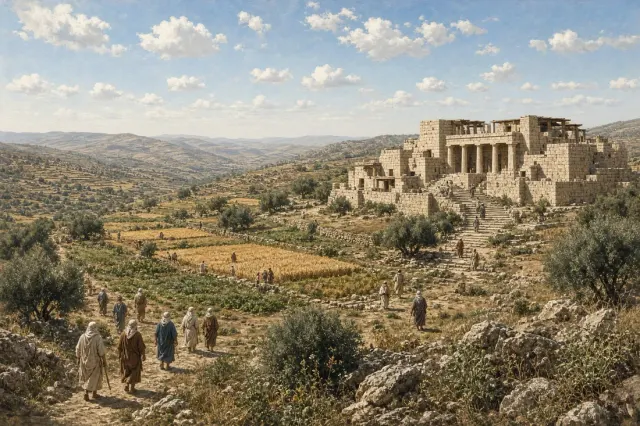
If poverty forces a family member to sell land, a close relative can buy it back. The seller can also recover it later by paying for the unused years. Otherwise it returns in the jubile. A house inside a walled city has different terms: the seller has one year to recover it. Village houses follow the land rules. Levites, the people assigned to sanctuary service, retain special rights to recover their town houses, while their surrounding pasture must not be sold.
In everyday life
A pawnshop customer returns with the agreed sum before the redemption deadline and receives her tools back. A relative helps her pay because the tools are needed for work. The original sale has a recognised route of reversal. Israel's inherited land returns at the jubile even when no relative supplies the money.
Notice
Leviticus 25:31 Unwalled village houses follow the rule for fields. The law distinguishes homes tied to farming land from houses inside a walled town.
Leviticus 25:25-34
King James Version25If thy brother be waxen poor, and hath sold away some of his possession, and if any of his kin come to redeem it, then shall he redeem that which his brother sold.
26And if the man have none to redeem it, and himself be able to redeem it;
27Then let him count the years of the sale thereof, and restore the overplus unto the man to whom he sold it; that he may return unto his possession.
28But if he be not able to restore it to him, then that which is sold shall remain in the hand of him that hath bought it until the year of jubile: and in the jubile it shall go out, and he shall return unto his possession.
29And if a man sell a dwelling house in a walled city, then he may redeem it within a whole year after it is sold; within a full year may he redeem it.
30And if it be not redeemed within the space of a full year, then the house that is in the walled city shall be established for ever to him that bought it throughout his generations: it shall not go out in the jubile.
31But the houses of the villages which have no wall round about them shall be counted as the fields of the country: they may be redeemed, and they shall go out in the jubile.
32Notwithstanding the cities of the Levites, and the houses of the cities of their possession, may the Levites redeem at any time.
33And if a man purchase of the Levites, then the house that was sold, and the city of his possession, shall go out in the year of jubile: for the houses of the cities of the Levites are their possession among the children of Israel.
34But the field of the suburbs of their cities may not be sold; for it is their perpetual possession.
Leviticus 25:35-46
Poor Israelites and Foreign Slaves Differ
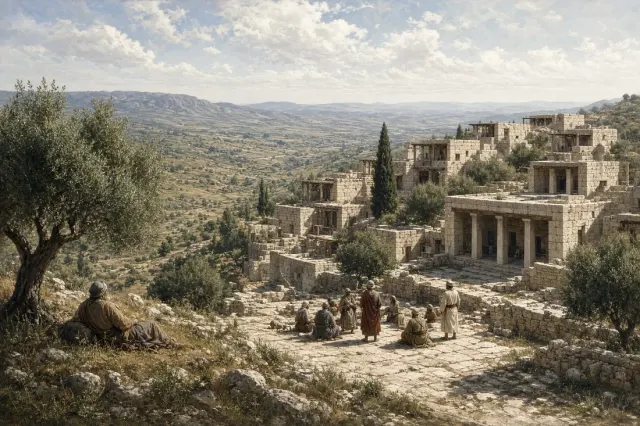
An impoverished neighbour must receive support without interest charged on money or food. An Israelite sold into service must be treated like a hired worker and released with the family at the jubile. God says these people already belong to him because he rescued them from Egypt. The law then permits buying foreign slaves and passing them to children as permanent property. This protection is unequal: the release given to Israelites is not extended to the foreign people held as slaves.
In everyday life
A labour historian compares two contracts at a factory archive and finds that workers beside each other had radically different rights. She records the difference without calling the less protected arrangement generous. The unequal rules are part of what must be faced. Ancient ownership of foreign slaves is harsher than ordinary employment contracts.
Notice
Leviticus 25:46 Foreign slaves can be inherited as property, while Israelites receive protection from harsh rule. The verse makes this unequal treatment explicit rather than resolving it.
Leviticus 25:35-46
King James Version35And if thy brother be waxen poor, and fallen in decay with thee; then thou shalt relieve him: yea, though he be a stranger, or a sojourner; that he may live with thee.
36Take thou no usury of him, or increase: but fear thy God; that thy brother may live with thee.
37Thou shalt not give him thy money upon usury, nor lend him thy victuals for increase.
38I am the LORD your God, which brought you forth out of the land of Egypt, to give you the land of Canaan, and to be your God.
39And if thy brother that dwelleth by thee be waxen poor, and be sold unto thee; thou shalt not compel him to serve as a bondservant:
40But as an hired servant, and as a sojourner, he shall be with thee, and shall serve thee unto the year of jubile:
41And then shall he depart from thee, both he and his children with him, and shall return unto his own family, and unto the possession of his fathers shall he return.
42For they are my servants, which I brought forth out of the land of Egypt: they shall not be sold as bondmen.
43Thou shalt not rule over him with rigour; but shalt fear thy God.
44Both thy bondmen, and thy bondmaids, which thou shalt have, shall be of the heathen that are round about you; of them shall ye buy bondmen and bondmaids.
45Moreover of the children of the strangers that do sojourn among you, of them shall ye buy, and of their families that are with you, which they begat in your land: and they shall be your possession.
46And ye shall take them as an inheritance for your children after you, to inherit them for a possession; they shall be your bondmen for ever: but over your brethren the children of Israel, ye shall not rule one over another with rigour.
Leviticus 25:47-55
An Israelite Sold Abroad Can Be Redeemed
An Israelite who becomes poor and sells himself to a wealthy resident foreigner can be bought back by a close relative. He can also buy his own release if he gains the means. The payment is calculated from the years remaining until the jubile, as with hired service. The community must not allow harsh treatment. If no earlier redemption happens, he and his children still leave at the jubile. God's claim over his people sets a limit on the buyer's claim.
In everyday life
An aunt pays the remaining charge that releases her nephew from a binding training repayment agreement. She checks the months already served so the payment does not charge him twice for completed time. Family help brings release sooner. Israel's law concerns a person sold into service, not a modern training contract.
Notice
Leviticus 25:53 The instruction forbids harsh rule in the community's sight. Neighbours have a duty not to ignore the treatment of the poor person sold into service.
Leviticus 25:47-55
King James Version47And if a sojourner or stranger wax rich by thee, and thy brother that dwelleth by him wax poor, and sell himself unto the stranger or sojourner by thee, or to the stock of the stranger’s family:
48After that he is sold he may be redeemed again; one of his brethren may redeem him:
49Either his uncle, or his uncle’s son, may redeem him, or any that is nigh of kin unto him of his family may redeem him; or if he be able, he may redeem himself.
50And he shall reckon with him that bought him from the year that he was sold to him unto the year of jubile: and the price of his sale shall be according unto the number of years, according to the time of an hired servant shall it be with him.
51If there be yet many years behind, according unto them he shall give again the price of his redemption out of the money that he was bought for.
52And if there remain but few years unto the year of jubile, then he shall count with him, and according unto his years shall he give him again the price of his redemption.
53And as a yearly hired servant shall he be with him: and the other shall not rule with rigour over him in thy sight.
54And if he be not redeemed in these years, then he shall go out in the year of jubile, both he, and his children with him.
55For unto me the children of Israel are servants; they are my servants whom I brought forth out of the land of Egypt: I am the LORD your God.
Details worth noticing
The opening image
Leviticus 25:1 begins with “And the LORD spake unto Moses in mount Sinai, saying,”
Where the chapter turns
Leviticus 25:28 forms a natural hinge: “But if he be not able to restore it to him, then that which is sold shall remain in the hand of him that hath bought it until the year of jubile: and in…”
The final note
Leviticus 25:55 leaves the reader with “For unto me the children of Israel are servants; they are my servants whom I brought forth out of the land of Egypt: I am the LORD your God.”
A word trail through the chapter
The words land, year, years, jubile, possession, sold help reveal the chapter’s repeated concerns.
KJV words made clear
- jubile
- The fiftieth year of release and return of family land.
- usury
- Interest charged on a loan, forbidden here when helping a poor neighbour.
Music and video connected to the passage
Related media appears when its Scripture reference overlaps this study. Music and video can illuminate a theme while the biblical text remains the foundation.