The big picture
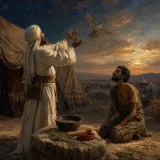
God now gives Moses, Israel's leader, and Aaron, the chief priest, rules about bodily discharges. Israel, the people living around the holy place, must know when washing, waiting, or offerings are needed. Some cases concern illness, while others concern ordinary bodily functions. Being unclean here means temporarily unfit for sacred contact. It does not by itself mean the person has acted wickedly, and the rules provide ways for that condition to end.
In this chapter
- An Ongoing Discharge Requires Separation Leviticus 15:1-15
A man with an ongoing bodily discharge is unclean.
- Semen Requires Washing and Waiting Leviticus 15:16-18
An emission of semen makes a man unclean until evening.
- Menstruation Brings a Defined Period Leviticus 15:19-24
A woman having her monthly bleeding is unclean for seven days.
- Prolonged Bleeding Has a Route Back Leviticus 15:25-30
Bleeding outside the normal monthly period, or continuing beyond it, makes a woman unclean for as long as it lasts.
- The Sanctuary Explains These Boundaries Leviticus 15:31-33
God explains that Israel must be kept from bringing uncleanness into the holy place among them.
Central truth
Bodily discharges bring temporary ritual limits, with washing, waiting, and sometimes offerings protecting the holy place and allowing a return.


Scripture beside the summary
Leviticus · King James Version · 33Leviticus 15:1-15
An Ongoing Discharge Requires Separation
A man with an ongoing bodily discharge is unclean. His bed, seat, saddle, and objects he touches can pass on uncleanness through contact. People who touch him or these things must wash themselves and their clothes, then wait until evening. Clay vessels are broken and wooden ones rinsed. When the discharge ends, he waits seven days and washes. On the eighth day he brings two birds for offerings, and the priest makes atonement for the condition that kept him unclean.

In everyday life
A home carer strips a sick man's bed and separates the bedding before washing. She cleans the chair he has used and changes her own clothes afterward. Care follows the things his body has touched, not only the man himself. Ritual uncleanness extends beyond the medical reasons for a carer's cleaning.
Notice
Leviticus 15:13 The seven-day count begins after the discharge has stopped. The return process follows the end of the condition rather than replacing that necessary change.
Leviticus 15:1-15
King James Version1And the LORD spake unto Moses and to Aaron, saying,
2Speak unto the children of Israel, and say unto them, When any man hath a running issue out of his flesh, because of his issue he is unclean.
3And this shall be his uncleanness in his issue: whether his flesh run with his issue, or his flesh be stopped from his issue, it is his uncleanness.
4Every bed, whereon he lieth that hath the issue, is unclean: and every thing, whereon he sitteth, shall be unclean.
5And whosoever toucheth his bed shall wash his clothes, and bathe himself in water, and be unclean until the even.
6And he that sitteth on any thing whereon he sat that hath the issue shall wash his clothes, and bathe himself in water, and be unclean until the even.
7And he that toucheth the flesh of him that hath the issue shall wash his clothes, and bathe himself in water, and be unclean until the even.
8And if he that hath the issue spit upon him that is clean; then he shall wash his clothes, and bathe himself in water, and be unclean until the even.
9And what saddle soever he rideth upon that hath the issue shall be unclean.
10And whosoever toucheth any thing that was under him shall be unclean until the even: and he that beareth any of those things shall wash his clothes, and bathe himself in water, and be unclean until the even.
11And whomsoever he toucheth that hath the issue, and hath not rinsed his hands in water, he shall wash his clothes, and bathe himself in water, and be unclean until the even.
12And the vessel of earth, that he toucheth which hath the issue, shall be broken: and every vessel of wood shall be rinsed in water.
13And when he that hath an issue is cleansed of his issue; then he shall number to himself seven days for his cleansing, and wash his clothes, and bathe his flesh in running water, and shall be clean.
14And on the eighth day he shall take to him two turtledoves, or two young pigeons, and come before the LORD unto the door of the tabernacle of the congregation, and give them unto the priest:
15And the priest shall offer them, the one for a sin offering, and the other for a burnt offering; and the priest shall make an atonement for him before the LORD for his issue.
Leviticus 15:16-18
Semen Requires Washing and Waiting
An emission of semen makes a man unclean until evening. He must wash his whole body, and any clothing or leather it touches must also be washed. After sexual intercourse, both the man and the woman bathe and remain unclean until evening. No animal offering is prescribed in these verses. The rules address an ordinary bodily event through a short period of washing and waiting, rather than describing every such event as a moral offence requiring confession.
In everyday life
A swimmer showers and changes before entering a pool with a strict entry routine. The needed wash applies even when she has done nothing wrong. A temporary condition and a moral accusation are different things. Israel's rule concerns bodily emissions and sacred access, not the cleanliness of a swimming pool.
Notice
Leviticus 15:18 Both partners wash and wait until evening. The same temporary condition applies to each, and no separate sacrifice is needed for this case.
Leviticus 15:16-18
King James Version16And if any man’s seed of copulation go out from him, then he shall wash all his flesh in water, and be unclean until the even.
17And every garment, and every skin, whereon is the seed of copulation, shall be washed with water, and be unclean until the even.
18The woman also with whom man shall lie with seed of copulation, they shall both bathe themselves in water, and be unclean until the even.
Leviticus 15:19-24
Menstruation Brings a Defined Period
A woman having her monthly bleeding is unclean for seven days. Her bed and seats share that ritual status, and anyone who touches them must wash and wait until evening. Contact with the woman also brings uncleanness. If a man has intercourse with her and her blood is upon him, he is unclean for seven days, including the bed where he lies. The rules describe how this temporary status spreads through close bodily contact and household use.

In everyday life
A dialysis patient sets aside her treatment chair and clean supplies while the household follows the clinic's contact commands. Her family changes its routine around a bodily need that is not a personal fault. The rules shape shared space as well as her own actions. Menstruation here is governed by ritual law, not dialysis care.
Notice
Leviticus 15:19 The seven days are specified at the start. The rule gives a defined period for this ordinary bodily process rather than an indefinite removal.
Leviticus 15:19-24
King James Version19And if a woman have an issue, and her issue in her flesh be blood, she shall be put apart seven days: and whosoever toucheth her shall be unclean until the even.
20And every thing that she lieth upon in her separation shall be unclean: every thing also that she sitteth upon shall be unclean.
21And whosoever toucheth her bed shall wash his clothes, and bathe himself in water, and be unclean until the even.
22And whosoever toucheth any thing that she sat upon shall wash his clothes, and bathe himself in water, and be unclean until the even.
23And if it be on her bed, or on any thing whereon she sitteth, when he toucheth it, he shall be unclean until the even.
24And if any man lie with her at all, and her flowers be upon him, he shall be unclean seven days; and all the bed whereon he lieth shall be unclean.
Leviticus 15:25-30
Prolonged Bleeding Has a Route Back
Bleeding outside the normal monthly period, or continuing beyond it, makes a woman unclean for as long as it lasts. Her bed and seats are treated as during menstruation, and contact requires washing and waiting. Once the bleeding stops, she counts seven days. On the eighth day she brings two birds to the priest at the tent entrance. One is offered for sin and the other as a burnt offering. The priest makes atonement so her prolonged uncleanness can end.

In everyday life
A rehabilitation patient waits for a persistent wound to close before starting the final return checks. She marks the first clear day and follows the remaining new roles instead of assuming that one good morning ends the process. The delay has an ordered conclusion. The woman's cleansing is a sacred rite, not wound treatment.
Notice
Leviticus 15:28 The woman's seven-day count starts when the bleeding ceases. The law recognises a return after a condition that has lasted longer than the normal period.
Leviticus 15:25-30
King James Version25And if a woman have an issue of her blood many days out of the time of her separation, or if it run beyond the time of her separation; all the days of the issue of her uncleanness shall be as the days of her separation: she shall be unclean.
26Every bed whereon she lieth all the days of her issue shall be unto her as the bed of her separation: and whatsoever she sitteth upon shall be unclean, as the uncleanness of her separation.
27And whosoever toucheth those things shall be unclean, and shall wash his clothes, and bathe himself in water, and be unclean until the even.
28But if she be cleansed of her issue, then she shall number to herself seven days, and after that she shall be clean.
29And on the eighth day she shall take unto her two turtles, or two young pigeons, and bring them unto the priest, to the door of the tabernacle of the congregation.
30And the priest shall offer the one for a sin offering, and the other for a burnt offering; and the priest shall make an atonement for her before the LORD for the issue of her uncleanness.
Leviticus 15:31-33
The Sanctuary Explains These Boundaries
God explains that Israel must be kept from bringing uncleanness into the holy place among them. Doing so would defile his dwelling and bring death. The final lines gather the cases of male discharges, semen, menstruation, prolonged bleeding, and sexual contact during uncleanness. These rules are tied to the presence of God within the camp. They do not say that every bodily condition is a chosen sin, but they insist that sacred access cannot ignore a person's ritual state.
In everyday life
A clean-room supervisor stops an otherwise healthy visitor at the changing area and supplies the needed clothing. The visitor has done nothing blameworthy, but cannot enter on ordinary terms. Entry conditions belong to the room's special use. God's holy place carries a sacred danger no clean-room procedure can fully represent.
Notice
Leviticus 15:31 God gives his dwelling among the people as the reason for separation. The rules protect approach to that presence rather than merely describing bodily processes.
Leviticus 15:31-33
King James Version31Thus shall ye separate the children of Israel from their uncleanness; that they die not in their uncleanness, when they defile my tabernacle that is among them.
32This is the law of him that hath an issue, and of him whose seed goeth from him, and is defiled therewith;
33And of her that is sick of her flowers, and of him that hath an issue, of the man, and of the woman, and of him that lieth with her that is unclean.
Details worth noticing
The opening image
Leviticus 15:1 begins with “And the LORD spake unto Moses and to Aaron, saying,”
Where the chapter turns
Leviticus 15:17 forms a natural hinge: “And every garment, and every skin, whereon is the seed of copulation, shall be washed with water, and be unclean until the even.”
The final note
Leviticus 15:33 leaves the reader with “And of her that is sick of her flowers, and of him that hath an issue, of the man, and of the woman, and of him that lieth with her that is unclean.”
A word trail through the chapter
The words unclean, issue, water, bathe, wash, clothes help reveal the chapter’s repeated concerns.
KJV words made clear
- issue
- A bodily discharge, here either continuing fluid or blood.
- flowers
- An older term for a woman's monthly menstrual bleeding.
Music and video connected to the passage
Related media appears when its Scripture reference overlaps this study. Music and video can illuminate a theme while the biblical text remains the foundation.