
Mark

16 Chapters
Mark: The Whole Book, Chapter by Chapter
The Kingdom Arrives, and Nothing Stays Quiet
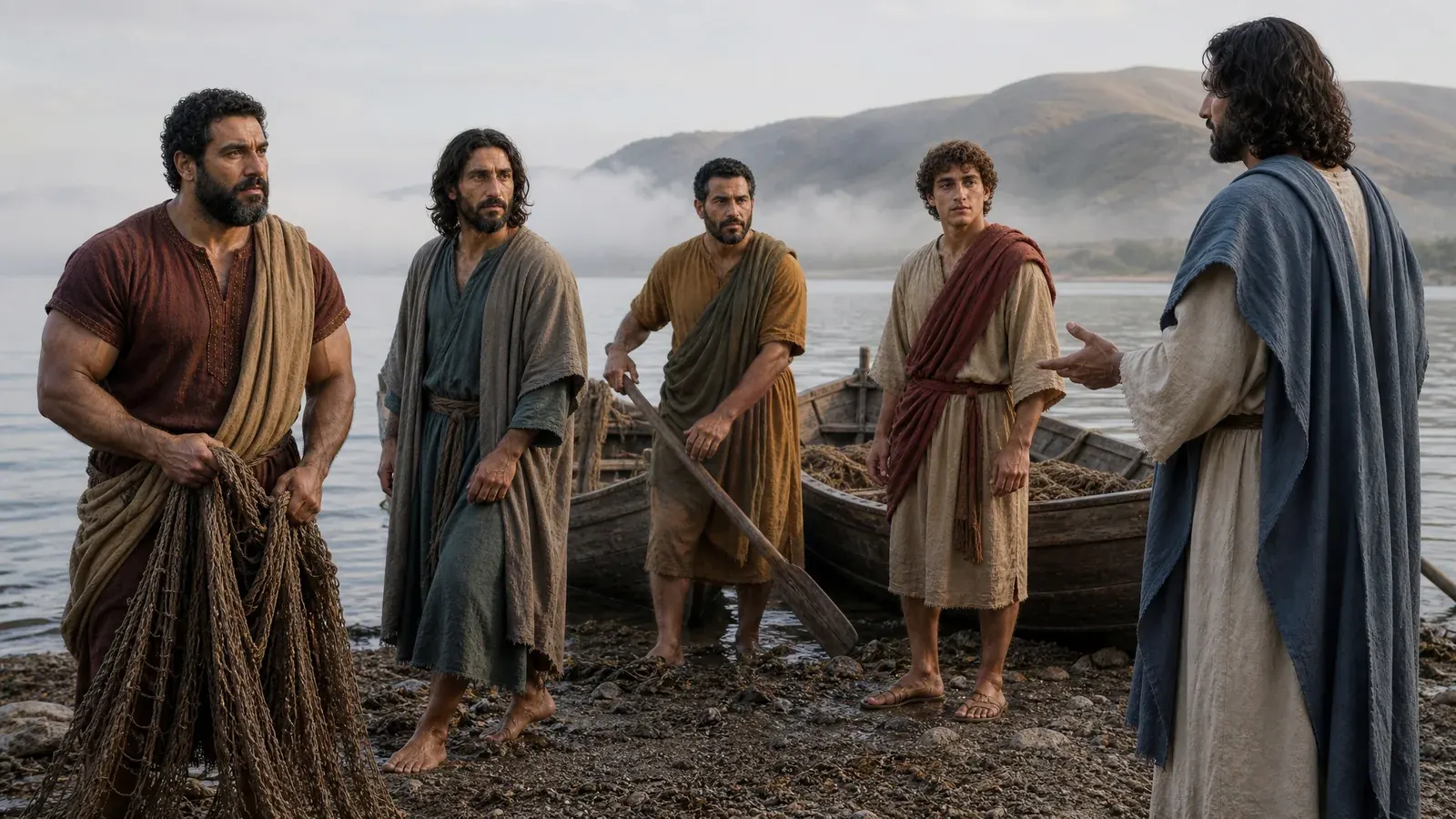
Mark opens by telling the reader more than most people inside the account yet know. John arrives as the promised messenger and deliberately refuses center stage. Heaven identifies Jesus as the beloved Son, and the Spirit immediately drives him into the wilderness. From there the chapter accelerates through kingdom preaching, interrupted workdays, astonished synagogue hearers, sickness, unclean spirits, and a city packed at a doorway. Yet popularity never takes control of Jesus' direction. Before daylight he withdraws to pray, then leaves a successful location because other towns must hear the proclamation. The final cleansing intensifies the tension. A man receives both compassion and a specific instruction, ignores the instruction, and spreads the report so widely that Jesus can no longer enter towns openly.
One complete chapter pageOpen chapter →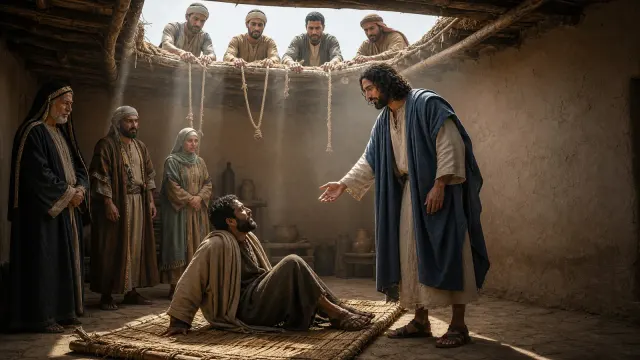
Forgiveness at the Center of the Argument
Mark 2 turns ordinary settings into places where authority becomes the argument. A packed house and a damaged roof lead not first to walking legs but to a declaration of forgiveness. A tax collector's table becomes a dispute about the kind of people Jesus chooses to be near. Questions about fasting and Sabbath then press beyond behavior into the meaning of his presence and his authority. The chapter repeatedly refuses shallow categories. Need does not become irrelevant because a rule is sacred, and religious practice is not treated as self-explanatory merely because it is familiar. The bridegroom changes the occasion, hunger complicates a Sabbath accusation, and the Son of man claims authority on earth to forgive sins and lordship over the Sabbath. Each dispute asks more than whether Jesus broke expectations. It asks who he is to speak and act this way.
One complete chapter pageOpen chapter →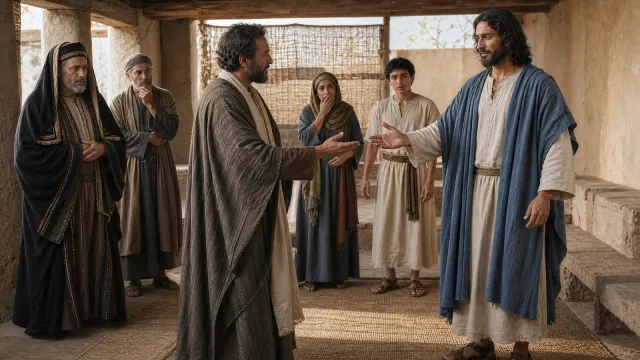
Hands Restored and Lines Drawn
By Mark 3, disagreement has sharpened into a plan to kill. A healed hand stands next to a conspiracy, while growing crowds press so hard that Jesus needs a boat kept ready. He appoints twelve first to be with him and then to be sent with authority, but closeness does not guarantee understanding or loyalty. Concern from his own people and accusation from Jerusalem converge around a crowded house. Jesus answers the claim that he works by Satan with the image of a strong man's house being emptied, then ties the warning about blasphemy directly to the charge that his liberating work comes from an unclean spirit. The chapter ends with family language redrawn around doing God's will. Mark keeps physical nearness, accurate recognition, appointed status, and genuine belonging from collapsing into the same category.
One complete chapter pageOpen chapter →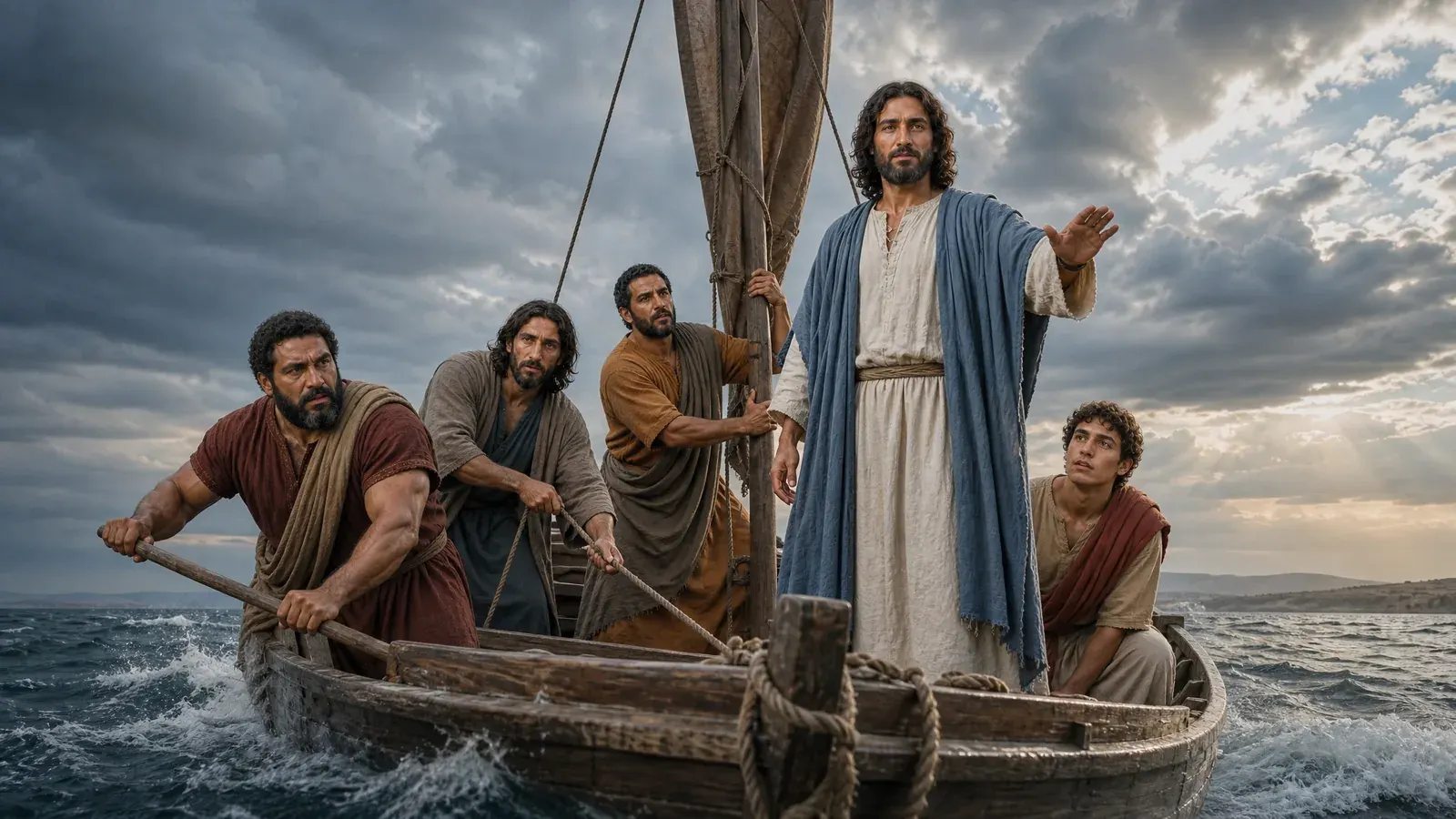
Hearing Is More Than Receiving the Sound
Mark 4 is obsessed with hearing, but it refuses to treat sound reaching the ear as the same thing as understanding. From a boat, Jesus speaks of seed, soils, lamps, measures, hidden growth, and harvest. The private explanations do not flatter the insiders, because the people closest to him still need the parables explained. Some reception dies immediately, some starts enthusiastically and collapses, some grows without fruit because competing cares choke it, and some bears in different measures. The chapter then carries that question of perception onto the water. A great storm becomes a great calm, yet the disciples' fear grows rather than disappears. Their final question, "What manner of man is this?", proves that they have witnessed authority without yet knowing how to name it. Hearing and seeing remain unfinished work.
One complete chapter pageOpen chapter →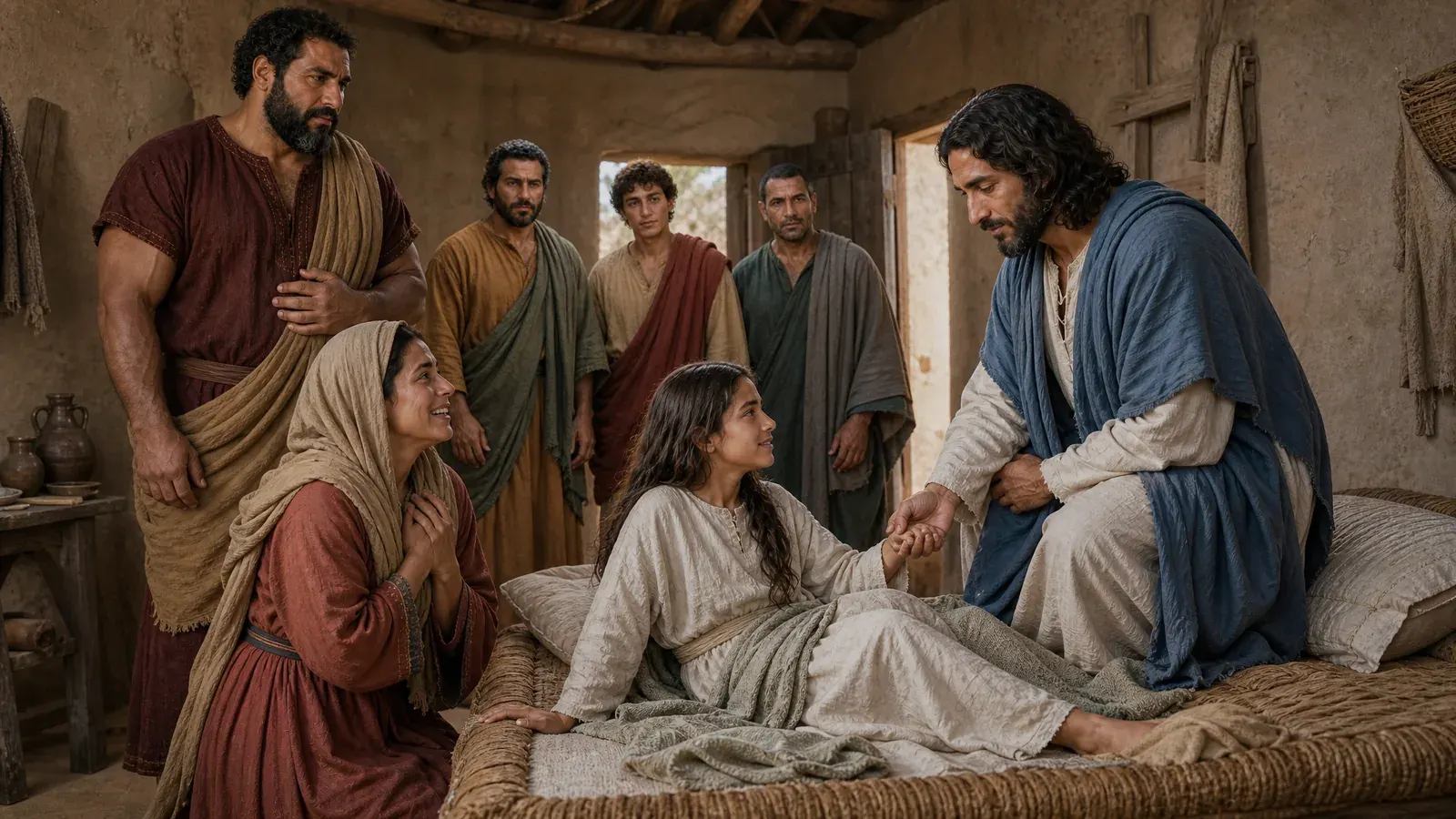
Beyond the Chains, the Crowd, and the Grave
Mark 5 moves across boundaries that look final until Jesus reaches them. A man living among tombs cannot be restrained even by chains, yet the many spirits within him still have to ask permission. His restoration frightens the surrounding people enough that they ask Jesus to leave. Back across the sea, Jairus asks for help before his daughter dies, and the journey is interrupted by a woman whose suffering has lasted twelve years. Mark braids the two encounters together so that delay, touch, fear, faith, and family language echo between them. The woman is called "Daughter" while Jesus is traveling toward Jairus' daughter. Then death itself arrives as a report meant to end the request. It does not. The chapter closes not on spectacle but on an ordinary command that the restored girl be given something to eat.
One complete chapter pageOpen chapter →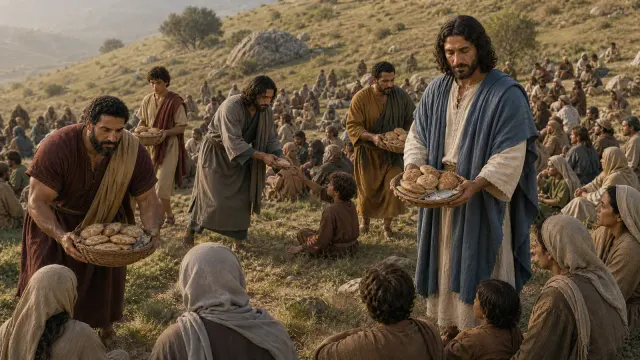
Familiar Faces, Two Meals, and an Unlearned Lesson
Mark 6 sets recognition and misunderstanding side by side until neither can be mistaken for the other. Jesus' own country knows his family and work history but stumbles over what they think they already know. The twelve are then sent with delegated authority and minimal provisions, only for the account to interrupt their mission with John's execution at Herod's feast. When they return, an attempted retreat becomes a second meal scene of a very different kind as Jesus teaches and feeds a multitude. Yet abundance does not automatically become understanding. The disciples distribute bread, gather baskets, and then panic when Jesus approaches across the sea. Mark explicitly says they had not understood the loaves. The chapter closes with people onshore recognizing Jesus immediately and carrying the sick toward him, leaving the disciples' deeper confusion unresolved.
One complete chapter pageOpen chapter →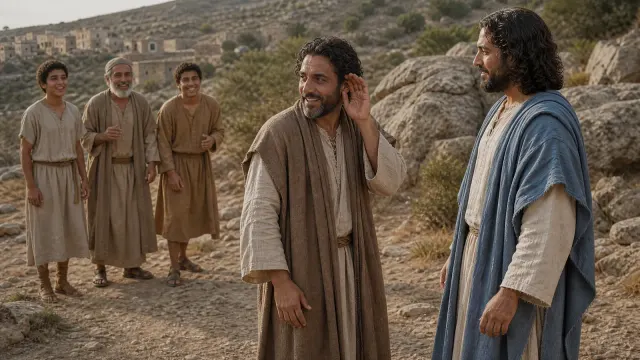
The Boundary Moves from the Hands to the Heart
Mark 7 begins with hands and ends with ears, but the movement between them passes through the heart. A dispute over inherited washing customs becomes an argument about what human tradition can do when it displaces a direct command of God. Jesus' Corban example makes the cost concrete by placing neglected parents behind religious language. He then moves the question of defilement inward, distinguishing food that passes through the body from evils that proceed from the heart. Beyond the earlier Galilean setting, a Syrophenician mother answers a difficult saying about children's bread with a reply that keeps her request inside the image rather than rejecting it. The chapter ends with a deaf man's ears opened and speech released. After repeated commands to hear and understand, Mark closes on hearing restored and words that refuse to stay quiet.
One complete chapter pageOpen chapter →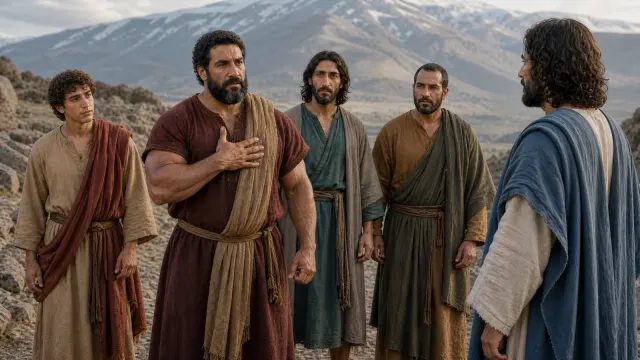
The Right Name, but Not Yet the Right Understanding
Mark 8 exposes how much evidence can sit beside how little understanding. A second multitude is fed, with another surplus left in baskets, yet the disciples still interpret Jesus' warning about leaven as a comment on forgotten bread. He makes them recite the basket counts and then asks why they still do not understand. The next healing is therefore perfectly placed: a blind man first sees people like walking trees and only afterward sees clearly. Peter then gives Jesus the correct title, "the Christ," but proves that accurate naming is not yet clear sight when he rebukes Jesus for teaching about suffering, rejection, death, and resurrection. Jesus answers by calling both crowd and disciples into the path of cross-bearing. The chapter moves from bread to sight to confession so that recognition itself becomes the thing under examination.
One complete chapter pageOpen chapter →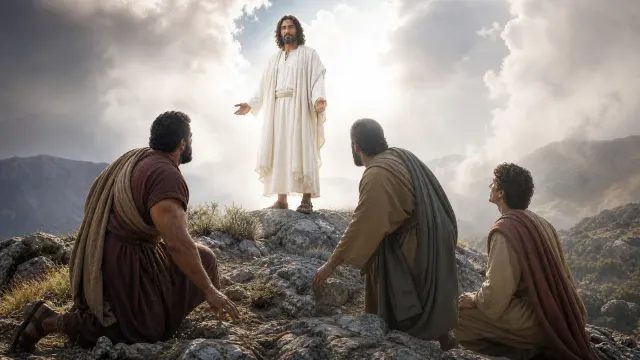
Glory on the Mountain, Arguments on the Road
Mark 9 places glory, failure, ambition, exclusion, and severe warning in one chapter without letting any of them cancel the others. The transfiguration reveals Jesus in dazzling glory, but the voice from the cloud does not replace his teaching about suffering. It commands the disciples to hear him. Coming down the mountain, they still struggle to understand resurrection. Below, a father brings both faith and unbelief into the same plea after the disciples fail to cast out a spirit. Soon those same disciples are afraid to ask about Jesus' death but willing to argue about their own greatness. Jesus answers by placing service, a child, an outsider working in his name, a cup of water, and the danger of harming little ones at the center. The chapter ends with fire, salt, and a final command for peace among men who have been competing.
One complete chapter pageOpen chapter →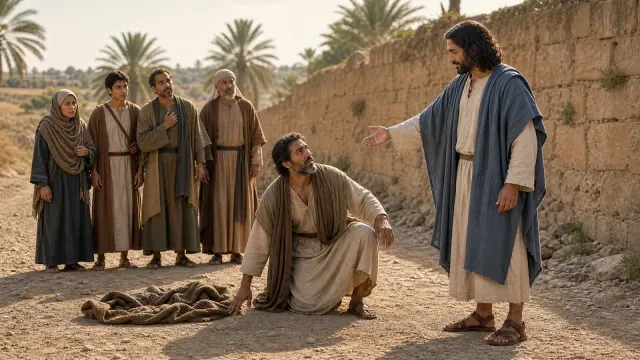
The Road to Jerusalem Measures Greatness Differently
Mark 10 keeps asking what people hold, receive, leave, or request as Jesus moves toward Jerusalem. A test about divorce sends Jesus back from legal permission to creation. Children are blocked by the disciples and then welcomed into Jesus' arms as he speaks of receiving the kingdom. A man with great possessions runs up seeking eternal life and leaves grieving when the answer reaches what he cannot release. Peter then asks, in effect, what leaving everything means for the disciples, and Jesus includes persecution in the promised return. The road to Jerusalem becomes explicit, along with another detailed prediction of suffering. James and John still ask for honored seats. Jesus answers with service and the Son of man's life given as a ransom for many. The chapter closes with Bartimaeus asking not for rank but sight, receiving it, and joining Jesus on the road.
One complete chapter pageOpen chapter →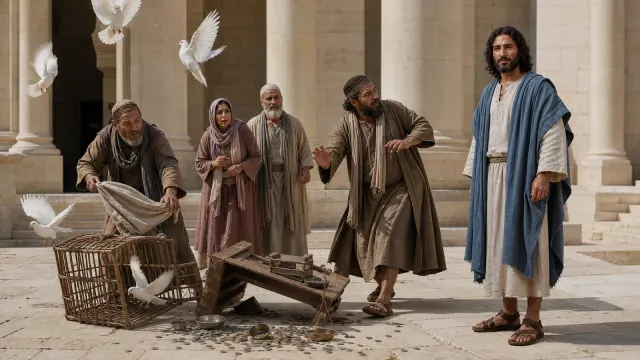
The Temple Is Inspected, Interrupted, and Questioned
Mark 11 brings Jesus into Jerusalem, but the first temple visit ends in inspection rather than confrontation. The next morning a leafy fig tree with no fruit begins an enacted sign that closes only after Jesus disrupts temple trade and teaching. Isaiah's house of prayer for all nations and Jeremiah's den of thieves give the temple action its interpretive weight without requiring invented accusations about specific exchange rates. When the disciples later find the fig tree withered from the roots, Jesus moves the conversation toward faith in God, prayer, and forgiveness rather than a reproducible technique for cursing trees. The chapter ends with an authority challenge. Jesus answers by asking about John's baptism, and the leaders' private calculation reveals that their refusal to answer is governed by consequences. They demand an account of his authority while declining to state their own judgment of the forerunner.
One complete chapter pageOpen chapter →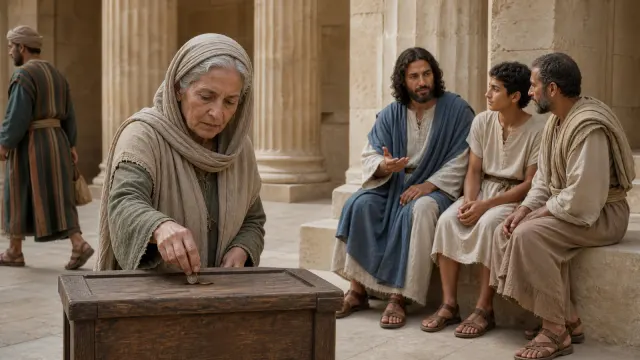
Questions Reveal Both Resistance and Recognition
Mark 12 turns the temple conflict into a sequence of parables, traps, genuine questions, and unsettling observations. The vineyard tenants mistake possession for ownership and kill the beloved son, only for the rejected stone to become the head of the corner. Pharisees and Herodians try to trap Jesus over tribute, while Sadducees construct a resurrection puzzle whose assumptions he rejects. Then a scribe approaches differently, recognizes a good answer, and hears that love of God and neighbor outranks sacrifice. Jesus himself raises the question of how David's son can also be David's Lord. The chapter ends by moving from religious honor to a poor widow's two mites. After warning against scribes who devour widows' houses, Jesus makes her entire living the measure that matters. Small coins become a large question because Mark measures cost, not display.
One complete chapter pageOpen chapter →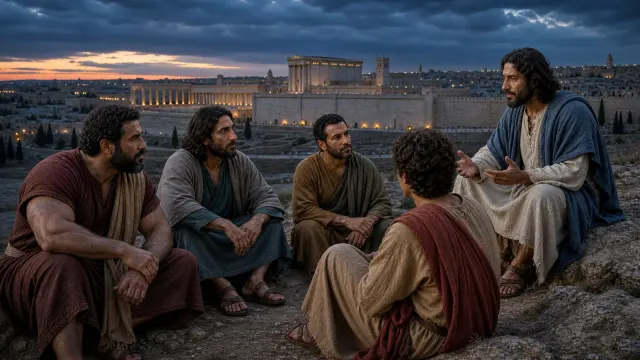
What Will Fall, What Will Endure, and What Remains Unknown
A disciple admires the temple's stones, and Jesus answers by declaring that the structure will fall. From there the chapter keeps resisting the desire to turn upheaval into a timetable. False claimants, wars, earthquakes, persecution, betrayal, the abomination of desolation, and cosmic signs all appear, but Jesus repeatedly warns against deception and premature certainty. The disciples themselves will be dragged before authorities, and those trials become settings for testimony rather than evidence that the mission has failed. The discourse reaches the Son of man's coming and the gathering of the elect, yet even recognizable nearness does not yield possession of the day or hour. Mark closes the chapter with a household whose servants already have assigned work. The master's return is uncertain; their responsibility is not.
One complete chapter pageOpen chapter →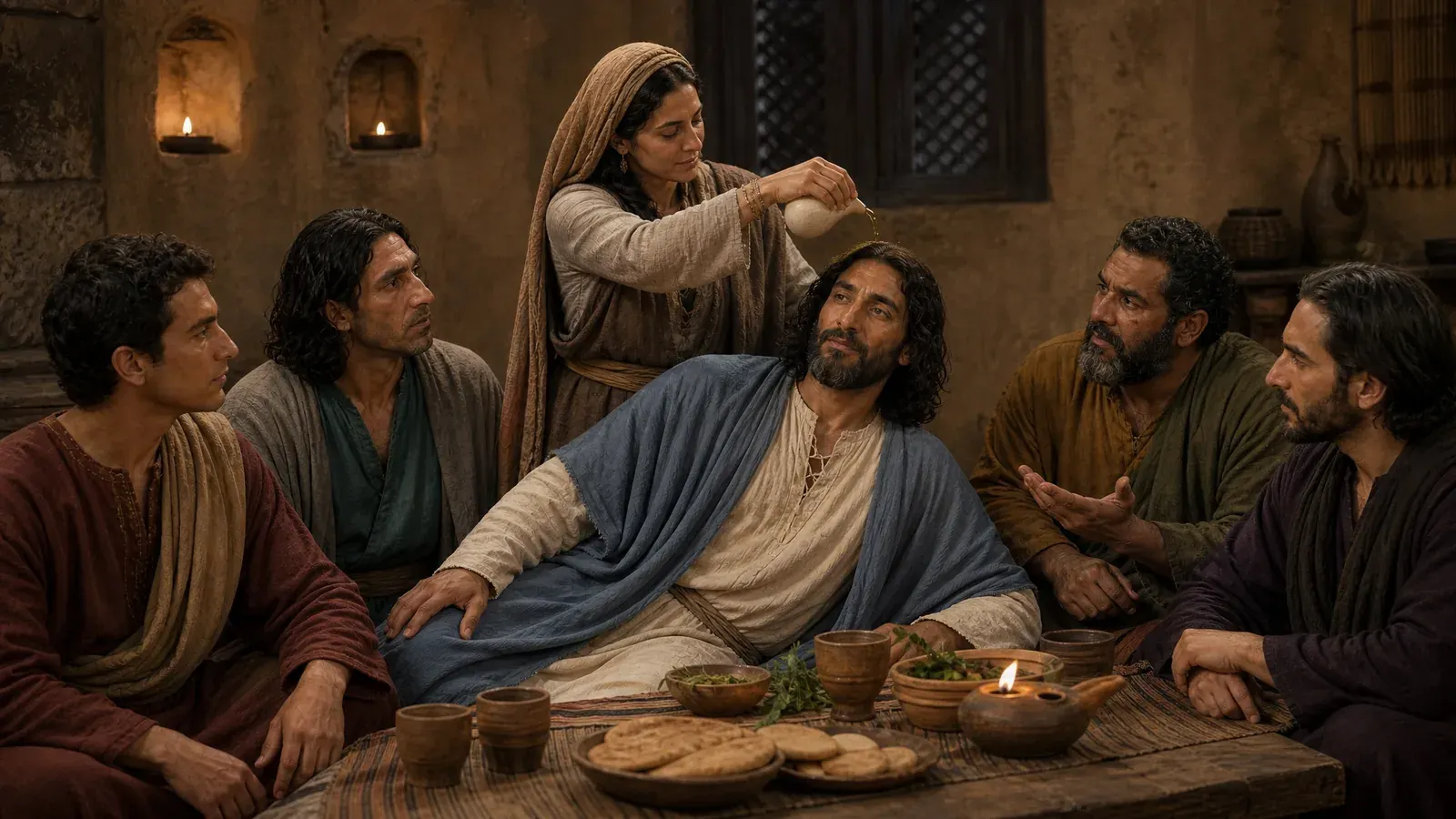
The Promised Road Reaches the Night of Betrayal
Mark 14 places costly devotion, betrayal, covenant language, confident promises, exhausted failure, and open confession inside one tightening night. An unnamed woman pours out what others call waste while Judas arranges payment for handing Jesus over. At the Passover table, Jesus names the betrayal and gives the coming death its meaning through bread and cup before anyone else can define it for him. He predicts that all will scatter and that Peter will deny him, yet he also promises a meeting in Galilee after he is risen. Gethsemane exposes the distance between promised loyalty and actual strength. Arrest follows a kiss, the disciples flee, witnesses fail to agree, and Jesus answers the direct question about his identity. Outside, Peter does exactly what he had insisted he would never do.
One complete chapter pageOpen chapter →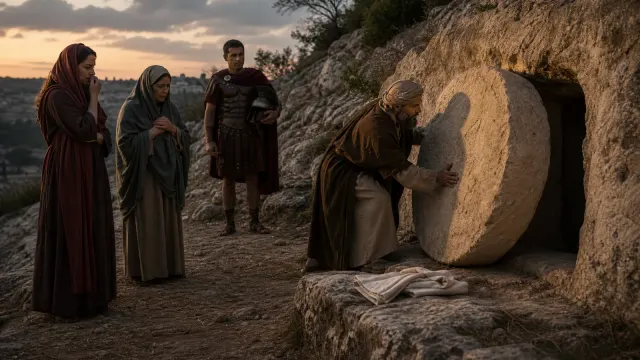
The Crucified King and the Witnesses Who Remain
Mark 15 moves Jesus from council to governor, from sentence to mock coronation, and from crucifixion to a sealed tomb, while one title keeps following him: "King of the Jews." Pilate recognizes the chief priests' envy but still chooses the course that will satisfy the crowd. Soldiers turn royal symbols into instruments of humiliation, and the written accusation remains above Jesus at Golgotha. Those watching demand that he prove himself by coming down, even though Mark has already defined his mission through giving his life for many. Darkness covers the land, Jesus cries the words of Psalm 22, the temple veil tears, and a centurion calls the dead man the Son of God. The chapter closes with women still watching and with Joseph placing the verified body in a known tomb.
One complete chapter pageOpen chapter →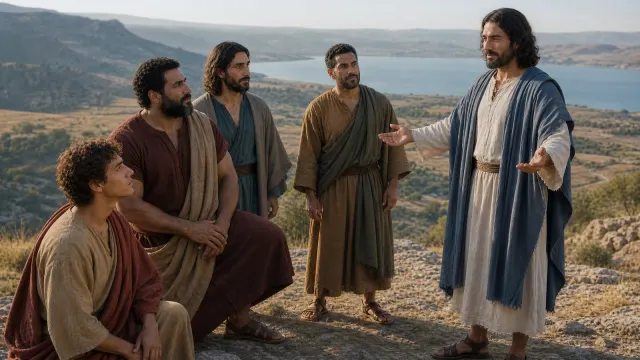
The Tomb Is Open, and the Message Goes Beyond It
Mark 16 begins with women carrying spices toward a tomb whose location they already know. Their concern is practical: who will move the stone? Instead they find it already rolled away and hear that Jesus of Nazareth, the one crucified, has risen. The message deliberately includes Peter and sends the disciples toward the Galilee meeting Jesus promised before their failure. Fear marks the women's first response. In the KJV's longer ending, resurrection testimony then meets repeated unbelief: Mary Magdalene is not believed, two further witnesses are not believed, and Jesus rebukes the eleven before giving them a worldwide commission. Belief, baptism, proclamation, and accompanying signs are placed inside that mission. The chapter closes with Jesus received into heaven and seated at God's right hand, while the disciples preach everywhere and the Lord continues "working with them."
One complete chapter pageOpen chapter →Source: eBible.org · eng-kjv2006