
The big picture
A wasted, lonely sufferer asks God to answer quickly. Hunger, sleeplessness, enemy taunts, and a sense of divine anger fill his days. He then looks towards Zion, Jerusalem's holy hill, and hopes for its rebuilding. The prayer reaches beyond one frail life to prisoners, gathered nations, and children not yet born. God's years have no end, and that contrast becomes the ground for asking that brief lives and the coming community be preserved.
In this chapter
- The Lonely Body Wastes Away Psalms 102:1-11
The opening asks for a swift answer and a face no longer hidden.
- The Enduring Lord Can Rebuild Psalms 102:12-17
God's lasting life stands against the speaker's fading days.
- Write the Rescue for Future Voices Psalms 102:18-22
The account is to be written for a coming generation, people not yet formed who will praise the Lord.
- The Creator Outlasts Every Garment Psalms 102:23-28
The speaker returns to his weakened strength and asks not to be taken in the middle of life.
Central truth
The wasting speaker appeals to God's unending life for personal mercy and a restored community that future generations can inhabit and praise.

Scripture beside the summary
Psalms · King James Version · 28Psalms 102:1-11
The Lonely Body Wastes Away
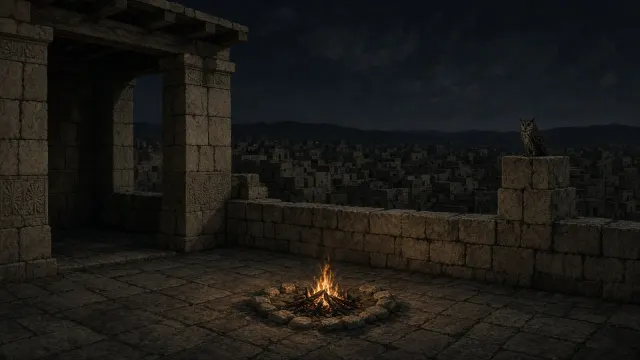
The opening asks for a swift answer and a face no longer hidden. The speaker's days vanish like smoke, and pain seems to burn his bones. His heart withers until eating is forgotten. Groaning leaves him thin, and solitary birds picture his loneliness and wakefulness. Enemies mock him all day. Ashes and tears fill the place of ordinary food and drink because he feels lifted and thrown down by God's anger. The account makes distress bodily and daily. The prayer does not disguise the weakness from the one asked to hear.
In everyday life
A housebound widower sits awake while the kettle goes cold beside an untouched slice of bread. Messages from an unresolved dispute remain on the table. When the visiting worker arrives, he describes the hours without trying to make them sound better. His thinness and sleeplessness belong to the need. The psalm brings such distress directly before God as anger and abandonment.
Notice
Psalms 102:7 The bird alone on the roof gives wakefulness a visible shape. The image joins isolation with sleepless watching, rather than describing sorrow only as an inward feeling.
Psalms 102:1-11
King James Version1Hear my prayer, O LORD, and let my cry come unto thee.
2Hide not thy face from me in the day when I am in trouble; incline thine ear unto me: in the day when I call answer me speedily.
3For my days are consumed like smoke, and my bones are burned as an hearth.
4My heart is smitten, and withered like grass; so that I forget to eat my bread.
5By reason of the voice of my groaning my bones cleave to my skin.
6I am like a pelican of the wilderness: I am like an owl of the desert.
7I watch, and am as a sparrow alone upon the house top.
8Mine enemies reproach me all the day; and they that are mad against me are sworn against me.
9For I have eaten ashes like bread, and mingled my drink with weeping,
10Because of thine indignation and thy wrath: for thou hast lifted me up, and cast me down.
11My days are like a shadow that declineth; and I am withered like grass.
Psalms 102:12-17
The Enduring Lord Can Rebuild
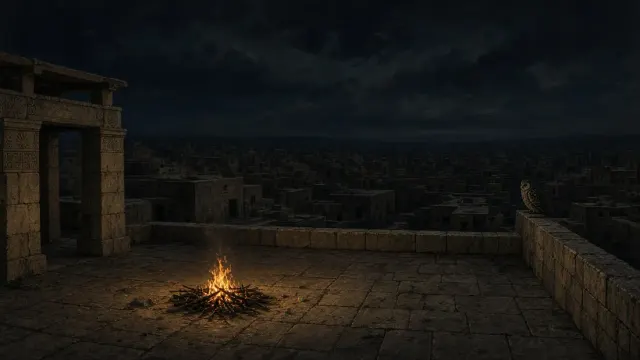
God's lasting life stands against the speaker's fading days. The prayer expects him to rise in mercy for the city because the time of favour has come. His servants still cherish its stones and dust. When he rebuilds and appears in glory, nations and kings will revere him. He will hear the destitute rather than despise their prayer. The turn towards the city does not leave the weak behind. Its hoped-for restoration displays the same attention to need that the speaker has sought for himself.
In everyday life
A displaced mason keeps a small stone from the ruined street where his family lived. At a rebuilding meeting he brings it to show the planners why even the rubble matters. New walls would restore more than property value. They would answer the attachment of people who have little else left. The psalm expects God to rebuild and hear the destitute.
Notice
Psalms 102:14 The servants value dust as well as stones. Their affection survives the city's ruin, helping explain why its restoration means more than an impressive construction project.
Psalms 102:12-17
King James Version12But thou, O LORD, shalt endure for ever; and thy remembrance unto all generations.
13Thou shalt arise, and have mercy upon Zion: for the time to favour her, yea, the set time, is come.
14For thy servants take pleasure in her stones, and favour the dust thereof.
15So the heathen shall fear the name of the LORD, and all the kings of the earth thy glory.
16When the LORD shall build up Zion, he shall appear in his glory.
17He will regard the prayer of the destitute, and not despise their prayer.
Psalms 102:18-22
Write the Rescue for Future Voices
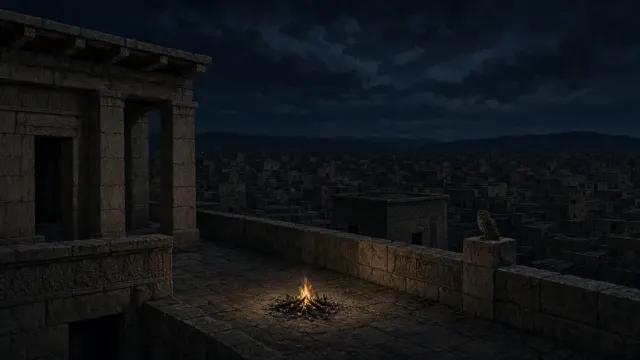
The account is to be written for a coming generation, people not yet formed who will praise the Lord. God looks from heaven towards earth to hear prisoners groan and release those marked for death. His name will be declared in the restored place of worship as peoples and kingdoms gather to serve him. The future record concerns more than buildings. It is also an account of lives set free. It preserves rescue of vulnerable lives and a widening assembly. People not yet present will receive a reason for praise from what is now being hoped and prayed for.
In everyday life
A prison-visiting volunteer keeps careful records after a group of wrongly held detainees is released. She asks permission to preserve the account for children who will otherwise know only fragments. Names, dates, and the help received are written clearly. The future readers are part of why memory matters today. The psalm attributes liberation and the gathered worship to God.
Notice
Psalms 102:18 The record is addressed to people still to come. Praise is imagined crossing the limit of the speaker's own short life through an account kept for others.
Psalms 102:18-22
King James Version18This shall be written for the generation to come: and the people which shall be created shall praise the LORD.
19For he hath looked down from the height of his sanctuary; from heaven did the LORD behold the earth;
20To hear the groaning of the prisoner; to loose those that are appointed to death;
21To declare the name of the LORD in Zion, and his praise in Jerusalem;
22When the people are gathered together, and the kingdoms, to serve the LORD.
Psalms 102:23-28
The Creator Outlasts Every Garment
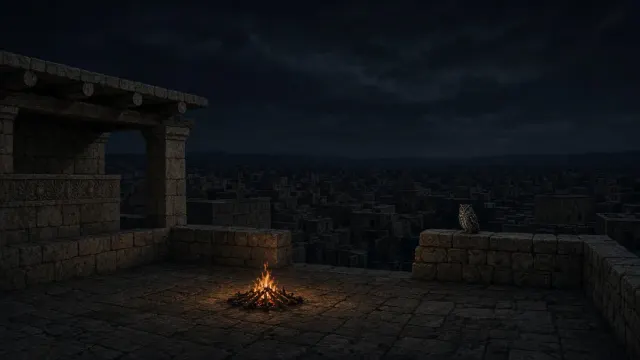
The speaker returns to his weakened strength and asks not to be taken in the middle of life. God's years reach through all generations. Earth and heaven are his work, but even they can wear out like clothes and be changed. He remains the same without an end to his years. The final hope is for the children of his servants to continue securely before him. Personal brevity is not solved by pretending to possess divine duration. It is brought under the care of the one who can sustain those who follow.
In everyday life
A seamstress replaces the lining of a coat she has repaired for three members of one family. Each wearer grew older while the work passed through her hands. She sees how even sturdy cloth gives way and asks the youngest about the next use. No material object supplies permanence by itself. The psalm's creator outlasts the whole created world.
Notice
Psalms 102:27 God remains the same while the heavens are pictured as changing clothes. The comparison places the deepest stability in the maker rather than in his visible works.
Psalms 102:23-28
King James Version23He weakened my strength in the way; he shortened my days.
24I said, O my God, take me not away in the midst of my days: thy years are throughout all generations.
25Of old hast thou laid the foundation of the earth: and the heavens are the work of thy hands.
26They shall perish, but thou shalt endure: yea, all of them shall wax old like a garment; as a vesture shalt thou change them, and they shall be changed:
27But thou art the same, and thy years shall have no end.
28The children of thy servants shall continue, and their seed shall be established before thee.
Details worth noticing
The opening image
Psalms 102:1 begins with “Hear my prayer, O LORD, and let my cry come unto thee.”
Where the chapter turns
Psalms 102:12 forms a natural hinge: “But thou, O LORD, shalt endure for ever; and thy remembrance unto all generations.”
The final note
Psalms 102:28 leaves the reader with “The children of thy servants shall continue, and their seed shall be established before thee.”
A word trail through the chapter
The words LORD, days, earth, prayer, Zion, bones help reveal the chapter’s repeated concerns.
KJV words made clear
- destitute
- Left without the resources or support needed to live.
- vesture
- Clothing or a garment worn over the body.
Music and video connected to the passage
Related media appears when its Scripture reference overlaps this study. Music and video can illuminate a theme while the biblical text remains the foundation.