The big picture
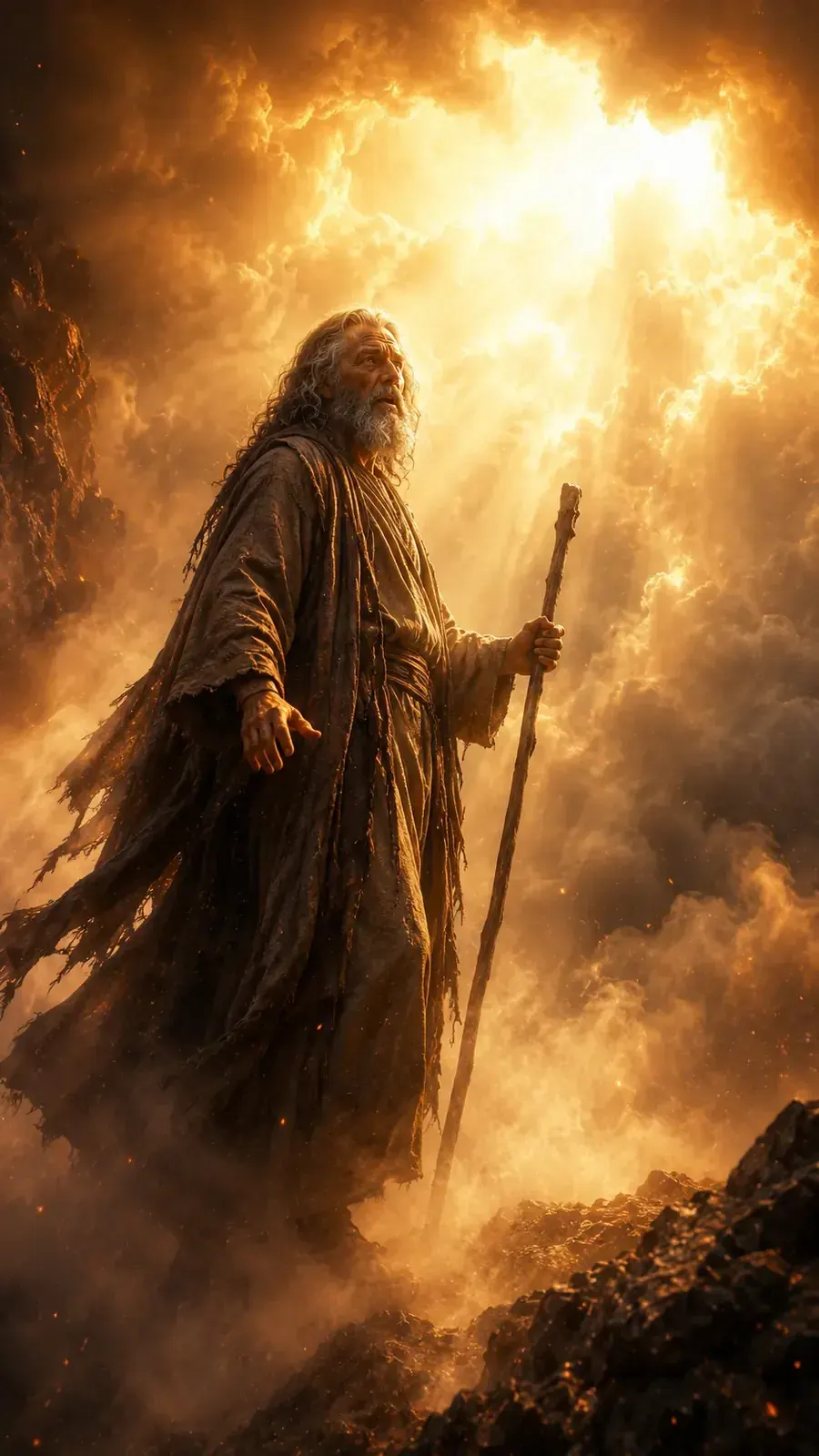
The Book of Exodus renews the covenant without pretending the first tablets never shattered. Moses cuts replacement stones, ascends alone, and hears the divine name proclaimed through mercy, grace, patience, goodness, truth, forgiveness, and judgment. Moses immediately turns that revelation into a plea for pardon and continued presence among a stiffnecked people. The renewed commands then strike directly at the danger exposed by the calf: rival altars, other gods, religious alliances, and molten images. Yet renewal also returns to calendars, firstborn redemption, Sabbath in the busiest farm seasons, annual appearances, sacrifices, and firstfruits. The covenant belongs to ordinary life as much as to the mountain. Written words preserve its terms beyond the emotional force of the encounter. Moses descends with a shining face he does not know is shining, carrying the commands to people who can see that the meeting has left a visible mark.
Central truth
Following Moses’ plea for the Lord’s presence after the calf crisis, the Lord proclaims his merciful yet just name and renews the covenant before Moses returns with a shining face and commands.
The study notes have a page of their own
The movement by movement analysis, the words to trace, the verse by verse notes and where readers differ are written for someone studying alone. They are on the Deep Personal Reflections page for this chapter. This page is the lesson.
A chapter-specific teaching brief
These anchors come from this chapter itself. They help a teacher use the Level 1 overview, the Level 2 study, and the Scripture text as one lesson.
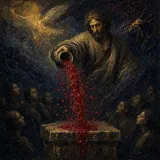
Open with the chapter’s first image
Exodus 34:1: “And the LORD said unto Moses, Hew thee two tables of stone like unto the first: and I will write upon these tables the words that were in the first tables…”
Slow down at the turning point
Exodus 34:20: “But the firstling of an ass thou shalt redeem with a lamb: and if thou redeem him not, then shalt thou break his neck. All the firstborn of thy sons thou…”
Keep this word trail visible
LORD, Moses, mount, children, tables, face
What to explain, in order
Teach the passage in this order. Each step names the verses it rests on, so every point can be shown in the text before it is applied.
Exodus 33:1-6
A land without his presence
Begin where the calf leaves the people. Read 33:1-3: God will keep his promise of the land and send an angel, but he will not go up among them, “lest I consume thee in the way”. Explain that God’s withdrawal is both judgment and protection; his holiness among a stubborn people would destroy them. Read 33:4-6 and explain the removal of ornaments as mourning and repentance, the opposite of the gold given for the calf. Teach this first because the rest of the passage answers one question: will God go with them? Read 33:15 ahead so the class knows Moses will not accept the land without God.
Exodus 33:7-11
The tent outside the camp
Read 33:7-11 and distinguish this tent from the tabernacle, which is described in chapters 25 to 31 and built in 35 to 40. Moses pitches it outside the camp, and those seeking the LORD must go out. Describe the scene: Moses walks out, the people stand at their doors, the cloud descends, and they worship from where they are. Then read 33:11, “face to face, as a man speaketh unto his friend”, and explain it as direct, personal speech. Keep 33:20 in view. Note Joshua staying in the tent. Teach this to show both the distance sin has created and the nearness God still grants.
Exodus 33:12-17
If thy presence go not
Read Moses’ prayer in 33:12-16 slowly. He asks to know God’s way, reminds God that “this nation is thy people”, and receives the promise, “My presence shall go with thee, and I will give thee rest” (33:14). Then he presses further: “If thy presence go not with me, carry us not up hence”. Explain that God’s presence is what makes Israel different from every other people (33:16). Read 33:17, where God agrees because Moses has found grace. Teach this as the turning point of the passage: intercession restores God’s presence to the people.
Exodus 33:18-23
Show me thy glory
Read 33:18-23. Moses asks to see God’s glory, and God answers with three gifts and one limit: his goodness will pass by, his name will be proclaimed, his mercy will be his own to give, but his face cannot be seen. Explain “clift” as cleft, a crack in the rock. Treat “my back parts” as language of a limited sight, and do not let the class build an image from it. Read John 1:18 to show how the New Testament speaks of God made known in the Son. Teach this before chapter 34 because the proclamation there is what God promises here.
Exodus 34:1-9
The name proclaimed
Read 34:1-5: new tablets hewn by Moses, God promising to write, Moses alone on the mountain, and the LORD descending. Then read 34:6-7 slowly, perhaps twice. Explain “longsuffering” as slow to anger and “by no means clear the guilty” as refusing to call guilt innocence. Point out the proportion: mercy for thousands, consequences to the fourth generation. Read 34:8-9: Moses bows, worships, and asks God to go among them, pardon, and take them as his inheritance. Teach this as the centre of the passage and of much of the Old Testament; Numbers 14:18, Psalm 103:8 and Jonah 4:2 quote it.
Exodus 34:10-28
The covenant renewed
Read 34:10-17 and show that the renewal repeats the very commands the calf broke: no covenants with the land’s gods, no other god, no molten gods. Explain “Jealous” as God’s exclusive claim, like a husband’s love that will not share. Read 34:18-26 for the feasts, the firstborn, and the Sabbath, with rest “in earing time”, which means ploughing. Then read 34:27-28 and note two things honestly. Readers differ on whether “he wrote” means God (as 34:1 promised and Deuteronomy 10:4 states) or Moses. And traditions number “the ten commandments” differently; set out the Jewish, Catholic and Lutheran, and Orthodox and Protestant divisions without choosing.
Exodus 34:29-35
A shining face and a veil
Read 34:29-35. Moses comes down with the tablets and does not know his face shines. Explain “wist not” as did not know and “vail” as veil. Show the pattern: the people fear, Moses calls them, teaches them God’s commands, veils his face, removes the veil before the LORD, and veils again. Read 2 Corinthians 3:7-18, where Paul reflects on this veil, and tell the class it is Paul’s reading, distinct from what Exodus says. Teach this last because it shows the result of the whole passage: God is again speaking with his people through Moses, and his glory, though veiled, is among them.
Where learners get stuck
The misreadings this passage tends to produce, and how to answer each from the text.
“Moses saw God face to face, so Exodus contradicts itself when it says no one can see God’s face.”
Exodus 33:11 says the LORD spoke with Moses “face to face, as a man speaketh unto his friend”, describing direct, personal speech. Exodus 33:20 says “Thou canst not see my face”, describing unrestricted sight of God’s glory. Both are in the same chapter, nine verses apart, so the Book of Exodus does not see them as contradicting. Teach them as two kinds of nearness: intimate conversation, and a glory no human can survive seeing.
“God punishes children for their parents’ sins.”
Exodus 34:7 speaks of God “visiting the iniquity of the fathers upon the children”, which many readers understand as the consequences of sin spreading through families, especially when children continue in it (compare 20:5, “of them that hate me”). Ezekiel 18:20 says the son shall not bear the iniquity of the father. Keep the proportion of 34:6-7: mercy for thousands. Speak gently to anyone carrying the effects of a parent’s sin.
“After the calf, God just forgave and forgot.”
God forgives, but the renewal is costly and specific. Moses must hew new tablets (34:1), God repeats the commands against other gods and molten images (34:14, 17), and he proclaims that he “will by no means clear the guilty” (34:7). The people had already been plagued (32:35). Forgiveness restores the relationship and its obligations together. It is grace, and it is not permission to treat sin lightly.
“Everyone numbers the Ten Commandments the same way, and they are listed in chapter 34.”
Exodus 34:28 calls what is written “the ten commandments” but does not number them, and readers differ on whether it refers to 20:2-17 (as 34:1 and Deuteronomy 10:1-4 suggest) or to the commands of 34:10-26. Jewish, Catholic and Lutheran, and Orthodox and most Protestant traditions also divide the commandments of chapter 20 differently. Show the options and let the class see that all of them read the same words.
“Moses’ shining face shows that great spiritual leaders glow with power.”
Moses “wist not that the skin of his face shone” (34:29); he did not seek it or display it. The shining came from speaking with the LORD, and he used his time with the people to give them God’s commandments (34:32), veiling his face afterwards. Exodus gives no way to test leaders by radiance, and Paul uses the veil to point to Christ (2 Corinthians 3:13-18). The glory belonged to God, not to Moses.
Learning objectives
- Explain why the promised land alone does not satisfy Moses.
- Locate the meeting tent outside the camp.
- Distinguish requested glory from the revelation granted.
- Identify mercy and judgment in the proclaimed name.
- Describe the renewed tablets and covenant obligations.
- Trace Moses’ shining face and use of the veil.
Teacher preparation
- Read Exodus 33–34 as a movement from threatened absence to renewed covenant communication.
- Distinguish the outside-camp tent in 33:7 from the sanctuary still unbuilt in chapters 35–40.
- Explain “clift” as cleft, “longsuffering” as patient, and “earing time” in 34:21 as plowing time.
- Read 33:11 beside 33:20 and 34:33 beside 34:34–35; preserve the wording rather than isolating phrases.
- Compare 34:1, 27–28 with Deuteronomy 10:1–4; distinguish Moses’ writing instruction from God’s promised tablet inscription.
Evidence and interpretation checks
Explicit
Establish from Exodus 33:14–17 that the Lord promises his presence and grants Moses’ request; the people’s innocence is not the explanation.
Scripture-supported
Use Deuteronomy 10:1–4 with Exodus 34:1 to confirm divine writing of the renewed tablets.
Strong inference
Infer from Exodus 33:15–16 that Moses regards the Lord’s presence, not territory alone, as what distinguishes this people.
Possible or traditional reading
Present reading “face to face” in Exodus 33:11 as direct, intimate speech, distinguished from unrestricted sight in 33:20, as an interpretive explanation; retain both statements.
Limit
State that Exodus 34:29–35 gives no physical mechanism for the radiance or test of present leaders by brightness.
Discussion with answer guidance
1. Why do the people mourn an announcement that still includes a good land?
What a good answer contains
Because the land without God is not what they want. God promises the land and an angel (33:1-2), but says, “I will not go up in the midst of thee; for thou art a stiffnecked people: lest I consume thee in the way” (33:3). The people hear “these evil tidings” and mourn, removing their ornaments (33:4-6). A good answer sees that the threatened loss is God’s presence, withheld because his holiness would destroy a stubborn people. A weak answer misses that the absence is also a mercy.
Show teacher guidance
Compare 33:1–6: the promise remains, but the Lord says he will not go in their midst lest he consume them. Keep absence and holiness together.
2. What does the meeting tent’s location require of those seeking the Lord?
What a good answer contains
That they go out to it. Moses pitched the tent “without the camp, afar off from the camp”, and “every one which sought the LORD went out” to it (33:7). When Moses goes, the people rise and stand at their tent doors, and when the cloudy pillar descends, they worship “every man in his tent door” (33:8-10). A good answer sees that the camp is now at a distance from God’s meeting place. A weak answer confuses this tent with the tabernacle whose construction has not yet begun.
Show teacher guidance
Use 33:7–11: they go outside the camp; the people watch and worship at their tent doors. Do not identify this tent as the already completed sanctuary.
3. When Moses asks to see glory, what does the Lord promise and withhold?
What a good answer contains
God promises, “I will make all my goodness pass before thee, and I will proclaim the name of the LORD before thee” (33:19), and that he will be gracious and merciful as he chooses. He withholds his face: “Thou canst not see my face: for there shall no man see me, and live” (33:20). Moses is placed in a cleft of the rock, covered by God’s hand, and sees his back (33:22-23). A good answer keeps the promise and the limit. A weak answer builds a picture of God’s body.
Show teacher guidance
Follow 33:18–23: goodness, proclaimed name, sovereign mercy, and protected sight; the face is withheld. Resist turning the language into an invented portrait.
4. How does the proclaimed name refuse a choice between mercy and justice?
What a good answer contains
It holds both together. “The LORD God, merciful and gracious, longsuffering, and abundant in goodness and truth” keeps “mercy for thousands, forgiving iniquity and transgression and sin” (34:6-7), and yet “will by no means clear the guilty”, visiting iniquity to the third and fourth generation. Moses worships and pleads, “pardon our iniquity and our sin” (34:9). A good answer reads every clause and notices the imbalance, thousands against four generations. A weak answer quotes only the merciful half or only the stern half.
Show teacher guidance
Read every clause of 34:6–7, then Moses’ plea in 34:8–9. Include forgiveness and refusal to clear guilt; do not erase either half.
5. What shows that covenant renewal is not permission to repeat the calf?
What a good answer contains
God renews the covenant with the same demands that the calf broke. New tablets are hewn and God writes on them (34:1-4). He warns against covenants with the land’s inhabitants and commands, “thou shalt worship no other god” (34:14), and “Thou shalt make thee no molten gods” (34:17). The feasts, redemption of the firstborn and the Sabbath follow, with rest “in earing time and in harvest” (34:21). A good answer sees renewal as restored obligation. A weak answer treats forgiveness as permission to forget.
Show teacher guidance
Use the restored tablets in 34:1–4 and exclusive-worship commands in 34:10–17. Include the feasts, redemption, and rest even during plowing and harvest in 34:18–26.
6. How do Moses’ shining face and veil relate to his task of communicating commands?
What a good answer contains
The shining comes from speaking with God, not from Moses’ effort: he “wist not that the skin of his face shone” (34:29). Aaron and the people are afraid (34:30), but Moses calls them and gives them “in commandment all that the LORD had spoken with him” (34:32). He veils his face after speaking, removes the veil before the LORD, and veils again (34:33-35). A good answer links the radiance to communicating God’s word. A weak answer turns it into prestige Moses sought.
Show teacher guidance
Identify his unawareness (34:29), the people’s fear (34:30), communicated commands (34:32), unveiled approach to the Lord (34:34), and covering again (34:35); reject self-produced prestige.
Responsible application
Heart and habits
Ask learners to revise an imaginary success statement that counts only arriving at a destination; compare Moses’ concern in Exodus 33:15–16.
Relationships and community
Discuss how a fictional community could seek restoration while retaining honest acknowledgment of wrongdoing and necessary obligations.
Mercy accurately described
Ask the class to correct two fictional summaries of Exodus 34:6–7, one deleting forgiveness and the other deleting accountability.
Session plans
Two timings of the same lesson. The shorter keeps the reading, the central discussion and one response; the longer gives the confusions and the application their own time.
45 minutes
Land without presence
Read 33:1-6 and take question one. Ask why the people mourned good news about a land.
The tent and the friend
Read 33:7-11 and take question two and confusion one.
Thy presence and thy glory
Read 33:12-23 and take question three.
The name
Read 34:1-9 twice. Take question four and confusion two, with care for anyone hurt by a parent’s sin.
Renewal and radiance
Read 34:10-17 and 34:27-35. Take questions five and six and confusion three. Show the numbering chart from confusion four briefly.
Handout and prayer
Read the key verse together and pray using the words of 34:6-7.
90 minutes
What would you lose
Ask the group what it would mean to have every blessing except God himself. Then read 33:1-6 and take question one.
Outside the camp
Read 33:7-11. Take question two and confusion one, and distinguish this tent from the tabernacle.
Moses prays
Read 33:12-17 and ask what Moses refuses to accept. Draw out 33:15-16.
In the cleft of the rock
Read 33:18-23 and John 1:14-18. Take question three.
The LORD, merciful and gracious
Read 34:1-9, then Psalm 103:8-13 and Jonah 4:2. Take question four and confusion two.
Tablets again
Read 34:10-28 in summary. Take question five and confusions three and four, setting out the numbering traditions without choosing.
The veil
Read 34:29-35 and 2 Corinthians 3:12-18. Take question six and confusion five, keeping Paul’s reading distinct from Exodus.
Handout and prayer
Read the key verse together, give out the sheet and pray for God’s presence to go with the group.
Adapting the lesson
Children
Draw a camp with a small tent outside it and let children stand at their paper tent doors while Moses walks out. Explain that Moses talked with God like a friend. For 33:22, have a child hide behind a large book as God’s hand while you read. Teach the words merciful and gracious with hand signs. Explain that Moses’ face shone because he had been with God, and he did not even know it.
Youth
Ask whether they would take the best life imaginable if God were not in it. Read 33:15 and let Moses’ answer challenge them. Spend time on 34:6-7 and let them notice the mercy and the justice together. Discuss confusion two with care, since some will have parents whose choices hurt them. Ask what it would look like for someone to be changed by time with God without trying to show it.
Adults
Adults can trace the whole movement from threatened absence to renewed covenant and dwell on 34:6-7 as Israel’s great confession of God’s character, quoted across the Old Testament. Discuss face to face and no man see me together, the question of who wrote in 34:28, and the numbering of the commandments, without forcing resolutions. Ask how a church that has failed badly seeks God’s presence again.
One to one
Read 34:6-7 aloud together and ask which word the person most needs to believe about God right now. If they feel far from God after a failure, read 33:7 and 33:14 and talk about going out to seek him. If they carry harm from a parent, handle 34:7 gently and read Ezekiel 18:20. Pray Moses’ prayer of 34:9 with them.
Song and video learning lab
A song or video may interpret, compress, or dramatize the text. Its value becomes clearer when its choices are compared with Scripture.
- Before the media: the exact passage and its central movement.
- During the media: the words, people, events, and emotions the artist emphasizes.
- After the media: what it clarifies, what it leaves out, and what belongs back in the biblical text.
Handout
One page for learners to take home. The print button prints this section alone.
Exodus 33:1–34:35
The passage in brief
After the golden calf, God says he will give Israel the land but will not go with them. The people mourn. Moses meets God in a tent outside the camp and pleads for God’s presence, and God promises to go with them. Moses asks to see God’s glory; God hides him in a rock and proclaims his name: merciful, gracious, slow to anger, forgiving, yet not clearing the guilty. God renews the covenant, and Moses returns with new tablets and a shining face.
A verse to keep
And the LORD passed by before him, and proclaimed, The LORD, The LORD God, merciful and gracious, longsuffering, and abundant in goodness and truth, Keeping mercy for thousands, forgiving iniquity and transgression and sin, and that will by no means clear the guilty; visiting the iniquity of the fathers upon the children, and upon the children’s children, unto the third and to the fourth generation.
Exodus 34:6-7 · King James Version
Questions to take home
Why did Moses refuse to go on without God’s presence, according to 33:15-16?
Which words in 34:6-7 describe God’s mercy, and which describe his justice?
Why did Moses’ face shine in 34:29?
This week
Read Exodus 34:6-7 every day this week and pray it back to God in your own words.
Music and video connected to the passage
Related media appears when its Scripture reference overlaps this study. Music and video can illuminate a theme while the biblical text remains the foundation.