
The big picture
Judges 7 deliberately makes Gideon’s army too small for the victory to be credited to Israel’s strength. Thousands leave because they are afraid, then a water test reduces the force again until only three hundred remain. Gideon still fears, and the LORD accommodates that fear by sending him with Purah to hear a Midianite dream. A barley cake topples a tent in the dream, and the enemy’s own interpretation says Midian has been delivered into Gideon’s hand. Gideon worships and returns ready to act. The three hundred surround the camp with trumpets, pitchers, and lamps, while the LORD turns Midianite swords against one another. Israel’s pursuit then expands beyond the original force. The chapter keeps human preparation visible but makes self-congratulation impossible as the final explanation.
Central truth
Judges 7 deliberately reduces Gideon's army so Israel cannot boast in its own strength, then uses a frightened Midianite's dream, three hundred men, and a night of trumpets, jars, and torches to rout the camp.
The study notes have a page of their own
The movement by movement analysis, the words to trace, the verse by verse notes and where readers differ are written for someone studying alone. They are on the Deep Personal Reflections page for this chapter. This page is the lesson.
A chapter-specific teaching brief
These anchors come from this chapter itself. They help a teacher use the Level 1 overview, the Level 2 study, and the Scripture text as one lesson.
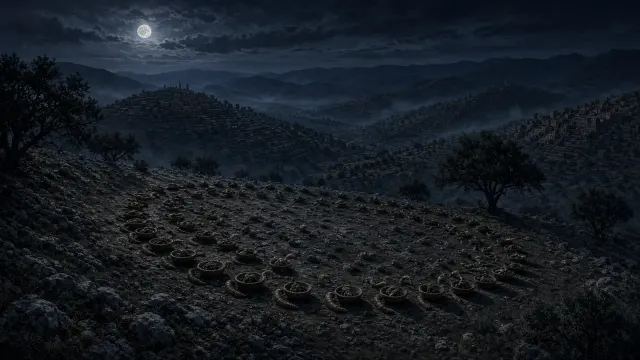
Open with the chapter’s first image
Judges 7:1: “Then Jerubbaal, who is Gideon, and all the people that were with him, rose up early, and pitched beside the well of Harod: so that the host of the…”
Slow down at the turning point
Judges 7:10: “But if thou fear to go down, go thou with Phurah thy servant down to the host:”
Keep this word trail visible
Gideon, host, LORD, people, hand, Midianites
What to explain, in order
Teach the passage in this order. Each step names the verses it rests on, so every point can be shown in the text before it is applied.
Judges 7:1-3
Too many
Begin at the spring of Harod with Midian camped below. Read 7:2 aloud twice and write its last words on the board: "Mine own hand hath saved me". Explain that "vaunt themselves" means boast. The LORD's concern is not victory but who will get the credit. Then the first cut: those "fearful and afraid" go home, echoing Deuteronomy 20:8. Teach this first because every later detail in the chapter serves that one purpose: Israel must not be able to boast.
Judges 7:4-8
Three hundred
Read the water test as written. The LORD says "I will try them for thee there" and does the choosing. Explain the confusion about lapping: verse 5 compares lapping to a dog, verse 6 says the three hundred put their hand to their mouth. Popular teaching says they were alert soldiers; the text gives no such reason. The point is the number, three hundred against an army "like grasshoppers for multitude". Teach this step so the class sees how small the LORD made the force.
Judges 7:9-15
A barley loaf in the camp
Read 7:9-11 and point to the LORD's kindness: "But if thou fear to go down" he may take his servant Phurah. The LORD answers Gideon's fear before Gideon asks. Then the dream. Explain that a barley cake was poor people's bread, a fitting picture of small, despised Israel rolling into the camp and flattening a tent. The Midianite's friend interprets it as "the sword of Gideon". Teach the response carefully: Gideon worships first, and only then commands.
Judges 7:16-22
Trumpets, jars and torches
Explain the plan. Three companies of a hundred, each man with a trumpet, an empty jar and a torch hidden inside it. At the start of the middle watch, just after the guards change, they break the jars, the torches blaze, the trumpets sound, and they shout "The sword of the LORD, and of Gideon." They stand still. Then read 7:22, the turning point: the LORD sets every man's sword against his fellow. Teach this as the climax of the chapter and keep the subject of 7:22 clear.
Judges 7:23-25
The pursuit
Finish with the tribes called out to pursue: Naphtali, Asher, Manasseh, and then Ephraim at the fords. Explain why the waters matter, as they did with Ehud in 3:28: the enemy is trapped at the river. Read the deaths of Oreb and Zeeb plainly and briefly; their names mean raven and wolf. Note that the heads are brought to Gideon, a grim detail of ancient war that prepares the quarrel of 8:1-3. Teach it last because chapter 8 begins exactly here.
Where learners get stuck
The misreadings this passage tends to produce, and how to answer each from the text.
"The three hundred were chosen because they were the most alert soldiers."
The text gives no such reason. Verse 2 states the purpose of the reduction, so that Israel cannot say "Mine own hand hath saved me". The LORD chooses at the water (7:4), and he wants a smaller number, not better men. The reading about watchful soldiers is popular but it puts the credit back on human quality, which is what the chapter is written against.
"Gideon's men won by a clever trick."
The trumpets and torches frighten the camp, but verse 22 says "the LORD set every man's sword against his fellow". The men "stood every man in his place" (7:21). The plan was obedience to a word, and the victory was the LORD's. Help learners hold both: human action was real, and it was not what saved them.
"God only uses people who have no fear."
Twenty-two thousand afraid men are sent home (7:3), but Gideon himself is afraid, and the LORD says so in 7:10 and gives him the dream to strengthen him (7:11). God works with fearful servants and gives them what they need to obey. The fear proclamation shrinks the army; it is not a rule that the fearful are useless.
"Fewer is always better in God's work."
This chapter is about one battle and one purpose: that Israel would not boast (7:2). Elsewhere God calls whole tribes, as in 6:35 and 7:23-24. The lesson is not that small is holy, but that the LORD arranges things so that the glory is clearly his.
Learning objectives
- Explain why the army is reduced before battle.
- Distinguish the two stages of reduction from later symbolic interpretations.
- Trace how the Midianite dream strengthens Gideon before the attack.
- Describe the function of trumpets, jars, and torches in the night assault.
- Identify who actually turns sword against whom inside the camp.
- Explain Ephraim's role in cutting off the fleeing Midianites.
Teacher preparation
- Locate the spring of Harod, Moreh, the Jordan, and Ephraim's routes so the pursuit after the camp panic is intelligible.
- Mark 7:2 as the interpretive key: the army is too many because Israel might vaunt itself against the LORD.
- Do not invent character tests around how men drank water. The passage uses the behavior to reduce numbers, not to praise one drinking posture.
- Prepare a simple demonstration with an empty jar, light, and trumpet image so the coordinated signal can be visualized without theatrics.
- Read 8:1–3 in advance because Ephraim's later complaint grows directly from the role assigned at the end of chapter 7.
Evidence and interpretation checks
Explicit
Judges 7:2 explicitly gives the reason for reduction: Israel must not say, 'Mine own hand hath saved me.' Verses 3–7 reduce the force from thirty-two thousand to three hundred.
Scripture-supported
In 7:13–15 Gideon overhears a dream about a barley cake overturning a tent and its interpretation as Gideon's sword, then worships and returns ready to attack.
Strong inference
The simultaneous trumpet blast, broken pitchers, exposed lamps, shouted cry, and fixed positions plausibly magnify confusion in the darkness, but the passage itself credits the LORD with setting every man's sword against his fellow.
Possible or traditional reading
Traditional lessons sometimes claim the three hundred were selected because alert soldiers lapped from their hands. Judges 7 never states that vigilance was the criterion, so do not teach it as the point.
Limit
The passage does not give a complete tactical diagram or identify every group killed in the panic. State what 7:22 reports and resist filling gaps with military reconstruction.
Discussion with answer guidance
1. Why does the LORD call Gideon's original force 'too many'?
What a good answer contains
Not because the army is too big to win, but because a win with that army would teach the wrong lesson. Verse 2 gives the reason in full: "The people that are with thee are too many for me to give the Midianites into their hands, lest Israel vaunt themselves against me, saying, Mine own hand hath saved me." A good answer quotes the last clause and names the danger as boasting. A weak answer treats the reduction as a test of soldiers' skill, which the verse never mentions.
Show teacher guidance
Use 7:2 exactly. The danger is Israel vaunting itself and saying its own hand saved it.
2. How many men leave after the fear proclamation, and how many remain after the water test?
What a good answer contains
First, "Whosoever is fearful and afraid, let him return" (7:3), and "there returned of the people twenty and two thousand; and there remained ten thousand." Then at the water the LORD says "The people are yet too many" (7:4), and those who lapped "were three hundred men" (7:6). A good answer tracks 32,000 to 10,000 to 300 and notices that the LORD himself chooses at the water: "I will try them for thee there." A weak answer gets the numbers right but forgets who did the choosing.
Show teacher guidance
Track the text: twenty-two thousand depart, ten thousand remain, and the final force is three hundred.
3. What changes in Gideon after he overhears the dream?
What a good answer contains
Before the dream, the LORD had to say "if thou fear to go down" (7:10). After hearing it, "he worshipped, and returned into the host of Israel, and said, Arise; for the LORD hath delivered into your hand the host of Midian" (7:15). The enemy's own soldier had said "into his hand hath God delivered Midian" (7:14). A good answer notices the order: hearing, worship, then command, and that Gideon now speaks the LORD's own words of 7:9. A weak answer skips the worship.
Show teacher guidance
Use 7:15. He hears the interpretation, worships, returns to Israel, and says the LORD has delivered Midian into their hand.
4. What are the three hundred carrying instead of conventional battle equipment in both hands?
What a good answer contains
Each man has "a trumpet in every man's hand, with empty pitchers, and lamps within the pitchers" (7:16). At the signal they break the pitchers and hold "the lamps in their left hands, and the trumpets in their right hands to blow withal" (7:20). A good answer notices the obvious: with both hands full, no one is holding a sword. The cry, "The sword of the LORD, and of Gideon", names a sword no Israelite is wielding. A weak answer says only that it was a clever trick.
Show teacher guidance
Use 7:16 and 7:20: trumpets, pitchers, and lamps or torches. The odd equipment makes the assault visually memorable.
5. Who causes the swords inside the camp to turn against one another?
What a good answer contains
Verse 22 states it: "the LORD set every man's sword against his fellow, even throughout all the host". The three hundred stood "every man in his place round about the camp" (7:21) while the camp ran. A good answer gives the action to the LORD in the words of the verse, and sees that the three hundred did exactly what they were told and no more. A weak answer credits the noise and the panic as the whole cause, which is the boast 7:2 warned against.
Show teacher guidance
Verse 22 states that the LORD sets every man's sword against his fellow. Do not credit the panic alone.
6. What do the men of Ephraim accomplish after the rout begins?
What a good answer contains
Gideon summons Ephraim to "take before them the waters unto Beth-barah and Jordan" (7:24), and they do. Then "they took two princes of the Midianites, Oreb and Zeeb", killing them at the rock Oreb and the winepress of Zeeb (7:25). A good answer notes that the pursuit widens the victory to more tribes, and that the princes die at a rock and a winepress, echoing the rock of 6:21 and Gideon's winepress of 6:11. It should also notice this prepares Ephraim's complaint in 8:1. A weak answer forgets Ephraim entirely.
Show teacher guidance
Use 7:24–25. They seize the waters to Beth-barah and Jordan and capture Oreb and Zeeb.
Responsible application
Heart and habits
Ask why success can become spiritually dangerous when people can plausibly say, 'Mine own hand hath saved me.' Keep the discussion on the boast named in verse 2.
Relationships and community
Discuss how a small assigned role and a later reinforcement role both matter in the same deliverance. Use Gideon's three hundred and Ephraim's pursuit.
Cut down the explanation
List every ordinary explanation the chapter removes or weakens before the battle. Then identify the explanation the book insists on keeping.
Session plans
Two timings of the same lesson. The shorter keeps the reading, the central discussion and one response; the longer gives the confusions and the application their own time.
45 minutes
Too many
Read 7:1-3. Take question one and write "Mine own hand hath saved me" on the board.
The count
Read 7:4-8. Take question two using counters and confusion one on the lapping.
The dream
Read 7:9-15. Take question three. Point to the worship before the command.
The night attack
Read 7:16-22. Take questions four and five, and confusion two.
Pursuit and close
Read 7:23-25 and take question six. Read the key verse together, hand out the sheet and pray.
90 minutes
Opening
Ask the group to name a success they were tempted to take credit for. Keep it light.
Too many
Read 7:1-3 with Deuteronomy 20:8. Take question one.
The water
Read 7:4-8. Use thirty-two counters, remove twenty-two, then reduce to three. Take question two and confusion one.
Fear and a dream
Read 7:9-15. Take question three and confusion three. Ask what the LORD gave Gideon when he was afraid.
Trumpets and torches
Read 7:16-22. Take questions four and five and confusion two. Act out the jars with paper cups.
The pursuit
Read 7:23-25 and 8:1. Take question six and confusion four.
Response and handout
Choose one application. Read the key verse together, point to the take-home line and pray, giving thanks for one thing the LORD did that we could not.
Adapting the lesson
Children
Use thirty-two counters or toy soldiers and take most away until only three are left. Ask how three could beat a big army. Give each child a paper cup with a torch drawn inside and a paper trumpet. Act out the shout, The sword of the LORD. Tell them God made the enemy run away. Leave out the deaths of Oreb and Zeeb.
Youth
Ask youth to retell the lapping test from memory, then read 7:5-6 and compare. Let them see how the popular version differs from the text. Spend time on 7:2 and boasting: what do they take credit for that was really given. Point out that Gideon was afraid and God still used him.
Adults
Give adults time on the purpose clause of 7:2 and how it shapes the whole chapter. Compare 1 Corinthians 1:27-29. Discuss how churches and families are tempted to boast in numbers or skill. Handle 7:22 carefully: human obedience and divine action. Note how 7:24-25 prepares the conflicts of chapter 8.
One to one
Read 7:9-15 together. Ask whether there is something the person is afraid to go down to. Read 7:10 and notice that the LORD names the fear and provides for it. Pray for them by name, asking God to strengthen their hands as he promised Gideon in 7:11.
Song and video learning lab
A song or video may interpret, compress, or dramatize the text. Its value becomes clearer when its choices are compared with Scripture.
- Before the media: the exact passage and its central movement.
- During the media: the words, people, events, and emotions the artist emphasizes.
- After the media: what it clarifies, what it leaves out, and what belongs back in the biblical text.
Handout
One page for learners to take home. The print button prints this section alone.
Judges 7:1–25
The passage in brief
Gideon gathers a large army, but the LORD says it is too many, because Israel would boast that they saved themselves. Those who are afraid go home, and then the LORD chooses three hundred at the water. At night the LORD lets Gideon overhear a Midianite telling a dream about a barley loaf flattening a tent. Gideon worships. The three hundred surround the camp with trumpets, jars and torches, and the LORD turns the enemy's swords on each other.
A verse to keep
And the LORD said unto Gideon, The people that are with thee are too many for me to give the Midianites into their hands, lest Israel vaunt themselves against me, saying, Mine own hand hath saved me.
Judges 7:2 · King James Version
Questions to take home
Why did the LORD say the army was too many, in 7:2?
What did Gideon do first after hearing the dream, in 7:15?
Who set the enemy's swords against each other, in 7:22?
This week
At the end of each day this week, name one good thing and say aloud who gave it.
Music and video connected to the passage
Related media appears when its Scripture reference overlaps this study. Music and video can illuminate a theme while the biblical text remains the foundation.
 Three Hundred LampsJudges 7:1-25Listen to related music →Three Hundred LampsJudges 6-8Listen to related music →
 God Only Needed Three HundredJudges 6-8Listen to related music →
 Judges, In Their Own EyesJudges 1:1-21:25Listen to related music →God Only Needed Three HundredJudges 6–8Watch a related video →