The big picture
Psalm 102 makes human frailty feel almost touchable. A life thins into smoke, bones burn, food is forgotten, tears enter the cup, and days lengthen like a disappearing shadow. Then the chapter turns with “But thou” and places that fading life beside the God whose years outlast generations and even the heavens. The Book of Psalms does not solve the sufferer’s pain by making him insignificant. His cry remains present while Zion, prisoners, future people, and gathered kingdoms enter the horizon. Ruined stones matter, unheard generations matter, and a single shortened life matters. The final confidence rests not on the speaker becoming permanent, but on the one who remains the same while creation itself wears like a garment.
Central truth
Psalm 102 moves from an afflicted person’s shrinking days to the Lord’s unending years, joining personal lament with confidence that Zion, future generations, and creation itself remain under God’s enduring rule.

The study notes have a page of their own
The movement by movement analysis, the words to trace, the verse by verse notes and where readers differ are written for someone studying alone. They are on the Deep Personal Reflections page for this chapter. This page is the lesson.
A chapter-specific teaching brief
These anchors come from this chapter itself. They help a teacher use the Level 1 overview, the Level 2 study, and the Scripture text as one lesson.
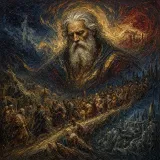
Open with the chapter’s first image
Psalms 102:1: “Hear my prayer, O LORD, and let my cry come unto thee.”
Slow down at the turning point
Psalms 102:12: “But thou, O LORD, shalt endure for ever; and thy remembrance unto all generations.”
Keep this word trail visible
LORD, days, earth, prayer, Zion, bones
What to explain, in order
Teach the passage in this order. Each step names the verses it rests on, so every point can be shown in the text before it is applied.
Psalms 102:1-2
Let the prayer be urgent
Begin with the heading, which calls the psalm a prayer of the afflicted when he is overwhelmed and pours out his complaint before the Lord. That is a permission: the Bible gives words for this state. Then read 102:1-2, five requests in two verses: hear, let my cry come, hide not thy face, incline thine ear, answer me speedily. Teach this first so the group knows that urgent, unpolished prayer is welcome. Watch the room; someone present may be praying this way already.
Psalms 102:3-11
Name the images one by one
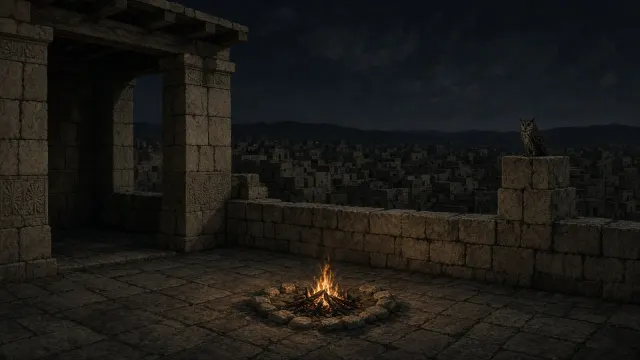
Go through the images slowly, because the psalm does. Smoke and a burning hearth, withered grass and forgotten bread, a body worn to bone, the pelican and the owl of the desert, a sparrow alone on the roof, ashes and tears, a lengthening shadow. Explain that they picture illness, grief and isolation together. Note 102:10, where the sufferer sees God's hand in his trouble, and do not resolve that tension quickly. Teach these verses in full; skipping them tells the suffering that their experience is too much for church.
Psalms 102:12-17
But thou, O Lord
Mark the turn: “But thou, O LORD, shalt endure for ever”. The sufferer is unchanged, but his eyes move from his own shadow to God's endurance. Then the prayer widens to Zion, lying in rubble that the servants still love. Explain that the psalm seems to come from a time when Jerusalem lay ruined, and that the hope is for God to arise and rebuild. Point to 102:17, “He will regard the prayer of the destitute”, which joins this one person to the many.
Psalms 102:18-22
Written for those not yet born
Read 102:18 and explain that the psalmist expects this prayer and its answer to be written down for a later generation. Then show the picture of 102:19-20: God looks down from heaven “To hear the groaning of the prisoner; to loose those that are appointed to death”. Teach that the God who rebuilds cities also hears a single groan. The section ends with peoples and kingdoms gathered to serve the Lord. This step follows Zion because the restored city becomes the place where his praise is declared.
Psalms 102:23-24
The lament comes back
Do not skip these two verses; the trouble returns. “He weakened my strength in the way; he shortened my days.” The psalmist pleads, “take me not away in the midst of my days”, and sets his short life against God's years. Explain that laments often move back and forth like this, and that faith does not have to travel in a straight line. Teach it honestly for anyone in the room whose hope comes and goes.
Psalms 102:25-28
The same God and the next generation
End with creation. The earth and the heavens are God's work, yet they will wear out like clothing and be changed, “But thou art the same”. Explain the picture of changing a garment: God outlasts even the universe. Mention that Hebrews 1:10-12 quotes these verses of the Son, as one way the New Testament reads them. Close on 102:28 and the hope for the children of God's servants. The psalm leaves the sufferer still praying, but no longer alone in time.
Where learners get stuck
The misreadings this passage tends to produce, and how to answer each from the text.
“If I feel like this, I must not have enough faith.”
The psalm is headed as a prayer for the afflicted when overwhelmed, and Scripture keeps it as a model. The person praying 102:3-11 is a believer speaking to God. Feeling consumed, isolated and withered is not presented as unbelief; it is brought to God. If anyone in the room is living in these verses, say clearly that this is a way of praying, and that seeking medical help and the care of others belongs beside it.
“Verse 10 means God is punishing me for something.”
The psalmist says, “thou hast lifted me up, and cast me down”, and links his state to God's indignation. But the psalm names no sin and does not invite anyone to hunt for one. It is the honest cry of someone who feels the weight of God's displeasure. Do not use the verse to diagnose anyone's suffering; let it show that a person may tell God what they feel and keep praying.
“The turn at verse 12 means my troubles should be over.”
Read on to 102:23: “He weakened my strength in the way; he shortened my days.” The trouble returns after the turn. Verse 12 changes what the psalmist looks at, God's endurance, not the condition of his body. Teach that hope and sorrow can sit together in one prayer, and that nobody needs to wait until they feel better before looking to God.
“If the heavens will perish, the world does not matter.”
102:25 calls the heavens and the earth “the work of thy hands”. They wear out like a garment, but a garment is changed, not despised. The point of 102:26-27 is God's permanence, not the worthlessness of creation. The psalm ends with children and descendants established before God, so it cares a great deal about the life that continues in the world.
Learning objectives
- Trace the shift from personal collapse to Zion’s restoration.
- Interpret smoke, bones, grass, birds, ashes, and shadow imagery.
- Explain why verse 12 changes the psalm’s scale.
- Connect future generations with written testimony.
- Compare creation’s aging with God’s permanence.
- Show how personal prayer and communal hope coexist.
Teacher preparation
- Read the heading as part of the setup: an afflicted person is overwhelmed and pours out complaint before the Lord.
- Mark every image of bodily weakness and isolation in verses 1–11.
- Circle the turning words “But thou, O LORD” in verse 12.
- Trace generation language in verses 12, 18, 24, and 28.
- Prepare to explain that the psalm can hold personal suffering and Zion’s future together without making one a metaphor for the other.
Evidence and interpretation checks
Explicit
Verses 3–11 explicitly pile up images of bodily weakness, isolation, hostility, grief, and shortened days.
Scripture-supported
Verses 12–22 support communal hope because the enduring Lord will arise for Zion, hear the destitute, and gather peoples and kingdoms to serve him.
Strong inference
Verse 18 strongly implies that present deliverance is meant to become testimony for a generation not yet born.
Possible or traditional reading
Christian readers connect verses 25–27 with Christ because Hebrews quotes them, but Psalm 102 should first be heard in its own address to the Lord.
Limit
The psalm does not identify the afflicted person, date the rebuilding of Zion, or promise that the individual worshiper will personally live to see every communal hope fulfilled.
Discussion with answer guidance
1. What do the images in verses 3–11 make the affliction feel like?
What a good answer contains
They make the affliction feel like being used up. Days “consumed like smoke” and bones “burned as an hearth” (102:3); a heart “smitten, and withered like grass” so that he forgets to eat (102:4); a body so wasted the bones cleave to the skin (102:5); “a sparrow alone upon the house top” (102:7); ashes for bread and tears in the drink (102:9); days “like a shadow that declineth” (102:11). A good answer keeps each image concrete. A weak answer sums it up as feeling sad, which is far too small.
Show teacher guidance
Keep each image concrete: smoke, burning bones, withered grass, solitary birds, ashes, tears, and lengthening shadow.
2. Why is “But thou, O LORD” in verse 12 such a major turn?
What a good answer contains
Because the psalm sets God's endurance directly against the worshiper's shrinking days. 102:11 ends “I am withered like grass”; 102:12 begins “But thou, O LORD, shalt endure for ever”. Nothing has changed in the sufferer's condition. What changes is where he looks. A good answer notices that the turn is to God's character, not to an improvement in health. A weak answer treats verse 12 as the place where the trouble ends.
Show teacher guidance
The worshiper’s days shrink, but the Lord’s endurance and remembrance extend through generations.
3. What draws the psalm from one sufferer to Zion?
What a good answer contains
God's own mercy toward Zion: “Thou shalt arise, and have mercy upon Zion: for the time to favour her, yea, the set time, is come” (102:13). Zion lies in ruins, since the servants love even “her stones” and “the dust thereof” (102:14), and the psalmist sees his own ruin inside hers. The promise that “He will regard the prayer of the destitute” (102:17) joins them. A good answer sees one person's lament taken into the hope of the whole people. A weak answer forgets the sufferer once Zion appears.
Show teacher guidance
Verses 13–17 look toward the Lord arising in mercy, rebuilding Zion, and regarding the prayer of the destitute.
4. Why write this for a generation to come in verse 18?
What a good answer contains
So that the rescue will outlive those who saw it. “This shall be written for the generation to come: and the people which shall be created shall praise the LORD” (102:18). The prayer of a destitute person becomes material for the worship of people not yet born. A good answer notices that the psalm is itself the fulfilment: we are reading what was written for us. A weak answer treats the verse as a general remark about keeping records.
Show teacher guidance
Deliverance is not meant to evaporate with eyewitnesses; it becomes material from which future people praise God.
5. What contrast appears in verses 25–27?
What a good answer contains
The heavens and the earth are God's work, “the work of thy hands” (102:25), yet they will wear out: “all of them shall wax old like a garment; as a vesture shalt thou change them” (102:26). Against this stands “But thou art the same, and thy years shall have no end” (102:27). A good answer sees that even the most stable things we know are temporary beside God, and may mention that Hebrews 1:10-12 applies these verses to the Son. A weak answer misses the clothing image.
Show teacher guidance
Creation is God’s work yet can wear out like clothing; the Lord remains the same and his years do not end.
6. How does verse 28 finish the psalm?
What a good answer contains
With the children of God's servants: “The children of thy servants shall continue, and their seed shall be established before thee” (102:28). A man who feared being taken away “in the midst of my days” (102:24) ends by trusting God for those who come after him. A good answer sees that the psalm closes not with the sufferer's healing but with the future of the community. A weak answer expects a personal happy ending the text does not give.
Show teacher guidance
The final word is intergenerational stability: servants’ children continue and their seed is established before God.
Responsible application
Write for people not here yet
Use verse 18 to turn one act of God remembered by a community into a record future learners could understand.
Do not confuse change with abandonment
Set verses 25–27 beside a changing institution or season and ask what remains anchored in God’s permanence.
Let lament widen
Use verses 12–22 to show how a suffering person can pray beyond immediate pain toward a community’s future good.
Session plans
Two timings of the same lesson. The shorter keeps the reading, the central discussion and one response; the longer gives the confusions and the application their own time.
45 minutes
Hear the cry
Read the heading and 102:1-2. Explain that this is a prayer for the overwhelmed and that it belongs in church.
The images
Read 102:3-11 slowly. Take question one, listing each image on the board, then confusion one with gentle care.
But thou
Read 102:12-17 and take questions two and three.
For the generation to come
Read 102:18-22 and take question four.
The garment and the children
Read 102:23-28. Take questions five and six, and confusion three.
Handout and prayer
Give out the handout, read the key verse together, and pray for all who are afflicted without naming anyone.
90 minutes
Words for the overwhelmed
Read the heading and ask why the Bible would include a prayer for people who are overwhelmed. Take answers without pressing anyone to share.
Smoke, grass and a sparrow
Read 102:1-11 and take question one. Then take confusions one and two, with clear words about seeking help.
The turn
Read 102:12-17 and take questions two and three. Read Lamentations 5:19-21 beside it, another prayer from ruined Zion.
Written down
Read 102:18-22 and take question four. Ask what we owe the believers who wrote their prayers down for us.
Back and forth
Read 102:23-24 and take confusion three. Let the group notice that the lament returns.
Like a garment
Read 102:25-27 and Hebrews 1:10-12. Take question five and confusion four.
The children of thy servants
Read 102:28 and take question six. Use one application, keeping it general and optional.
Handout and a written prayer
Give out the handout. Invite each person to write a short private prayer in the psalm's shape: complaint, but thou, and hope for others. Close by reading the key verse together.
Adapting the lesson
Children
Children know what lonely feels like. Show a picture of a little bird alone on a roof and read 102:7. Say that the person who wrote this felt sad and alone and told God all about it. Then read 102:12 and 102:27 in simple words: God is always the same. Keep the darker images light, and make sure any child who seems troubled can talk to a trusted adult afterwards.
Youth
Many teenagers know the weight described in 102:3-11, sometimes better than adults realise. Read the images and ask which ones describe feelings they have seen in others, not necessarily in themselves. Say plainly that praying like this is faithful, and that telling a trusted adult or getting help is faithful too. Then show the turn in 102:12. Have the name of a pastor or counsellor ready to give.
Adults
Adults can take the whole shape, including Zion's ruin and the return of the lament in 102:23-24. Give time to how the psalm joins one person's suffering to a community's hope. Some will carry grief, chronic illness or depression; do not ask them to testify. Hebrews 1:10-12 is worth reading with those who want to see how the New Testament uses 102:25-27.
One to one
This psalm is often best read with one person. Let them choose which image fits them, if any, and listen without fixing. Offer 102:12 as something to hold, not a demand to feel better. If they speak of despair or of wanting to die, stay with them, take it seriously, and help them reach immediate support from a doctor, a crisis line or a trusted person nearby.
Song and video learning lab
A song or video may interpret, compress, or dramatize the text. Its value becomes clearer when its choices are compared with Scripture.
- Before the media: the exact passage and its central movement.
- During the media: the words, people, events, and emotions the artist emphasizes.
- After the media: what it clarifies, what it leaves out, and what belongs back in the biblical text.
Handout
One page for learners to take home. The print button prints this section alone.
Psalms 102:1–28
The passage in brief
Psalm 102 is the prayer of someone overwhelmed. He feels his days going up like smoke, his heart withering like grass, and himself alone like a bird on a roof, and he tells God all of it. Then he turns: but you, Lord, last for ever. He prays for God to rebuild ruined Zion and expects his prayer to be written down for people not yet born. Even the heavens will wear out like old clothes, but God stays the same, and the children of his servants will live before him.
A verse to keep
But thou, O LORD, shalt endure for ever; and thy remembrance unto all generations.
Psalms 102:12 · King James Version
Questions to take home
Which image in 102:3-11 best describes how a hard time feels?
What changes in 102:12, and what stays the same?
Who will read this prayer, according to 102:18?
This week
When you feel overwhelmed this week, tell God plainly what you feel, then read 102:12 aloud.
Music and video connected to the passage
Related media appears when its Scripture reference overlaps this study. Music and video can illuminate a theme while the biblical text remains the foundation.