The big picture
Psalm 116 is shaped by a voice that was heard when death felt near and now wants that rescue to be heard by others. The Book of Psalms moves from a private cry to public thanksgiving in Jerusalem. Along the way, deliverance is measured through soul, eyes, feet, rest, breath, vows, and loosened bonds. The speaker does not treat survival as proof that dependence is over. Because God inclined his ear, he plans to keep calling for the rest of his life. Even his answer to divine benefits begins by receiving “the cup of salvation.” The chapter ends in the courts of the LORD’s house, where the same voice once compressed into “deliver my soul” now has room to praise before the people.
Central truth
Psalm 116 answers heard prayer with lifelong calling, public thanksgiving, paid vows, and renewed service, remembering deliverance from death, tears, and falling without pretending the earlier affliction was small.

The study notes have a page of their own
The movement by movement analysis, the words to trace, the verse by verse notes and where readers differ are written for someone studying alone. They are on the Deep Personal Reflections page for this chapter. This page is the lesson.
A chapter-specific teaching brief
These anchors come from this chapter itself. They help a teacher use the Level 1 overview, the Level 2 study, and the Scripture text as one lesson.
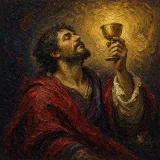
Open with the chapter’s first image
Psalms 116:1: “I love the LORD, because he hath heard my voice and my supplications.”
Slow down at the turning point
Psalms 116:12: “What shall I render unto the LORD for all his benefits toward me?”
Keep this word trail visible
LORD, call, death, name, soul, people
What to explain, in order
Teach the passage in this order. Each step names the verses it rests on, so every point can be shown in the text before it is applied.
Psalms 116:1-4
Love, because he heard
Begin with the confession, “I love the LORD”, and its reason, that he has heard. Explain the picture of God inclining his ear, bending down to catch a faint voice. Then read the crisis: the sorrows of death, the pains of the grave, trouble and sorrow, and the one line prayer of 116:4. Teach this first so the class knows the size of the rescue. The psalm belongs to the Hallel sung at Passover, so it was very likely sung by Jesus and his disciples on the night before he died.
Psalms 116:5-9
Rest, my soul
Now the psalmist describes God: gracious, righteous, merciful, the one who preserves the simple. Explain simple as unprotected people with no defences of their own. Then the self address, “Return unto thy rest, O my soul”, and the threefold rescue: soul from death, eyes from tears, feet from falling. Teach this as the way a rescued person preaches to himself, and point to 116:9, a new walk before the Lord in the land of the living.
Psalms 116:10-11
Faith that spoke in the dark
Two difficult verses. “I believed, therefore have I spoken: I was greatly afflicted”, and then “I said in my haste, All men are liars.” Explain that the psalmist is remembering what he said during the crisis: he kept believing and kept speaking, even when he felt everyone had failed him. Paul quotes 116:10 in 2 Corinthians 4:13. Teach that faith can speak while afflicted, and that hasty words spoken in distress are recorded honestly, not commended as doctrine.
Psalms 116:12-15
What shall I render
Here comes the question of gratitude: what can I give back? The answer surprises. Take the cup of salvation, perhaps the cup raised at a thank offering, call on God's name, and keep the vows made in distress. Then verse 15: “Precious in the sight of the LORD is the death of his saints.” Explain precious as costly or weighty; God does not treat the death of his people lightly, which is why he rescued this one. Teach it here because it explains the rescue.
Psalms 116:16-19
A servant in the courts
End with identity and public worship. “O LORD, truly I am thy servant”, and then, “thou hast loosed my bonds”. Explain the son of thine handmaid as one born into God's household, a servant from birth. The loosed bonds answer the cords of death in verse 3. Then come the thank offering and the vows in the courts of the Lord's house in Jerusalem. Close by showing how the psalm travels from a deathbed to the temple, and ask what it would look like to bring a private thanks into the congregation.
Where learners get stuck
The misreadings this passage tends to produce, and how to answer each from the text.
“Verse 15 means God is glad when believers die.”
Precious here means costly or weighty in God's sight. The psalmist has just been rescued from death (116:3, 8), and the verse explains why: the death of God's people is no small thing to him. At a funeral the verse can comfort, because it says God values each of his saints, but it should never be used to suggest that God wanted someone to die.
“All men are liars is a doctrine about humanity.”
The verse itself says it was spoken “in my haste” (116:11), in the panic of affliction. The psalmist reports his words honestly; he does not teach them as truth. The point is that even when his faith was speaking through confusion, God heard him. Teach it as permission to bring hasty, hurt words to God, not as a verdict on every person.
“To repay God I must work hard for him.”
The question of 116:12 is answered by receiving: “I will take the cup of salvation, and call upon the name of the LORD” (116:13). Keeping vows and offering thanks follow, but they are acts of gratitude, not repayment; nothing could repay God's benefits. Teach that the right response to grace is to keep receiving and keep calling, and to say thank you in front of God's people.
“If God really loved me, he would have rescued me the way he rescued the psalmist.”
The psalm is one person's testimony, and it is honest about how close he came to death. Not every believer is healed or rescued in this life, and verse 15 itself speaks of the death of God's saints as precious to him. Handle this gently with anyone who is grieving or ill. The psalm's deepest comfort is that God hears and values his people, in life and in death.
Learning objectives
- Trace the reasons the worshiper loves the Lord.
- Identify the death and distress language.
- Explain “Return unto thy rest, O my soul.”
- Interpret the cup, vows, and sacrifice of thanksgiving.
- Handle verse 15 carefully.
- Show how private rescue becomes public worship.
Teacher preparation
- Mark every “I will” after the opening “I love,” showing how gratitude becomes action.
- List what God has delivered: soul from death, eyes from tears, feet from falling, and bonds loosed.
- Prepare to explain verse 11 as a statement made “in my haste,” not a settled doctrine that every person always lies.
- Read verse 15 in context before using it at funerals; the whole psalm values the Lord’s servants and their lives.
- Notice how often public space appears: presence of all his people, courts of the Lord’s house, Jerusalem.
Evidence and interpretation checks
Explicit
Verses 1–4 explicitly connect love and lifelong calling with the Lord’s having heard the worshiper’s voice and supplications.
Scripture-supported
Verses 8–9 support a comprehensive rescue image: death, tears, and falling give way to walking before the Lord in the land of the living.
Strong inference
Verses 12–19 strongly imply gratitude needs embodied response, including calling, vows, thanksgiving, service, and public praise.
Possible or traditional reading
Verse 15 is traditionally used at funerals, but “precious” should not be made to mean God enjoys death; the verse affirms the weight or value of his saints’ death in his sight.
Limit
Psalm 116 does not promise that every prayer for physical deliverance ends with survival; it reports this worshiper’s rescue and response.
Discussion with answer guidance
1. Why does the psalm begin “I love the LORD”?
What a good answer contains
The reason follows at once: “I love the LORD, because he hath heard my voice and my supplications. Because he hath inclined his ear unto me, therefore will I call upon him as long as I live” (116:1-2). Love answers being heard. A good answer sees the picture of God bending his ear down to a weak person, and the lifelong resolve that follows from it. A weak answer treats I love the Lord as a general feeling and drops the because.
Show teacher guidance
The reason follows immediately: God heard the worshiper’s voice and inclined his ear.
2. How serious was the crisis in verses 3–4?
What a good answer contains
Close to death: “The sorrows of death compassed me, and the pains of hell gat hold upon me: I found trouble and sorrow” (116:3). Hell here is Sheol, the grave. His prayer was short and desperate: “O LORD, I beseech thee, deliver my soul” (116:4). A good answer keeps the danger as large as the text makes it and notices that the whole prayer is one line. A weak answer turns the crisis into a minor setback.
Show teacher guidance
Use the text’s own language: sorrows of death, pains of the grave, trouble, sorrow, and a cry for deliverance.
3. What does the soul need to remember in verse 7?
What a good answer contains
“Return unto thy rest, O my soul; for the LORD hath dealt bountifully with thee” (116:7). He speaks to himself, calling his anxious soul back to rest, and the reason is what God has already done. A good answer notices the self address and that rest rests on God's past kindness, not on present feelings. A weak answer reads it as a command simply to stop worrying.
Show teacher guidance
The worshiper tells his soul to return to rest because the Lord has dealt bountifully with it.
4. What threefold deliverance appears in verse 8?
What a good answer contains
“For thou hast delivered my soul from death, mine eyes from tears, and my feet from falling” (116:8). Life, sorrow and stumbling: God has rescued the whole person, from the worst danger to the daily one. A good answer keeps the three distinct and sees verse 9 follow from them, “I will walk before the LORD in the land of the living”, on feet that no longer fall. A weak answer collapses the three into one.
Show teacher guidance
Soul from death, eyes from tears, and feet from falling. Do not collapse the three images.
5. What does the worshiper propose to “render” in verses 12–14?
What a good answer contains
Nothing that repays God; he can only receive more. “What shall I render unto the LORD for all his benefits toward me? I will take the cup of salvation, and call upon the name of the LORD. I will pay my vows unto the LORD now in the presence of all his people” (116:12-14). A good answer sees the paradox: the way to give back is to take the cup and keep calling, and the vows are promises made in distress, now kept in public. A weak answer thinks gratitude means earning God's favour.
Show teacher guidance
He receives the cup of salvation, calls on the Lord’s name, and pays vows publicly.
6. Why does the psalm end in Jerusalem’s courts?
What a good answer contains
Because thanksgiving belongs among God's people. He will pay his vows “now in the presence of all his people, In the courts of the LORD’s house, in the midst of thee, O Jerusalem” (116:18-19). A private rescue becomes public testimony. A good answer sees the movement from a bed of sorrow to the temple courts, and that the whole community shares in the praise. A weak answer keeps gratitude private.
Show teacher guidance
The rescue began in personal distress but ends as communal thanksgiving and visible service before God’s people.
Responsible application
Make gratitude actionable
Use verses 12–14 to move thanksgiving from a feeling into calling, keeping commitments, and public acknowledgment.
Speak carefully about death
Use verse 15 to affirm God’s care for his servants without describing death itself as trivial or desirable.
Return to rest by remembering
Use verses 7–8 to build a Scripture-based recap of what God did before asking the soul to settle.
Session plans
Two timings of the same lesson. The shorter keeps the reading, the central discussion and one response; the longer gives the confusions and the application their own time.
45 minutes
Because he heard
Read 116:1-4 and take questions one and two.
Rest, my soul
Read 116:5-9 and take questions three and four.
Spoken in haste
Read 116:10-11 and take confusion two.
The cup and the vows
Read 116:12-15. Take question five and confusions one and three.
In the courts, and the handout
Read 116:16-19 and take question six. Give out the handout and read the key verse together.
90 minutes
A time you were heard
Ask people to recall privately a time they felt God heard them. Then read the whole psalm.
The sorrows of death
Read 116:1-4 and take questions one and two.
Preaching to the soul
Read 116:5-9 and take questions three and four. Compare Psalm 42:5.
Faith in the dark
Read 116:10-11 and 2 Corinthians 4:13, and take confusion two.
What shall I render
Read 116:12-14. Take question five and confusion three, and explain the thank offering of Leviticus 7:12-15.
Precious death
Read 116:15 and take confusions one and four, with care for anyone grieving.
A servant in the courts
Read 116:16-19 and take question six. Read Matthew 26:30 and note that this psalm was part of the Hallel.
Handout and testimony
Give out the handout, read the key verse together, and invite anyone who wishes to share one sentence of thanks.
Adapting the lesson
Children
Ask children what it feels like when someone really listens to them. Read 116:1-2 and say that God bends down to listen to us. Then read 116:8 and count the three things God saved: life, tears and feet. Let them mime crying, then smiling, then walking steadily. Keep talk of death simple and leave out frightening detail.
Youth
Ask how they know someone loves them. Read 116:1-2 and talk about being heard. Then read 116:11 and admit that we all say things in a panic that we do not mean. Discuss 116:12-13: what does gratitude look like when you cannot pay someone back? Invite them to write a private thank you note to God.
Adults
Adults can discuss the Hallel and the Last Supper, Paul's use of 116:10, the thank offering and the meaning of verse 15 at funerals. Some will have come close to death or lost someone dear; let the psalm speak to both. Ask how private gratitude can become public thanksgiving in the life of the congregation.
One to one
If the person has recently come through illness or danger, read the psalm as their testimony and ask which verse fits. If they are still in the middle of it, read 116:3-4 and pray its short prayer with them. If they are grieving, read 116:15 gently. Encourage them, when they are ready, to give thanks among God's people.
Song and video learning lab
A song or video may interpret, compress, or dramatize the text. Its value becomes clearer when its choices are compared with Scripture.
- Before the media: the exact passage and its central movement.
- During the media: the words, people, events, and emotions the artist emphasizes.
- After the media: what it clarifies, what it leaves out, and what belongs back in the biblical text.
Handout
One page for learners to take home. The print button prints this section alone.
Psalms 116:1–19
The passage in brief
Psalm 116 is a thank you song from someone God rescued from death. He loves the Lord because God bent down and listened to his cry. He tells his own soul to rest again, because God has saved his life, dried his tears and kept his feet from falling. He asks what he can give back, and answers that he will take the cup of salvation, call on God's name, and keep his promises in front of everyone in the temple courts.
A verse to keep
I love the LORD, because he hath heard my voice and my supplications. Because he hath inclined his ear unto me, therefore will I call upon him as long as I live.
Psalms 116:1-2 · King James Version
Questions to take home
Why does the psalmist love the Lord, according to 116:1-2?
What three things has God rescued in 116:8?
How does the psalmist answer his own question in 116:12-14?
This week
Tell someone this week about one time God heard your prayer, and thank him for it when you gather for worship.
Music and video connected to the passage
Related media appears when its Scripture reference overlaps this study. Music and video can illuminate a theme while the biblical text remains the foundation.