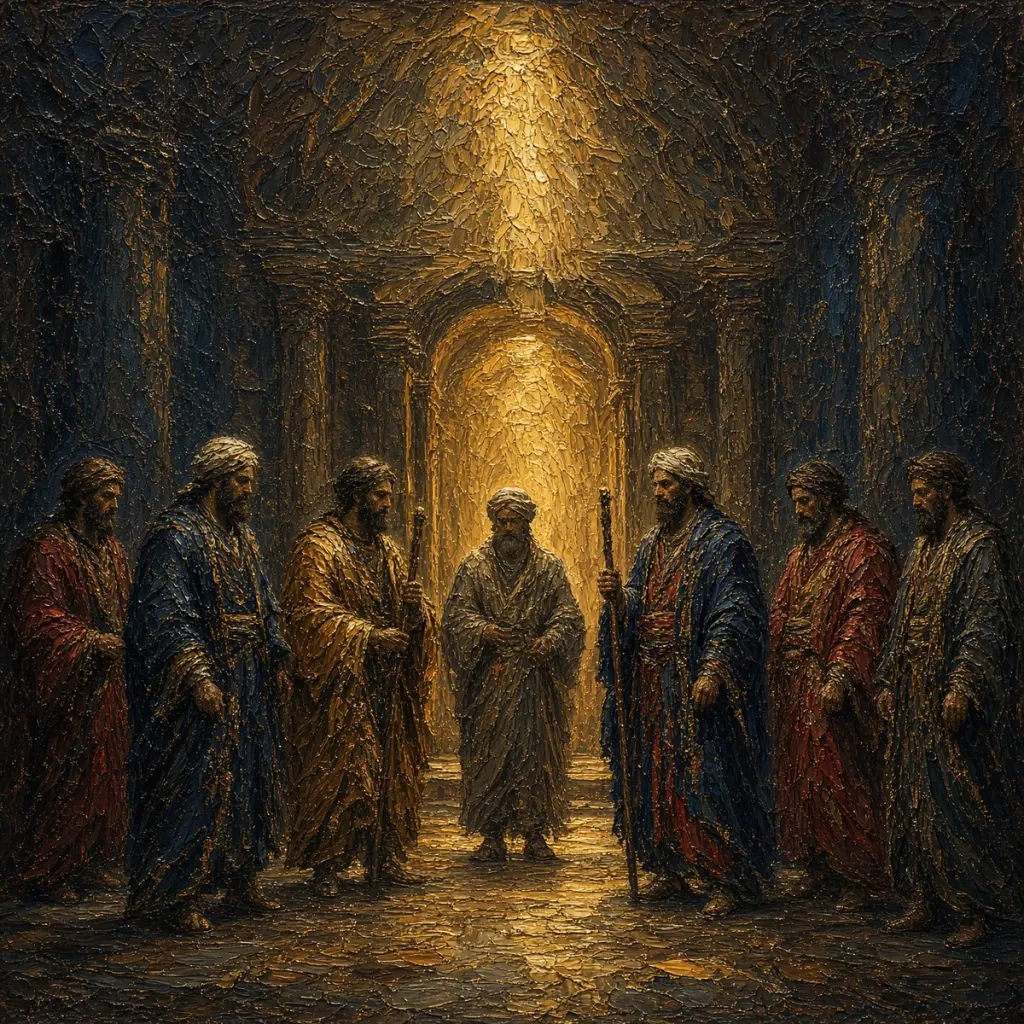
[Verse 1]
Israel's genealogical record is linked to exile in Babylon for transgression.
People from Judah, Benjamin, Ephraim, and Manasseh dwell in Jerusalem.
Benjaminite households also take their places in the restored city.
Azariah is named as ruler of the house of God.
[Pre-Chorus]
The people drew near, but not by careless way,
Holiness ordered every word and day.
[Chorus]
Every Gatekeeper in His Course, keep the covenant in view,
Every word and ordered service true.
From altar, ark, and house the witness rose,
The holy God alone the ending knows.
[Verse 2]
The king's gate on the east remains a principal trust.
Gatekeeping is connected with the ancient service of the Korahites.
Four chief porters oversee the chambers and treasuries.
Some Levites count sacred vessels whenever they enter and leave.
[Bridge]
Mattithiah receives trusted responsibility over the things made in pans.
Kohathites prepare the showbread for every Sabbath.
Singers remain free from other work because their ministry continues day and night.
The genealogy of Gibeon and Saul is repeated to transition toward the fallen monarchy.
[Final Chorus]
Every Gatekeeper in His Course, keep the covenant in view,
Every word and ordered service true.
From altar, ark, and house the witness rose,
The holy God alone the witness shows.
[Outro]
The lamps burned low, the ordered service stayed.
The covenant remembered every vow that had been made.
1 Chronicles 9: The work that opens the gates each morning
The genealogical introduction reaches Jerusalem after stating plainly that Judah was carried to Babylon for transgression. Restoration is then given an everyday shape through named inhabitants and sanctuary workers. Priests are called able men for the service of God's house, gatekeepers work in rotations and open the doors each morning, vessels are counted, supplies are supervised, bread is prepared, and singers are freed from other tasks because their own service occupies them continually. The chapter draws records from different periods to show continuity rather than pretending everything happened at once. Finally, Saul's genealogy returns almost word for word from the previous chapter. That repetition opens the door from ancestry into royal history, positioning the reader to meet Saul not at his anointing but at the battlefield where his reign ends.