New · FreePlay The Witnesses The in-depth puzzle battle quest through Bible history

Places of the Bible

Gibeon

A city that survived by lying convincingly, and the treaty it got by fraud was honoured anyway.

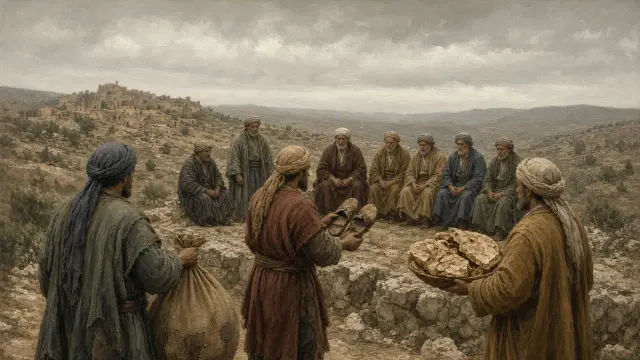
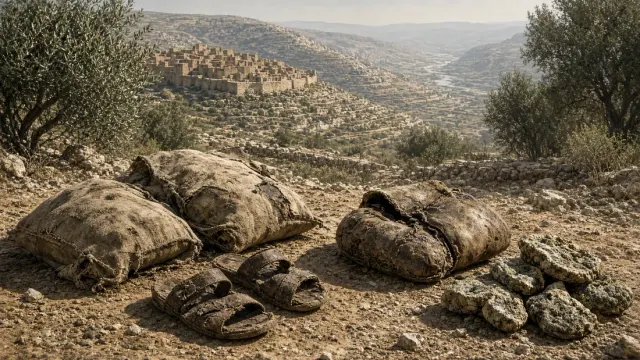
Having seen what happened at Jericho and Ai, the Gibeonites work wilily. They arrive with old sacks, cracked wine bottles, patched shoes and mouldy bread, and say we be come from a very far country. The account records the exact failure in one clause: and the men took of their victuals, and asked not counsel at the mouth of the LORD. A league is made and confirmed by oath, and three days later the truth comes out.

Where it appearsJoshua 9 to 10 · 2 Samuel 2 · 1 Kings 3

Scroll down to the account

The movements, in the order the text gives them.

The Account of Gibeon

  1. 01

    Joshua 9:3-13

    This our bread we took hot for our provision

    The evidence is staged and inspected. Every prop is chosen to prove distance, and the bread is the centrepiece.

    The bread is not lunch. It is evidence. Every worn item has a job: patched shoes, split wineskins, old clothing, and provisions that supposedly left the oven hot before a very long journey. The Gibeonites have arranged their possessions to make distance visible. The Book of Joshua has already told where they really live, so the interest lies in watching a constructed appearance acquire authority.

    Israel is not entirely unsuspecting. The men raise the decisive possibility that these visitors are neighbors. The answer never supplies a verifiable homeland; it supplies deference, the fame of the LORD, and more distance. Even the reported news is carefully bounded. They speak of Egypt, Sihon, and Og, not of Jericho and Ai, although verse 3 says those recent defeats prompted their action.

    The deception is about survival, not merely commercial advantage. Their later explanation in verse 24 explicitly names fear for their lives. That does not turn the falsehood into truth, but it prevents treating the scene as a harmless prank with stale bread. The props are almost comic. What they are intended to prevent is not.

    Verse by verse

    1. 9:4-5

      Clouted means patched, and the wine containers are skins rather than glass bottles. Their claimed wear supports the false account of distance.

    2. 9:7

      The chapter identifies the speakers as Hivites even while they avoid disclosing their origin to Israel.

    3. 9:9-10

      The embassy names the earlier events beyond the Jordan but omits Jericho and Ai, which verse 3 identifies as the news behind its action.

    Joshua 9:3-13

    King James Version · 11 verses

    9:3And when the inhabitants of Gibeon heard what Joshua had done unto Jericho and to Ai,

    9:4They did work wilily, and went and made as if they had been ambassadors, and took old sacks upon their asses, and wine bottles, old, and rent, and bound up;

    9:5And old shoes and clouted upon their feet, and old garments upon them; and all the bread of their provision was dry and mouldy.

    9:6And they went to Joshua unto the camp at Gilgal, and said unto him, and to the men of Israel, We be come from a far country: now therefore make ye a league with us.

    9:7And the men of Israel said unto the Hivites, Peradventure ye dwell among us; and how shall we make a league with you?

    9:8And they said unto Joshua, We are thy servants. And Joshua said unto them, Who are ye? and from whence come ye?

    9:9And they said unto him, From a very far country thy servants are come because of the name of the LORD thy God: for we have heard the fame of him, and all that he did in Egypt,

    9:10And all that he did to the two kings of the Amorites, that were beyond Jordan, to Sihon king of Heshbon, and to Og king of Bashan, which was at Ashtaroth.

    9:11Wherefore our elders and all the inhabitants of our country spake to us, saying, Take victuals with you for the journey, and go to meet them, and say unto them, We are your servants: therefore now make ye a league with us.

    9:12This our bread we took hot for our provision out of our houses on the day we came forth to go unto you; but now, behold, it is dry, and it is mouldy:

    9:13And these bottles of wine, which we filled, were new; and, behold, they be rent: and these our garments and our shoes are become old by reason of the very long journey.

  2. 02

    Joshua 9:14-15

    They asked not counsel at the mouth of the LORD

    One clause names the whole error. The inspection was thorough and the question that mattered was never asked.

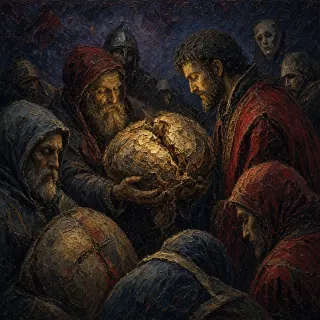
    The sentence moves from their victuals to the mouth of the LORD. Israel has considered something that can be handled and tasted, but has not asked for the judgment that the situation requires. The contrast is wonderfully compact: the provisions receive attention, the divine counsel does not. A great deal has been checked except the thing that could settle the matter.

    The chapter does not say that all observation is useless. The deception works precisely because ordinary signs of age can be arranged to imply a false journey. Earlier suspicion was sensible; the problem is that suspicion was answered by the very evidence the visitors supplied. The account names the missing inquiry rather than supplying an invented motive such as pride or impatience.

    Verse 15 then adds weight in stages: Joshua makes peace, establishes a covenant to preserve their lives, and the leaders swear to it. A preliminary impression has become a binding public commitment. The life-preserving purpose is explicit, so the later dispute concerns more than whether Israel has been embarrassed. People who were enemies now hold an oath bearing the name of Israel's God.

    Verse by verse

    1. 9:14

      Took of their victuals has been read as examining or tasting their provisions, and sometimes as sharing food. The text clearly states the taking, not every detail of the action.

    2. 9:15

      League means covenant or treaty. The stated purpose, to let them live, defines the protection being pledged.

    Joshua 9:14-15

    King James Version · 2 verses

    9:14And the men took of their victuals, and asked not counsel at the mouth of the LORD.

    9:15And Joshua made peace with them, and made a league with them, to let them live: and the princes of the congregation sware unto them.

    Joshua 9:14-15: They asked not counsel at the mouth of the LORD
  3. 03

    Joshua 9:18-21

    We have sworn unto them

    The congregation murmurs and the princes refuse to break the oath. The fraud is punished with labour rather than the sword.

    Discovery does not make the oath disappear. The congregation objects, and the leaders do not answer by claiming that the Gibeonites told the truth. They answer by naming the LORD God of Israel, by whom they have sworn. The false account of a journey is one problem; killing people protected by that oath would create another.

    The leaders' stated concern is wrath because of the oath. That makes their refusal more than an attempt to save face after a bad negotiation. They accept a restriction on their own power to undo the arrangement. The Book of Joshua does not offer a general law settling every treaty obtained by fraud. It reports the obligation these leaders acknowledge and the lives their acknowledgment protects.

    Protection is not equality. The Gibeonites are assigned woodcutting and water-carrying for the congregation, with the altar's service specified later in verse 27. Those are imposed labor obligations, not merely honorary appointments near a sanctuary. The account keeps both sides visible: they are not killed, and they are not released into unrestricted freedom. The promise of life is honored without pretending the deception has had no consequences.

    Verse by verse

    1. 9:18

      The oath is attributed to the leaders but restrains the community's action. The congregation's anger does not erase it.

    2. 9:20

      The leaders explicitly fear divine wrath for violating their sworn promise, not merely retaliation by the Gibeonites.

    3. 9:21

      Hewers of wood and drawers of water describes compulsory service. Joshua 9:23 and 27 extend the explanation to service connected with the house of God and the altar.

    Joshua 9:18-21

    King James Version · 4 verses

    9:18And the children of Israel smote them not, because the princes of the congregation had sworn unto them by the LORD God of Israel. And all the congregation murmured against the princes.

    9:19But all the princes said unto all the congregation, We have sworn unto them by the LORD God of Israel: now therefore we may not touch them.

    9:20This we will do to them; we will even let them live, lest wrath be upon us, because of the oath which we sware unto them.

    9:21And the princes said unto them, Let them live; but let them be hewers of wood and drawers of water unto all the congregation; as the princes had promised them.

    Joshua 9:18-21: We have sworn unto them
  4. 04

    Joshua 10:6-14

    Sun, stand thou still upon Gibeon

    Israel marches up all night to save the city that tricked them, and the longest day in Scripture is spent defending a treaty obtained by lying.

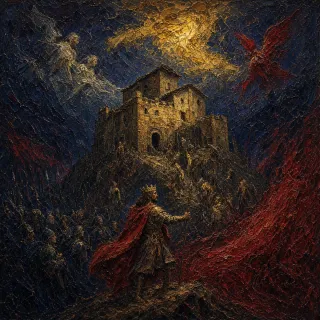
    The people who obtained protection by deception now need that protection against an army. The five kings attack Gibeon because it has made peace with Israel, according to verses 1-5. Joshua does not treat their assault as a convenient way to escape the awkward treaty. He marches all night to defend the people whose lives Israel has pledged to preserve.

    The chapter keeps that strenuous movement beside the LORD's action. Joshua marches; the LORD throws the enemy into confusion. Israel fights; the hail kills more than the sword. The comparison does not erase the soldiers, but it prevents the victory from being credited simply to them. Even the account of the battle counts its dead in a way that directs attention beyond Israel's military strength.

    The sun and moon then enter Joshua's public appeal. The text says that the sun did not hurry to set for about a whole day, and its concluding emphasis is that the LORD listened to a man's voice and fought for Israel. Interpretations of the physical event differ; the passage does not provide an astronomical mechanism. It does provide the reason the day is remembered. The help promised to Gibeon becomes the setting of an exceptional divine answer.

    Verse by verse

    1. 10:6

      The appeal calls the Gibeonites Joshua's servants, the same relationship used in the earlier negotiations, now invoked as grounds for help.

    2. 10:9

      The sudden arrival follows a march lasting through the night. The text attributes both active preparation and divine assistance to this victory.

    3. 10:11

      The great stones from heaven are identified within the verse as hailstones; the passage explicitly compares their casualties with those caused by Israel's sword.

    4. 10:13-14

      About a whole day is the KJV wording; it does not supply an exact number of added hours. Verse 14 identifies the LORD's response and fighting as the decisive significance.

    Joshua 10:6-14

    King James Version · 9 verses

    10:6And the men of Gibeon sent unto Joshua to the camp to Gilgal, saying, Slack not thy hand from thy servants; come up to us quickly, and save us, and help us: for all the kings of the Amorites that dwell in the mountains are gathered together against us.

    10:7So Joshua ascended from Gilgal, he, and all the people of war with him, and all the mighty men of valour.

    10:8And the LORD said unto Joshua, Fear them not: for I have delivered them into thine hand; there shall not a man of them stand before thee.

    10:9Joshua therefore came unto them suddenly, and went up from Gilgal all night.

    10:10And the LORD discomfited them before Israel, and slew them with a great slaughter at Gibeon, and chased them along the way that goeth up to Beth-horon, and smote them to Azekah, and unto Makkedah.

    10:11And it came to pass, as they fled from before Israel, and were in the going down to Beth-horon, that the LORD cast down great stones from heaven upon them unto Azekah, and they died: they were more which died with hailstones than they whom the children of Israel slew with the sword.

    10:12Then spake Joshua to the LORD in the day when the LORD delivered up the Amorites before the children of Israel, and he said in the sight of Israel, Sun, stand thou still upon Gibeon; and thou, Moon, in the valley of Ajalon.

    10:13And the sun stood still, and the moon stayed, until the people had avenged themselves upon their enemies. Is not this written in the book of Jasher? So the sun stood still in the midst of heaven, and hasted not to go down about a whole day.

    10:14And there was no day like that before it or after it, that the LORD hearkened unto the voice of a man: for the LORD fought for Israel.

  5. 05

    1 Kings 3:4-15

    Give thy servant an understanding heart

    Solomon sacrifices at the great high place here and is offered anything. What he asks for is the ability to discern between good and bad.

    Solomon asks for an understanding heart, and the Hebrew puts an ear inside the request: a listening heart. He does not ask first for a larger treasury, a longer life, or the death of his enemies. He asks for the capacity to judge a people he repeatedly calls God's people. The scale of the office, not the size of the king's ambition, governs the prayer.

    The phrase little child expresses his confessed inadequacy for that task; it should not be turned into a precise age. His explanation concerns not knowing how to go out or come in, the language of carrying out leadership. The answer then distinguishes gifts from a condition. Wisdom is granted, riches and honor are added, but lengthened days in verse 14 are attached to walking in the LORD's ways. Those clauses should not be flattened into one unconditional promise.

    The dream ends in worship before the ark at Jerusalem and a feast for his servants. The next case in the chapter concerns two women and a living child, giving judgment a concrete human setting. At Gibeon, wisdom is requested not as an ornament for the royal reputation but as equipment for hearing a case.

    Verse by verse

    1. 3:4

      The description great high place is illuminated by the tabernacle and altar located at Gibeon in 2 Chronicles 1:3-5.

    2. 3:7

      Little child does not specify Solomon's age. The following expression concerns his inexperience in the work of governing.

    3. 3:9

      The Hebrew lev shomea means a listening or hearing heart. The requested discernment concerns judgment between good and bad.

    4. 3:14

      The promise of lengthened days is explicitly conditional, unlike the gifts already announced in verses 12-13.

    1 Kings 3:4-15

    King James Version · 12 verses

    3:4And the king went to Gibeon to sacrifice there; for that was the great high place: a thousand burnt offerings did Solomon offer upon that altar.

    3:5In Gibeon the LORD appeared to Solomon in a dream by night: and God said, Ask what I shall give thee.

    3:6And Solomon said, Thou hast shewed unto thy servant David my father great mercy, according as he walked before thee in truth, and in righteousness, and in uprightness of heart with thee; and thou hast kept for him this great kindness, that thou hast given him a son to sit on his throne, as it is this day.

    3:7And now, O LORD my God, thou hast made thy servant king instead of David my father: and I am but a little child: I know not how to go out or come in.

    3:8And thy servant is in the midst of thy people which thou hast chosen, a great people, that cannot be numbered nor counted for multitude.

    3:9Give therefore thy servant an understanding heart to judge thy people, that I may discern between good and bad: for who is able to judge this thy so great a people?

    3:10And the speech pleased the Lord, that Solomon had asked this thing.

    3:11And God said unto him, Because thou hast asked this thing, and hast not asked for thyself long life; neither hast asked riches for thyself, nor hast asked the life of thine enemies; but hast asked for thyself understanding to discern judgment;

    3:12Behold, I have done according to thy words: lo, I have given thee a wise and an understanding heart; so that there was none like thee before thee, neither after thee shall any arise like unto thee.

    3:13And I have also given thee that which thou hast not asked, both riches, and honour: so that there shall not be any among the kings like unto thee all thy days.

    3:14And if thou wilt walk in my ways, to keep my statutes and my commandments, as thy father David did walk, then I will lengthen thy days.

    3:15And Solomon awoke; and, behold, it was a dream. And he came to Jerusalem, and stood before the ark of the covenant of the LORD, and offered up burnt offerings, and offered peace offerings, and made a feast to all his servants.

Why it matters

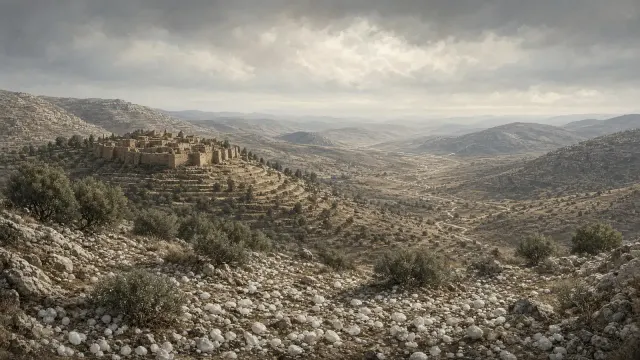
What happens next is the interesting part. Israel does not break the treaty. The princes say we have sworn unto them by the LORD God of Israel, now therefore we may not touch them, and the Gibeonites become hewers of wood and drawers of water for the congregation. Then five kings attack Gibeon for defecting, and Israel marches all night to defend the people who had deceived them. The long day happens over that battle, and centuries later the tabernacle is at Gibeon when Solomon asks for an understanding heart.

5 songs

The music

Every song in the catalogue whose passage falls inside these chapters.

  1. Joshua 8:30-9:27

    We Asked No Counsel

  2. Joshua 10

    Sun, Stand Still

  3. 2 Samuel 2:12-4:12

    The House of David Grew Stronger

  4. 1 Kings 3

    A Wise and Understanding Heart

  5. 1 Kings 3:1-28

    An Understanding Heart

Nearby

All the places

Report an error on this page