New · FreePlay The Witnesses The in-depth puzzle battle quest through Bible history

Places of the Bible

Ai

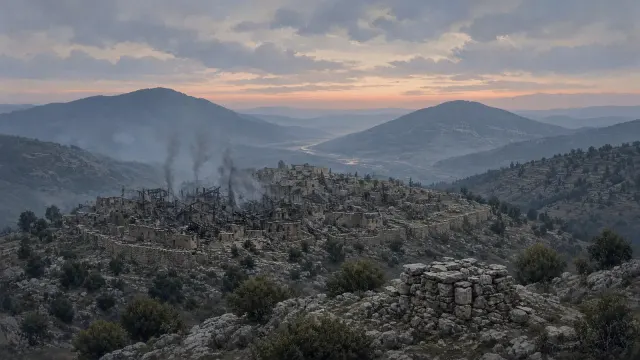
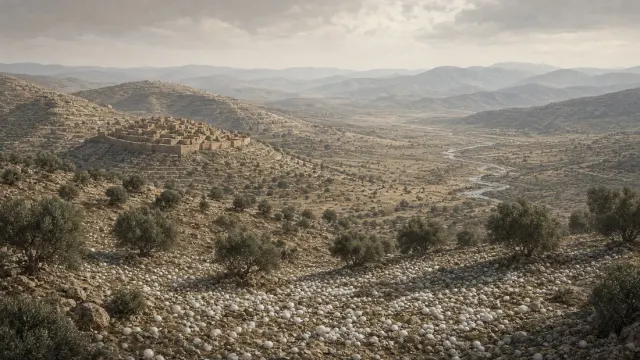
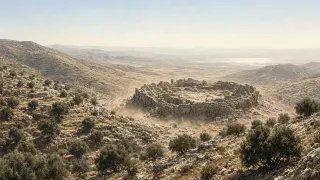
A small town that beat a nation, because of something buried under a tent thirty miles away.

The scouts are confident and the advice is sensible: make not all the people to labour thither, for they are but few. Three thousand go up and are chased from before the gate, and thirty-six men die, and the hearts of the people melted and became as water. The account has already told the reader what the scouts did not know, in a single verse at the head of the chapter about Achan and a wedge of gold and a Babylonish garment.

Where it appearsJoshua 7 to 8

Scroll down to the account
Ai

The movements, in the order the text gives them.

The Account of Ai

  1. 01

    Joshua 7:2-5

    They are but few

    The scouting report is accurate and the conclusion drawn from it is wrong. Thirty-six men die and the nation loses its nerve.

    The scouts counted the defenders. The Book of Joshua has already counted something else: a violation of the command at Jericho. Achan's theft is named in 7:1, before the reconnaissance begins, so the defeat is not presented as an unexplained military surprise. The soldiers do not possess the information the reader has.

    For they are but few. The recommendation sounds economical enough: no reason to make everybody climb the hill for a small town. But the passage never says that a larger detachment would have solved the actual problem. About three thousand go, about thirty-six die, and the survivors are struck while retreating downhill. The arithmetic is modest beside the chapter's consequence. These are deaths, not merely an embarrassing entry in a campaign report.

    Then comes the reversal in a familiar phrase. Rahab had described the people of Jericho with melted hearts in 2:11. Now Israel's hearts melt and become water. The people who had terrified a fortified city are running from the town their scouts considered barely worth the walk. The geography has changed. So has the side that is afraid.

    Verse by verse

    1. 7:2

      Bethaven and Bethel are distinguished here; the verse places Ai east of Bethel without giving a distance from Jericho.

    2. 7:3

      The spies recommend two or three thousand, but 7:11-12 locates the decisive problem in covenant violation, not troop numbers.

    3. 7:5

      The wording about melted hearts recalls Joshua 2:11 and 5:1, where the frightened people are Israel's opponents.

    Joshua 7:2-5

    King James Version · 4 verses

    7:2And Joshua sent men from Jericho to Ai, which is beside Beth-aven, on the east side of Beth-el, and spake unto them, saying, Go up and view the country. And the men went up and viewed Ai.

    7:3And they returned to Joshua, and said unto him, Let not all the people go up; but let about two or three thousand men go up and smite Ai; and make not all the people to labour thither; for they are but few.

    7:4So there went up thither of the people about three thousand men: and they fled before the men of Ai.

    7:5And the men of Ai smote of them about thirty and six men: for they chased them from before the gate even unto Shebarim, and smote them in the going down: wherefore the hearts of the people melted, and became as water.

    Joshua 7:2-5: They are but few
  2. 02

    Joshua 7:10-12

    Wherefore liest thou thus upon thy face

    Prayer is interrupted rather than answered. The reason for the defeat is stated as a fact about the camp, not about Ai.

    Get thee up is not a request for a better speech. Joshua has spent the preceding verses on the ground, asking why the crossing has ended in defeat. God's answer sends him from lament to investigation. There is something to remove, not merely something to mourn.

    The charge accumulates with almost prosecutorial force: transgressed, taken, stolen, dissembled. Then the stolen things are put among their own stuff. Goods explicitly withheld from private possession have been tucked into the ordinary inventory of a household. The hiding place does not change their status. Israel has not made the forbidden things ordinary; the forbidden things have brought Israel under the same condemnation.

    That is the sting in verse 12. The people charged with carrying out the ban have themselves become accursed. Their successful crossing and victory at Jericho do not entitle them to God's presence regardless of what they do afterward. Yet the refusal of that presence has an explicit condition, except ye destroy the accursed from among you. This is a diagnosis of this defeat, with a stated remedy. It is not a license to invent a secret offense behind every human loss.

    Verse by verse

    1. 7:10

      Joshua has been prostrate before the ark since evening approached in 7:6; the command now requires action.

    2. 7:11

      Dissembled means concealed the truth or acted deceitfully. The object is not merely valuable property but something already placed under the divine ban.

    3. 7:12

      Israel hath sinned is a corporate charge, although 7:1 identifies Achan as the individual who took the prohibited goods.

    Joshua 7:10-12

    King James Version · 3 verses

    7:10And the LORD said unto Joshua, Get thee up; wherefore liest thou thus upon thy face?

    7:11Israel hath sinned, and they have also transgressed my covenant which I commanded them: for they have even taken of the accursed thing, and have also stolen, and dissembled also, and they have put it even among their own stuff.

    7:12Therefore the children of Israel could not stand before their enemies, but turned their backs before their enemies, because they were accursed: neither will I be with you any more, except ye destroy the accursed from among you.

    Joshua 7:10-12: Wherefore liest thou thus upon thy face
  3. 03

    Joshua 7:16-21

    I saw, I coveted, I took, I hid

    The search narrows by lot through tribe, family and household. The confession is four verbs long and entirely accurate.

    The search ends with a name already printed at the beginning of the chapter. That changes the purpose of the narrowing: tribe, family, household, man. This is not a puzzle designed to keep the culprit secret from the reader. It exposes publicly what has been concealed privately.

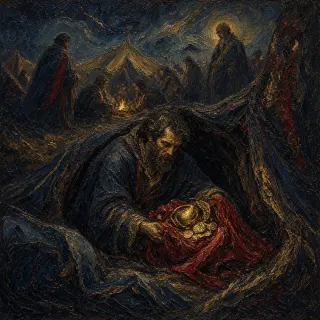
    Joshua still says My son. The address does not cancel the charge, and the demand to give glory to God is immediately explained by tell me now what thou hast done. Here truthfulness, not an elaborate religious declaration, is the required acknowledgment. Achan's confession is brutally concrete: an attractive garment, weighed silver, weighed gold, a hole beneath his own tent.

    I saw, I coveted, I took. The sequence recalls the seeing, desiring, and taking in Genesis 3:6. The hiding follows. What began as an object judged desirable ends as an object that cannot safely be displayed. Even the position of the silver is specified, and the messengers find it exactly there in 7:22. The Book of Joshua does not leave the offense floating in an abstract discussion of greed. There is dirt over the evidence, and there are dead men from Ai.

    Verse by verse

    1. 7:18

      First Chronicles 2:7 names Achar as the troubler of Israel, recalling the trouble language surrounding Achan and the valley of Achor in Joshua 7:25-26.

    2. 7:19

      Give glory is explained here as honest confession. John 9:24 similarly places a demand to honor God within an interrogation, though its KJV wording is Give God the praise.

    3. 7:21

      Shekels here measure weight. The passage gives two hundred of silver and fifty of gold, not a count of minted coins.

    4. 7:21

      The confession attributes the taking to Achan. It does not identify his children as accomplices; their inclusion in the judgment in 7:24-26 must not be explained by invented participation.

    Joshua 7:16-21

    King James Version · 6 verses

    7:16So Joshua rose up early in the morning, and brought Israel by their tribes; and the tribe of Judah was taken:

    7:17And he brought the family of Judah; and he took the family of the Zarhites: and he brought the family of the Zarhites man by man; and Zabdi was taken:

    7:18And he brought his household man by man; and Achan, the son of Carmi, the son of Zabdi, the son of Zerah, of the tribe of Judah, was taken.

    7:19And Joshua said unto Achan, My son, give, I pray thee, glory to the LORD God of Israel, and make confession unto him; and tell me now what thou hast done; hide it not from me.

    7:20And Achan answered Joshua, and said, Indeed I have sinned against the LORD God of Israel, and thus and thus have I done:

    7:21When I saw among the spoils a goodly Babylonish garment, and two hundred shekels of silver, and a wedge of gold of fifty shekels weight, then I coveted them, and took them; and, behold, they are hid in the earth in the midst of my tent, and the silver under it.

    Joshua 7:16-21: I saw, I coveted, I took, I hid
  4. 04

    Joshua 8:1-8

    Lay thee an ambush for the city behind it

    The second attempt is given a plan, and this time the spoil is explicitly allowed, which is what the first attempt lacked.

    The second attack begins with a command opposite to the scouts' earlier economy: take all the people of war. But the most unsettling difference is in the next verse. Spoil and cattle may now be taken. The objects are not inherently untouchable; the command governing them has changed. At Jericho, private appropriation was disobedience. At Ai, the same category of property is expressly granted.

    The tactic also refuses to reproduce Jericho. No marching circuit, no collapsing wall, no promise that planning is unnecessary. Joshua is told to lay an ambush, and the visible force is to repeat the appearance of its earlier defeat. As at the first occurs twice. The previous disaster provides the enemy with an expectation, and that expectation becomes part of the plan.

    The Book of Joshua actually gives the anticipated enemy speech, They flee before us, so there is no need to supply an imagined discussion inside Ai. The false retreat is designed to pull defenders away from the city; the hidden force then occupies what the pursuit leaves exposed. The promise of victory and the precision of the orders occupy the same paragraph. Neither makes the other redundant.

    Verse by verse

    1. 8:1

      Fear not repeats the encouragement associated with Joshua's commission in Joshua 1:9; the failed assault has not ended that commission.

    2. 8:2

      The permission to take spoil is repeated in 8:27. It contrasts directly with the prohibition associated with Jericho in 6:18-19.

    3. 8:3

      This verse gives thirty thousand; 8:12 gives five thousand for an ambush. Their relationship is disputed, and the two figures should not silently be made identical.

    4. 8:5-6

      The apparent repetition of the first defeat is deliberate deception; 8:15 explicitly says the Israelites made as if they were beaten.

    Joshua 8:1-8

    King James Version · 8 verses

    8:1And the LORD said unto Joshua, Fear not, neither be thou dismayed: take all the people of war with thee, and arise, go up to Ai: see, I have given into thy hand the king of Ai, and his people, and his city, and his land:

    8:2And thou shalt do to Ai and her king as thou didst unto Jericho and her king: only the spoil thereof, and the cattle thereof, shall ye take for a prey unto yourselves: lay thee an ambush for the city behind it.

    8:3So Joshua arose, and all the people of war, to go up against Ai: and Joshua chose out thirty thousand mighty men of valour, and sent them away by night.

    8:4And he commanded them, saying, Behold, ye shall lie in wait against the city, even behind the city: go not very far from the city, but be ye all ready:

    8:5And I, and all the people that are with me, will approach unto the city: and it shall come to pass, when they come out against us, as at the first, that we will flee before them,

    8:6(For they will come out after us) till we have drawn them from the city; for they will say, They flee before us, as at the first: therefore we will flee before them.

    8:7Then ye shall rise up from the ambush, and seize upon the city: for the LORD your God will deliver it into your hand.

    8:8And it shall be, when ye have taken the city, that ye shall set the city on fire: according to the commandment of the LORD shall ye do. See, I have commanded you.


  5. 05

    Joshua 8:30-35

    He read all the words of the law

    Straight after the battle the whole law is read aloud to everyone, including the women, the little ones, and the strangers among them.

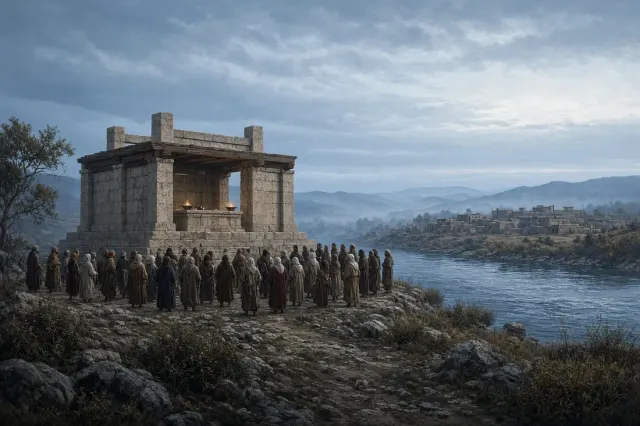
    The campaign closes this section with a public reading, not a victory speech. After Ai, Joshua leads an assembly at Ebal, where the successful army must stand among those who hear the law. A military result has not made the commander or his soldiers exempt from it.

    Stones have already marked judgment in these chapters: a heap over Achan in 7:26 and another over Ai's king in 8:29. Now stones support an altar, and the law is written on stones in the people's presence. The repeated material is plain enough; the purposes are sharply different. The land is being marked not only by graves and destruction but by covenant worship and a public obligation that can be read.

    All keeps returning. All Israel, all the words, all the congregation. The women, the little ones, and the resident foreigners are expressly included. These are not surplus listeners permitted to stand at the edge of a soldiers' ceremony. The community that lives with the covenant is gathered to hear it, including its curses. After the first defeat at Ai, that last part is hardly a formality. The law that Israel broke is the law Joshua reads aloud.

    Verse by verse

    1. 8:30

      The scene has moved to Mount Ebal. Then introduces the episode but supplies neither the travel interval nor a detailed itinerary from Ai.

    2. 8:31

      Whole stones are unhewn stones, as the prohibition on iron tools makes clear; compare Exodus 20:25 and Deuteronomy 27:5-6.

    3. 8:34

      The reading includes blessings and curses. No portion is said to have been suppressed because the assembly follows a victory.

    4. 8:35

      Conversant means dwelling or living among them, not being skilled in conversation. The strangers are resident foreigners.

    Joshua 8:30-35

    King James Version · 6 verses

    8:30Then Joshua built an altar unto the LORD God of Israel in mount Ebal,

    8:31As Moses the servant of the LORD commanded the children of Israel, as it is written in the book of the law of Moses, an altar of whole stones, over which no man hath lift up any iron: and they offered thereon burnt offerings unto the LORD, and sacrificed peace offerings.

    8:32And he wrote there upon the stones a copy of the law of Moses, which he wrote in the presence of the children of Israel.

    8:33And all Israel, and their elders, and officers, and their judges, stood on this side the ark and on that side before the priests the Levites, which bare the ark of the covenant of the LORD, as well the stranger, as he that was born among them; half of them over against mount Gerizim, and half of them over against mount Ebal; as Moses the servant of the LORD had commanded before, that they should bless the people of Israel.

    8:34And afterward he read all the words of the law, the blessings and cursings, according to all that is written in the book of the law.

    8:35There was not a word of all that Moses commanded, which Joshua read not before all the congregation of Israel, with the women, and the little ones, and the strangers that were conversant among them.

    Joshua 8:30-35: He read all the words of the law

Why it matters

Joshua tears his clothes and lies before the ark until evening, and the answer he gets is blunt: get thee up, wherefore liest thou thus upon thy face. Israel hath sinned. The defeat is treated as information rather than misfortune, and the search that follows narrows by tribe, family and household until it reaches a man who confesses in one sentence, I saw, I coveted, I took, I hid. Then Ai is taken on the second attempt with an ambush and a spear held out, and the altar on Ebal is built immediately afterwards.

2 songs

The music

Every song in the catalogue whose passage falls inside these chapters.

  1. Joshua 7:1-8:29

    The Hidden Thing

  2. Joshua 8:30-9:27

    We Asked No Counsel

Nearby

All the places

Report an error on this page