

Lyrics · 2 Chronicles
The Battle Was God's
2 Chronicles 13:1-14:1
Lyrics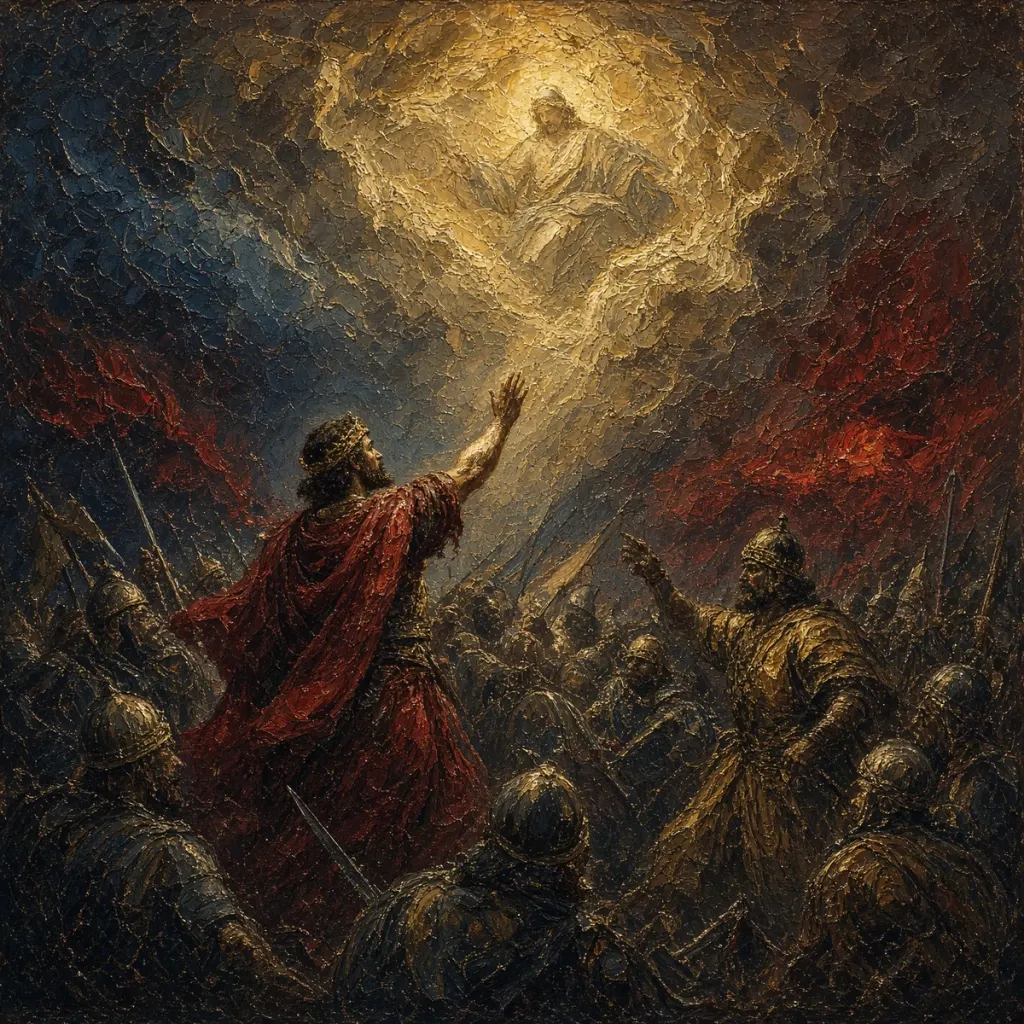
Playing next
About this song
About this song
This song belongs to the 2 Chronicles collection. One recording is available to play here, with the complete lyrics below.
- Bible book
- 2 Chronicles
- Collection
- 2 Chronicles
- Musical styles
- Uncategorized
Named in this songJerusalemSolomonAaronShowbread
About the passage
2 Chronicles 13: A royal claim is tested from behind
Abijah meets Jeroboam with a speech before meeting him with an army. He appeals to the covenant with David, describes the northern break in terms favourable to his father's house, and contrasts Jeroboam's calves and priestly arrangements with Judah's ordered worship under Aaronic priests and Levites. The speech is forceful, but it does not control the field. Jeroboam's ambush places Judah between enemies in front and behind, forcing the claim about God's presence into an immediate crisis. Judah cries to the LORD, the priests sound the trumpets, and the Book of 2 Chronicles attributes the victory to divine action and Judah's reliance on the God of its fathers. The reported losses are enormous within a divided people. Abijah then captures towns and grows stronger while Jeroboam does not recover his former strength. One battle settles a moment of power, not the entire meaning of either reign.
Study 2 Chronicles 13 in depth2 Chronicles 14: Rest builds cities, reliance meets the army
Asa's reign begins with removal, direction, and rest. He tears down rival worship and commands Judah to seek the LORD and keep the law, while ten quiet years create room for practical preparation. Walls, towers, gates, bars, and a large organized army show that reliance on God is not presented as an excuse for neglecting defence. Then Zerah arrives with the force the KJV numbers at a thousand thousand and three hundred chariots. Asa's preparation remains real, but his prayer refuses to make the outcome a simple calculation of troop strength. He appeals to the God who can help whether human power is great or weak and says Judah rests on him. The LORD is credited with striking the invading force, while Asa's army pursues, attacks surrounding places, and carries extensive spoil back to Jerusalem. Rest, readiness, prayer, and action remain joined.
Study 2 Chronicles 14 in depth