


Lyrics · Acts
A Face Like an Angel
Acts 6:8-8:4
Lyrics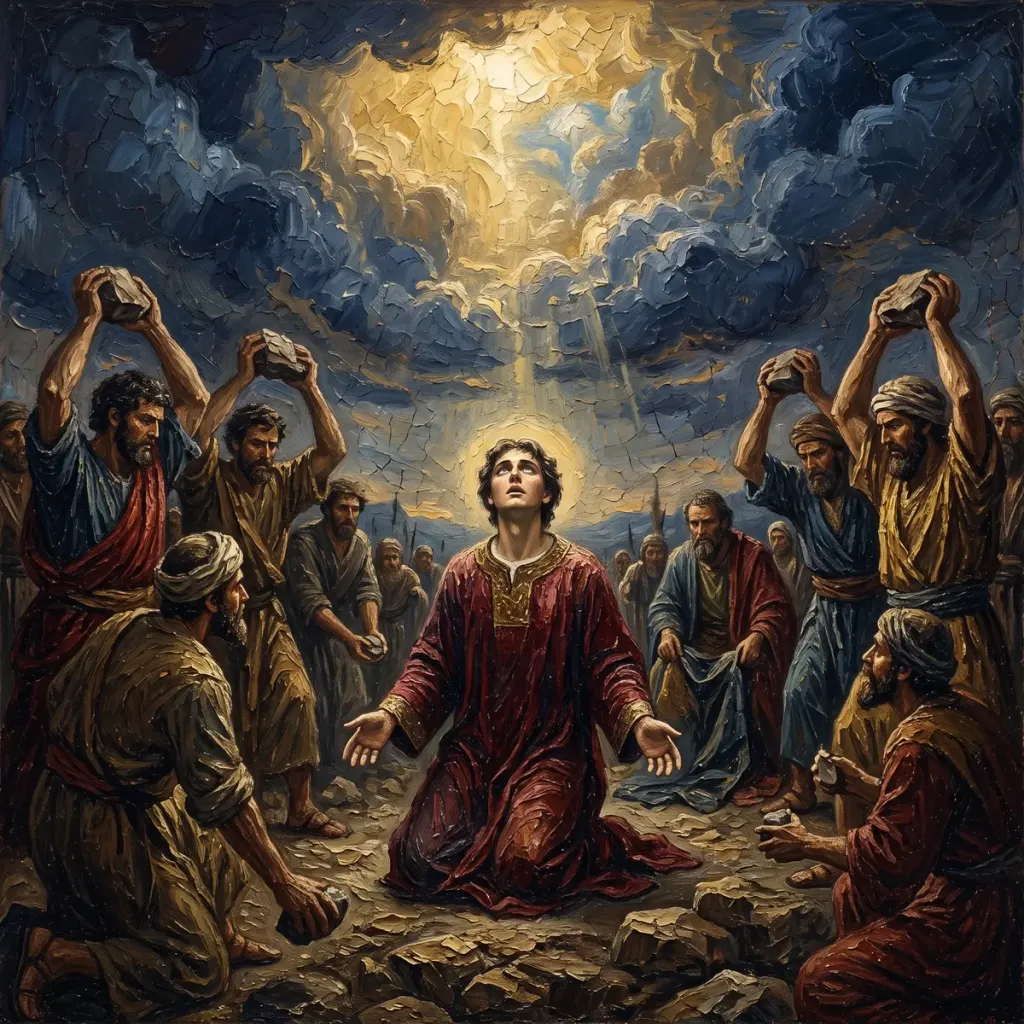
About this song
About this song
This song belongs to the Acts collection. 8 recordings are available to play here, with the complete lyrics below.
- Bible book
- Acts
- Collection
- Acts
- Musical styles
- Acoustic, World Music, Electronic, Cinematic Soundtrack, Worship & Gospel, Soul, Blues & Jazz
Named in this songStephenAbrahamMoses
About the passage
Acts 6: A neglected table becomes a test of the whole church
Growth creates a problem no miracle can solve by spectacle: Greek-speaking widows are being neglected in the daily distribution. The Book of Acts does not protect the church's image by denying the complaint, and the apostles do not solve it by pretending material care is beneath serious spiritual work. The same language of ministry applies to the tables and to the word, while the responsibilities are distributed so neither is abandoned. Seven men with good reputation, wisdom, and the Holy Ghost are chosen, and the result is continued growth. Stephen then immediately breaks any neat division between practical service and public witness. He performs wonders and speaks with a wisdom his opponents cannot overcome. When argument fails, the method changes. Accusations are arranged around Moses, God, the temple, and the law, and false witnesses bring Stephen before the council. His face is described in a way that prepares for a defense rooted deeply in the very Scriptures he is accused of dishonoring.
Study Acts 6 in depthActs 7: Stephen puts the accusation back into Israel’s history
Stephen answers the charges against him by taking the council through Israel's own history, but the route he chooses keeps unsettling the assumptions behind the accusations. God appears to Abraham before Abraham possesses the land. God is with Joseph in Egypt after his brothers reject him. Moses is refused before God sends “this Moses” as ruler and deliverer, and holy ground appears in the wilderness long before a temple stands in Jerusalem. The tabernacle and temple are acknowledged as real gifts without being allowed to contain the God who made heaven and earth. By the time Stephen turns directly on his hearers, the pattern is clear: sacred privileges have repeatedly existed beside resistance to God's messengers. The accused becomes the accuser, charging the council with receiving the law and not keeping it. The hearing ends not in acquittal but in stones, while Stephen sees Jesus at God's right hand and dies praying for the people killing him.
Study Acts 7 in depthActs 8: Scattered people carry the word farther
Stephen's burial and the church's scattering are allowed to remain grief and persecution before the chapter shows what the scattering carries. Saul enters houses and drags away believers, while displaced people preach wherever they go. Philip reaches Samaria, where a city that once gave its attention to Simon the sorcerer now hears the kingdom of God and the name of Jesus Christ. Simon himself believes and is baptized, but his attempt to buy the authority associated with the Holy Ghost exposes how deeply he still misunderstands divine gift. The chapter then changes scale from a city to one traveler. Philip is sent to an Ethiopian official reading Isaiah on a desert road, and the crucial question becomes not whether the words are moving but whom they mean. Philip begins there and announces Jesus. Water appears, the traveler asks what hinders baptism, and the encounter ends with two men moving on in different directions, one preaching and one rejoicing.
Study Acts 8 in depth