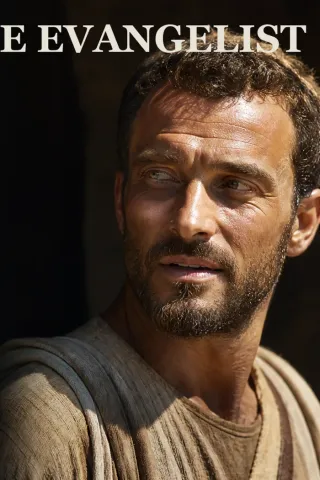
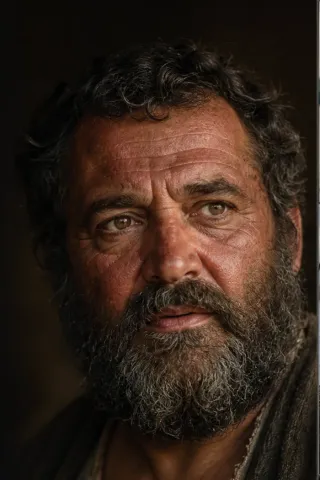
New · FreePlay The Witnesses The in-depth puzzle battle quest through Bible history

People of the Bible

Stephen

Was appointed to hand out food, and gave the longest speech in Acts before anybody could stop him.

The job he is given is administrative. The Greek-speaking widows are being overlooked in the daily distribution, so seven men are chosen to handle it, and Stephen is named first, full of faith and of the Holy Ghost. The text will not leave him at the tables. Within a few verses he is doing great wonders and miracles among the people, and men from a synagogue of freedmen dispute with him and are not able to resist the wisdom and the spirit by which he spoke.

Where he appearsActs 6 to 8

Scroll down to the account
Stephen

The movements, in the order the text gives them.

The Account of Stephen

  1. 01

    Acts 6:1-6

    Chosen to serve tables

    A complaint about food distribution produces the first appointed office in the church. Seven men are chosen and Stephen heads the list.

    The church is growing, and some widows are missing their share. Acts places those facts in the same sentence. Numerical success has not made the distribution fair, and the complaint is not dismissed as an unfortunate interruption to more spiritual business. The answer requires men full of the Holy Ghost and wisdom. Apparently, arranging the meals is not a job for whatever gifts are left over.

    The apostles distinguish their responsibilities without downgrading the need. They must not abandon prayer and the word, but the widows must not remain neglected either. The whole community participates in choosing the seven; the apostles pray and lay hands on them. Stephen enters through that public recognition, not through a private claim to importance. His first description, full of faith and of the Holy Ghost, belongs beside a practical failure that needs repair. The later speaker before the council is already a trusted servant here. Nothing in the passage suggests that handling material needs and speaking with spiritual authority are opposite careers.

    Verse by verse

    1. 6:1

      The "Grecians" are Greek-speaking Jews, contrasted with the "Hebrews" within the believing community, not simply Gentiles contrasted with Jews.

    2. 6:5

      The seven are often called the first deacons, but Acts 6 does not give them the noun "deacon" as a formal title.

    3. 6:6

      Prayer and laying on of hands accompany the public appointment; the passage does not prescribe the complete form of every later ordination.

    Acts 6:1-6

    King James Version · 6 verses

    6:1And in those days, when the number of the disciples was multiplied, there arose a murmuring of the Grecians against the Hebrews, because their widows were neglected in the daily ministration.

    6:2Then the twelve called the multitude of the disciples unto them, and said, It is not reason that we should leave the word of God, and serve tables.

    6:3Wherefore, brethren, look ye out among you seven men of honest report, full of the Holy Ghost and wisdom, whom we may appoint over this business.

    6:4But we will give ourselves continually to prayer, and to the ministry of the word.

    6:5And the saying pleased the whole multitude: and they chose Stephen, a man full of faith and of the Holy Ghost, and Philip, and Prochorus, and Nicanor, and Timon, and Parmenas, and Nicolas a proselyte of Antioch:

    6:6Whom they set before the apostles: and when they had prayed, they laid their hands on them.

    Acts 6:1-6: Chosen to serve tables
  2. 02

    Acts 6:8-15

    His face as it had been the face of an angel

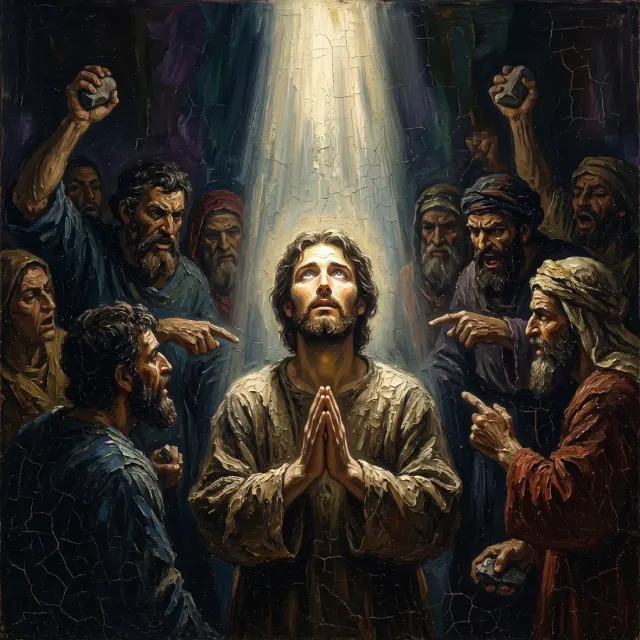
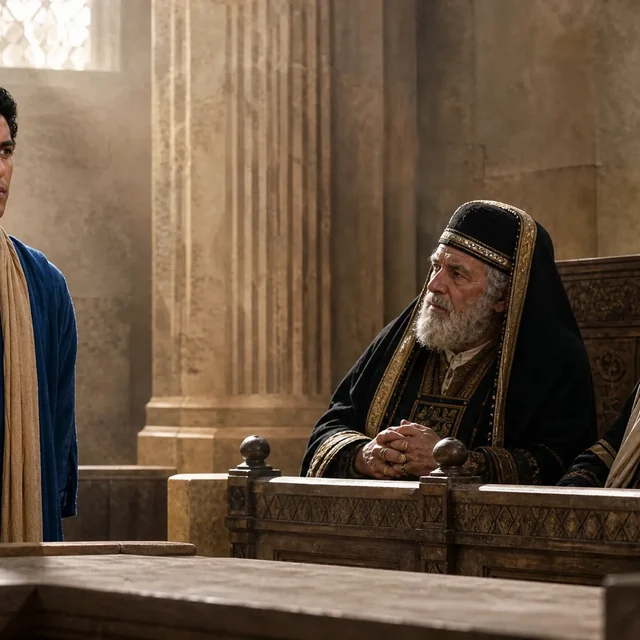
    Losing the argument, his opponents suborn witnesses. The council looks at him, and the last thing recorded before the speech is what his face looked like.

    The argument changes methods when it cannot win by argument. First there is disputing; then an inability to resist Stephen's wisdom; then men are suborned. Acts makes the sequence visible. The allegation of blasphemy does not arrive as the neutral result of a successful examination. It arrives after the opposing speakers have failed, and the book calls the resulting testimony false.

    The accusations cluster around Moses, God, the holy place, and the law. These are not incidental subjects. They frame Stephen as a threat to the very inheritance his speech will claim and examine. Meanwhile, the council looks closely at the accused and sees a face like an angel's. The text does not supply a halo, a smile, or an explanation of the appearance. It does place that appearance before the men charging him with speaking against God. There is a pointed contrast between the manufactured words entering the hearing and the face actually in front of the judges. The prosecution has recruited voices. It has not gained control of everything visible.

    Verse by verse

    1. 6:9

      "Libertines" translates a name associated with freedmen, not a claim that the synagogue's members were morally libertine.

    2. 6:11

      "Suborned" means that men were secretly induced to give the desired testimony; Acts does not state the payment or arrangement.

    3. 6:13

      Acts labels these witnesses false. Their accusation cannot simply be copied into a statement of what Stephen actually taught.

    4. 6:15

      The comparison may recall the radiant face of Moses in Exodus 34:29-35, but Acts does not explicitly say that Stephen's face emitted light.

    Acts 6:8-15

    King James Version · 8 verses

    6:8And Stephen, full of faith and power, did great wonders and miracles among the people.

    6:9Then there arose certain of the synagogue, which is called the synagogue of the Libertines, and Cyrenians, and Alexandrians, and of them of Cilicia and of Asia, disputing with Stephen.

    6:10And they were not able to resist the wisdom and the spirit by which he spake.

    6:11Then they suborned men, which said, We have heard him speak blasphemous words against Moses, and against God.

    6:12And they stirred up the people, and the elders, and the scribes, and came upon him, and caught him, and brought him to the council,

    6:13And set up false witnesses, which said, This man ceaseth not to speak blasphemous words against this holy place, and the law:

    6:14For we have heard him say, that this Jesus of Nazareth shall destroy this place, and shall change the customs which Moses delivered us.

    6:15And all that sat in the council, looking stedfastly on him, saw his face as it had been the face of an angel.

    Acts 6:8-15: His face as it had been the face of an angel
  3. 03

    Acts 7:2-50

    The God of glory appeared unto our father Abraham

    The defence is a history lesson, and every episode in it happens somewhere other than the temple. The most High dwells not in temples made with hands.

    The charge concerns the temple, but Stephen begins where there is no temple. The God of glory appears to Abraham in Mesopotamia, before the move to the promised land, before a child exists to inherit it, before Abraham owns enough ground to put a foot on. That is not scenery. It establishes the order of things: God speaks, and the institutions and possessions come afterward. Joseph carries the same argument into Egypt. His brothers sell him; God is with him. Moses encounters holy ground in a wilderness outside the land. Geography has become evidence. The presence of God is not waiting for a Jerusalem address.

    Rejection supplies the other repeated movement. Joseph's brothers fail to recognize the man through whom their household will survive. Moses is pushed away by the people he means to defend, yet this same Moses becomes the ruler and deliverer God sends. The repetition matters more than a tidy parade of famous names. An authorized deliverer can arrive and be refused by the very people who claim the inheritance. Stephen does not make Moses the enemy of revelation. Moses receives the lively oracles, living words; the failure belongs to those who will not obey them. Their feet have left Egypt, but their hearts have gone back. The calf gives that inward return a visible shape. Having rejected a God-given deliverer, they celebrate something their own hands can manufacture.

    The argument then approaches the building at the center of the accusation. Stephen acknowledges that the tabernacle was made according to God's direction and that Solomon built a house. Neither fact is denied. What is denied is confinement: the most High dwelleth not in temples made with hands. Isaiah supplies the closing language, with heaven as throne, earth as footstool, and God's hand behind everything a builder might use. This is criticism spoken from Israel's Scriptures, not contempt for them. The long account has been answering a precise question without accepting the prosecution's terms. Possession of a sacred building is not proof that its custodians recognize the God who cannot be contained in it.

    Verse by verse

    1. 7:14

      The seventy-five agrees with the Greek Septuagint's total in Genesis 46:27; the KJV's Genesis 46:27 and Deuteronomy 10:22 give seventy. These are differing ancient forms of the family total.

    2. 7:16

      Genesis 23 places Abraham's purchase at Machpelah, while Genesis 33:19 and Joshua 24:32 associate Jacob's purchase with Shechem. Acts 7:16 presents a real difficulty in how these details relate, not grounds for inventing an otherwise unmentioned transaction.

    3. 7:23

      Acts gives Moses forty years before this visit, another forty before the burning bush in 7:30, and forty leading the people in 7:36. The speech organizes his life into three forty-year spans.

    4. 7:38

      The Greek ekklesia means an assembly or congregation here; "lively oracles" means living divine utterances. Neither expression makes the wilderness assembly a later church institution.

    5. 7:45

      The KJV's "Jesus" here is Joshua, who brought Israel into Canaan. The Greek form of the two names is the same.

    6. 7:49-50

      The quotation draws on Isaiah 66:1-2. Its contrast is between the Creator and what human beings can build, not a claim that Solomon never built the temple.

    Acts 7:2-50: The God of glory appeared unto our father Abraham

    Acts 7:2-50

    King James Version · 49 verses

    7:2And he said, Men, brethren, and fathers, hearken; The God of glory appeared unto our father Abraham, when he was in Mesopotamia, before he dwelt in Charran,

    7:3And said unto him, Get thee out of thy country, and from thy kindred, and come into the land which I shall shew thee.

    7:4Then came he out of the land of the Chaldæans, and dwelt in Charran: and from thence, when his father was dead, he removed him into this land, wherein ye now dwell.

    7:5And he gave him none inheritance in it, no, not so much as to set his foot on: yet he promised that he would give it to him for a possession, and to his seed after him, when as yet he had no child.

    7:6And God spake on this wise, That his seed should sojourn in a strange land; and that they should bring them into bondage, and entreat them evil four hundred years.

    7:7And the nation to whom they shall be in bondage will I judge, said God: and after that shall they come forth, and serve me in this place.

    7:8And he gave him the covenant of circumcision: and so Abraham begat Isaac, and circumcised him the eighth day; and Isaac begat Jacob; and Jacob begat the twelve patriarchs.

    7:9And the patriarchs, moved with envy, sold Joseph into Egypt: but God was with him,

    7:10And delivered him out of all his afflictions, and gave him favour and wisdom in the sight of Pharaoh king of Egypt; and he made him governor over Egypt and all his house.

    7:11Now there came a dearth over all the land of Egypt and Chanaan, and great affliction: and our fathers found no sustenance.

    7:12But when Jacob heard that there was corn in Egypt, he sent out our fathers first.

    7:13And at the second time Joseph was made known to his brethren; and Joseph’s kindred was made known unto Pharaoh.

    7:14Then sent Joseph, and called his father Jacob to him, and all his kindred, threescore and fifteen souls.

    7:15So Jacob went down into Egypt, and died, he, and our fathers,

    7:16And were carried over into Sychem, and laid in the sepulchre that Abraham bought for a sum of money of the sons of Emmor the father of Sychem.

    7:17But when the time of the promise drew nigh, which God had sworn to Abraham, the people grew and multiplied in Egypt,

    7:18Till another king arose, which knew not Joseph.

    7:19The same dealt subtilly with our kindred, and evil entreated our fathers, so that they cast out their young children, to the end they might not live.

    7:20In which time Moses was born, and was exceeding fair, and nourished up in his father’s house three months:

    7:21And when he was cast out, Pharaoh’s daughter took him up, and nourished him for her own son.

    7:22And Moses was learned in all the wisdom of the Egyptians, and was mighty in words and in deeds.

    7:23And when he was full forty years old, it came into his heart to visit his brethren the children of Israel.

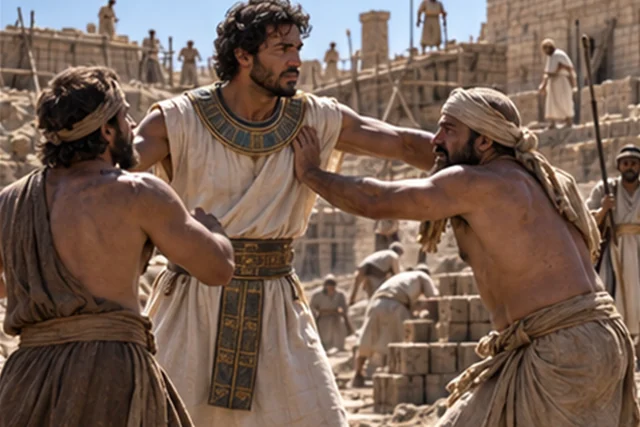
    7:24And seeing one of them suffer wrong, he defended him, and avenged him that was oppressed, and smote the Egyptian:

    7:25For he supposed his brethren would have understood how that God by his hand would deliver them: but they understood not.

    7:26And the next day he shewed himself unto them as they strove, and would have set them at one again, saying, Sirs, ye are brethren; why do ye wrong one to another?

    7:27But he that did his neighbour wrong thrust him away, saying, Who made thee a ruler and a judge over us?

    7:28Wilt thou kill me, as thou diddest the Egyptian yesterday?

    7:29Then fled Moses at this saying, and was a stranger in the land of Madian, where he begat two sons.

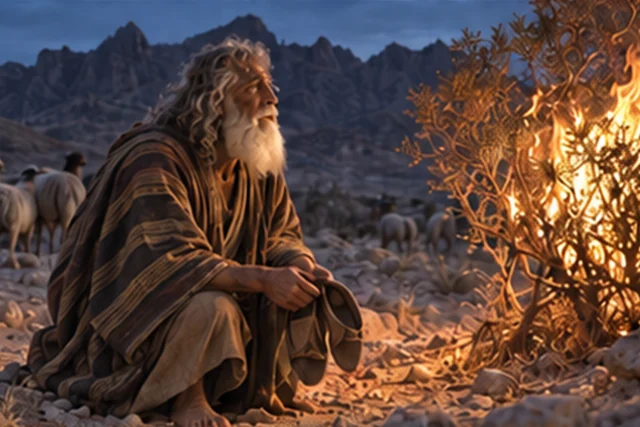
    7:30And when forty years were expired, there appeared to him in the wilderness of mount Sina an angel of the Lord in a flame of fire in a bush.

    7:31When Moses saw it, he wondered at the sight: and as he drew near to behold it, the voice of the Lord came unto him,

    7:32Saying, I am the God of thy fathers, the God of Abraham, and the God of Isaac, and the God of Jacob. Then Moses trembled, and durst not behold.

    7:33Then said the Lord to him, Put off thy shoes from thy feet: for the place where thou standest is holy ground.

    7:34I have seen, I have seen the affliction of my people which is in Egypt, and I have heard their groaning, and am come down to deliver them. And now come, I will send thee into Egypt.

    7:35This Moses whom they refused, saying, Who made thee a ruler and a judge? the same did God send to be a ruler and a deliverer by the hand of the angel which appeared to him in the bush.

    7:36He brought them out, after that he had shewed wonders and signs in the land of Egypt, and in the Red sea, and in the wilderness forty years.

    7:37This is that Moses, which said unto the children of Israel, A prophet shall the Lord your God raise up unto you of your brethren, like unto me; him shall ye hear.

    7:38This is he, that was in the church in the wilderness with the angel which spake to him in the mount Sina, and with our fathers: who received the lively oracles to give unto us:

    7:39To whom our fathers would not obey, but thrust him from them, and in their hearts turned back again into Egypt,

    7:40Saying unto Aaron, Make us gods to go before us: for as for this Moses, which brought us out of the land of Egypt, we wot not what is become of him.

    7:41And they made a calf in those days, and offered sacrifice unto the idol, and rejoiced in the works of their own hands.

    7:42Then God turned, and gave them up to worship the host of heaven; as it is written in the book of the prophets, O ye house of Israel, have ye offered to me slain beasts and sacrifices by the space of forty years in the wilderness?

    7:43Yea, ye took up the tabernacle of Moloch, and the star of your god Remphan, figures which ye made to worship them: and I will carry you away beyond Babylon.

    7:44Our fathers had the tabernacle of witness in the wilderness, as he had appointed, speaking unto Moses, that he should make it according to the fashion that he had seen.

    7:45Which also our fathers that came after brought in with Jesus into the possession of the Gentiles, whom God drave out before the face of our fathers, unto the days of David;

    7:46Who found favour before God, and desired to find a tabernacle for the God of Jacob.

    7:47But Solomon built him an house.

    7:48Howbeit the most High dwelleth not in temples made with hands; as saith the prophet,

    7:49Heaven is my throne, and earth is my footstool: what house will ye build me? saith the Lord: or what is the place of my rest?

    7:50Hath not my hand made all these things?

  4. 04

    Acts 7:51-58

    I see the heavens opened

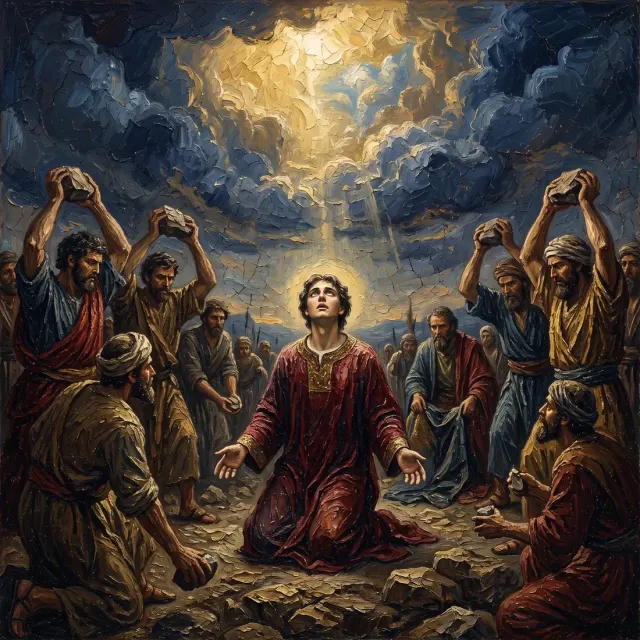
    He turns the charge around, they stop their ears, and he sees the Son of man standing rather than seated. They cast him out of the city and stone him.

    The accusation about ears becomes visible almost at once. Stephen calls his hearers uncircumcised in heart and ears; they stop their ears. The bodily gesture supplies a terrible illustration of the charge. His conclusion is not that Moses' law is worthless. It is that those who received it have not kept it. The dispute remains inside the scriptural inheritance the speech has just traced, and its immediate target is the people confronting him, not a license to condemn an entire people across history.

    The God of glory named at the beginning of the speech is now the glory Stephen sees. Below, the council hears an accusation; above, he sees Jesus at God's right hand. Standing is striking, but the passage does not explain the posture. A welcome, a witness, a judge: interpreters have proposed different meanings. The text establishes the position of Jesus more firmly than the reason for his stance. Stephen's declaration of the Son of man also recalls the claim made before the council in Luke 22:69. Then the hearing becomes a rush outside the city. Witnesses put down their clothes to participate in the killing, and Saul enters the account at their feet. No verdict is recorded between the shout and the stones.

    Verse by verse

    1. 7:51

      The speech addresses Stephen's immediate hearers. Its charge must not be turned into an accusation against every Jewish person, including the Jewish believers described throughout these chapters.

    2. 7:55

      Acts states that Jesus is standing but does not identify the reason. Explanations of the posture should remain interpretations, not additional events supplied to the passage.

    3. 7:56

      Luke 22:69 also places the Son of man at God's right hand before the council. Stephen's declaration recalls that claim without using precisely the same wording or posture.

    4. 7:58

      Deuteronomy 17:7 requires witnesses to take the first part in a stoning. Acts gives the witnesses a conspicuous place here but records no formal sentence before the assault.

    Acts 7:51-58

    King James Version · 8 verses

    7:51Ye stiffnecked and uncircumcised in heart and ears, ye do always resist the Holy Ghost: as your fathers did, so do ye.

    7:52Which of the prophets have not your fathers persecuted? and they have slain them which shewed before of the coming of the Just One; of whom ye have been now the betrayers and murderers:

    7:53Who have received the law by the disposition of angels, and have not kept it.

    7:54When they heard these things, they were cut to the heart, and they gnashed on him with their teeth.

    7:55But he, being full of the Holy Ghost, looked up stedfastly into heaven, and saw the glory of God, and Jesus standing on the right hand of God,

    7:56And said, Behold, I see the heavens opened, and the Son of man standing on the right hand of God.

    7:57Then they cried out with a loud voice, and stopped their ears, and ran upon him with one accord,

    7:58And cast him out of the city, and stoned him: and the witnesses laid down their clothes at a young man’s feet, whose name was Saul.

    Acts 7:51-58: I see the heavens opened
  5. 05

    Acts 7:59-8:2

    Lay not this sin to their charge

    He dies with two prayers, both of them echoing the cross. Saul is consenting unto his death, and the persecution that scatters the church starts that day.

    Stephen's last words do not pretend that the stones are innocent. He names what is happening this sin and asks that it not be laid to the attackers' charge. Forgiveness does not require an improved description of the killing. The prayer is spoken with a loud voice, not supplied as a private thought, and it follows another direct appeal: Lord Jesus, receive my spirit. The man condemned after speaking of Jesus in heaven now entrusts himself to that same Jesus.

    He kneels; then the account says he fell asleep. That gentler expression does not cancel the violence. The next chapter immediately gives both the widening persecution and the great lamentation over his burial. Death has not become a decorative ending, and faith has not made mourning inappropriate. Saul's consent is also stated without softening. When Paul later recalls this event in Acts 22:20, he admits his participation rather than presenting himself as an accidental spectator. Meanwhile, Stephen receives burial from devout men whose names and affiliations are not supplied. The community is scattered, and Acts 11:19 will trace some of that movement as far as Antioch. These pages contain both the spread of the message and the loss that drove the messengers out. The grave is not omitted.

    Verse by verse

    1. 7:59

      "Lord Jesus" identifies the recipient of the appeal to receive Stephen's spirit. The wording presents direct invocation, not merely a report about Jesus.

    2. 7:60

      "Fell asleep" describes his death. The expression does not say that the stoning was painless or deny the physical death reported by the burial.

    3. 8:1

      Acts 22:20 records Paul's later acknowledgment of standing by, consenting, and keeping the killers' garments. Acts does not describe a hidden change of heart in Saul during this event.

    4. 8:2

      The burial party is described as devout men without names or a more specific identification. Their great lamentation is part of the text, not a failure the chapter rebukes.

    Acts 7:59-8:2

    King James Version · 4 verses

    7:59And they stoned Stephen, calling upon God, and saying, Lord Jesus, receive my spirit.

    7:60And he kneeled down, and cried with a loud voice, Lord, lay not this sin to their charge. And when he had said this, he fell asleep.

    8:1And Saul was consenting unto his death. And at that time there was a great persecution against the church which was at Jerusalem; and they were all scattered abroad throughout the regions of Judæa and Samaria, except the apostles.

    8:2And devout men carried Stephen to his burial, and made great lamentation over him.

    Acts 7:59-8:2: Lay not this sin to their charge

Why it matters

So they bring false witnesses instead, and the charge is about the temple and the customs of Moses. The answer is fifty-two verses of Israel’s own history, told as the account of a God who kept meeting people outside the land and outside the house: Abraham in Mesopotamia, Joseph in Egypt, Moses in Midian, the tabernacle in the wilderness. Only at the end does he turn it on the council. He dies asking that the sin not be laid to their charge, and the coats of the men stoning him are laid at the feet of a young man named Saul.

2 songs

The music

Every song in the catalogue whose passage falls inside these chapters.

  1. Acts 6:8-8:4

    A Face Like an Angel

  2. Acts 6:1-7:60

    Stephen's Martyrdom

Nearby

All the people

Report an error on this page