

Exodus 25:31-36
Of beaten work shall the candlestick be made
Nothing is joined. The shaft, the branches, the bowls and the flowers are all worked out of a single mass of gold.
Verse by verse
- 25:31
Candlestick is the KJV term for a lampstand; the fuel is olive oil, not wax candles, as Leviticus 24:2 makes explicit.
- 25:33
The Hebrew meshukkadim describes almond-shaped ornament; the accompanying flower language supports the blossom form.
- 25:36
One beaten work emphasizes the unity of the gold structure; the text does not supply a modern manufacturing sequence.



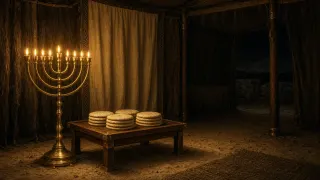
This light has branches and flowers before it has lamps. The instructions linger over almond-shaped cups, ornamental buds, and a central shaft with three branches on either side. The object is not a bare rack made expensive by its material. It gives the sanctuary a flowering form in worked gold.
The repeated phrase of the same matters. Branches and ornament belong to the one beaten work, not to a collection of decorative pieces hung on afterward. The craftsmanship has to produce unity as well as detail. Exodus gives the metalworker something considerably more demanding than seven places to put a flame.
The tree resemblance invites comparison with the garden imagery elsewhere in the sanctuary, especially its cherubim, but Exodus does not identify this furnishing outright as the tree of life. The secure observation is already rich: a place ordered for God's dwelling contains branches, buds, and blossoms shaped into a source of light. The gold does not imitate a dead stump. It carries the form of growth. No elaborate code assigning a separate doctrine to every petal is needed to notice what the design is doing.