


Numbers 17:1-5
Write thou every man’s name upon his rod
The test is designed to be unambiguous. Twelve named staves, one place, one night, and the result announced before it happens.
Verse by verse
- 17:2
The prescribed total is twelve rods; verse 6 says Aaron's rod was among them.
- 17:3
Aaron's name identifies the rod of Levi, giving the test a representative, not merely personal, scope.
- 17:4
Before the testimony locates the rods in relation to the covenant witness; the verse does not explicitly say inside the ark.
- 17:5
Numbers 16:10 identifies the priesthood as an issue in the preceding challenge.



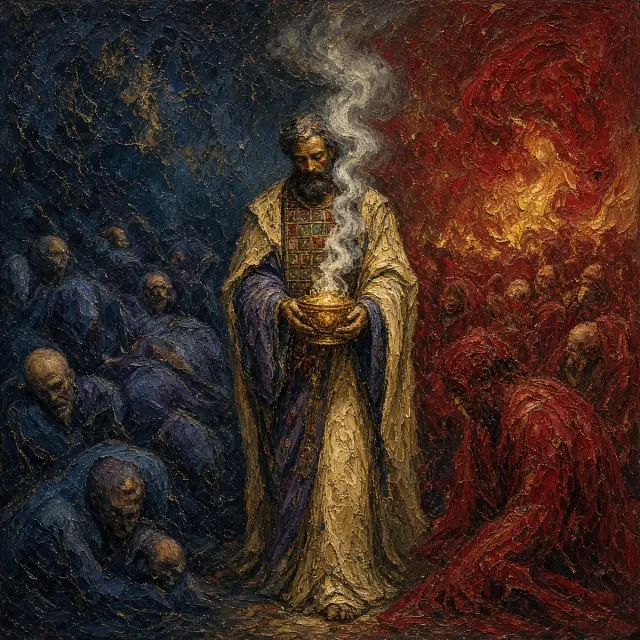







After the ground has opened and the plague has passed through the camp, the next answer is a blossom. The change of register matters. Numbers 16 has already shown the cost of challenging the priesthood, yet accusation returned even after judgment. Another speech defending Aaron would enter an argument that has survived far more than speeches. Here the choice is to be made visible in something nobody can argue into growth.
Each rod receives a name before it enters the sanctuary. The names make the test identifiable, and Aaron's is written for the house of Levi, not merely for Aaron as a private individual. The dispute concerns an appointed place in Israel's worship. These are representatives before the testimony, not twelve gardeners entering a competition. The decisive words are whom I shall choose. Moses gathers and places the rods; he does not manufacture the sign. The place where God promises to meet becomes the place where the disputed appointment is confirmed. Even the purpose reaches beyond silencing criticism of Moses and Aaron: the complaints directed against them have become complaints against God. The answer will be a living thing on a staff that no longer belongs to a tree.