Objects of the Bible

The tongues of fire

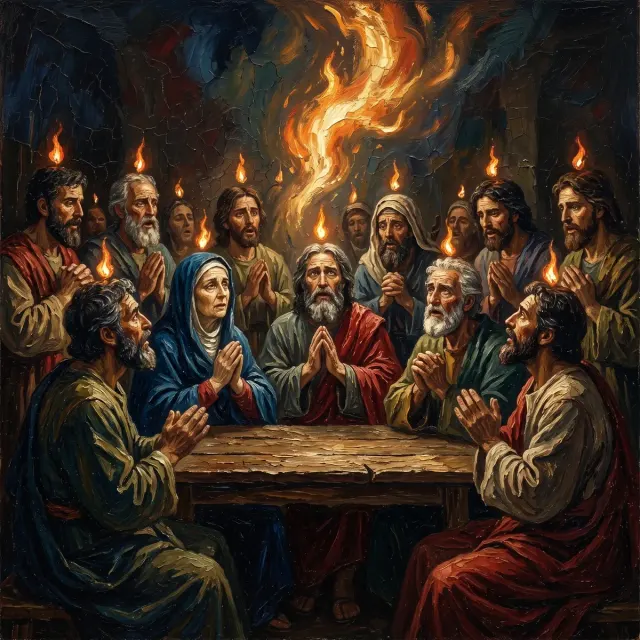
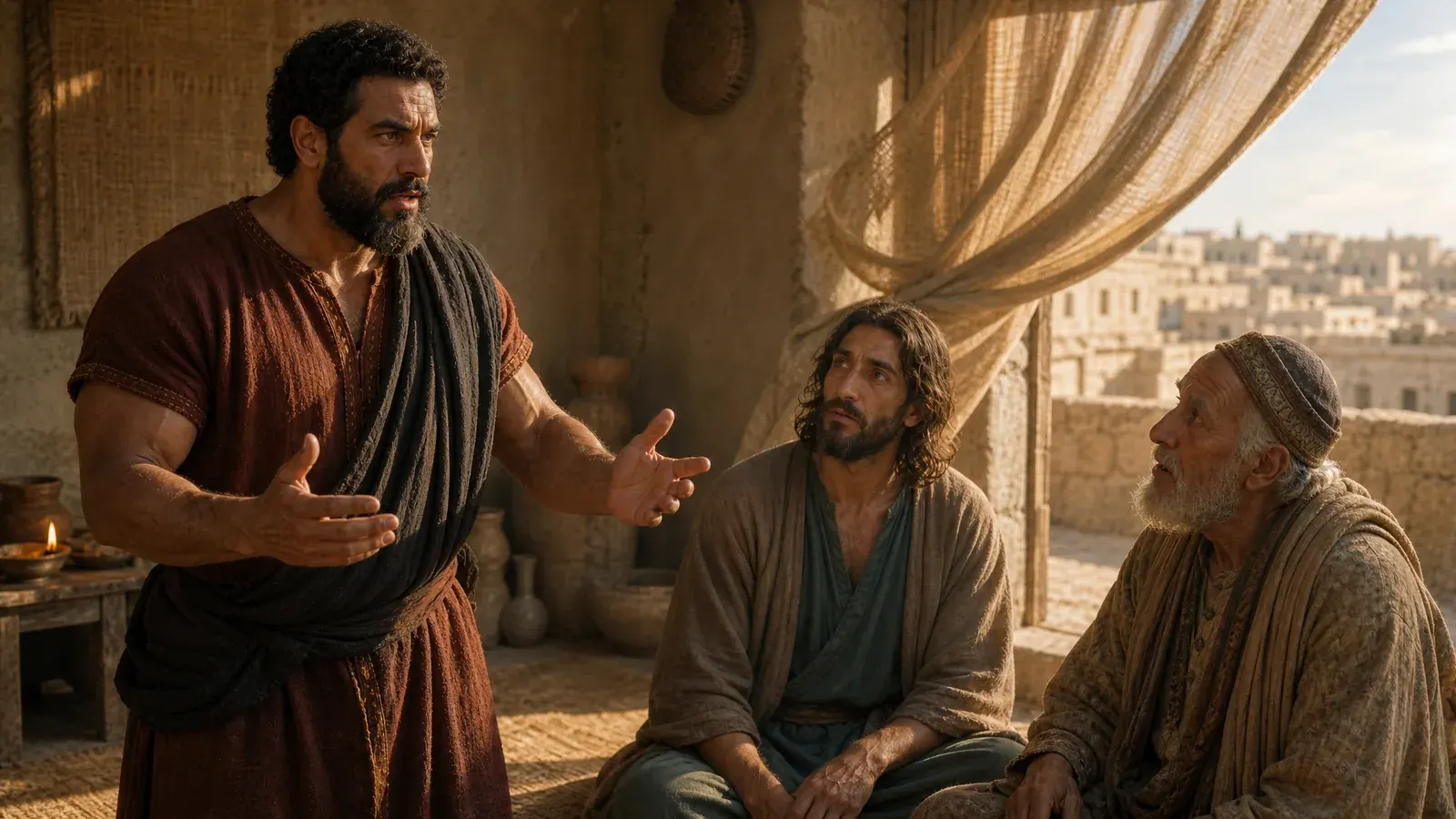
Not one flame over a room. It parted, and sat on each of them, one at a time.

Luke describes three things and hedges two of them. A sound as of a rushing mighty wind, which is a comparison rather than a wind, and tongues like as of fire, which is two comparisons stacked. The verb is the part that is not hedged: it sat upon each of them. Whatever was seen, it divided before it landed, and the account insists on the distribution. Nothing hovers over the group. Every person in the room gets one.

Where it appearsActs 2

Scroll down to the account
The tongues of fire

The movements, in the order the text gives them.

The Account of The tongues of fire

  1. 01

    Acts 2:1-3

    It sat upon each of them

    The description hedges the wind and the fire with comparisons, and then states the distribution as a fact.

    The small word each does an astonishing amount of work. The sound fills the house, but the visible sign rests on persons. Acts does not leave a single impressive flame above the gathering while everybody below becomes scenery. The gift is shared without making its recipients anonymous. All are together; each is marked.

    The comparisons are careful, too. A sound as of a rushing mighty wind is not a report that a storm blew through the furniture. Tongues like as of fire are not a report of people burning. Acts describes what the witnesses could hear and see while preserving the difference between the sign and an ordinary weather event. Then verse 4 carries the movement inward: the people themselves are filled with the Holy Ghost. In Numbers 11:29 Moses had wished that the LORD would put his Spirit upon all his people. Here the repeated all and each give that old wish a striking setting. The room is filled, but nobody disappears into the room.

    Verse by verse

    1. 2:1

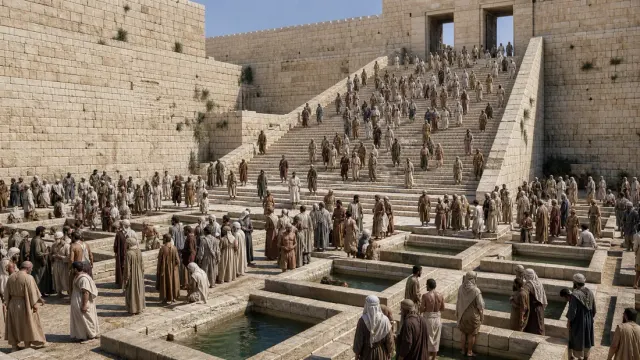
      Pentecost means fiftieth. Leviticus 23:15-16 prescribes the fifty-day count associated with this harvest feast.

    2. 2:3

      The verse specifies a sign upon each person, but does not describe the order in which it reached them. Like as of fire is a comparison, not an explanation of its material composition.
    Acts 2:1-3

    King James Version · 3 verses

    2:1And when the day of Pentecost was fully come, they were all with one accord in one place.

    2:2And suddenly there came a sound from heaven as of a rushing mighty wind, and it filled all the house where they were sitting.

    2:3And there appeared unto them cloven tongues like as of fire, and it sat upon each of them.

    Acts 2:1-3: It sat upon each of them
  2. 02

    Acts 2:5-8

    Every man heard them speak in his own language

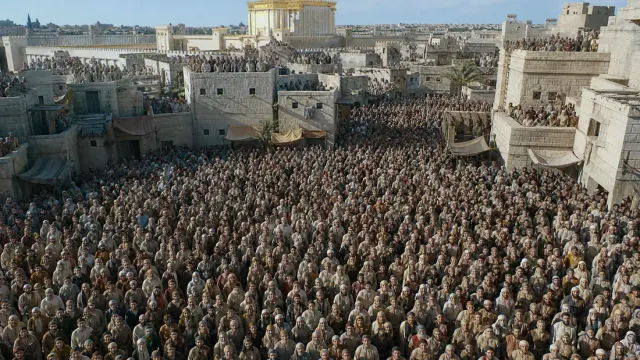
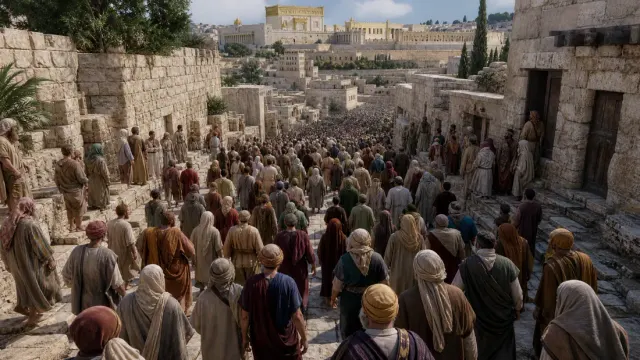
    The miracle is on the hearing end as much as the speaking end, and the account names fifteen groups to prove the range.

    The crowd is bewildered because it understands. That is the lovely reversal tucked into confounded: these hearers are not struggling to make sense of meaningless sounds. They recognize the language of home coming from mouths they did not expect to speak it. Wherein we were born makes the recognition personal without inventing anyone's emotions beyond the amazement the passage names.

    Galilaeans supplies the puzzle. The speakers come from one identifiable region; the hearers belong to a far wider world. The following list reaches east toward Mesopotamia and west toward Rome, while verse 11 identifies the content as the wonderful works of God. Different languages carry the same subject. Nothing here requires the visitors to abandon their native speech before they can understand it.

    There is a strong contrast with the confusion of languages in Genesis 11, though Acts does not explicitly label the event a reversal of Babel. Nor does it restore a single language. The difference remains, and understanding crosses it. Unity arrives without a language being confiscated.

    Verse by verse

    1. 2:5

      The gathering is initially described as devout Jews from many lands; verse 10 also names proselytes. It should not be recast as an exclusively non-Jewish audience.

    2. 2:6-8

      Verse 4 attributes the speaking to the Spirit, while these verses emphasize the hearers recognizing their own languages. The passage does not explain the mechanics beyond those statements.

    Acts 2:5-8

    King James Version · 4 verses

    2:5And there were dwelling at Jerusalem Jews, devout men, out of every nation under heaven.

    2:6Now when this was noised abroad, the multitude came together, and were confounded, because that every man heard them speak in his own language.

    2:7And they were all amazed and marvelled, saying one to another, Behold, are not all these which speak Galilæans?

    2:8And how hear we every man in our own tongue, wherein we were born?

    Acts 2:5-8: Every man heard them speak in his own language
  3. 03

    Acts 2:12-13

    These men are full of new wine

    Two reactions are recorded, bewilderment and mockery, and the text gives the mockery in direct speech.

    New wine is a remarkably economical explanation for a multilingual gathering. It supplies a label in four words and leaves the actual languages unexplained. The humor belongs to the mismatch, not to the miracle. Verse 11 has just said that people recognize the wonderful works of God in their own tongues; intoxication is not an account of that recognition.

    Acts keeps two reactions distinct. Some are amazed and uncertain, asking about meaning. Others mock. The first response admits that the event exceeds an existing explanation; the second announces an explanation without doing the explanatory work. The text does not say that every puzzled hearer is hostile, and it does not make every witness a believer merely because something extraordinary has happened.

    There is also a deliberate contrast in fullness. Verse 4 has already named what fills the speakers: the Holy Ghost. The taunt supplies a competing account of the same people. Acts has given the reader the answer before the accusation arrives. The charge is loud; the evidence is elsewhere.

    Verse by verse

    1. 2:12

      Were in doubt describes perplexity here, not a settled denial of the event. The question asks what the event means.

    2. 2:13

      Gleukos is sweet or new wine. The accusation and Peter's answer in verse 15 concern drunkenness, so the word should not be used here to argue that the drink could not intoxicate.

    Acts 2:12-13

    King James Version · 2 verses

    2:12And they were all amazed, and were in doubt, saying one to another, What meaneth this?

    2:13Others mocking said, These men are full of new wine.

    Acts 2:12-13: These men are full of new wine
  4. 04

    Acts 2:15

    It is but the third hour of the day

    The defence starts with an appeal to the hour rather than to theology, which is the flattest possible rebuttal.

    Peter begins with the time of day. Before Joel, before the argument about David, before the proclamation of the resurrection, there is a sober little observation about the morning. The third hour is approximately nine o'clock, reckoned from the beginning of daylight. The reply is brisk enough to have a dry edge without turning the gathering into a comedy.

    Its limits matter. Peter is not establishing a law of nature that makes drunkenness impossible before a certain hour. He is rejecting this accusation in this setting. The real explanation comes in the next sentence, where the contrast shifts from supposed intoxication to the promised outpouring of the Spirit. The clock clears away a taunt; Scripture explains the event.

    Acts 2:14 also places the eleven beside him as he stands. The speech has one voice, but it does not present a lone man detached from the other witnesses. Peter speaks for the group the charge has targeted. The answer starts with an ordinary fact, then refuses to stay at the level of the insult.

    Verse by verse

    1. 2:15

      The third hour is conventionally reckoned as about nine in the morning. The wording gives an ancient daylight hour, not a modern clock reading.

    2. 2:15

      The denial answers the charge in Acts 2:13. Peter's positive explanation begins in verse 16, so the hour is not presented as the whole argument.

    Acts 2:15

    King James Version · 1 verse

    2:15For these are not drunken, as ye suppose, seeing it is but the third hour of the day.

    Acts 2:15: It is but the third hour of the day
  5. 05

    Acts 2:16-21

    This is that which was spoken by the prophet Joel

    The explanation is a quotation, and the part of it Peter keeps is the part about sons, daughters, servants and handmaids.

    The list does not stop where status would normally stop it. Sons and daughters, young and old, servants and handmaidens: Joel's promise crosses sex, age, and social standing. Peter is not explaining the noise by announcing that a few exceptional men have acquired an unusual ability. He places the event inside a promise whose language keeps widening the circle.

    This is that is stronger than a passing resemblance. Peter identifies what is happening with what Joel announced. Even so, the quotation extends beyond the phenomena Acts has described that morning: blood, smoke, a darkened sun, and a bloodlike moon belong to the larger horizon of the day of the Lord. Readers differ over how that horizon unfolds. The passage does not provide a dated schedule, and there is no need to manufacture one.

    The quotation ends not on cosmic darkness but on whosoever shall call. Its movement is from widespread prophetic speech to an equally expansive summons to salvation. Later in the speech, Acts 2:33 identifies the exalted Jesus as the one who has poured out what the crowd sees and hears. The tongues are a sign; Peter's explanation identifies the giver.

    Verse by verse

    1. 2:17-18

      The paired groups explain the breadth of all flesh. The passage includes women and people of low social status among those receiving prophetic speech.

    2. 2:19-20

      The quotation is Joel 2:28-32. It links the Spirit's outpouring with the day of the Lord, but does not state that every cosmic sign occurred during the gathering.

    3. 2:21

      Romans 10:13 also cites Joel's promise about calling on the Lord. Acts 2:38-39 continues the subject with repentance, baptism, and the scope of the promise.

    Acts 2:16-21

    King James Version · 6 verses

    2:16But this is that which was spoken by the prophet Joel;

    2:17And it shall come to pass in the last days, saith God, I will pour out of my Spirit upon all flesh: and your sons and your daughters shall prophesy, and your young men shall see visions, and your old men shall dream dreams:

    2:18And on my servants and on my handmaidens I will pour out in those days of my Spirit; and they shall prophesy:

    2:19And I will shew wonders in heaven above, and signs in the earth beneath; blood, and fire, and vapour of smoke:

    2:20The sun shall be turned into darkness, and the moon into blood, before that great and notable day of the Lord come:

    2:21And it shall come to pass, that whosoever shall call on the name of the Lord shall be saved.

    Acts 2:16-21: This is that which was spoken by the prophet Joel

Why it matters

The result is a language event rather than a light show, and the list of who understood is the longest list of nations in the New Testament: Parthians, and Medes, and Elamites, and the dwellers in Mesopotamia, and Judaea, and Cappadocia, in Pontus, and Asia. Every one of them hears in the tongue wherein he was born. The charge from the crowd is drunkenness, and Peter’s first argument against it is a clock: these are not drunken, as ye suppose, seeing it is but the third hour of the day.

2 songs

The music

Every song in the catalogue whose passage falls inside these chapters.

  1. Acts 2:1-21, 41-47

    Every Tongue

  2. Acts 2

    Tongues of Fire

The videos

The videos

Every release whose passage falls inside these chapters, playing here.

Nearby

All the objects

Report an error on this page