New · FreePlay The Witnesses The in-depth puzzle battle quest through Bible history

People of the Bible

Enoch

Seventh from Adam, walked with God for three hundred years, and was not, for God took him.

Also called Enoch the son of Jared; not the Enoch who was Cain's son

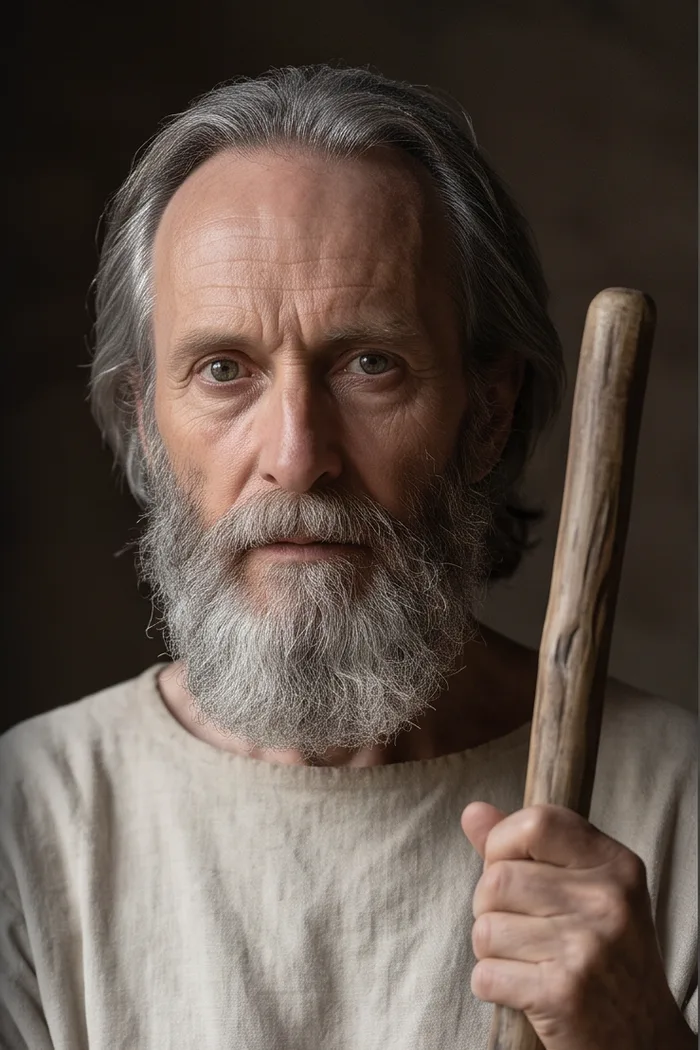
Enoch is the seventh man in the line from Adam through Seth, the son of Jared and the father of Methuselah. The book of the generations in Genesis 5 gives every other man the same three verbs: he lived, he begat, he died. Enoch gets a different one. After the birth of Methuselah he walked with God for three hundred years, and then he was not, for God took him. He is the only man in that chapter who does not die, and at three hundred and sixty-five years his life is the shortest in it by half.

Nothing else about him is recorded in the Old Testament, and the New Testament fills the silence twice. Hebrews says that by faith Enoch was translated so that he should not see death, and that before he was taken he had the testimony that he pleased God. Jude quotes a prophecy of his, that the Lord comes with ten thousands of his saints to execute judgment on the ungodly, which is the only prophecy in Scripture attributed to a man who lived before the flood. Together with Elijah he is one of two men in the Bible taken from the earth without dying.

Where he appearsGenesis 5

Scroll down to the account
Enoch

The movements, in the order the text gives them.

The Account of Enoch

  1. 01

    Genesis 5:18-21

    Seventh from Adam

    Jared, at a hundred and sixty-two, begets Enoch. Enoch, at sixty-five, begets Methuselah. Up to this point his entry in the record reads like every other.

    Enoch's entry begins like every other in the chapter: his father Jared, the years, the son. Jared is the sixth from Adam and lives nine hundred and sixty-two years, and the refrain falls on him as on the rest, and he died. Then Enoch, the seventh, begets Methuselah at sixty-five, young by the chapter's standard. Nothing so far marks him out. The name Enoch, dedicated, is the same as Cain's son's name in chapter 4, and the two Enochs are the two families of Genesis side by side: one has a city named after him, the other will walk with God. Methuselah's name, the longest-lived man in the Bible, has been read to mean when he dies, it shall be sent, and by the chapter's arithmetic he dies in the year of the flood.

    Verse by verse

    1. 5:18-20

      Jared: the name may mean descent. He is the last man in the line to receive the ordinary formula before the exception.

    2. 5:21

      Methuselah: 969 years, Genesis 5:27. His death and the flood fall in the same year.

    Genesis 5:18-21

    King James Version · 4 verses

    5:18And Jared lived an hundred sixty and two years, and he begat Enoch:

    5:19And Jared lived after he begat Enoch eight hundred years, and begat sons and daughters:

    5:20And all the days of Jared were nine hundred sixty and two years: and he died.

    5:21And Enoch lived sixty and five years, and begat Methuselah:

    Genesis 5:18-21: Seventh from Adam
  2. 02

    Genesis 5:22

    He walked with God

    After Methuselah is born, Enoch walks with God for three hundred years and has other sons and daughters. The chapter's refrain, and he lived, is replaced for him alone with a description of how he lived.

    Where every other man in the chapter lived after he begat his son, Enoch walked with God after he begat Methuselah. The verb is the one used of God walking in the garden in the cool of the day, and of Noah in chapter 6. It describes companionship, a shared road, and it is dated: the walking begins at the birth of his son. Three hundred years of it. The text gives no visions, no altars, no words; only that for three centuries a man's life was lived in step with God, while he begat sons and daughters like anyone else. Micah's question, what doth the LORD require of thee, ends with the same verb: to walk humbly with thy God.

    Verse by verse

    1. 5:22

      Walked with God: the phrase replaces lived in the formula. Only Enoch and Noah, 6:9, receive it in Genesis.

    Genesis 5:22

    King James Version · 1 verse

    5:22And Enoch walked with God after he begat Methuselah three hundred years, and begat sons and daughters:

    Genesis 5:22: He walked with God
  3. 03

    Genesis 5:23-24

    And he was not

    All the days of Enoch are three hundred and sixty-five years. Then the text says it again, Enoch walked with God, and adds what no one else in the chapter receives: and he was not, for God took him. There is no death recorded.

    Three hundred and sixty-five years, the number of days in a year, and the shortest life in the chapter. Then the formula breaks. Nine times the chapter says and he died; of Enoch it says he was not, for God took him. The Hebrew is as abrupt as the English: he was not there. No death, no grave, no mourning. The same verb, took, is used when Elijah is taken up in 2 Kings 2, and the Psalms use it of God receiving the righteous: thou shalt guide me with thy counsel, and afterward receive me to glory. In a chapter built on the sentence of chapter 3, Enoch is the one man on whom the sentence does not fall, and the text offers no explanation except the walking.

    Verse by verse

    1. 5:23

      365: short beside the others, and a full round of the sun. Some have seen the number as deliberate.

    2. 5:24

      He was not: the phrase Jacob uses of Joseph in 42:36. God took him: the verb of 2 Kings 2:3 and Psalm 49:15, 73:24.

    Genesis 5:23-24

    King James Version · 2 verses

    5:23And all the days of Enoch were three hundred sixty and five years:

    5:24And Enoch walked with God: and he was not; for God took him.

    Genesis 5:23-24: And he was not
  4. 04

    1 Chronicles 1:3

    In Israel's record

    The Chronicler lists him without comment in the line from Adam to Noah: Henoch, Methuselah, Lamech. The nation's history passes through him.

    The Chronicler lists him with no comment, between Jared and Methuselah, spelled Henoch in the King James. The register does not repeat the miracle; it only keeps him in the line from Adam to Noah, which is the line to Abraham and David. That a man who did not die still stands in a genealogy of the dead is the Chronicler's quiet way of saying he belonged to the same family and the same promise.

    Verse by verse

    1. 1:3

      Henoch, Methuselah, Lamech: the seventh, eighth and ninth from Adam.

    1 Chronicles 1:3

    King James Version · 1 verse

    1:3Henoch, Methuselah, Lamech,

    1 Chronicles 1:3: In Israel's record
  5. 05

    Luke 3:37

    In the line of Jesus

    Luke's genealogy runs back through Methuselah to Enoch, then Jared, on its way to Adam. The man taken from the earth is an ancestor of the one who came down to it.

    Luke's genealogy passes through him on its way back to Adam and God: Mathusala, which was the son of Enoch, which was the son of Jared. Jesus is placed in the line of the man who walked with God and was taken, and the church has read the sequence as a shadow of the ascension. Luke gives no more than the name, but the placing is the point: Enoch's road ended in God's presence, and the one descended from him will go there by way of a cross and an empty tomb.

    Verse by verse

    1. 3:37

      The Greek spellings, Mathusala, Maleleel, Cainan, follow the Septuagint. Luke's list is the only New Testament genealogy that reaches Enoch.

    Luke 3:37

    King James Version · 1 verse

    3:37Which was the son of Mathusala, which was the son of Enoch, which was the son of Jared, which was the son of Maleleel, which was the son of Cainan,

    Luke 3:37: In the line of Jesus
  6. 06

    Hebrews 11:5-6

    Translated by faith

    By faith Enoch was translated that he should not see death, and was not found, because God had translated him; before that he had the testimony that he pleased God. The writer adds the principle: without faith it is impossible to please him.

    Hebrews reads Genesis 5:24 as an account of faith and supplies what Genesis left unsaid. By faith Enoch was translated that he should not see death, and was not found, because God had translated him. The words not found imply that people looked, as the sons of the prophets looked for Elijah. Before his translation he had this testimony, that he pleased God, which is how the Greek Old Testament rendered walked with God. Then verse 6 draws the lesson for everyone: without faith it is impossible to please him, and the one who comes to God must believe that he is, and that he rewards those who seek him. Enoch's three hundred years become the definition of faith: believing God is there, and seeking him.

    Verse by verse

    1. 11:5

      Translated: removed, carried across. Not found: the search of 2 Kings 2:17 is implied.

    2. 11:6

      He that cometh to God: the two beliefs required, that God exists and that seeking him is not in vain, are what Enoch's walk consisted of.

    Hebrews 11:5-6

    King James Version · 2 verses

    11:5By faith Enoch was translated that he should not see death; and was not found, because God had translated him: for before his translation he had this testimony, that he pleased God.

    11:6But without faith it is impossible to please him: for he that cometh to God must believe that he is, and that he is a rewarder of them that diligently seek him.

    Hebrews 11:5-6: Translated by faith
  7. 07

    Jude 1:14-15

    The prophecy

    Jude quotes Enoch, the seventh from Adam, prophesying that the Lord comes with ten thousands of his saints to execute judgment on all the ungodly for their deeds and their hard speeches. The words match the opening of the ancient Book of Enoch.


    Jude quotes a prophecy of Enoch, the seventh from Adam, which is found not in Genesis but in the Jewish book of Enoch, written long before the New Testament and widely read in Jude's day. Behold, the Lord cometh with ten thousands of his saints, to execute judgement upon all. Jude does not thereby make the book of Enoch Scripture; he uses a saying his readers knew, as Paul quotes Greek poets. But the placing of the words in Enoch's mouth fits Genesis. The man who walked with God before the flood is made a preacher of the judgement to come, and his message is the one Noah's ark would embody a few generations later. The word ungodly appears four times in one verse; Enoch's walk was the opposite.

    Verse by verse

    1. 1:14

      Seventh from Adam: counting Adam as first. The book of Enoch, 1:9, is the source of the quotation.

    2. 1:15

      Ungodly, four times: Jude's whole letter is about the people Enoch's prophecy describes.

    Jude 1:14-15

    King James Version · 2 verses

    1:14And Enoch also, the seventh from Adam, prophesied of these, saying, Behold, the Lord cometh with ten thousands of his saints,

    1:15To execute judgment upon all, and to convince all that are ungodly among them of all their ungodly deeds which they have ungodly committed, and of all their hard speeches which ungodly sinners have spoken against him.

    Jude 1:14-15: The prophecy

The people, the places and the rest of Scripture.

Reading Enoch closely

The people he dealt with

The text names only his father and his son, and both matter. Jared is the fifth from Seth, and nothing is said of him beyond the numbers. Methuselah is the son whose birth marks the point at which Enoch's walking with God is said to begin, as if fatherhood turned him toward God, and Methuselah goes on to live nine hundred and sixty-nine years, the longest life in the Bible. By the numbers in Genesis 5, Methuselah dies in the year of the flood, which many readers have taken as a sign of how long God's patience ran before the water came.

Enoch's other company is God himself. Walking with someone in Hebrew means keeping pace with them, going where they go, and the phrase is used later of Noah, of Abraham walking before God, and of Micah's summary of the whole law: to walk humbly with your God. Enoch is the first man to be described that way and the only one for whom it was the whole record.

Jude adds a crowd he did not keep company with. The ungodly of his prophecy are the men of Genesis 6, whose wickedness filled the earth, and Enoch is shown speaking to them before God took him. Read that way, his three hundred years were not a retreat but a witness.

The two Enochs

Genesis has two men of this name and the difference between them is the difference between Cain's line and Seth's. The first Enoch is Cain's son, born in the land of Nod, and the city Cain builds is named after him, the first city in Scripture. The second is Jared's son in the line of Seth. One has his name written over a wall; the other has his name written in the list of those who walked with God. The chapter does not comment on the coincidence, but it places the two lists side by side so the reader will.

What came before and what followed

Before Enoch, everyone dies. Adam's death is recorded in the same chapter, and the reader is meant to feel the weight of the refrain, and he died, and he died, and he died, as the sentence of Genesis 3 works its way down the generations. Enoch breaks the sequence at the seventh place, the number of completeness, and then the sequence resumes. Methuselah dies. Lamech dies. Then Noah is born.

What follows is a long silence. The Old Testament does not mention him again outside the Chronicler's list. Between the Testaments, Jewish writers filled the silence with the Book of Enoch, which describes him being shown the heavens and the coming judgment, and it is a line from that book that Jude quotes. Sirach says Enoch pleased the Lord and was taken up, an example of repentance to all generations. By the time of the New Testament, Enoch had become the model of a man rewarded with life for pleasing God.

Where the rest of Scripture reaches back

Hebrews 11 gives him three verses and a principle. He was translated by faith, he was not found because God had translated him, and before that he had the testimony that he pleased God; therefore, the writer says, without faith it is impossible to please God, for whoever comes to him must believe that he is and that he rewards those who seek him. Enoch is the proof of that last clause.

Jude 14 and 15 quote him by name and number, Enoch the seventh from Adam, and treat his prophecy of judgment as a true word about the false teachers of Jude's own day. Luke's genealogy passes through him. Beyond those, the Bible's later hope that some will not sleep but be changed, and its account of Elijah taken up in a whirlwind, both stand in the light of the first man who was not, because God took him.

Why it matters

Enoch is the first sign in the Bible that death is not the last word. Genesis 5 is a chapter of graves, and in the middle of it one man simply is not there, because God took him. Hebrews reads that as a reward for faith and makes him the second name on its roll, between Abel and Noah. Where Abel shows faith accepted and Noah shows faith obeying, Enoch shows faith rewarded, and the letter draws the lesson at once: without faith it is impossible to please God.

He is also the Bible's picture of what walking with God looks like across a whole life. The phrase is used of only two men before the flood, Enoch and Noah, and of Enoch it is said twice. It describes a habit rather than a moment, three centuries of ordinary days lived in company with God while the world of Genesis 6 was filling with violence. Jude's quotation adds that he was not silent about that world. The man who walked with God also warned the men who did not.

1 song

The music

Every song in the catalogue whose passage falls inside these chapters.

  1. Genesis 3:1-5:32

    Blood in the Ground

Nearby

All the people

Report an error on this page