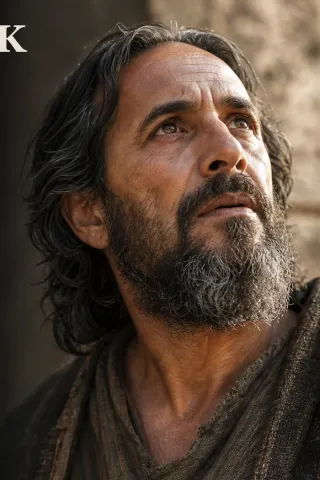
New · FreePlay The Witnesses The in-depth puzzle battle quest through Bible history

People of the Bible

Nahum

Wrote the sequel to Jonah, about the same city, a hundred and fifty years later, and it does not end the same way.

Nahum prophesies against Nineveh, the capital of Assyria, an empire that had deported the northern tribes and left records of its own cruelty on its palace walls. The book has no call narrative and no biography, and it does not address Israel at all except to say that the yoke is about to be broken. What it does instead is describe the fall of a city in short, fast lines: the chariots raging in the streets, the noise of the whip, the prancing horses, and the piles of bodies without number.

Where he appearsNahum 1 to 3

Scroll down to the account
Nahum

The movements, in the order the text gives them.

The Account of Nahum

  1. 01

    Nahum 1:1-8

    Slow to anger, and great in power

    The opening holds jealousy, vengeance and fury in one hand and a stronghold in the day of trouble in the other, and says he knows them that trust in him.

    The clouds are the dust of his feet. What looks enormous from the ground is barely a footstep here. The opening steadily removes the things that seem impossible to move: the sea dries, the hills melt, the rocks break. Nineveh receives this introduction before its defenses receive any attention. The scale has already been set.

    Then, in the middle of all that force, comes the LORD is good. The sentence is not an embarrassed correction of the preceding verses. The same power that threatens the enemy provides a strong hold for those who trust him. Mountains have just failed that test; the refuge is not another mountain. Nor does slow anger mean that the charge has been dropped. Nahum places patience beside power and insists that delayed judgment is not acquittal. Goodness includes somewhere for the threatened to stand.

    Verse by verse

    1. 1:1

      Elkoshite identifies Nahum with Elkosh, but the location is disputed. The heading supplies neither a king nor a date for the vision.

    2. 1:2

      The repeated vengeance language concerns action against named adversaries. It is not a description of envy toward their possessions or success.

    3. 1:7

      Knoweth expresses recognition of those taking refuge in him; it does not suggest that the enemy is otherwise unknown to God.

    4. 1:8

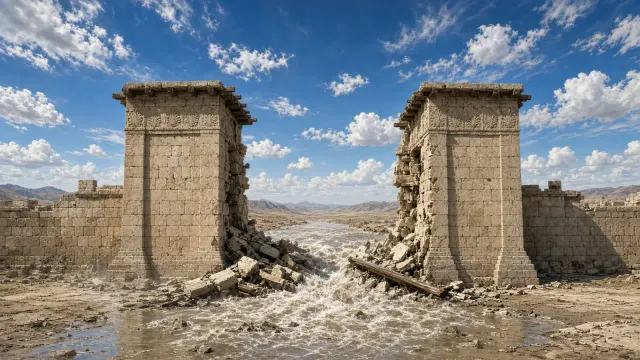
      The flood belongs to the passage's language of overwhelming judgment. This verse alone cannot establish a particular military use of river water.

    Nahum 1:1-8

    King James Version · 8 verses

    1:1The burden of Nineveh. The book of the vision of Nahum the Elkoshite.

    1:2God is jealous, and the LORD revengeth; the LORD revengeth, and is furious; the LORD will take vengeance on his adversaries, and he reserveth wrath for his enemies.

    1:3The LORD is slow to anger, and great in power, and will not at all acquit the wicked: the LORD hath his way in the whirlwind and in the storm, and the clouds are the dust of his feet.

    1:4He rebuketh the sea, and maketh it dry, and drieth up all the rivers: Bashan languisheth, and Carmel, and the flower of Lebanon languisheth.

    1:5The mountains quake at him, and the hills melt, and the earth is burned at his presence, yea, the world, and all that dwell therein.

    1:6Who can stand before his indignation? and who can abide in the fierceness of his anger? his fury is poured out like fire, and the rocks are thrown down by him.

    1:7The LORD is good, a strong hold in the day of trouble; and he knoweth them that trust in him.

    1:8But with an overrunning flood he will make an utter end of the place thereof, and darkness shall pursue his enemies.

    Nahum 1:1-8: Slow to anger, and great in power
  2. 02

    Nahum 1:9-15

    Behold upon the mountains

    The feet of him that brings good tidings, that publishes peace. Judah is told to keep her feasts, because the wicked shall no more pass through her.

    A tangled thorn hedge looks difficult to get through. Fully dry stubble is not difficult to burn. Nahum puts those pictures beside each other, reducing the enemy's apparent complexity to combustible material. Numbers and security do not alter the result. The evil counsellor has an elaborate project; the answering sentence is a grave.

    The changes of address matter. A yoke is broken off the afflicted people, while the oppressor's name and images are cut off. These are not contradictory promises delivered to one recipient. Judah is finally named, and the announcement becomes a messenger crossing the mountains with peace. Its practical meaning is beautifully ordinary: the feasts can be kept and the vows paid. The imperial power that interrupted those acts will no longer march through. In this passage, the end of a threat is also the reopening of a calendar.

    Verse by verse

    1. 1:9

      Affliction not rising a second time stresses the completeness of the announced defeat. It is not a blanket prediction that Judah will never again face any hardship.

    2. 1:11

      The Hebrew beliyyaal appears behind both wicked counseller in 1:11 and the wicked in 1:15. The repeated term ties the threat to its removal.

    3. 1:13-14

      The pronouns move between the afflicted community and its enemy. The yoke is broken for the former; the grave is prepared for the latter.

    Nahum 1:9-15

    King James Version · 7 verses

    1:9What do ye imagine against the LORD? he will make an utter end: affliction shall not rise up the second time.

    1:10For while they be folden together as thorns, and while they are drunken as drunkards, they shall be devoured as stubble fully dry.

    1:11There is one come out of thee, that imagineth evil against the LORD, a wicked counsellor.

    1:12Thus saith the LORD; Though they be quiet, and likewise many, yet thus shall they be cut down, when he shall pass through. Though I have afflicted thee, I will afflict thee no more.

    1:13For now will I break his yoke from off thee, and will burst thy bonds in sunder.

    1:14And the LORD hath given a commandment concerning thee, that no more of thy name be sown: out of the house of thy gods will I cut off the graven image and the molten image: I will make thy grave; for thou art vile.

    1:15Behold upon the mountains the feet of him that bringeth good tidings, that publisheth peace! O Judah, keep thy solemn feasts, perform thy vows: for the wicked shall no more pass through thee; he is utterly cut off.

    Nahum 1:9-15: Behold upon the mountains
  3. 03

    Nahum 2:1-13

    The chariots rage in the streets

    Short lines that read like a bulletin. The shield of his mighty men is made red, the chariots jostle in the broad ways, and the palace is dissolved.

    The orders are impressive. The men carrying them out stumble. Nahum lets the military language roar for a moment, then shows the gap between commands and control: the city empties while someone is still shouting Stand, stand. Wealth that seemed beyond counting becomes spoil. The pool cannot hold its people.

    The lion passage explains what that wealth cost. This is no harmless portrait of a splendid animal feeding its family. The den is full because other creatures have been torn apart; the cubs inherit the benefits of predation. Then the LORD addresses the city directly, and its appetite is cut off along with its weapons. Even the messengers lose their voice. That detail answers the messenger of peace in 1:15: Judah can hear good tidings because the voice that carried the oppressor's demands is being silenced.

    Verse by verse

    1. 2:1

      Munition means the fortification or defensive position, not a supply of modern ammunition.

    2. 2:6

      The opened river gates belong to the picture of the city being breached. The verse does not supply enough detail to reconstruct the siege engineering with certainty.

    3. 2:7

      Huzzab is an uncertain expression, treated as a name in the KJV but also read as a verb meaning that something is established or decreed. Tabering describes beating the breasts like a drum.

    4. 2:12

      Ravin means prey taken by violence. The lion imagery interprets the city's accumulation of wealth as predation.

    Nahum 2:1-13: The chariots rage in the streets

    Nahum 2:1-13

    King James Version · 13 verses

    2:1He that dasheth in pieces is come up before thy face: keep the munition, watch the way, make thy loins strong, fortify thy power mightily.

    2:2For the LORD hath turned away the excellency of Jacob, as the excellency of Israel: for the emptiers have emptied them out, and marred their vine branches.

    2:3The shield of his mighty men is made red, the valiant men are in scarlet: the chariots shall be with flaming torches in the day of his preparation, and the fir trees shall be terribly shaken.

    2:4The chariots shall rage in the streets, they shall justle one against another in the broad ways: they shall seem like torches, they shall run like the lightnings.

    2:5He shall recount his worthies: they shall stumble in their walk; they shall make haste to the wall thereof, and the defence shall be prepared.

    2:6The gates of the rivers shall be opened, and the palace shall be dissolved.

    2:7And Huzzab shall be led away captive, she shall be brought up, and her maids shall lead her as with the voice of doves, tabering upon their breasts.

    2:8But Nineveh is of old like a pool of water: yet they shall flee away. Stand, stand, shall they cry; but none shall look back.

    2:9Take ye the spoil of silver, take the spoil of gold: for there is none end of the store and glory out of all the pleasant furniture.

    2:10She is empty, and void, and waste: and the heart melteth, and the knees smite together, and much pain is in all loins, and the faces of them all gather blackness.

    2:11Where is the dwelling of the lions, and the feedingplace of the young lions, where the lion, even the old lion, walked, and the lion’s whelp, and none made them afraid?

    2:12The lion did tear in pieces enough for his whelps, and strangled for his lionesses, and filled his holes with prey, and his dens with ravin.

    2:13Behold, I am against thee, saith the LORD of hosts, and I will burn her chariots in the smoke, and the sword shall devour thy young lions: and I will cut off thy prey from the earth, and the voice of thy messengers shall no more be heard.

  4. 04

    Nahum 3:1-19

    Woe to the bloody city

    The catalogue is deliberate: the whip, the wheels, the horsemen, the bright sword, the heap of corpses. It ends by asking upon whom has your wickedness not passed continually.

    First the sound: whip, wheels, horses. Then the glitter of weapons. Then so many bodies that movement itself becomes stumbling. The passage does not let military spectacle stay spectacular. Nor does the city's beauty in verse 4 excuse it. The accusation is that its allure sells nations and families into bondage; the following exposure strips away that attractive surface in brutally humiliating imagery.

    Thebes interrupts Nineveh's claim to exceptional safety. Water, allies, rank, and wealth failed there. Children were killed in the streets, and dignitaries became objects of a lottery. Nothing in those details needs decoration. Nineveh's own defenses then become ripe figs, its officials insects that disappear when conditions change, its people a flock nobody gathers. The final applause is explained by the final accusation: the city's evil has passed continually over others. Its wound is not viewed apart from the wounds it inflicted.

    Verse by verse

    1. 3:4-6

      The sexual imagery personifies Nineveh as an alluring city that enslaves others. The threatened public stripping depicts humiliation; it is not an instruction about treating women.

    2. 3:10

      The account of No includes murdered children, deportation, and the distribution of captives by lot. The verse does not name the attacking king or give the year.

    3. 3:13

      The comparison uses a conventional ancient contrast between armed male soldiers and women outside that combat role. It describes the defenders' loss of military resistance, not an assessment of every woman's character.

    4. 3:19

      Bruit means a report or news. The handclapping is tied explicitly to the continual harm attributed to the city, not presented as unexplained delight in suffering.

    Nahum 3:1-19: Woe to the bloody city

    Nahum 3:1-19

    King James Version · 19 verses

    3:1Woe to the bloody city! it is all full of lies and robbery; the prey departeth not;

    3:2The noise of a whip, and the noise of the rattling of the wheels, and of the pransing horses, and of the jumping chariots.

    3:3The horseman lifteth up both the bright sword and the glittering spear: and there is a multitude of slain, and a great number of carcases; and there is none end of their corpses; they stumble upon their corpses:

    3:4Because of the multitude of the whoredoms of the wellfavoured harlot, the mistress of witchcrafts, that selleth nations through her whoredoms, and families through her witchcrafts.

    3:5Behold, I am against thee, saith the LORD of hosts; and I will discover thy skirts upon thy face, and I will shew the nations thy nakedness, and the kingdoms thy shame.

    3:6And I will cast abominable filth upon thee, and make thee vile, and will set thee as a gazingstock.

    3:7And it shall come to pass, that all they that look upon thee shall flee from thee, and say, Nineveh is laid waste: who will bemoan her? whence shall I seek comforters for thee?

    3:8Art thou better than populous No, that was situate among the rivers, that had the waters round about it, whose rampart was the sea, and her wall was from the sea?

    3:9Ethiopia and Egypt were her strength, and it was infinite; Put and Lubim were thy helpers.

    3:10Yet was she carried away, she went into captivity: her young children also were dashed in pieces at the top of all the streets: and they cast lots for her honourable men, and all her great men were bound in chains.

    3:11Thou also shalt be drunken: thou shalt be hid, thou also shalt seek strength because of the enemy.

    3:12All thy strong holds shall be like fig trees with the firstripe figs: if they be shaken, they shall even fall into the mouth of the eater.

    3:13Behold, thy people in the midst of thee are women: the gates of thy land shall be set wide open unto thine enemies: the fire shall devour thy bars.

    3:14Draw thee waters for the siege, fortify thy strong holds: go into clay, and tread the morter, make strong the brickkiln.

    3:15There shall the fire devour thee; the sword shall cut thee off, it shall eat thee up like the cankerworm: make thyself many as the cankerworm, make thyself many as the locusts.

    3:16Thou hast multiplied thy merchants above the stars of heaven: the cankerworm spoileth, and flieth away.

    3:17Thy crowned are as the locusts, and thy captains as the great grasshoppers, which camp in the hedges in the cold day, but when the sun ariseth they flee away, and their place is not known where they are.

    3:18Thy shepherds slumber, O king of Assyria: thy nobles shall dwell in the dust: thy people is scattered upon the mountains, and no man gathereth them.

    3:19There is no healing of thy bruise; thy wound is grievous: all that hear the bruit of thee shall clap the hands over thee: for upon whom hath not thy wickedness passed continually?

Why it matters

Nahum is the uncomfortable half of a pair. Jonah went to the same city and it repented and he was angry about the mercy; Nahum comes after the repentance has worn off and says the patience has an end. The book insists on both at once in its first lines: the LORD is slow to anger and great in power, and will not at all acquit the wicked. And the same chapter carries a line read at funerals since: the LORD is good, a strong hold in the day of trouble, and he knows them that trust in him.

5 songs

The music

Every song in the catalogue whose passage falls inside these chapters.

  1. Nahum 1:9-15

    Behold upon the Mountains

    Play hereOpen song pageRead lyrics
  2. Nahum 1:1-3:19

    Nahum (Nineveh Will Fall)

    Play here
    Open song pageRead lyrics
  3. Nahum 1:1-8

    The LORD Is Slow to Anger

    Play hereOpen song pageRead lyrics
  4. Nahum 2:1-13

    The Chariots Rage in the Streets

    Play hereOpen song pageRead lyrics
  5. Nahum 3:1-19

    Woe to the Bloody City

    Play hereOpen song pageRead lyrics

Nearby

All the people

Report an error on this page