New · FreePlay The Witnesses The in-depth puzzle battle quest through Bible history

People of the Bible

Jonah

Ran from an assignment, was given it again, carried it out in eight words, and then sulked because it worked.

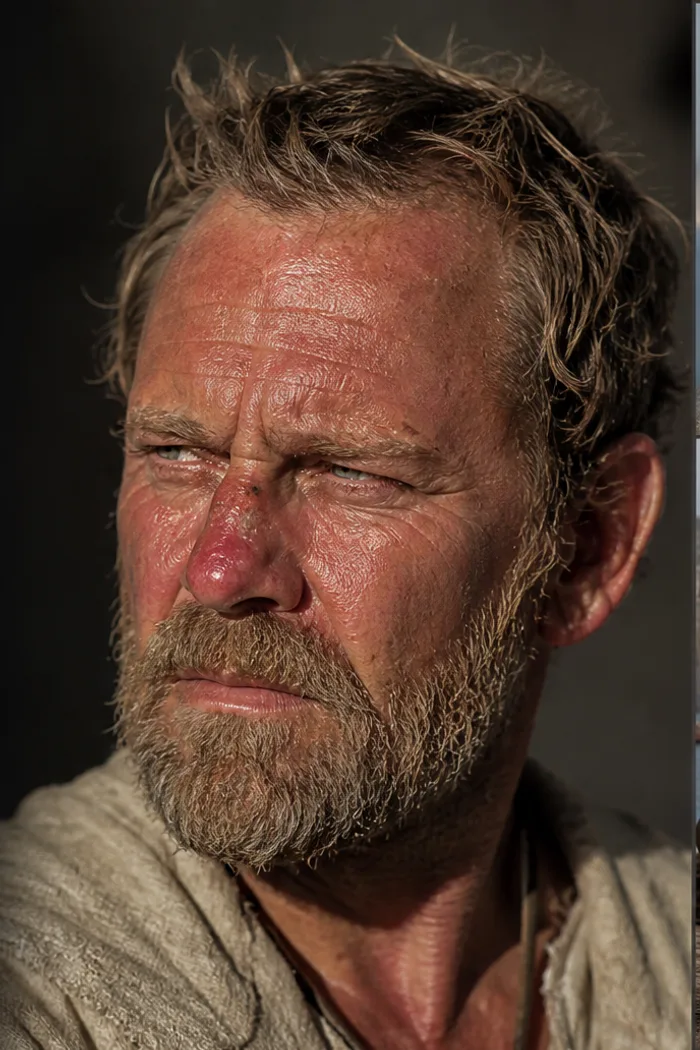
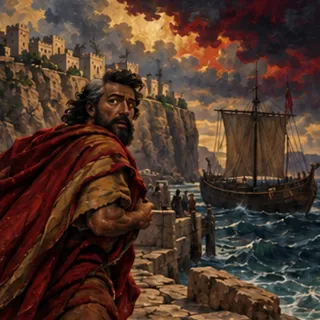
Jonah is told to go to Nineveh, the capital of the empire that will eventually destroy his country, and he goes to Joppa and takes a ship in the opposite direction. The storm does not frighten him; he is asleep below deck and the pagan sailors are praying. He tells them to throw him overboard, they try to row back to land first, and only when they cannot do they do it, and then they fear and sacrifice. Three days later he preaches the shortest sermon in Scripture, and the whole city repents.

Where he appearsJonah 1 to 4

Scroll down to the account
Jonah

The movements, in the order the text gives them.

The Account of Jonah

  1. 01

    Jonah 1:1-6

    Down to Joppa, down into the ship

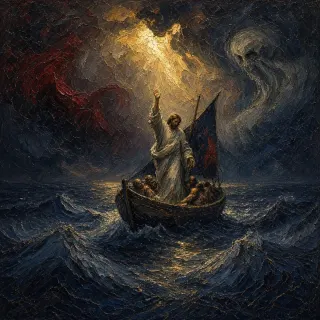
    The verbs run downwards through the chapter. He pays the fare, goes below, and is fast asleep while the crew throws cargo overboard and the captain comes to ask him to pray.

    Jonah obeys the first verb and reverses the assignment. Told to arise and go, he rises and flees. The repeated destination, Tarshish, keeps the wrong journey in view, while the repeated down takes him to Joppa, into the ship, and into its deepest recesses. He pays the fare himself. This is organized disobedience, complete with a ticket.

    Above him, sailors pray and throw away the goods that make the voyage worth undertaking. Below, the man carrying the word of the LORD sleeps. The captain has to supply him with two imperatives already appropriate to his calling: arise, call. The foreign shipmaster is not introduced as a theologian, but at this moment he understands that a passenger ought to pray. Jonah's sleep is reported; peace of conscience is not. A quiet man and an obedient man are not necessarily the same person.

    Verse by verse

    1. 1:3

      The book names Tarshish as the attempted destination but does not settle its precise location.

    2. 1:4

      Verse 4 attributes this particular storm to the LORD; it does not authorize treating every storm as punishment for somebody's disobedience.

    3. 1:6

      Jonah 4:2 gives Jonah's own explanation for fleeing. Fear of the Ninevites is not the reason he states.

    Jonah 1:1-6

    King James Version · 6 verses

    1:1Now the word of the LORD came unto Jonah the son of Amittai, saying,

    1:2Arise, go to Nineveh, that great city, and cry against it; for their wickedness is come up before me.

    1:3But Jonah rose up to flee unto Tarshish from the presence of the LORD, and went down to Joppa; and he found a ship going to Tarshish: so he paid the fare thereof, and went down into it, to go with them unto Tarshish from the presence of the LORD.

    1:4But the LORD sent out a great wind into the sea, and there was a mighty tempest in the sea, so that the ship was like to be broken.

    1:5Then the mariners were afraid, and cried every man unto his god, and cast forth the wares that were in the ship into the sea, to lighten it of them. But Jonah was gone down into the sides of the ship; and he lay, and was fast asleep.

    1:6So the shipmaster came to him, and said unto him, What meanest thou, O sleeper? arise, call upon thy God, if so be that God will think upon us, that we perish not.

    Jonah 1:1-6: Down to Joppa, down into the ship
  2. 02

    Jonah 1:11-16

    Take me up and cast me forth

    He gives them the answer and they refuse it, rowing hard to bring the ship to land. When they finally do as he says, they pray not to be charged with innocent blood, and afterwards they sacrifice.

    Nevertheless is the word that keeps these sailors from becoming convenient villains. Jonah has identified himself as the cause and named the remedy, but they still row for land. The man who brought danger aboard is the man they try to preserve. Their reluctance receives more attention than the actual throwing.

    Their prayer also changes address. Earlier each cried to his own god; now they appeal to the LORD and fear the guilt of innocent blood. The passage does not claim that Jonah is innocent of disobedience. It shows the sailors unwilling to presume that his confession gives them unrestricted authority over his life. When the sea stops, fear does not simply evaporate with the danger. It becomes fear of the LORD, sacrifice, and vows. Jonah's attempted departure from his commission has not prevented these foreigners from encountering the God he serves.

    Verse by verse

    1. 1:12

      Jonah acknowledges responsibility for this storm; the verse does not record a command from God requiring the sailors to throw him overboard.

    2. 1:14

      The prayer concerns bloodguilt, not a declaration that every action of Jonah has been blameless.

    3. 1:16

      The passage reports sacrifice and vows without specifying where or exactly when the sacrifice was offered.

    Jonah 1:11-16

    King James Version · 6 verses

    1:11Then said they unto him, What shall we do unto thee, that the sea may be calm unto us? for the sea wrought, and was tempestuous.

    1:12And he said unto them, Take me up, and cast me forth into the sea; so shall the sea be calm unto you: for I know that for my sake this great tempest is upon you.

    1:13Nevertheless the men rowed hard to bring it to the land; but they could not: for the sea wrought, and was tempestuous against them.

    1:14Wherefore they cried unto the LORD, and said, We beseech thee, O LORD, we beseech thee, let us not perish for this man’s life, and lay not upon us innocent blood: for thou, O LORD, hast done as it pleased thee.

    1:15So they took up Jonah, and cast him forth into the sea: and the sea ceased from her raging.

    1:16Then the men feared the LORD exceedingly, and offered a sacrifice unto the LORD, and made vows.

    Jonah 1:11-16: Take me up and cast me forth
  3. 03

    Jonah 2:1-10

    Out of the belly of hell

    A psalm from inside the fish, made almost entirely out of quotations from other psalms. The weeds are wrapped about his head, and salvation is of the LORD.

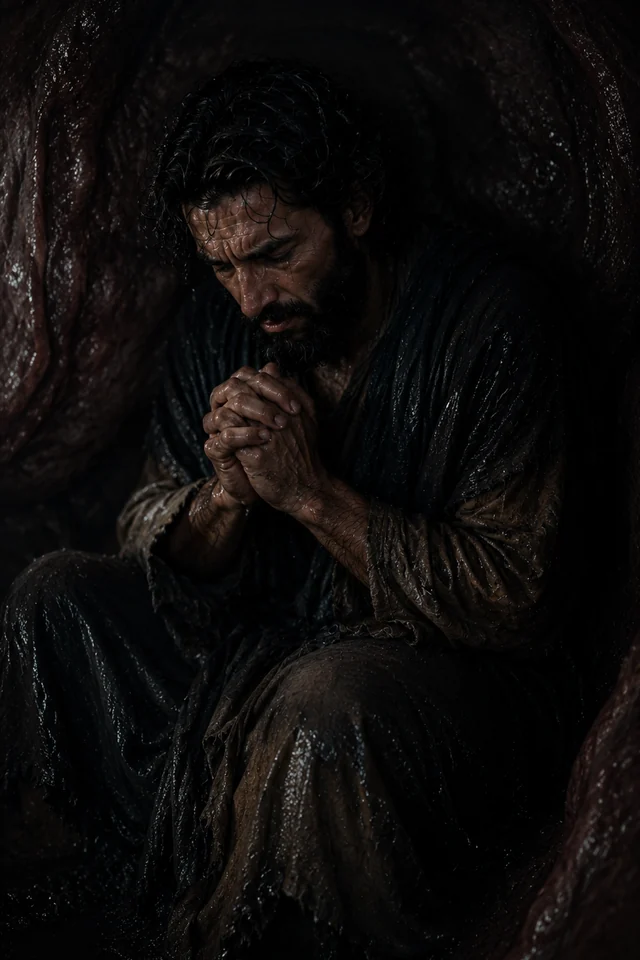
    The fish is an uncomfortable place to give thanks, but Jonah is already describing a rescue. The weeds, the depths, and the bars of the earth belong to his account of sinking; the prayer is spoken from the creature that has kept him from disappearing into that descent. Confinement and deliverance occupy the same space. Calling the fish only a punishment misses half the passage.

    The downward movement finally meets a stronger verb: brought up. Jonah remembers the temple while remaining far beyond its walls, and his prayer reaches the place his body cannot. Sacrifice and vows also recall the sailors in 1:16; the prophet is now speaking the language they had already put into practice. The great closing confession, Salvation is of the LORD, is followed by an undignified arrival on shore. The Book of Jonah does not confuse being delivered with making a graceful entrance.

    Verse by verse

    1. 2:2

      Hell translates Sheol, the realm of the dead. The poem uses the language of approaching death; it does not explicitly state that Jonah died and was raised.

    2. 2:6

      In Matthew 12:40 Jesus relates Jonah's three days and nights in the creature to the Son of man in the heart of the earth; Matthew 16:4 again names Jonah's sign.

    3. 2:10

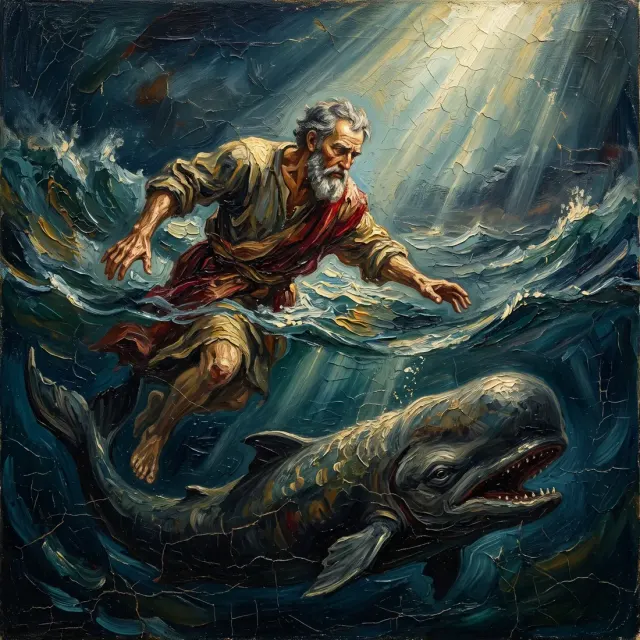
      Jonah 1:17 says great fish; the Greek ketos behind whale in Matthew 12:40 is a broad term for a large sea creature, not a modern species identification.

    Jonah 2:1-10

    King James Version · 10 verses

    2:1Then Jonah prayed unto the LORD his God out of the fish’s belly,

    2:2And said, I cried by reason of mine affliction unto the LORD, and he heard me; out of the belly of hell cried I, and thou heardest my voice.

    2:3For thou hadst cast me into the deep, in the midst of the seas; and the floods compassed me about: all thy billows and thy waves passed over me.

    2:4Then I said, I am cast out of thy sight; yet I will look again toward thy holy temple.

    2:5The waters compassed me about, even to the soul: the depth closed me round about, the weeds were wrapped about my head.

    2:6I went down to the bottoms of the mountains; the earth with her bars was about me for ever: yet hast thou brought up my life from corruption, O LORD my God.

    2:7When my soul fainted within me I remembered the LORD: and my prayer came in unto thee, into thine holy temple.

    2:8They that observe lying vanities forsake their own mercy.

    2:9But I will sacrifice unto thee with the voice of thanksgiving; I will pay that that I have vowed. Salvation is of the LORD.

    2:10And the LORD spake unto the fish, and it vomited out Jonah upon the dry land.

    Jonah 2:1-10: Out of the belly of hell
  4. 04

    Jonah 3:1-10

    Yet forty days

    Eight words in Hebrew, five in English, with no mention of God, repentance or hope. The people believe, the king comes off his throne, and the beasts are put in sackcloth.

    The second commission is not a smaller assignment. Nineveh is still great, and the message still belongs to the LORD. What has changed is the direction of Jonah's feet. His recorded announcement occupies eight English words; the response reaches from the least inhabitant to the king's throne. The royal decree does not create the first movement toward God. The people have already believed before the report reaches the palace.

    The king removes the garment that displays his rank and sits in ashes. Even the animals enter the public fast, but verse 10 will not let sackcloth become the whole explanation. God saw their works, that they turned from their evil way. The decree names violence in their hands; the response has to reach those hands. Nineveh does not purchase a reprieve through an impressive ceremony. It abandons the conduct named in the warning, and the threatened destruction is withheld.

    Verse by verse

    1. 3:3

      The three days' journey describes Nineveh's extent in some sense, but the text does not specify whether this is a crossing, a circuit, or the time required for the visit.

    2. 3:6

      The king is unnamed. Assigning a particular Assyrian ruler to this verse exceeds the information given.

    3. 3:10

      Repented of the evil describes God relenting from the announced calamity, not repenting of moral wrongdoing.

    4. 3:10

      Matthew 12:41 and Luke 11:32 explicitly cite the Ninevites' repentance at Jonah's preaching; Luke 11:30 also calls Jonah a sign to Nineveh.

    Jonah 3:1-10

    King James Version · 10 verses

    3:1And the word of the LORD came unto Jonah the second time, saying,

    3:2Arise, go unto Nineveh, that great city, and preach unto it the preaching that I bid thee.

    3:3So Jonah arose, and went unto Nineveh, according to the word of the LORD. Now Nineveh was an exceeding great city of three days’ journey.

    3:4And Jonah began to enter into the city a day’s journey, and he cried, and said, Yet forty days, and Nineveh shall be overthrown.

    3:5So the people of Nineveh believed God, and proclaimed a fast, and put on sackcloth, from the greatest of them even to the least of them.

    3:6For word came unto the king of Nineveh, and he arose from his throne, and he laid his robe from him, and covered him with sackcloth, and sat in ashes.

    3:7And he caused it to be proclaimed and published through Nineveh by the decree of the king and his nobles, saying, Let neither man nor beast, herd nor flock, taste any thing: let them not feed, nor drink water:

    3:8But let man and beast be covered with sackcloth, and cry mightily unto God: yea, let them turn every one from his evil way, and from the violence that is in their hands.

    3:9Who can tell if God will turn and repent, and turn away from his fierce anger, that we perish not?

    3:10And God saw their works, that they turned from their evil way; and God repented of the evil, that he had said that he would do unto them; and he did it not.

  5. 05

    Jonah 4:1-11

    Should I not spare Nineveh

    He is angry and says he knew God was gracious and merciful, which is why he fled. He sits east of the city to watch, and the argument ends with a gourd, a worm, and a question about a great city.

    Jonah's complaint is an accurate statement about God delivered as an accusation. Gracious, merciful, slow to anger: the language of Exodus 34:6 becomes the reason he wishes the mission had never succeeded. His problem is not that God has failed to be merciful. Mercy has reached the wrong address, according to Jonah's own protest. The text finally gives his motive, and it is sharper than a guessed fear of dangerous foreigners.

    The plant makes the disproportion visible. Jonah becomes exceedingly glad over its shade, then defends anger even unto death when it disappears. The LORD contrasts that concern with a city full of lives Jonah neither made nor sustains. The final mention of cattle brings even the creatures included in the fast back into view. No reply from Jonah is recorded. God gets the final speech, and that speech ends with living beings, not the prophet's damaged expectations.

    Verse by verse

    1. 4:2

      Jonah's confession closely parallels Joel 2:13, where the same divine character supports a call to return rather than a complaint about mercy.

    2. 4:6

      The Hebrew name of the plant does not justify certainty about its precise botanical species.

    3. 4:11

      Sixscore thousand means 120,000. Whether inability to distinguish right from left identifies young children or pictures the population's lack of discernment is disputed.

    4. 4:11

      The book does not record Jonah's eventual response to this final divine question.

    Jonah 4:1-11

    King James Version · 11 verses

    4:1But it displeased Jonah exceedingly, and he was very angry.

    4:2And he prayed unto the LORD, and said, I pray thee, O LORD, was not this my saying, when I was yet in my country? Therefore I fled before unto Tarshish: for I knew that thou art a gracious God, and merciful, slow to anger, and of great kindness, and repentest thee of the evil.

    4:3Therefore now, O LORD, take, I beseech thee, my life from me; for it is better for me to die than to live.

    4:4Then said the LORD, Doest thou well to be angry?

    4:5So Jonah went out of the city, and sat on the east side of the city, and there made him a booth, and sat under it in the shadow, till he might see what would become of the city.

    4:6And the LORD God prepared a gourd, and made it to come up over Jonah, that it might be a shadow over his head, to deliver him from his grief. So Jonah was exceeding glad of the gourd.

    4:7But God prepared a worm when the morning rose the next day, and it smote the gourd that it withered.

    4:8And it came to pass, when the sun did arise, that God prepared a vehement east wind; and the sun beat upon the head of Jonah, that he fainted, and wished in himself to die, and said, It is better for me to die than to live.

    4:9And God said to Jonah, Doest thou well to be angry for the gourd? And he said, I do well to be angry, even unto death.

    4:10Then said the LORD, Thou hast had pity on the gourd, for the which thou hast not laboured, neither madest it grow; which came up in a night, and perished in a night:

    4:11And should not I spare Nineveh, that great city, wherein are more than sixscore thousand persons that cannot discern between their right hand and their left hand; and also much cattle?


Why it matters

Jonah is the only prophetic book where the prophet is the problem, and the joke is on him throughout: the sailors behave better than he does, the fish obeys, the plant obeys, the worm obeys, the wind obeys, and the city obeys. He is angry about the mercy and says he knew this would happen, which is why he ran. The book ends on a question God asks him and he never answers, about a hundred and twenty thousand people who cannot tell their right hand from their left.

13 songs

The music

Every song in the catalogue whose passage falls inside these chapters.

  1. Jonah 1-2

    Down to the Deep

  2. Jonah 1:1-3

    He Rose Up to Flee

  3. Jonah 1:1–4:11

    Jonah (Mercy Beneath the Waves)

  4. Jonah 1:1-4:11

    Jonah, Definitive Edition

    Play here
    Open song pageRead lyrics
  5. Jonah 1:17-2:10

    Out of the Belly of Hell

  6. Jonah 1:7-10

    The Lot Fell upon Jonah

  7. Jonah 1:11-16

    The Sea Ceased from Her Raging

  8. Jonah 1:4-6

    What Meanest Thou, O Sleeper?

  9. Jonah 3:5-10

    God Saw Their Works

  10. Jonah 3:1-10

    He Warned a Nation

    Play here
    Open song pageRead lyrics
  11. Jonah 3-4

    The City Repented

  12. Jonah 3:1-4

    Yet Forty Days

  13. Jonah 4:1-11

    Should Not I Spare Nineveh?

Nearby

All the people

Report an error on this page