New · FreePlay The Witnesses The in-depth puzzle battle quest through Bible history

People of the Bible

Amos

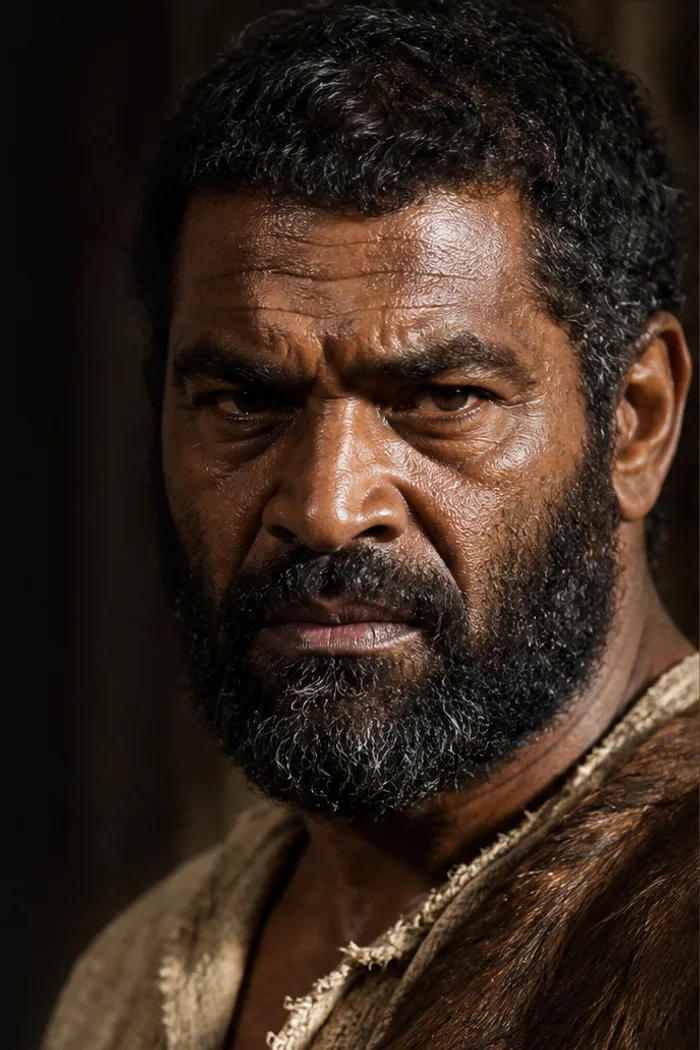
A herdsman from Judah who walked north into a rich country and told it its worship was noise.

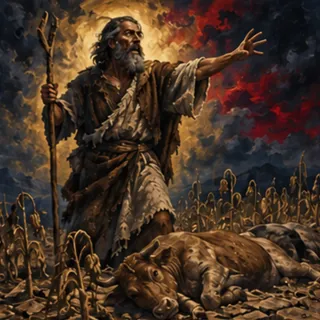
Amos is not a professional. He keeps sheep at Tekoa and tends sycamore figs, and he says so plainly when challenged: I was no prophet, neither was I a prophet’s son. He is sent to Israel in a prosperous reign, and he opens by pronouncing judgment on six surrounding nations in turn, which would have been popular, then on Judah, and then on Israel itself, at greater length than all the others combined. The priest at Bethel tells him to go home and earn his bread somewhere else.

Where he appearsAmos 1 to 9

Scroll down to the account
Amos

The movements, in the order the text gives them.

The Account of Amos

  1. 01

    Amos 1:1-2:16

    For three transgressions, and for four

    Damascus, Gaza, Tyre, Edom, Ammon, Moab, then Judah, each in the same formula. By the time he reaches Israel the pattern is established and the audience is already agreeing.

    Israel waits until the eighth accusation. Six foreign peoples come first, then Judah, then the kingdom named in the heading as the object of Amos's message. The repeated three and four makes each judgment sound settled before the next begins. By the time the formula reaches Israel, it is thoroughly familiar. Israel does not occupy the judge's bench. It has been standing at the end of the queue.

    The longest indictment is also the nearest to ordinary life: debts, shoes, pledged clothing, wine, a vulnerable woman shared by father and son. The altars do not interrupt the exploitation; they provide its setting. Clothes taken as security become something to recline upon during worship. Then the exodus enters the charge. A people brought out of bondage now sells the poor, gives wine to those vowed to abstain, and orders the prophets to stop speaking. The point is not that Israel lacked warning or deliverance. Both were given, and both have been answered with their opposite. The final collapse of speed, strength, weapons, and courage leaves the nation's celebrated advantages with nothing left to accomplish.

    Verse by verse

    1. 1:1

      Zechariah 14:5 still refers to the earthquake in Uzziah's reign. Amos dates his message relative to that remembered event, not by giving its calendar year.

    2. 1:3

      Three and four is an escalating numerical formula, not an instruction to find exactly four listed offenses in each oracle.

    3. 2:8

      Exodus 22:26-27 requires a pledged outer garment to be returned before nightfall because its owner needs it for covering.

    4. 2:12

      Numbers 6:3 excludes wine from the Nazirite vow. Giving Nazarites wine and silencing prophets attacks two forms of consecration expressly said to have come from God.

    Amos 1:1-2:16: For three transgressions, and for four

    Amos 1:1-2:16

    King James Version · 31 verses

    1:1The words of Amos, who was among the herdmen of Tekoa, which he saw concerning Israel in the days of Uzziah king of Judah, and in the days of Jeroboam the son of Joash king of Israel, two years before the earthquake.

    1:2And he said, The LORD will roar from Zion, and utter his voice from Jerusalem; and the habitations of the shepherds shall mourn, and the top of Carmel shall wither.

    1:3Thus saith the LORD; For three transgressions of Damascus, and for four, I will not turn away the punishment thereof; because they have threshed Gilead with threshing instruments of iron:

    1:4But I will send a fire into the house of Hazael, which shall devour the palaces of Ben-hadad.

    1:5I will break also the bar of Damascus, and cut off the inhabitant from the plain of Aven, and him that holdeth the sceptre from the house of Eden: and the people of Syria shall go into captivity unto Kir, saith the LORD.

    1:6Thus saith the LORD; For three transgressions of Gaza, and for four, I will not turn away the punishment thereof; because they carried away captive the whole captivity, to deliver them up to Edom:

    1:7But I will send a fire on the wall of Gaza, which shall devour the palaces thereof:

    1:8And I will cut off the inhabitant from Ashdod, and him that holdeth the sceptre from Ashkelon, and I will turn mine hand against Ekron: and the remnant of the Philistines shall perish, saith the Lord GOD.

    1:9Thus saith the LORD; For three transgressions of Tyrus, and for four, I will not turn away the punishment thereof; because they delivered up the whole captivity to Edom, and remembered not the brotherly covenant:

    1:10But I will send a fire on the wall of Tyrus, which shall devour the palaces thereof.

    1:11Thus saith the LORD; For three transgressions of Edom, and for four, I will not turn away the punishment thereof; because he did pursue his brother with the sword, and did cast off all pity, and his anger did tear perpetually, and he kept his wrath for ever:

    1:12But I will send a fire upon Teman, which shall devour the palaces of Bozrah.

    1:13Thus saith the LORD; For three transgressions of the children of Ammon, and for four, I will not turn away the punishment thereof; because they have ripped up the women with child of Gilead, that they might enlarge their border:

    1:14But I will kindle a fire in the wall of Rabbah, and it shall devour the palaces thereof, with shouting in the day of battle, with a tempest in the day of the whirlwind:

    1:15And their king shall go into captivity, he and his princes together, saith the LORD.

    2:1Thus saith the LORD; For three transgressions of Moab, and for four, I will not turn away the punishment thereof; because he burned the bones of the king of Edom into lime:

    2:2But I will send a fire upon Moab, and it shall devour the palaces of Kerioth: and Moab shall die with tumult, with shouting, and with the sound of the trumpet:

    2:3And I will cut off the judge from the midst thereof, and will slay all the princes thereof with him, saith the LORD.

    2:4Thus saith the LORD; For three transgressions of Judah, and for four, I will not turn away the punishment thereof; because they have despised the law of the LORD, and have not kept his commandments, and their lies caused them to err, after the which their fathers have walked:

    2:5But I will send a fire upon Judah, and it shall devour the palaces of Jerusalem.

    2:6Thus saith the LORD; For three transgressions of Israel, and for four, I will not turn away the punishment thereof; because they sold the righteous for silver, and the poor for a pair of shoes;

    2:7That pant after the dust of the earth on the head of the poor, and turn aside the way of the meek: and a man and his father will go in unto the same maid, to profane my holy name:

    2:8And they lay themselves down upon clothes laid to pledge by every altar, and they drink the wine of the condemned in the house of their god.

    2:9Yet destroyed I the Amorite before them, whose height was like the height of the cedars, and he was strong as the oaks; yet I destroyed his fruit from above, and his roots from beneath.

    2:10Also I brought you up from the land of Egypt, and led you forty years through the wilderness, to possess the land of the Amorite.

    2:11And I raised up of your sons for prophets, and of your young men for Nazarites. Is it not even thus, O ye children of Israel? saith the LORD.

    2:12But ye gave the Nazarites wine to drink; and commanded the prophets, saying, Prophesy not.

    2:13Behold, I am pressed under you, as a cart is pressed that is full of sheaves.

    2:14Therefore the flight shall perish from the swift, and the strong shall not strengthen his force, neither shall the mighty deliver himself:

    2:15Neither shall he stand that handleth the bow; and he that is swift of foot shall not deliver himself: neither shall he that rideth the horse deliver himself.

    2:16And he that is courageous among the mighty shall flee away naked in that day, saith the LORD.

  2. 02

    Amos 5:21-24

    I hate your feast days

    Take away from me the noise of your songs, I will not hear the melody of your viols. But let judgment run down as waters, and righteousness as a mighty stream.

    The songs may be beautifully performed. Nothing here says otherwise. Noise is God's verdict on worship severed from the justice demanded earlier in the chapter, not a review of the musicians' ability. Smell, acceptance, regard, hearing: one avenue after another is closed. The worshippers have plenty to offer, and none of it can make the treatment of the poor disappear.

    That is why the stream matters. Verse 24 is not a decorative motto placed after some uncomfortable remarks about religion. Earlier, justice was turned to wormwood and the poor were turned aside at the gate, where judgments were made. Now justice must move through the same society with the force and persistence of water. More volume from the singers will not answer the charge. The sound God refuses cannot substitute for the life he requires.

    Verse by verse

    1. 5:21

      Not smell rejects the acceptance of sacrificial worship. It is not a claim that the offerings lack a physical odor.

    2. 5:23

      The KJV viols denotes stringed instruments here, not specifically the bowed instruments of later European music.

    3. 5:24

      The Hebrew adjective translated mighty can express enduring strength or permanence, supporting the image of a reliable, unfailing flow.

    4. 5:21-24

      Stephen quotes Amos 5:25-27, immediately after this passage, in Acts 7:42-43 as part of his indictment of idolatrous worship.

    Amos 5:21-24

    King James Version · 4 verses

    5:21I hate, I despise your feast days, and I will not smell in your solemn assemblies.

    5:22Though ye offer me burnt offerings and your meat offerings, I will not accept them: neither will I regard the peace offerings of your fat beasts.

    5:23Take thou away from me the noise of thy songs; for I will not hear the melody of thy viols.

    5:24But let judgment run down as waters, and righteousness as a mighty stream.

    Amos 5:21-24: I hate your feast days
  3. 03

    Amos 7:7-9

    A plumbline

    The LORD stands on a wall made by a plumbline with a plumbline in his hand, and asks what he sees. The answer is a plumbline, and the meaning is that the measuring is not arbitrary.

    The vision is quieter than the locusts and fire that precede it, but the verdict is less reversible. In those earlier scenes Amos intercedes and the threatened disaster is withdrawn. Here there is a wall, an object in God's hand, and a declaration that Israel will no longer be passed over. No answering plea from Amos is recorded. The calmness is the severity.

    In the KJV's reading, the plumbline brings the uncompromising straightness of a builder's tool into the middle of the nation. Yet the passage does not actually describe the wall leaning or give a measurement of its defects. Its explicit interpretation is the coming desolation of sanctuaries and the sword against Jeroboam's house. The cherished places and the ruling dynasty stand together under the same verdict. Religious importance and royal permanence are not exemptions written into the instrument.

    Verse by verse

    1. 7:7

      The first two visions end with God relenting after Amos's intercession, in 7:3 and 7:6. That response does not appear after this vision.

    2. 7:8

      The declaration about not passing by Israel again recurs in 8:2, after the vision of summer fruit.

    3. 7:9

      The house of Jeroboam means the dynasty. It is not identical to the claim about Jeroboam personally that Amaziah reports in 7:11.

    Amos 7:7-9

    King James Version · 3 verses

    7:7Thus he shewed me: and, behold, the Lord stood upon a wall made by a plumbline, with a plumbline in his hand.

    7:8And the LORD said unto me, Amos, what seest thou? And I said, A plumbline. Then said the Lord, Behold, I will set a plumbline in the midst of my people Israel: I will not again pass by them any more:

    7:9And the high places of Isaac shall be desolate, and the sanctuaries of Israel shall be laid waste; and I will rise against the house of Jeroboam with the sword.

    Amos 7:7-9: A plumbline
  4. 04

    Amos 7:10-17

    I was no prophet

    Amaziah tells him to flee to Judah and prophesy there for a living. He answers that he was a herdsman and a gatherer of sycamore fruit, and that the LORD took him from following the flock.

    Amaziah calls Bethel the king's chapel and the king's court. Twice the king; no mention of whose word might outrank him there. His instruction to Amos joins earning bread to prophesying somewhere else, as though the difficulty were simply finding a more suitable market. Amos answers with a different account of his presence. He was taken from the flock and sent. Bethel's priest cannot cancel an appointment he did not make.

    The exchange is not a cheerful celebration of an outsider getting the better of an official. Its conclusion names prostitution, the killing of children, confiscation, and death abroad. The violence is not decorative, and the text gives no warrant to soften it. Amaziah has tried to forbid words about exile; the reply places exile inside his own household. The final sentence repeats the national deportation he reported. Silencing its messenger has not altered its substance.

    Verse by verse

    1. 7:11

      Amaziah reports the death of Jeroboam himself, whereas 7:9 names Jeroboam's house. The difference between the prophecy and the report should remain visible.

    2. 7:14

      A prophet's son can mean a member of a prophetic group, not necessarily a biological son; compare the groups in 2 Kings 2:3-7.

    3. 7:14

      Sycomore fruit belongs to the sycamore-fig tree. Amos names an agricultural occupation; he does not supply enough information to calculate his income.

    4. 7:17

      The book also promises restoration in Amos 9:11-15. James cites its rebuilding promise in Acts 15:15-18 when discussing the inclusion of Gentiles.

    Amos 7:10-17

    King James Version · 8 verses

    7:10Then Amaziah the priest of Beth-el sent to Jeroboam king of Israel, saying, Amos hath conspired against thee in the midst of the house of Israel: the land is not able to bear all his words.

    7:11For thus Amos saith, Jeroboam shall die by the sword, and Israel shall surely be led away captive out of their own land.

    7:12Also Amaziah said unto Amos, O thou seer, go, flee thee away into the land of Judah, and there eat bread, and prophesy there:

    7:13But prophesy not again any more at Beth-el: for it is the king’s chapel, and it is the king’s court.

    7:14Then answered Amos, and said to Amaziah, I was no prophet, neither was I a prophet’s son; but I was an herdman, and a gatherer of sycomore fruit:

    7:15And the LORD took me as I followed the flock, and the LORD said unto me, Go, prophesy unto my people Israel.

    7:16Now therefore hear thou the word of the LORD: Thou sayest, Prophesy not against Israel, and drop not thy word against the house of Isaac.

    7:17Therefore thus saith the LORD; Thy wife shall be an harlot in the city, and thy sons and thy daughters shall fall by the sword, and thy land shall be divided by line; and thou shalt die in a polluted land: and Israel shall surely go into captivity forth of his land.

    Amos 7:10-17: I was no prophet

Why it matters

Amos is the reason the phrase social justice has an Old Testament pedigree. His charge is not idolatry but the selling of the righteous for silver and the poor for a pair of shoes, beds of ivory, and wine drunk in bowls while the ruin of Joseph goes unnoticed. God says he hates their feast days and will not hear the melody of their viols, and then names the alternative in one line that Martin Luther King quoted: let judgment run down as waters, and righteousness as a mighty stream.

9 songs

The music

Every song in the catalogue whose passage falls inside these chapters.

  1. Amos 1:1–9:15

    Amos (Let Justice Roll)

  2. Amos 1:1-2:5

    The LORD Will Roar from Zion

  3. Amos 2:6-3:15

    You Only Have I Known

  4. Amos 4:1-13

    Prepare to Meet Thy God

  5. Amos 5:1-6:14

    Let Judgment Run Down as Waters

  6. Amos 7:1-9

    A Plumbline in the Midst

  7. Amos 7:10-17

    I Was No Prophet

  8. Amos 8:1-14

    A Famine of Hearing the Words

  9. Amos 9:1-15

    I Will Raise Up the Tabernacle of David

The videos

The videos

Every release whose passage falls inside these chapters, playing here.

Nearby

All the people

Report an error on this page