New · FreePlay The Witnesses The in-depth puzzle battle quest through Bible history

People of the Bible

Hosea

Was told to marry a woman who would leave him, and then told to go and buy her back.

Hosea prophesies in the last decades of the northern kingdom, and the message is delivered through his own household before it is ever preached. He is told to take a wife of whoredoms, and the three children are named as sentences: Jezreel, then Lo-ruhamah, not pitied, then Lo-ammi, not my people. Later he is told to love her again, and he buys her for fifteen pieces of silver and a homer and a half of barley, which is roughly the price of a slave, and tells her to wait for him.

Where he appearsHosea 1 to 14

Scroll down to the account
Hosea

The movements, in the order the text gives them.

The Account of Hosea

  1. 01

    Hosea 1:2-9

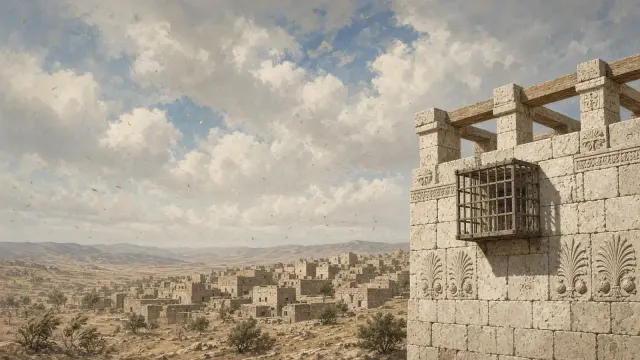
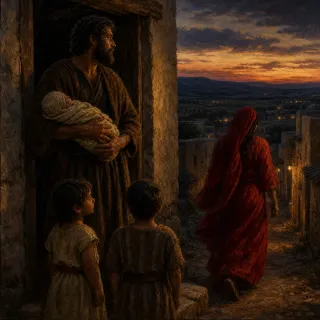
    Three children, three sentences

    Jezreel for the blood of a dynasty, Lo-ruhamah because mercy is running out, and Lo-ammi, not my people, which reverses the oldest promise in the covenant.

    The names are the sentences. A child is born, and a kingdom receives its verdict. Jezreel names a place of bloodshed; Loruhamah announces the withdrawal of mercy; Loammi strikes at belonging itself. The movement is steadily inward: first the dynasty, then the protection of the nation, then the relationship on which its identity rests. The last name is not merely another threat of military defeat. It puts a negative into the words that made Israel a people.

    The Book of Hosea anchors this terrible vocabulary in ordinary family time. Gomer has a father named Diblaim. A daughter is weaned before another son is conceived. These are not three labels thrown into a speech at once. Birth and weaning carry the message through the household's actual succession of days. Yet the explanations attached to the names concern Israel's conduct, not wrongdoing committed by newborn children. The children carry the indictment; the nation is its defendant.

    Judah's exception sharpens the warning rather than softening it into general optimism. Its deliverance will not come by the bow, sword, battle, horses, or horsemen. The passage steadily removes the equipment a kingdom might list as reasons for confidence. Israel's bow will break; Judah's weapons will not be its saviour. Neither kingdom is being invited to congratulate its army.

    Verse by verse

    1. 1:2

      The phrase wife of whoredoms has been read as describing Gomer at the time of marriage or in light of subsequent unfaithfulness. The verse does not provide a separate chronology of her conduct.

    2. 1:3

      Only the first birth explicitly says bare him a son. The omission of him from the later notices does not by itself establish the paternity of either later child.

    3. 1:4

      Second Kings 10:30 approves Jehu's action against Ahab's house, while Hosea announces judgment on Jehu's house for Jezreel's bloodshed. The relationship between those assessments is debated; Hosea does not explain the tension here.

    4. 1:6

      Loruhamah means not pitied or not shown mercy. The name's explanation concerns the house of Israel, distinguished from Judah in the following verse.

    5. 1:9

      Loammi means not my people. Hosea 1:10 and 2:23 explicitly reverse the rejection, so verse 9 should not be made the book's final statement about Israel.


    Hosea 1:2-9

    King James Version · 8 verses

    1:2The beginning of the word of the LORD by Hosea. And the LORD said to Hosea, Go, take unto thee a wife of whoredoms and children of whoredoms: for the land hath committed great whoredom, departing from the LORD.

    1:3So he went and took Gomer the daughter of Diblaim; which conceived, and bare him a son.

    1:4And the LORD said unto him, Call his name Jezreel; for yet a little while, and I will avenge the blood of Jezreel upon the house of Jehu, and will cause to cease the kingdom of the house of Israel.

    1:5And it shall come to pass at that day, that I will break the bow of Israel in the valley of Jezreel.

    1:6And she conceived again, and bare a daughter. And God said unto him, Call her name Lo-ruhamah: for I will no more have mercy upon the house of Israel; but I will utterly take them away.

    1:7But I will have mercy upon the house of Judah, and will save them by the LORD their God, and will not save them by bow, nor by sword, nor by battle, by horses, nor by horsemen.

    1:8Now when she had weaned Lo-ruhamah, she conceived, and bare a son.

    1:9Then said God, Call his name Lo-ammi: for ye are not my people, and I will not be your God.

    Hosea 1:2-9: Three children, three sentences
  2. 02

    Hosea 2:14-23

    A door of hope

    He will allure her into the wilderness and speak comfortably to her, and the valley of Achor, which was where Achan died, becomes a door of hope.

    Therefore takes a startling turn. The previous verse ends with Israel forgetting the LORD; this one answers with allure, wilderness, and speech to the heart. The charge of betrayal has not been withdrawn. The direction of the speech has changed. Even the landscape changes its meaning. Wilderness, threatened as desolation in 2:3, becomes the setting for renewed address; the valley associated with Achan's judgment becomes a door of hope. The promise returns to the exodus, but it does not merely repeat the journey. It reopens a broken relationship.

    Three times the betrothal is announced. Its terms are righteousness, judgment, lovingkindness, mercies, and faithfulness. Reconciliation here is not an agreement to stop mentioning what went wrong. Justice belongs inside the marriage language, not outside it. The broken bow makes the same point through an object. In 1:5 its breaking meant Israel's defeat. In 2:18 the removal of weapons means that the restored people can lie down safely. The same snapped weapon, a different world around it.

    Then the harvest becomes a chain of answering voices: heaven, earth, grain, wine, oil, Jezreel. Earlier, Israel credited the lovers with these gifts and failed to recognize their giver. Now their provision is traced back to the LORD. Baal does not get to collect the thanks for somebody else's grain. The final verse also answers all three children's names: Jezreel becomes sowing, the unpitied receives mercy, and the rejected people are acknowledged again. The restoration is precise enough to call the household by name.

    Verse by verse

    1. 2:14

      Speak comfortably translates the Hebrew idiom of speaking to the heart. Isaiah 40:2 uses the same idiom when Jerusalem is addressed with comfort.

    2. 2:15

      Joshua 7:24-26 locates Achan's judgment in the valley of Achor. Hosea deliberately gives that place of judgment the new function of an opening into hope.

    3. 2:16

      Ishi means my husband; Baali can mean my master or my husband but also carries the name Baal. Verse 17 makes the removal of that divine name the immediate context of the change.

    4. 2:18

      The broken bow echoes Hosea 1:5, but its significance changes from national defeat to the removal of warfare and the possibility of safety.

    5. 2:23

      Jezreel combines the Hebrew root for sowing with El, God. I will sow her activates that meaning and reverses the first child's association with impending judgment.

    6. 2:23

      First Peter 2:10 echoes both halves of the reversal: becoming God's people and receiving mercy. Its wording retains the paired concerns of belonging and compassion.

    Hosea 2:14-23

    King James Version · 10 verses

    2:14Therefore, behold, I will allure her, and bring her into the wilderness, and speak comfortably unto her.

    2:15And I will give her her vineyards from thence, and the valley of Achor for a door of hope: and she shall sing there, as in the days of her youth, and as in the day when she came up out of the land of Egypt.

    2:16And it shall be at that day, saith the LORD, that thou shalt call me Ishi; and shalt call me no more Baali.

    2:17For I will take away the names of Baalim out of her mouth, and they shall no more be remembered by their name.

    2:18And in that day will I make a covenant for them with the beasts of the field, and with the fowls of heaven, and with the creeping things of the ground: and I will break the bow and the sword and the battle out of the earth, and will make them to lie down safely.

    2:19And I will betroth thee unto me for ever; yea, I will betroth thee unto me in righteousness, and in judgment, and in lovingkindness, and in mercies.

    2:20I will even betroth thee unto me in faithfulness: and thou shalt know the LORD.

    2:21And it shall come to pass in that day, I will hear, saith the LORD, I will hear the heavens, and they shall hear the earth;

    2:22And the earth shall hear the corn, and the wine, and the oil; and they shall hear Jezreel.

    2:23And I will sow her unto me in the earth; and I will have mercy upon her that had not obtained mercy; and I will say to them which were not my people, Thou art my people; and they shall say, Thou art my God.

    Hosea 2:14-23: A door of hope
  3. 03

    Hosea 3:1-5

    Fifteen pieces of silver

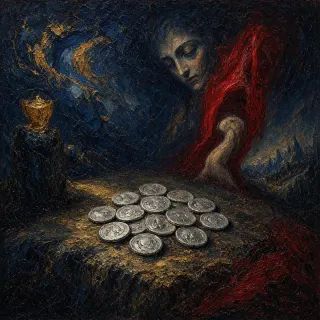
    Go again, love a woman beloved of her friend yet an adulteress. He buys her, names the price in silver and barley, and tells her to abide for him many days.

    The silver is counted. The woman's answer is not recorded. That difference matters in a passage often expanded into an elaborate scene of bargaining, public humiliation, and tearful reunion. Hosea gives fifteen pieces of silver, a homer and a half of barley, and the terms of an arrangement. He does not give an auctioneer, a crowd, or a speech from the woman. The command is to love, and its stated measure is the LORD's love for Israel while Israel is turning elsewhere. The comparison is explicit; the missing scene is not available to fill in.

    Many days is the hinge. It describes the woman's required waiting in verse 3 and Israel's condition in verse 4. Buying is not followed by an immediate return to ordinary life. The explanation moves through six absences, arranged in pairs: king and prince, sacrifice and image, ephod and teraphim. The nation's loss reaches both its government and its religious arrangements. It is not simply told to swap one object of worship for another and carry on unchanged.

    Afterward then opens beyond that interval. The people will seek both the LORD and David their king, language that turns the northern kingdom's hope toward the Davidic relationship rather than merely the recovery of any throne. The last phrase has an unusual object for fear: the LORD and his goodness. The chapter's destination is not only submission before power. Goodness itself is part of what makes the return an encounter of trembling seriousness.

    Verse by verse

    1. 3:1

      The woman is not named in this chapter. Identifying her with Gomer connects chapters 1 and 3, but readers differ, and the identification should not be presented as an explicit statement of verse 1.

    2. 3:2

      The payment combines silver and barley. No seller, auction, or equivalent total price in silver is specified, so a detailed sale scene or a definite thirty-shekel valuation goes beyond the verse.

    3. 3:3

      Many days recurs in verse 4 and supplies the stated link between the household action and Israel's prolonged deprivation. The exact terms of Hosea's own abstention in the last clause are interpreted differently.

    4. 3:4

      Teraphim are household cult images, as also in Genesis 31:19 and 31:34. Their presence beside royal and priestly terms makes the list wider than a catalogue of one institution.

    5. 3:5

      David their king looks forward rather than reporting the reign of the historical David. Ezekiel 37:24-25 likewise uses David's name in a promise of future rule over a reunited people.

    Hosea 3:1-5

    King James Version · 5 verses

    3:1Then said the LORD unto me, Go yet, love a woman beloved of her friend, yet an adulteress, according to the love of the LORD toward the children of Israel, who look to other gods, and love flagons of wine.

    3:2So I bought her to me for fifteen pieces of silver, and for an homer of barley, and an half homer of barley:

    3:3And I said unto her, Thou shalt abide for me many days; thou shalt not play the harlot, and thou shalt not be for another man: so will I also be for thee.

    3:4For the children of Israel shall abide many days without a king, and without a prince, and without a sacrifice, and without an image, and without an ephod, and without teraphim:

    3:5Afterward shall the children of Israel return, and seek the LORD their God, and David their king; and shall fear the LORD and his goodness in the latter days.

    Hosea 3:1-5: Fifteen pieces of silver
  4. 04

    Hosea 11:1-9

    How shall I give you up

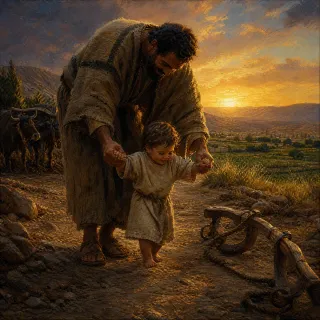
    I taught Ephraim to walk, taking them by their arms. The judgment is real and then it breaks off mid sentence: my heart is turned within me, my repentings are kindled together.

    Before the sword appears, there are arms teaching a child to walk. The accusation begins with care so ordinary that its giver goes unrecognized: they knew not that I healed them. This is the same failure of recognition exposed in 2:8, where Israel does not know who supplied the grain, wine, and oil. Here the gifts are even more intimate. Movement, healing, release from a yoke, food placed within reach. The account of rebellion begins with the patient work that made the child's life possible.

    The tenderness does not cancel the approaching Assyrian rule or the sword over the cities. Nor does the passage insert a national repentance before the sudden movement of compassion. Verse 7 still calls the people bent to backsliding; verse 8 turns within the divine speech itself. Admah and Zeboim give the threatened destruction a terrible scale. These are not names for an unpleasant season that passes. Deuteronomy 29:23 places them with Sodom and Gomorrah in a landscape of overthrow and barrenness.

    The reason given for stopping short of that end is remarkable: for I am God, and not man; the Holy One in the midst of thee. God's difference from humanity explains restraint, not a greater capacity to retaliate. The holiness has not disappeared, and neither has the judgment already announced. But in this sentence the Holy One is precisely the one who refuses to finish Ephraim by destruction. Holiness is not presented as the obstacle mercy somehow overcomes. Here it is the reason mercy remains.

    Verse by verse

    1. 11:3

      Taught Ephraim also to go means teaching Ephraim to walk. Ephraim and Israel stand in parallel in verse 8, making the national reference explicit.

    2. 11:4

      The KJV's yoke and feeding language draws on the care of an animal. Meat here means food, not specifically animal flesh.

    3. 11:8

      Deuteronomy 29:23 names Admah and Zeboim alongside Sodom and Gomorrah among the cities overthrown in divine anger. Their names make the prospect one of devastating judgment, not merely political inconvenience.

    4. 11:8

      Repentings renders a Hebrew noun that Brown-Driver-Briggs glosses here as compassion. It describes the stirring of divine pity, not a confession that God has committed a moral wrong.

    5. 11:9

      Hosea's insistence on mercy also appears in 6:6. Jesus quotes that verse in Matthew 9:13 and 12:7, in disputes about eating with sinners and the Sabbath, respectively.

    Hosea 11:1-9

    King James Version · 9 verses

    11:1When Israel was a child, then I loved him, and called my son out of Egypt.

    11:2As they called them, so they went from them: they sacrificed unto Baalim, and burned incense to graven images.

    11:3I taught Ephraim also to go, taking them by their arms; but they knew not that I healed them.

    11:4I drew them with cords of a man, with bands of love: and I was to them as they that take off the yoke on their jaws, and I laid meat unto them.

    11:5He shall not return into the land of Egypt, but the Assyrian shall be his king, because they refused to return.

    11:6And the sword shall abide on his cities, and shall consume his branches, and devour them, because of their own counsels.

    11:7And my people are bent to backsliding from me: though they called them to the most High, none at all would exalt him.

    11:8How shall I give thee up, Ephraim? how shall I deliver thee, Israel? how shall I make thee as Admah? how shall I set thee as Zeboim? mine heart is turned within me, my repentings are kindled together.

    11:9I will not execute the fierceness of mine anger, I will not return to destroy Ephraim: for I am God, and not man; the Holy One in the midst of thee: and I will not enter into the city.

    Hosea 11:1-9: How shall I give you up

Why it matters

Hosea is where the covenant stops being described as a contract and starts being described as a marriage, and the book never lets the reader off the hook about which party is which. Its most quoted line, I desired mercy and not sacrifice, is used twice by Jesus against people who were technically correct. And its turning point is not a threat but a question: how shall I give you up, how shall I hand you over, my heart is turned within me.

9 songs

The music

Every song in the catalogue whose passage falls inside these chapters.

  1. Hosea 1:1–14:9

    Hosea (Return to Me)

  2. Hosea 1:1-11

    Not My People, Yet Sons of the Living God

  3. Hosea 2:14-23

    A Door of Hope

  4. Hosea 2:1-13

    I Will Hedge Up Thy Way

  5. Hosea 3:1-5

    Fifteen Pieces of Silver

  6. Hosea 4:1-6:11

    I Desired Mercy, and Not Sacrifice

  7. Hosea 7:1-10:15

    They Have Sown the Wind

  8. Hosea 11:1-12

    How Shall I Give Thee Up?

  9. Hosea 12:1-14:9

    I Will Be as the Dew

Nearby

All the people

Report an error on this page