New · FreePlay The Witnesses The in-depth puzzle battle quest through Bible history

People of the Bible

Joel

Preached a sermon about locusts that turned into the text Peter used on the day the church began.

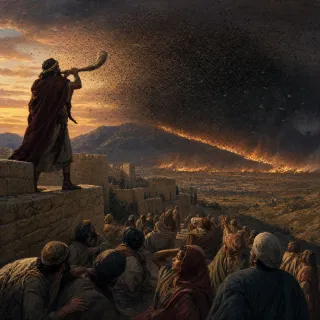
Joel gives no dates and almost no biography. What he has is an emergency: a plague of locusts in four waves has stripped the land, the grain offering and the drink offering are cut off from the house of the LORD because there is nothing left to offer, and the priests are told to lie all night in sackcloth. He calls a fast and a solemn assembly, gathers the elders, the children and the nursing infants, and then says the thing the book is remembered for: rend your heart and not your garments.

Where he appearsJoel 1 to 3

Scroll down to the account
Joel

The movements, in the order the text gives them.

The Account of Joel

  1. 01

    Joel 1:1-12

    What the palmerworm left

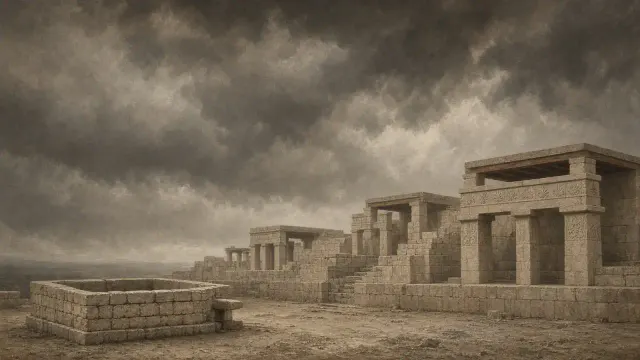
    Four waves named in one verse, each eating what the last one left. The vine is dried up, the fig tree languishes, and joy is withered away from the sons of men.

    Drunkards and priests appear in the same inventory of loss, and the pairing has an edge. Both have been deprived of wine, but for very different reasons. Joel moves from mouths to altars without changing the crop. The disaster has reached places that ordinarily have little reason to share a paragraph. There is no comfortable division here between an economic emergency outside and religious life proceeding normally inside.

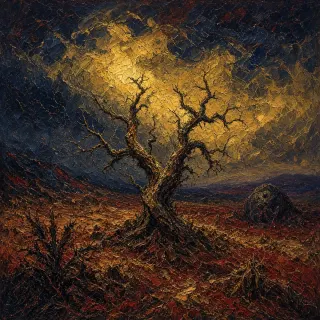
    The stripped fig tree gives the devastation its terrible precision. Not merely missing fruit: missing bark, white branches, a living thing scraped bare. Then the list of ruined plants ends with something that does not grow on a tree. Joy is withered away. The Hebrew repeats the drying-up language for vegetation and human gladness. Joel has not left the fields to discuss the people. By the end of the paragraph, both are withering together.

    Verse by verse

    1. 1:1

      The heading names Joel and his father but supplies no king or regnal date. A precise date for his ministry cannot be extracted from this verse.

    2. 1:9

      The KJV meat offering is a grain offering, not an animal portion; Leviticus 2:1 specifies fine flour, oil, and frankincense.

    3. 1:7

      Barked means stripped of bark. The white branches are physical evidence of the destruction, not a description of healthy blossom.

    Joel 1:1-12

    King James Version · 12 verses

    1:1The word of the LORD that came to Joel the son of Pethuel.

    1:2Hear this, ye old men, and give ear, all ye inhabitants of the land. Hath this been in your days, or even in the days of your fathers?

    1:3Tell ye your children of it, and let your children tell their children, and their children another generation.

    1:4That which the palmerworm hath left hath the locust eaten; and that which the locust hath left hath the cankerworm eaten; and that which the cankerworm hath left hath the caterpiller eaten.

    1:5Awake, ye drunkards, and weep; and howl, all ye drinkers of wine, because of the new wine; for it is cut off from your mouth.

    1:6For a nation is come up upon my land, strong, and without number, whose teeth are the teeth of a lion, and he hath the cheek teeth of a great lion.

    1:7He hath laid my vine waste, and barked my fig tree: he hath made it clean bare, and cast it away; the branches thereof are made white.

    1:8Lament like a virgin girded with sackcloth for the husband of her youth.

    1:9The meat offering and the drink offering is cut off from the house of the LORD; the priests, the LORD’s ministers, mourn.

    1:10The field is wasted, the land mourneth; for the corn is wasted: the new wine is dried up, the oil languisheth.

    1:11Be ye ashamed, O ye husbandmen; howl, O ye vinedressers, for the wheat and for the barley; because the harvest of the field is perished.

    1:12The vine is dried up, and the fig tree languisheth; the pomegranate tree, the palm tree also, and the apple tree, even all the trees of the field, are withered: because joy is withered away from the sons of men.


  2. 02

    Joel 1:13-20

    Sanctify a fast

    The priests are told to gird themselves and lament, because the offering is cut off from the house of their God. Even the beasts groan, and the cattle are perplexed because there is no pasture.

    A fast during a food crisis is not redundant. Hunger has already been imposed; a consecrated fast makes the response deliberate and communal. The priests cannot supply the missing offerings, but they can gather the people, exchange their ordinary service for lament, and call upon the God whose house now lacks its provisions. Joel does not mistake a functioning religious institution for an untouched one.

    Then the congregation grows beyond the people assembled at the temple. The cattle groan, the sheep suffer, and the wild animals direct their thirst toward God. Joel's own cry in verse 19 stands beside theirs in verse 20. This is not a charming animal scene. The watercourses are dry. The repeated appeal makes the prophet one voice within a land-wide cry, not a detached observer explaining the drought from somewhere comfortable.

    Verse by verse

    1. 1:14

      Sanctify means set apart for a sacred purpose. The command concerns a publicly appointed fast, not merely the unavoidable absence of food.

    2. 1:17

      Garners are storehouses for grain. Seed, storage, and harvest all fail within the same verse.

    3. 1:20

      The animals also cry to God, but the passage does not describe them confessing human sins. Their distress belongs to the devastation of the land.

    Joel 1:13-20

    King James Version · 8 verses

    1:13Gird yourselves, and lament, ye priests: howl, ye ministers of the altar: come, lie all night in sackcloth, ye ministers of my God: for the meat offering and the drink offering is withholden from the house of your God.

    1:14Sanctify ye a fast, call a solemn assembly, gather the elders and all the inhabitants of the land into the house of the LORD your God, and cry unto the LORD,

    1:15Alas for the day! for the day of the LORD is at hand, and as a destruction from the Almighty shall it come.

    1:16Is not the meat cut off before our eyes, yea, joy and gladness from the house of our God?

    1:17The seed is rotten under their clods, the garners are laid desolate, the barns are broken down; for the corn is withered.

    1:18How do the beasts groan! the herds of cattle are perplexed, because they have no pasture; yea, the flocks of sheep are made desolate.

    1:19O LORD, to thee will I cry: for the fire hath devoured the pastures of the wilderness, and the flame hath burned all the trees of the field.

    1:20The beasts of the field cry also unto thee: for the rivers of waters are dried up, and the fire hath devoured the pastures of the wilderness.

  3. 03

    Joel 2:12-17

    Rend your heart

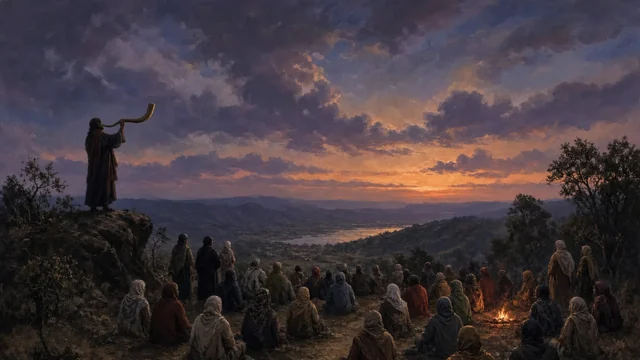
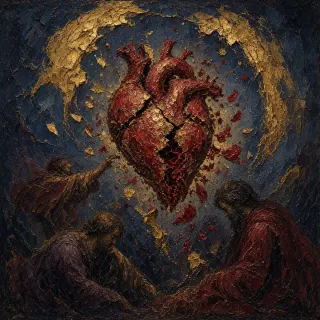
    Turn with all your heart, with fasting and weeping and mourning, and rend your heart and not your garments, for he is gracious and merciful, and repents him of the evil.

    The garment is not the problem. The untouched heart inside it is. Joel has already required sackcloth, and he still requires fasting, gathering, and tears; the demand for an inward turning does not cancel the outward acts. It denies them the right to stand in for the thing they are meant to express. Torn cloth cannot perform repentance on somebody else's behalf.

    The ground for returning is God's stated character, not a promise that sufficient grief will force his hand. Verse 14 leaves the outcome open. Even the blessing imagined there is strikingly modest: enough grain and wine for an offering again. Then every ordinary boundary gives way, from the age of the nursing infant to the privacy of the bridal chamber. The priests appeal to a relationship already named: these are God's people and God's inheritance. Their plea rests on belonging, not on an impressive account of their achievements.

    Verse by verse

    1. 2:13

      Rend means tear. The contrast concerns genuine repentance rather than merely displaying its conventional signs.

    2. 2:13-14

      The evil from which God relents is threatened calamity, not a moral wrong committed by God. The Hebrew wording must be read in that context.

    3. 2:17

      The porch and altar identify the temple setting of the priestly plea. The text specifies their position without inventing a private scene inside the sanctuary.

    Joel 2:12-17

    King James Version · 6 verses

    2:12Therefore also now, saith the LORD, turn ye even to me with all your heart, and with fasting, and with weeping, and with mourning:

    2:13And rend your heart, and not your garments, and turn unto the LORD your God: for he is gracious and merciful, slow to anger, and of great kindness, and repenteth him of the evil.

    2:14Who knoweth if he will return and repent, and leave a blessing behind him; even a meat offering and a drink offering unto the LORD your God?

    2:15Blow the trumpet in Zion, sanctify a fast, call a solemn assembly:

    2:16Gather the people, sanctify the congregation, assemble the elders, gather the children, and those that suck the breasts: let the bridegroom go forth of his chamber, and the bride out of her closet.

    2:17Let the priests, the ministers of the LORD, weep between the porch and the altar, and let them say, Spare thy people, O LORD, and give not thine heritage to reproach, that the heathen should rule over them: wherefore should they say among the people, Where is their God?

    Joel 2:12-17: Rend your heart
  4. 04

    Joel 2:28-32

    I will pour out my spirit

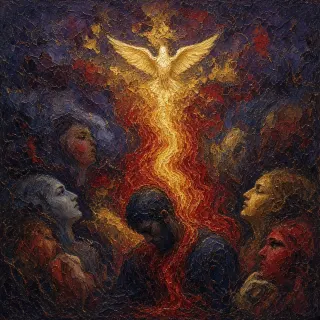
    Upon all flesh. Sons and daughters prophesying, old men dreaming, young men seeing visions, and on the servants and the handmaids in those days will I pour out my spirit.

    The servants are not brought in to carry anything. They receive the Spirit. That small social detail prevents all flesh from dissolving into a grand but empty phrase: daughters as well as sons, old and young, male and female servants are expressly included. The abundance announced earlier in the chapter has moved beyond full threshing floors. God's gift is no longer described only in terms of what the land produces.

    Acts 2:16-21 identifies this passage as the explanation of Pentecost, not as an attractive quotation attached afterward. Peter names Joel. Still, the darkened heavens and the day of the LORD keep the promise larger than a single peaceful scene; the exact reach of those signs remains disputed. The ending joins two calls without flattening either: people call upon the LORD, and the surviving remnant consists of those whom the LORD calls. The invitation and the initiative meet in one verse.

    Verse by verse

    1. 2:28-29

      Pour out presents an abundant gift. The list explains its breadth across age, sex, and social position; it does not say every person automatically receives it.

    2. 2:28

      Acts 2:17 renders Joel's afterward as in the last days and Acts 2:18 repeats that the servants will prophesy.

    3. 2:32

      Joel names Zion and Jerusalem as places of deliverance. Romans 10:12-13 cites the promise while expressly rejecting a Jew-Greek distinction in access to the Lord.

    Joel 2:28-32

    King James Version · 5 verses

    2:28And it shall come to pass afterward, that I will pour out my spirit upon all flesh; and your sons and your daughters shall prophesy, your old men shall dream dreams, your young men shall see visions:

    2:29And also upon the servants and upon the handmaids in those days will I pour out my spirit.

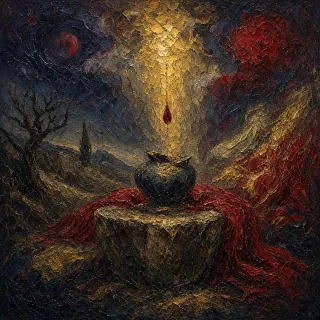
    2:30And I will shew wonders in the heavens and in the earth, blood, and fire, and pillars of smoke.

    2:31The sun shall be turned into darkness, and the moon into blood, before the great and the terrible day of the LORD come.

    2:32And it shall come to pass, that whosoever shall call on the name of the LORD shall be delivered: for in mount Zion and in Jerusalem shall be deliverance, as the LORD hath said, and in the remnant whom the LORD shall call.

    Joel 2:28-32: I will pour out my spirit

Why it matters

Joel takes a agricultural disaster and reads it as a summons, and then widens without warning. The promise of restored years that the locust has eaten is followed immediately by a pouring out of the Spirit on all flesh, sons and daughters, old men and young men, servants and handmaids. Peter stands up in Jerusalem at nine in the morning and says this is that which was spoken by the prophet Joel, and the whole of Acts follows from it.

9 songs

The music

Every song in the catalogue whose passage falls inside these chapters.

  1. Joel 1:1–3:21

    Joel (Blow the Trumpet in Zion)

  2. Joel 1:13-20

    Sanctify Ye a Fast

  3. Joel 1:1-12

    The Field Is Wasted

  4. Joel 2:1-11

    Blow Ye the Trumpet in Zion

  5. Joel 2:28-32

    I Will Pour Out My Spirit

  6. Joel 2:18-27

    I Will Restore the Years

  7. Joel 2:12-17

    Rend Your Heart

  8. Joel 3:17-21

    A Fountain Shall Come Forth

  9. Joel 3:1-16

    The Valley of Decision

Nearby

All the people

Report an error on this page