
New · FreePlay The Witnesses The in-depth puzzle battle quest through Bible history

People of the Bible

Zephaniah

Traced his own family back four generations to a king, and then announced the end of everything.

Zephaniah gives a longer genealogy than any other prophet, back to Hezekiah, and prophesies in the days of Josiah, which places him at or just before the great reform. The opening is total: I will utterly consume all things from off the land, man and beast, the fowls of the heaven and the fishes of the sea. What follows is the day of the LORD described as darkness and gloominess, a day of the trumpet and alarm, in which neither silver nor gold shall be able to deliver them.

Where he appearsZephaniah 1 to 3

Scroll down to the account
Zephaniah

The movements, in the order the text gives them.

The Account of Zephaniah

  1. 01

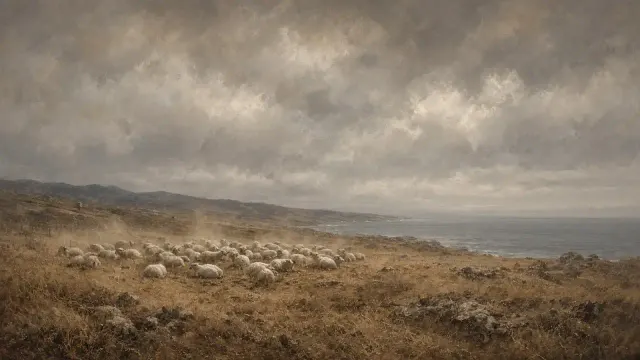
    Zephaniah 1:2-6

    I will utterly consume

    The sweep is deliberately total and runs backwards through creation, beasts, birds and fish, before narrowing to those who worship the host of heaven on the housetops.

    The sweep begins wider than any army's reach: people, animals, birds, even fish. Then the address contracts to Judah and Jerusalem. That movement is the shock. The city is not standing outside the threatened world, watching judgment happen elsewhere. The hand stretches toward it too.

    The list of worshippers is more searching than a simple division between believers and unbelievers. Some bow to the heavenly bodies. Some swear by the LORD and by Malcham, keeping both allegiances in circulation. Others have turned away; others have not bothered to seek him at all. Including the divine name in an oath does not remove a person from the indictment. The repeated and keeps adding people whom a tidier religious classification might have separated. Zephaniah exposes not only replacement worship but divided worship and settled neglect.

    Verse by verse

    1. 1:2

      The preceding heading dates the prophecy to Josiah and traces four generations to Hizkiah. That ancestor may be King Hezekiah, but the heading does not give him the title king.

    2. 1:4

      Baal worship and idolatrous priests also appear among the practices removed by Josiah in 2 Kings 23:4-5. The shared setting does not by itself date this oracle before or after a particular reform.

    3. 1:5

      The host of heaven means the heavenly bodies worshipped on the roofs. The verse distinguishes that practice from the double oath invoking both the LORD and Malcham.

    Zephaniah 1:2-6

    King James Version · 5 verses

    1:2I will utterly consume all things from off the land, saith the LORD.

    1:3I will consume man and beast; I will consume the fowls of the heaven, and the fishes of the sea, and the stumblingblocks with the wicked; and I will cut off man from off the land, saith the LORD.

    1:4I will also stretch out mine hand upon Judah, and upon all the inhabitants of Jerusalem; and I will cut off the remnant of Baal from this place, and the name of the Chemarims with the priests;

    1:5And them that worship the host of heaven upon the housetops; and them that worship and that swear by the LORD, and that swear by Malcham;

    1:6And them that are turned back from the LORD; and those that have not sought the LORD, nor enquired for him.

    Zephaniah 1:2-6: I will utterly consume
  2. 02

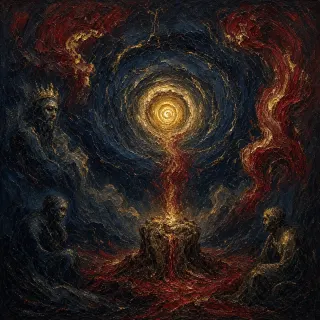
    Zephaniah 1:12

    Settled on their lees

    He will search Jerusalem with candles and punish the men who say in their heart that the LORD will not do good nor evil. The picture is wine left undisturbed until it thickens.

    They have not argued God out of existence. They have retired him from active service. Their settled conclusion is that the LORD will do neither good nor harm, which leaves their arrangements comfortably undisturbed. The verse actually gives that inner conclusion; nothing needs to be invented behind it.

    The answer is a search with lamps. The people who count on divine inactivity are pictured being deliberately sought out, corner by corner. Settled on their lees describes an existence left undisturbed long enough to harden into certainty. The irony is exact: the one they expect to do nothing announces a painstaking inspection.

    Verse by verse

    1. 1:12

      Candles translates the Hebrew word for lamps. The point is a thorough search, not a specification of wax candles.

    2. 1:12

      Lees are the sediment associated with wine. The image concerns settled, undisturbed complacency; it does not require a claim that all wine kept on its lees is spoiled.

    3. 1:12

      Do evil here means bring harm or calamity, paired with doing good. The men are denying consequential divine action, not weighing whether God commits moral wrongdoing.

    Zephaniah 1:12

    King James Version · 1 verse

    1:12And it shall come to pass at that time, that I will search Jerusalem with candles, and punish the men that are settled on their lees: that say in their heart, The LORD will not do good, neither will he do evil.

    Zephaniah 1:12: Settled on their lees
  3. 03

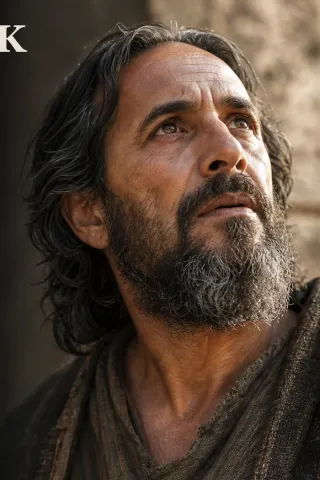
    Zephaniah 2:1-3

    Seek meekness

    Seek the LORD, all you meek of the earth, who have wrought his judgment. Seek righteousness, seek meekness, it may be you shall be hid in the day of the LORD’s anger.

    Before is the word doing the urgent work. The decree is pictured on the point of giving birth, and the day can pass like chaff. This is not an invitation to discuss repentance once the consequences have become convenient. The appeal belongs to the narrowing interval before judgment arrives.

    Then the humble are told to seek humility. They are already described as people who practice God's judgment, yet that description does not turn their conduct into a completed qualification. Seeking the LORD, righteousness, and meekness is one connected movement. The possibility of being hidden is expressed cautiously: it may be. That does not empty the appeal of hope. It refuses to turn refuge into a claim that the threatened can enforce. The rich in 1:18 cannot buy safety; the humble here cannot boast of having earned it.

    Verse by verse

    1. 2:1

      The repeated gathering summons the nation before the arrival of the decree's consequences. It is a communal call, not merely a private exercise.

    2. 2:3

      Wrought his judgment describes people who have acted according to God's requirements. Meekness here is compatible with doing justice, not another name for inactivity.

    3. 2:3

      It may be translates ulay, perhaps. The wording leaves deliverance as something sought from God rather than a result mechanically secured by a ritual.

    Zephaniah 2:1-3

    King James Version · 3 verses

    2:1Gather yourselves together, yea, gather together, O nation not desired;

    2:2Before the decree bring forth, before the day pass as the chaff, before the fierce anger of the LORD come upon you, before the day of the LORD’s anger come upon you.

    2:3Seek ye the LORD, all ye meek of the earth, which have wrought his judgment; seek righteousness, seek meekness: it may be ye shall be hid in the day of the LORD’s anger.

    Zephaniah 2:1-3: Seek meekness
  4. 04

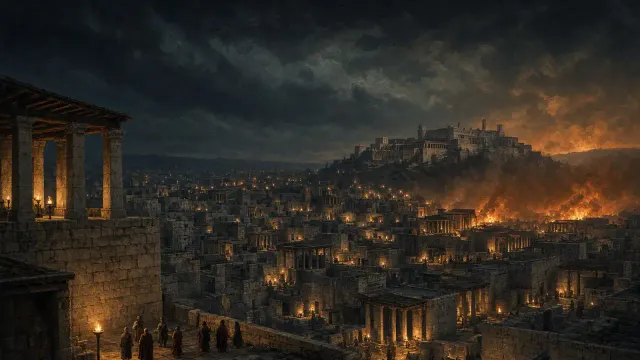
    Zephaniah 3:14-20

    He will rejoice over you with singing

    The book ends on a reversal so complete that the judge becomes the one rejoicing. He will save, he will rest in his love, and he will joy over you with singing.

    Zion is told to sing, and then God sings over Zion. The movement is more remarkable than a command followed by compliance: the joy becomes reciprocal. Nor is the mighty savior a distant patron sending congratulations. In the midst appears twice, making presence the center of the promise.

    That presence has already appeared in 3:5, where the righteous LORD stands within a corrupt city. What changes is not his discovery of Jerusalem but the removal of judgment, enemies, and proud wrongdoing. The gathered people include those who limp and those driven away, not merely the strong enough to make a triumphant entrance. Shame is reversed where it was suffered. The book that opened by sweeping life away closes by bringing scattered people home, and its last assurance places the reversal before their eyes. The restoration is not allowed to remain a rumor.

    Verse by verse

    1. 3:14

      Daughter of Zion personifies Jerusalem and its people. Israel and daughter of Jerusalem name the community from complementary angles.

    2. 3:17

      The Hebrew behind rest can mean being silent; interpreters differ over quiet delight and quieting the beloved. The KJV retains rest, so the phrase should not be silently replaced with a different reading.

    3. 3:14

      The remnant's truthful speech in the preceding verse and Zion's song have a canonical parallel in Revelation 14:1-5. That is a comparison of shared features, not an explicit quotation naming Zephaniah.

    4. 3:19

      Her that halteth means the one who limps. The gathering explicitly includes weakness and displacement, rather than treating them as disqualifications.

    Zephaniah 3:14-20

    King James Version · 7 verses

    3:14Sing, O daughter of Zion; shout, O Israel; be glad and rejoice with all the heart, O daughter of Jerusalem.

    3:15The LORD hath taken away thy judgments, he hath cast out thine enemy: the king of Israel, even the LORD, is in the midst of thee: thou shalt not see evil any more.

    3:16In that day it shall be said to Jerusalem, Fear thou not: and to Zion, Let not thine hands be slack.

    3:17The LORD thy God in the midst of thee is mighty; he will save, he will rejoice over thee with joy; he will rest in his love, he will joy over thee with singing.

    3:18I will gather them that are sorrowful for the solemn assembly, who are of thee, to whom the reproach of it was a burden.

    3:19Behold, at that time I will undo all that afflict thee: and I will save her that halteth, and gather her that was driven out; and I will get them praise and fame in every land where they have been put to shame.

    3:20At that time will I bring you again, even in the time that I gather you: for I will make you a name and a praise among all people of the earth, when I turn back your captivity before your eyes, saith the LORD.

    Zephaniah 3:14-20: He will rejoice over you with singing

Why it matters

Zephaniah names the particular sin of a comfortable religious city: men settled on their lees who say in their heart that the LORD will not do good, neither will he do evil. The indifference is the charge. And then the book turns completely in its last paragraph, and the God who was the judge is described singing: he will rest in his love, he will joy over you with singing, which is the only place in Scripture where God is said to sing.

6 songs

The music

Every song in the catalogue whose passage falls inside these chapters.

  1. Zephaniah 1:14-18

    The Great Day Is Near

    Play hereOpen song pageRead lyrics
  2. Zephaniah 1:1-13

    The LORD Will Utterly Consume

    Play hereOpen song pageRead lyrics
  3. Zephaniah 1:1-3:20

    Zephaniah, Definitive Edition

    Play here
    Open song pageRead lyrics
  4. Zephaniah 2:4-3:8

    He Will Stretch Out His Hand

    Play hereOpen song pageRead lyrics
  5. Zephaniah 2:1-3

    Seek Righteousness, Seek Meekness

    Play hereOpen song pageRead lyrics
  6. Zephaniah 3:9-20

    He Will Rejoice over Thee with Singing

    Play hereOpen song pageRead lyrics

Nearby

All the people

Report an error on this page