New · FreePlay The Witnesses The in-depth puzzle battle quest through Bible history

Places of the Bible

Peniel

A ford, a night, a wrestling match nobody wins, and a man who walks away with a new name and a limp.

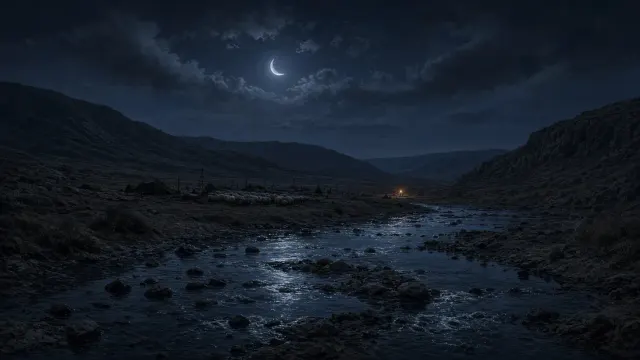
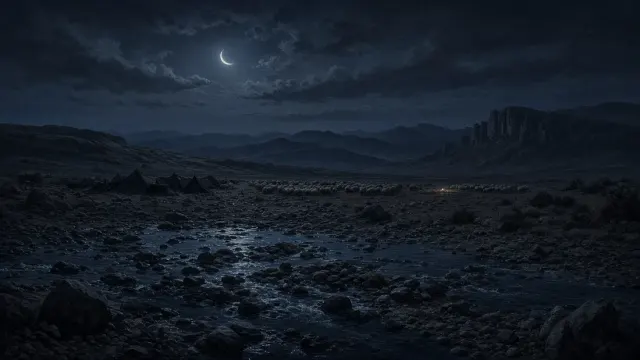
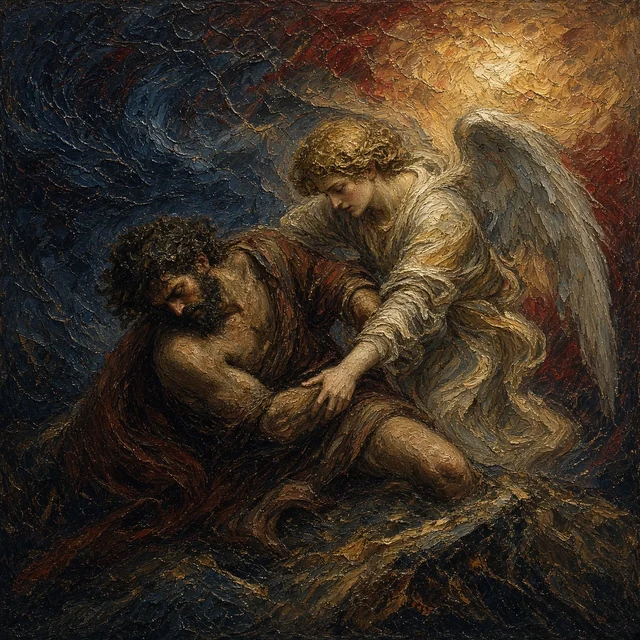
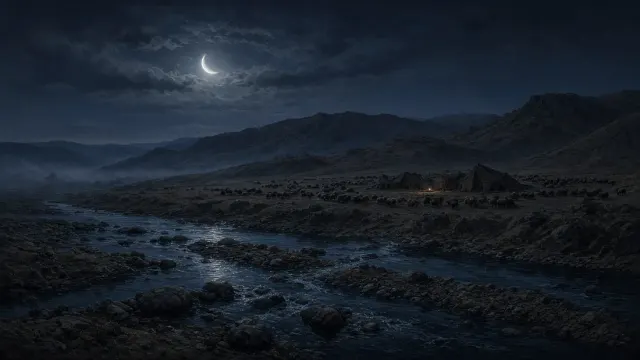
Jacob is coming home and Esau is coming to meet him with four hundred men. He divides the company, sends the present ahead in droves, prays the plainest prayer of his life, and then sends his wives and children over the brook Jabbok with everything he has. And Jacob was left alone, and there wrestled a man with him until the breaking of the day. The text does not say who the man is and will not say it later either.

Where it appearsGenesis 32

Scroll down to the account
Peniel

The movements, in the order the text gives them.

The Account of Peniel

  1. 01

    Genesis 32:9-12

    I am not worthy of the least of all thy mercies

    The prayer names the promise, the fear and the facts in order: with my staff I passed over this Jordan, and now I am become two bands.

    This is the first prayer the Book of Genesis records from Jacob, and he is sixty odd years into a life full of dealings. The man who bargained at Bethel with a conditional vow, if God will be with me and keep me, is here asking without conditions.

    The opening move is to quote God back to God. The LORD which saidst unto me, Return unto thy country, and to thy kindred, and I will deal well with thee. Jacob is not reminding himself. He is pointing out that he is where he is because he was told to be, and the appeal rests on the instruction rather than on his own standing.

    I am not worthy of the least of all the mercies translates a single Hebrew verb, qatonti, meaning I have been made small. It is the confession of a man who has spent twenty years becoming larger and is describing the effect in the opposite direction.

    The measure he gives is exact and domestic: with my staff I passed over this Jordan, and now I am become two bands. One stick, then two camps. He is counting his own increase in a prayer about being afraid of what it might cost him, and the two bands are the arrangement he made in the previous verses in case Esau destroys one of them.

    Verse by verse

    1. 32:9

      Jacob prays by quoting the command he was given. The ground of the request is the instruction, not his record since receiving it.

    2. 32:10

      The Hebrew qatonti means I have been made small. The King James renders the sense rather than the single word.

    3. 32:11

      The mother with the children is a fixed phrase for total destruction of a household, used in the law about taking a bird and its young.

    4. 32:12

      The sand of the sea is the promise made to Abraham in Genesis 22:17, after the mountain. Jacob is holding God to a sentence spoken to his grandfather.
    Genesis 32:9-12

    King James Version · 4 verses

    32:9And Jacob said, O God of my father Abraham, and God of my father Isaac, the LORD which saidst unto me, Return unto thy country, and to thy kindred, and I will deal well with thee:

    32:10I am not worthy of the least of all the mercies, and of all the truth, which thou hast shewed unto thy servant; for with my staff I passed over this Jordan; and now I am become two bands.

    32:11Deliver me, I pray thee, from the hand of my brother, from the hand of Esau: for I fear him, lest he will come and smite me, and the mother with the children.

    32:12And thou saidst, I will surely do thee good, and make thy seed as the sand of the sea, which cannot be numbered for multitude.

    Genesis 32:9-12: I am not worthy of the least of all thy mercies
  2. 02

    Genesis 32:22-24

    Jacob was left alone

    He sends everything he owns across the water and stays behind with nothing. The wrestling begins in that emptiness and lasts all night.

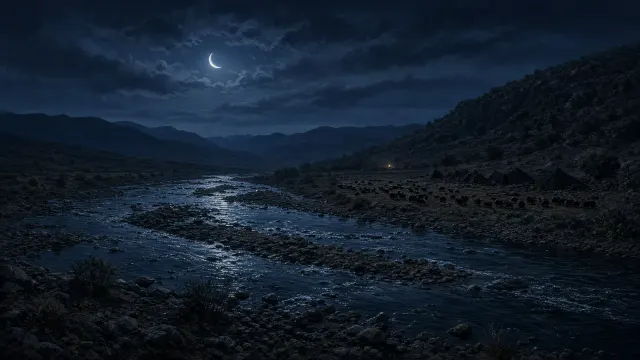
    Jacob sends everyone across: two wives, two womenservants, eleven sons, and everything he owns. The careful division into two bands, made so that half might escape, ends with a man on the wrong side of the water with nothing arranged around him at all.

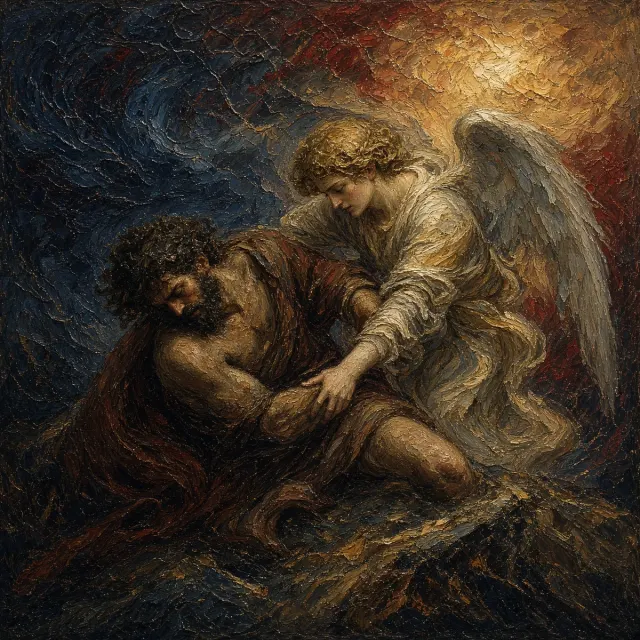
    And Jacob was left alone. The Book of Genesis states it without explanation and does not say why he stayed. Then, with no introduction and no warning, there wrestled a man with him until the breaking of the day.

    The word is ish, a man. Not an angel, not the LORD, not a vision. The chapter will complicate this twice over, in Jacob's own words in verse 30 and in the prophet Hosea's reading centuries later, but at the moment of the wrestling itself the account gives the plainest noun available and leaves the reader with it for six verses.

    The Hebrew here is dense with sound. The ford is Jabbok, yabboq. The man is Jacob, ya'aqov. The verb for wrestled is ye'abeq. Three words built from the same handful of consonants, so that the place, the man and the struggle are almost the same word said three ways.

    Verse by verse

    1. 32:22

      The Jabbok is a tributary running west into the Jordan through a deep gorge. Crossing it at night with a household is a considerable undertaking.

    2. 32:24

      Ish, a man. The account withholds any other identification until Jacob supplies one in verse 30.

    Genesis 32:22-24

    King James Version · 3 verses

    32:22And he rose up that night, and took his two wives, and his two womenservants, and his eleven sons, and passed over the ford Jabbok.

    32:23And he took them, and sent them over the brook, and sent over that he had.

    32:24And Jacob was left alone; and there wrestled a man with him until the breaking of the day.

    Genesis 32:22-24: Jacob was left alone
  3. 03

    Genesis 32:25-26

    I will not let thee go, except thou bless me

    He is injured and still holding on. The request is made from a position that has already lost.

    When he saw that he prevailed not against him. The subject of that clause is the man, not Jacob, and the sentence says plainly that the stranger could not win. What follows is a touch rather than a blow. The hollow of Jacob's thigh is put out of joint by contact, which suggests that the contest had not been conducted at full strength up to that point.

    Let me go, for the day breaketh. The reason offered is daylight, and the account does not explain why that should matter. Jewish tradition has the angel needing to return for the morning praise; other readers have connected it to the danger stated in verse 30, that seeing God is not survivable. The Book of Genesis says only that the request was made and refused.

    I will not let thee go, except thou bless me is a demand made by a man who has just been crippled, to someone he cannot beat, while holding on with a dislocated hip. Jacob has spent his life obtaining blessings by arrangement, a bowl of pottage, a goatskin on his arms, a bargain over spotted cattle. Here he asks for one directly and will not move until it is given.

    Verse by verse

    1. 32:25

      The one who prevails not is the man, stated before the touch. The dislocation follows the failure to win rather than causing it.

    2. 32:26

      Nothing in the account explains why daybreak ends the struggle. The request is made, refused, and not returned to.

    Genesis 32:25-26

    King James Version · 2 verses

    32:25And when he saw that he prevailed not against him, he touched the hollow of his thigh; and the hollow of Jacob’s thigh was out of joint, as he wrestled with him.

    32:26And he said, Let me go, for the day breaketh. And he said, I will not let thee go, except thou bless me.

    Genesis 32:25-26: I will not let thee go, except thou bless me
  4. 04

    Genesis 32:27-28

    Thy name shall be called no more Jacob

    The last time he was asked who he was, he answered I am Esau thy firstborn. This time he gives his own name and it is changed.

    What is thy name. The question is not for information, and Jacob's one word answer is the hinge of the whole chapter. The last time he was asked to say who he was, standing by a blind father with goatskin on his arms, he said I am Esau thy firstborn. Now he gives the name he was actually given, which means heel holder or supplanter, and the giving of it is the last thing required of him.

    Thy name shall be called no more Jacob, but Israel. The explanation offered is sarita im elohim, thou hast striven with God, and the King James renders it as a prince hast thou power with God. The account supplies its own etymology and it is a reading of the sound rather than a claim about the word's derivation, which is how the Book of Genesis names people throughout.

    With God and with men, and hast prevailed. The men are not hypothetical. Esau is on the far side of the water and Laban is behind him, and both have been contended with. The new name is not given at the end of a career of struggle to reward its conclusion. It is given in the middle of a night, before the most frightening meeting of his life, and it describes what has already happened as much as what he is to become.

    Verse by verse

    1. 32:27

      Jacob must say his own name. The last recorded time he was asked who he was, in Genesis 27:19, he gave his brother's.

    2. 32:28

      The explanation given is a play on the sound of Israel rather than a derivation, which is how Genesis names people throughout.

    Genesis 32:27-28

    King James Version · 2 verses

    32:27And he said unto him, What is thy name? And he said, Jacob.

    32:28And he said, Thy name shall be called no more Jacob, but Israel: for as a prince hast thou power with God and with men, and hast prevailed.

    Genesis 32:27-28: Thy name shall be called no more Jacob
  5. 05

    Genesis 32:30-31

    The sun rose upon him, and he halted

    He names the place for the face he saw and crosses over limping. The limp is the only physical mark any patriarch carries out of an encounter.

    Jacob names the place Peniel, the face of God, and the next verse spells it Penuel. The Book of Genesis uses both forms in consecutive sentences and does not treat the difference as worth remarking on; later books use Penuel.

    His reason is given as a survival. I have seen God face to face, and my life is preserved. This is Jacob's own interpretation and the first identification of the stranger in the chapter, made after the fact by the man who wrestled him. The account has said only a man. The prophet Hosea, reading this centuries later, says he had power over the angel and prevailed, weeping and making supplication, and adds the detail of tears that the Book of Genesis does not record.

    And as he passed over Penuel the sun rose upon him, and he halted upon his thigh. The sunrise is the counterpart of another sentence about this man. At Bethel, twenty years earlier, he lay down because the sun was set. The night that began there ends here, and he comes out of it with a new name and a permanent limp. The account puts the blessing and the injury in the same clause and does not rank them.

    Verse by verse

    1. 32:30

      Peniel here, Penuel in the next verse. Both spellings stand, and later books settle on Penuel.

    2. 32:31

      The sun rises on him here; at Bethel in Genesis 28:11 the sun had set on him. The two sentences bracket twenty years.

    Genesis 32:30-31

    King James Version · 2 verses

    32:30And Jacob called the name of the place Peniel: for I have seen God face to face, and my life is preserved.

    32:31And as he passed over Penuel the sun rose upon him, and he halted upon his thigh.

    Genesis 32:30-31: The sun rose upon him, and he halted

Why it matters

The contest is settled by a touch rather than a throw. Seeing that he prevailed not against him, he touched the hollow of his thigh, and it was out of joint as he wrestled with him. Then he asks to be let go because the day breaks, and Jacob answers I will not let thee go except thou bless me. The exchange that follows is a question about his name, an answer that had once been a lie, and a new name given: Israel, for as a prince hast thou power with God and with men, and hast prevailed.

1 song

The music

Every song in the catalogue whose passage falls inside these chapters.

  1. Genesis 32:22-32

    Until the Breaking of Day

Nearby

All the places

Report an error on this page