New · FreePlay The Witnesses The in-depth puzzle battle quest through Bible history

Places of the Bible

Shechem

The first place the promise was spoken aloud in the land, and the first place the family disgraced itself in it.

Abram passes through the land as far as the place of Shechem, unto the plain of Moreh, and there the LORD appears to him and says unto thy seed will I give this land. It is the first recorded word spoken to him inside Canaan, and he builds an altar on the spot. Two generations later Jacob comes back from Haran, buys a parcel of a field at the hand of the children of Hamor for a hundred pieces of money, and erects an altar of his own.

Where it appearsGenesis 12 · Genesis 33 to 34

Scroll down to the account

The movements, in the order the text gives them.

The Account of Shechem

  1. 01

    Genesis 12:6-7

    Unto thy seed will I give this land

    The first altar in Canaan goes up here, and the Book of Genesis notes in the same breath that the Canaanite was then in the land.

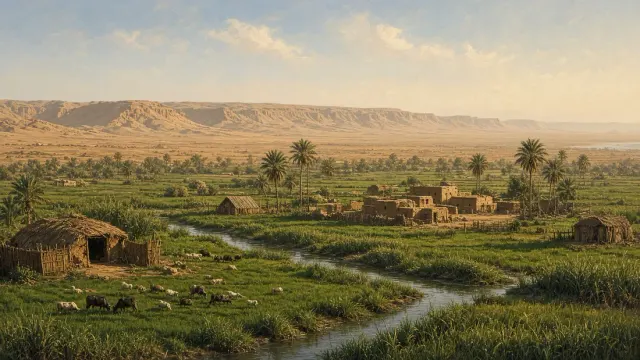
    Shechem enters Abram's journey as a place where a promise receives a visible response. The LORD appeared unto Abram; the altar is built unto the LORD, who appeared unto him. That repetition brackets the construction. The altar commemorates an encounter, not Abram's discovery that this particular patch of ground possesses a holiness independent of God.

    The location is wonderfully concrete. Sichem, Moreh, the Canaanite already in the land. The promised country has names and inhabitants, while the promised descendants are still absent. Abram's first recorded altar in Canaan therefore stands between what can be seen and what has only been spoken. It is a substantial act on behalf of a future that has not yet acquired a household of heirs.

    Later Scripture keeps returning to this place when belonging must be stated plainly. Jacob names an altar for the God of Israel in 33:20; Joshua makes a covenant with the assembled people at Shechem in Joshua 24:25. The repeated location gives those declarations depth. One family heard the promise here. A people later answered for its allegiance here. The geography carries the memory.

    Verse by verse

    1. 12:6

      Sichem and Shechem represent the same Hebrew place-name.

    2. 12:6

      The notice about the Canaanite identifies a populated country, not an unoccupied estate.

    3. 12:7

      The two mentions of the LORD appearing explain the altar's significance: it responds to divine revelation.

    Genesis 12:6-7

    King James Version · 2 verses

    12:6And Abram passed through the land unto the place of Sichem, unto the plain of Moreh. And the Canaanite was then in the land.

    12:7And the LORD appeared unto Abram, and said, Unto thy seed will I give this land: and there builded he an altar unto the LORD, who appeared unto him.

    Genesis 12:6-7: Unto thy seed will I give this land
  2. 02

    Genesis 33:18-20

    He bought a parcel of a field

    Jacob comes back safe from Haran and buys ground rather than camping on it. He calls the altar God, the God of Israel.

    A tent can stand on purchased ground. Jacob's way of life remains mobile, but this particular camping place is not merely borrowed space: the seller, location, and payment are all recorded. The promise of Canaan does not make ordinary ownership arrangements beneath the dignity of its heir. Jacob pays for the field where his tent has been spread.

    The altar's name then places a different kind of claim beside the transaction. Elelohe-Israel means God, the God of Israel. Israel is not yet the name of a settled nation here; it is the name given to Jacob in the preceding chapter. The man who returned from Padanaram with a new name now uses that name in acknowledging God. The purchase locates his tent. The altar identifies his allegiance.

    This small property has a long memory. Joshua 24:32 names the same purchase from Hamor's sons when Joseph's bones are buried at Shechem. John 4:5-6 places Jesus near the land Jacob gave Joseph, beside Jacob's well. The field therefore belongs to more than a brief pause after reconciliation with Esau. Generations cross it, and Scripture continues to remember who acquired it.

    Verse by verse

    1. 33:18

      The King James reads Shalem as a place-name; the Hebrew can also be read as describing Jacob arriving safely or whole at Shechem.

    2. 33:19

      This is a purchase by Jacob, distinct from Abraham's purchase of Machpelah in Genesis 23.

    3. 33:20

      Elelohe-Israel means God, the God of Israel, linking the altar to Jacob's new name in 32:28.

    Genesis 33:18-20

    King James Version · 3 verses

    33:18And Jacob came to Shalem, a city of Shechem, which is in the land of Canaan, when he came from Padan-aram; and pitched his tent before the city.

    33:19And he bought a parcel of a field, where he had spread his tent, at the hand of the children of Hamor, Shechem’s father, for an hundred pieces of money.

    33:20And he erected there an altar, and called it El-elohe-Israel.

    Genesis 33:18-20: He bought a parcel of a field
  3. 03

    Genesis 34:1-12

    Dinah went out to see the daughters of the land

    A visit becomes an assault, and the assault is followed by a marriage proposal and a trade agreement offered to her family.

    Shechem's tender speech comes after the violation, not instead of it. The Book of Genesis allows both facts to stand: he defiled Dinah, and he loved her. Affection afterward does not change the sequence of the verbs or supply consent that the passage never records. Dinah went out to see the daughters of the land. The text does not accuse her of wrongdoing for going.

    Then the conversation expands astonishingly fast. Hamor proposes intermarriage, residence, commerce, and property ownership. A wrong done to one woman has become the occasion for negotiating the relationship between two communities. Shechem offers whatever payment the family requires, but Dinah herself receives no recorded speech in the negotiation. His desire is repeatedly stated. Hers is not.

    Jacob's sons are grieved and very angry, and the chapter gives an explicit judgment on the act: which thing ought not to be done. That sentence prevents the generous offer from laundering the assault into a marriage arrangement with an unfortunate beginning. The passage contains terms for possession, payment, and trade, but none of them can replace the missing word from Dinah. The proposed settlement is detailed. Her agreement is not recorded.

    Verse by verse

    1. 34:1

      The verse states the purpose of Dinah's outing without assigning blame to her.

    2. 34:3

      Shechem's love and kind speech are reported after the sexual violation; they do not establish Dinah's consent.

    3. 34:7

      Folly here names a serious outrage, not merely foolish judgment or social awkwardness.

    4. 34:12

      Dowry and gift are separate terms in the offer; the proposed amount is left open rather than fixed.

    Genesis 34:1-12

    King James Version · 12 verses

    34:1And Dinah the daughter of Leah, which she bare unto Jacob, went out to see the daughters of the land.

    34:2And when Shechem the son of Hamor the Hivite, prince of the country, saw her, he took her, and lay with her, and defiled her.

    34:3And his soul clave unto Dinah the daughter of Jacob, and he loved the damsel, and spake kindly unto the damsel.

    34:4And Shechem spake unto his father Hamor, saying, Get me this damsel to wife.

    34:5And Jacob heard that he had defiled Dinah his daughter: now his sons were with his cattle in the field: and Jacob held his peace until they were come.

    34:6And Hamor the father of Shechem went out unto Jacob to commune with him.

    34:7And the sons of Jacob came out of the field when they heard it: and the men were grieved, and they were very wroth, because he had wrought folly in Israel in lying with Jacob’s daughter; which thing ought not to be done.

    34:8And Hamor communed with them, saying, The soul of my son Shechem longeth for your daughter: I pray you give her him to wife.

    34:9And make ye marriages with us, and give your daughters unto us, and take our daughters unto you.

    34:10And ye shall dwell with us: and the land shall be before you; dwell and trade ye therein, and get you possessions therein.

    34:11And Shechem said unto her father and unto her brethren, Let me find grace in your eyes, and what ye shall say unto me I will give.

    34:12Ask me never so much dowry and gift, and I will give according as ye shall say unto me: but give me the damsel to wife.

  4. 04

    Genesis 34:25-31

    Simeon and Levi took each man his sword

    The reply is made on the third day, when the men of the city are sore. Jacob speaks about reputation; his sons speak about their sister.

    The third day turns a covenant sign into an opening for slaughter. Circumcision was the condition Jacob's sons had proposed for becoming one people; now the resulting pain leaves the men exposed to attack. The deception is not something inferred from the outcome. Verse 13 has already named it. Religious language has provided the terms of the trap.

    Dinah is taken out of Shechem's house, but the violence does not stop with the man who assaulted her. All the males are killed, and the account moves deliberately through sheep, oxen, asses, possessions, children, and wives. The inventory includes human captives. This is not merely a rescue reported with forceful verbs. The brothers' stated concern for their sister accompanies the destruction of other households.

    Jacob's immediate objection concerns what the massacre has done to his standing and the danger of retaliation against his numerically small family. Simeon and Levi answer by insisting on Dinah's violated dignity. Both speeches must remain in view: the father's fear does not diminish the assault, and the brothers' defense of their sister does not make the massacre disappear. The chapter ends with their challenge, not with God's approval. It has left a city emptied of its men.

    Verse by verse

    1. 34:25

      The pain follows the circumcision agreed upon in 34:15-24; it is not an unexplained sickness.

    2. 34:26

      Dinah is still in Shechem's house when the brothers remove her; the earlier negotiations had not brought her home.

    3. 34:29

      The spoiling includes the capture of women and children, not only the taking of livestock and goods.

    4. 34:31

      The brothers receive the last speech in this chapter, but Genesis 49:5-7 explicitly condemns their anger and cruelty.

    Genesis 34:25-31

    King James Version · 7 verses

    34:25And it came to pass on the third day, when they were sore, that two of the sons of Jacob, Simeon and Levi, Dinah’s brethren, took each man his sword, and came upon the city boldly, and slew all the males.

    34:26And they slew Hamor and Shechem his son with the edge of the sword, and took Dinah out of Shechem’s house, and went out.

    34:27The sons of Jacob came upon the slain, and spoiled the city, because they had defiled their sister.

    34:28They took their sheep, and their oxen, and their asses, and that which was in the city, and that which was in the field,

    34:29And all their wealth, and all their little ones, and their wives took they captive, and spoiled even all that was in the house.

    34:30And Jacob said to Simeon and Levi, Ye have troubled me to make me to stink among the inhabitants of the land, among the Canaanites and the Perizzites: and I being few in number, they shall gather themselves together against me, and slay me; and I shall be destroyed, I and my house.

    34:31And they said, Should he deal with our sister as with an harlot?

    Genesis 34:25-31: Simeon and Levi took each man his sword
  5. 05

    Genesis 49:5-7

    Cursed be their anger

    Fifty years later the deathbed blessing returns to this town and divides the two brothers in Israel for it.

    The brothers had the last word at Shechem. They do not have it at Jacob's deathbed. What began in chapter 34 as a protest about the family's danger becomes here an explicit condemnation of cruelty. Jacob does not ask that the old affair be forgotten for the sake of a peaceful gathering. He names the anger and refuses fellowship with the violent purpose it served.

    Simeon and Levi are brethren is more than a genealogical reminder in a room full of brothers. They acted together, and together they receive the verdict. The answer to their destructive union is division: I will divide them in Jacob, and scatter them in Israel. The paired names of their father frame the territory within which their descendants will be dispersed. Family identity remains; concentrated power does not.

    The object of the curse is carefully named: their anger and their wrath. Dinah's injury has not been denied, nor has Shechem been pronounced innocent. The condemnation falls on the fury that made a city's destruction its answer. This is not an outsider accusing the covenant family. Its own father places the accusation among his final words. The massacre does not become honorable with age.

    Verse by verse

    1. 49:5

      The shared designation brethren recalls their joint action in Genesis 34:25, not merely their common father.

    2. 49:6

      The King James reads digged down a wall; another established reading of the Hebrew is hamstrung an ox. Both readings describe destructive violence.

    3. 49:7

      The curse explicitly targets their anger and wrath; the following sentence announces dispersion within Jacob and Israel.

    Genesis 49:5-7

    King James Version · 3 verses

    49:5Simeon and Levi are brethren; instruments of cruelty are in their habitations.

    49:6O my soul, come not thou into their secret; unto their assembly, mine honour, be not thou united: for in their anger they slew a man, and in their selfwill they digged down a wall.

    49:7Cursed be their anger, for it was fierce; and their wrath, for it was cruel: I will divide them in Jacob, and scatter them in Israel.

    Genesis 49:5-7: Cursed be their anger

Why it matters

Then Genesis 34 happens in the same town. Dinah goes out to see the daughters of the land, Shechem the son of Hamor takes her, and Simeon and Levi answer a proposed marriage alliance with circumcision, three days, and swords. Jacob’s objection is that they have made him to stink among the inhabitants of the land, and their answer is a question: should he deal with our sister as with a harlot. The chapter closes without settling it, and Jacob is still bitter about it on his deathbed.

1 song

The music

Every song in the catalogue whose passage falls inside these chapters.

  1. Genesis 12:1-9

    Go From Your Country

Nearby

All the places

Report an error on this page