
New · FreePlay The Witnesses The in-depth puzzle battle quest through Bible history

Places of the Bible

The land of Nod

A country named for wandering, east of the garden, where the first city was built.

Nod is where Cain goes after the sentence, and the name carries the sentence with it: it means wandering. The account gives it no rivers, no borders and no neighbours, only a direction, east of Eden. Then it records something that sits oddly against a name like that. The first man condemned to wander is the first man to build a city, and he names it after his son.

Where it appearsGenesis 4

Scroll down to the account

The movements, in the order the text gives them.

The Account of The land of Nod

  1. 01

    Genesis 4:12

    The sentence

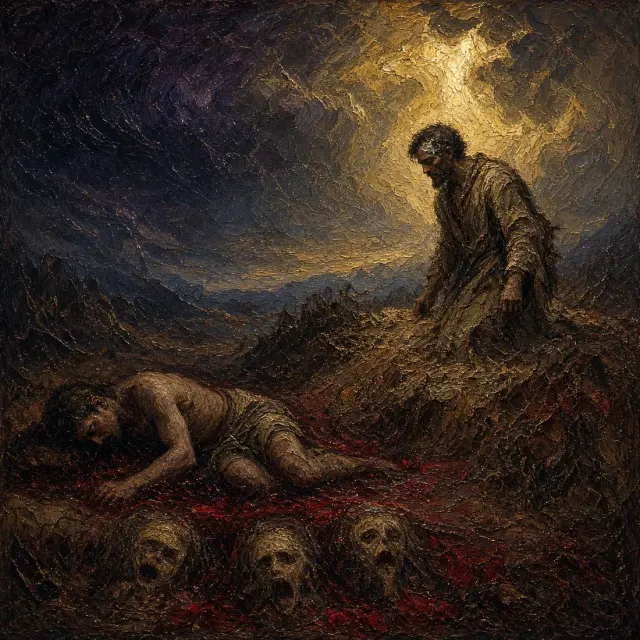
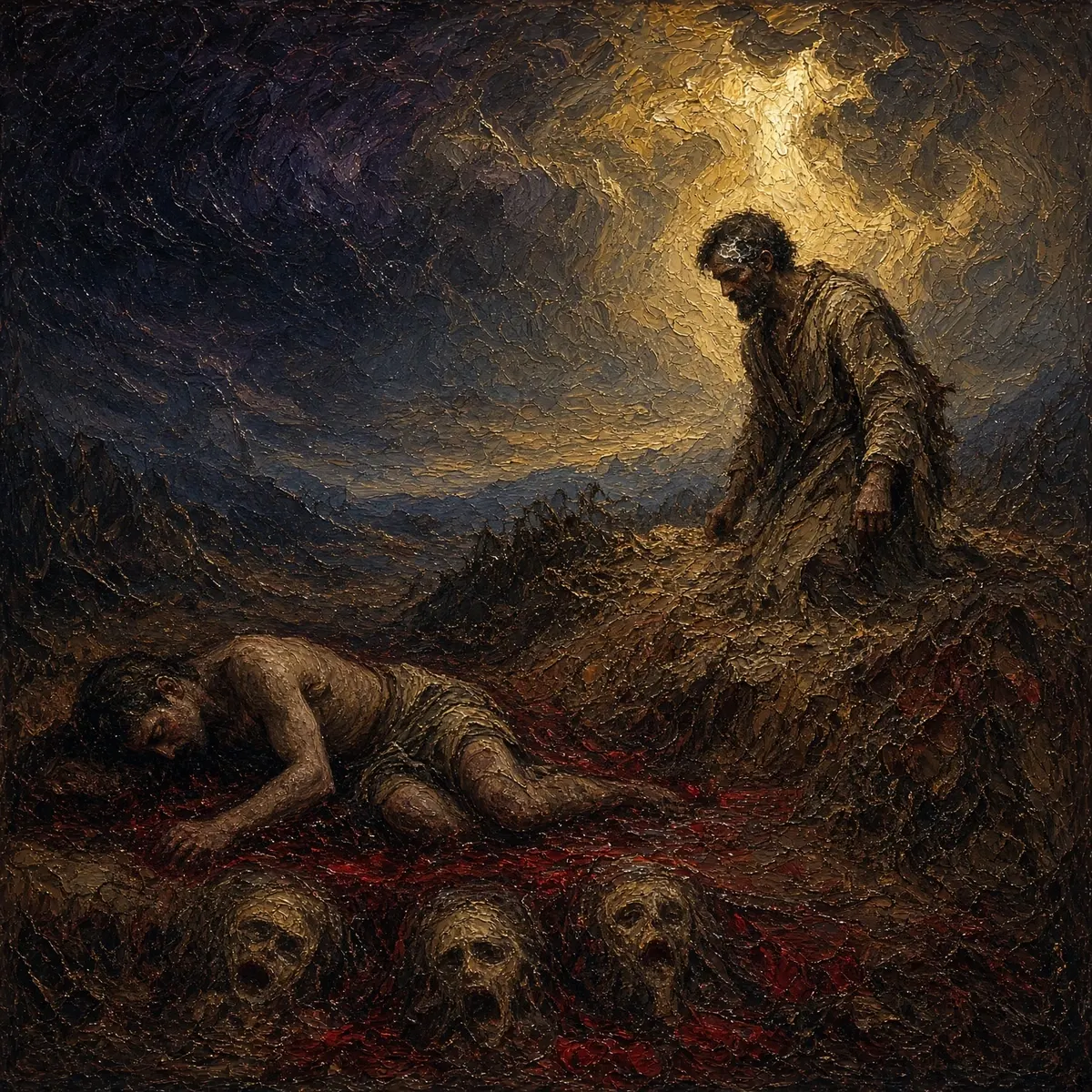
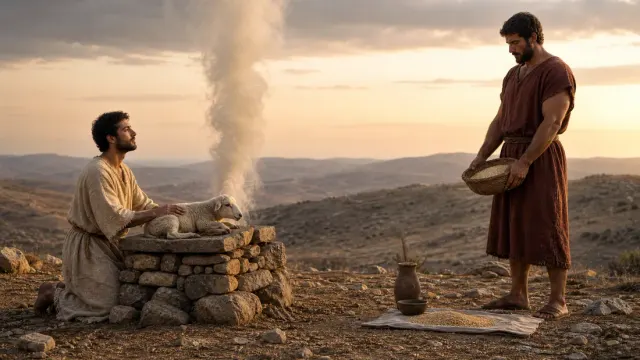
    A fugitive and a wanderer on the earth. The punishment is not a prison, it is the loss of a place to stand.

    The punishment strikes Cain at the place where he knew how to live. He was introduced as a tiller of the ground, and his offering came from its fruit. Now that same ground will no longer yield him its strength. This is not an unrelated penalty attached to a murder. The soil received Abel's blood in verse 11; the soil now refuses its former relationship with the man who spilled it.

    The language also tightens what happened to Adam. Adam was sent out of the garden to cultivate difficult ground. Cain faces the loss of settled life on that ground itself. A fugitive and a vagabond is more than a change of address: it is the disruption of a farmer's whole way of remaining somewhere.

    The country called Nod has not yet appeared, but its name is already audible in the Hebrew word for wandering. The sentence supplies the meaning before the map supplies the label. Cain's destination will carry his judgment in its name.

    Verse by verse

    1. 4:12

      The Hebrew pair na wa-nad has closely matching sounds. Nad, wandering, is related to the place-name Nod in verse 16.

    2. 4:12

      The loss of the ground's strength is specifically addressed to Cain. The verse does not declare that agriculture has become impossible for every human being.
    Genesis 4:12

    King James Version · 1 verse

    4:12When thou tillest the ground, it shall not henceforth yield unto thee her strength; a fugitive and a vagabond shalt thou be in the earth.

    Genesis 4:12: The sentence
  2. 02

    Genesis 4:16

    Away from the presence

    He goes out and settles east of Eden, and the account marks the direction as carefully as it marked the garden.

    He dwelt in the land of wandering. The words rub against each other, and the Hebrew makes the friction sharper: the settled verb is followed by a name tied to unsettled life. Nod is not introduced with rivers, harvests, or a list of neighbors. Its one stated bearing is east of Eden. The location is defined by the place Cain has lost proximity to.

    Went out from the presence of the LORD also answers Cain's own speech in verse 14, where he feared being hidden from God's face. The departure is therefore more than a geographical move. It gives visible form to the estrangement already named in the exchange.

    Yet the preceding verse must remain attached. God has prohibited Cain's killing and provided a protecting mark. Leaving the divine presence does not mean the chapter has withdrawn that protection or announced that God cannot reach Nod. Cain departs under judgment and under a restriction on vengeance. Neither fact makes the other disappear.

    Verse by verse

    1. 4:16

      Presence translates an expression involving the face. It echoes Cain's reference to being hidden from God's face in verse 14.

    2. 4:16

      East of Eden repeats the eastern orientation of the guarded garden entrance in Genesis 3:24. It does not identify a measurable distance between Eden and Nod.

    Genesis 4:16

    King James Version · 1 verse

    4:16And Cain went out from the presence of the LORD, and dwelt in the land of Nod, on the east of Eden.

    Genesis 4:16: Away from the presence
  3. 03

    Genesis 4:17

    The first city

    The wanderer builds walls and gives them his son's name. Exile answers itself with architecture.

    The man sentenced to wandering becomes the first city-builder named in Scripture. That is a substantial tension, not a detail to hurry past. Building gives the account the language of permanence immediately after Nod has supplied the language of displacement. The chapter does not say the sentence has been canceled. It lets a city and a wanderer's judgment occupy the same line of history.

    The city takes the son's name, not the father's. Enoch becomes both a child in a household and a name attached to a settlement. The account has moved from the murder of a brother to the continuation of a family, without pretending that the first event has been undone by the second.

    The following verses credit this family with livestock-keeping, music, and metalwork. They also record Lamech's violent boast. The Book of Genesis is quite capable of recognizing human skill without mistaking it for innocence. A city can be built, instruments can be made, and violence can still have a voice inside the household.

    Verse by verse

    1. 4:17

      The Hebrew construction includes a participle, building. It presents Cain engaged in city-building without describing the city's size or giving a completion date.

    2. 4:17

      Cain's wife is not named, and her parentage is not supplied here. Genesis 5:4 mentions Adam's sons and daughters without identifying which woman became Cain's wife.

    Genesis 4:17

    King James Version · 1 verse

    4:17And Cain knew his wife; and she conceived, and bare Enoch: and he builded a city, and called the name of the city, after the name of his son, Enoch.

    Genesis 4:17: The first city

Why it matters

Nod is the Bible's first picture of exile as a place rather than an event, and the first hint that people answer exile by building. The city rising in the land of wandering is a pattern the rest of Scripture returns to, all the way to Babel and Babylon.

2 songs

The music

Every song in the catalogue whose passage falls inside these chapters.

  1. Genesis 3:1-5:32

    Blood in the Ground

  2. Genesis 4:1-16

    The Blood Cries

Nearby

All the places

Report an error on this page