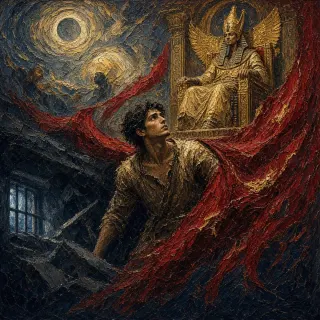
New · FreePlay The Witnesses The in-depth puzzle battle quest through Bible history

People of the Bible

Abel

The keeper of sheep who brought his best, was accepted, and was killed for it.

Also called In Hebrew, Hebel, a breath or a vapour

Abel is the second son of Adam and Eve, a keeper of sheep, and the first human being to die. He never speaks in the account. He brings the firstlings of his flock and their fat as an offering, God has regard for it, and his older brother Cain, whose offering was not regarded, kills him in a field. His blood cries to God from the ground. His whole life in Genesis is seven verses long, and his name in Hebrew means a breath, the word Ecclesiastes uses for everything that passes.

The rest of Scripture makes far more of him than Genesis does. Jesus calls him righteous Abel and puts his blood first in the long account of innocent blood shed on the earth. Hebrews says he offered by faith, obtained witness that he was righteous, and being dead still speaks. John says his works were righteous. He is the first martyr, the first shepherd, and the first man whose death called for justice, and the writer of Hebrews closes the thought by saying that the blood of Jesus speaks better things than the blood of Abel.

Where he appearsGenesis 4

Scroll down to the account
Abel

The movements, in the order the text gives them.

The Account of Abel

  1. 01

    Genesis 4:2

    A keeper of sheep

    Eve bears a second son after Cain. No word is spoken over his birth as there was over his brother's, and his name is a breath. He becomes a keeper of sheep while Cain works the ground.

    Abel is introduced as his brother's brother and given his trade in the same breath. His name, Hebel, means breath or vapour, the word Ecclesiastes will use for what passes and cannot be held; whether Eve chose it or the Book of Genesis did, it fits a life that ends in a single verse. He is a keeper of sheep, the first shepherd in Scripture, and the text sets his calling beside Cain's, tiller of the ground, so that the two brothers stand for the two oldest ways of living off the earth. Nothing more is said of his childhood, and he never speaks.

    Verse by verse

    1. 4:2

      Keeper of sheep: the Bible's shepherds after him include Abraham, Jacob, Moses, David and, in John 10, Christ.

    Genesis 4:2

    King James Version · 1 verse

    4:2And she again bare his brother Abel. And Abel was a keeper of sheep, but Cain was a tiller of the ground.

    Genesis 4:2: A keeper of sheep
  2. 02

    Genesis 4:4

    The firstlings and the fat

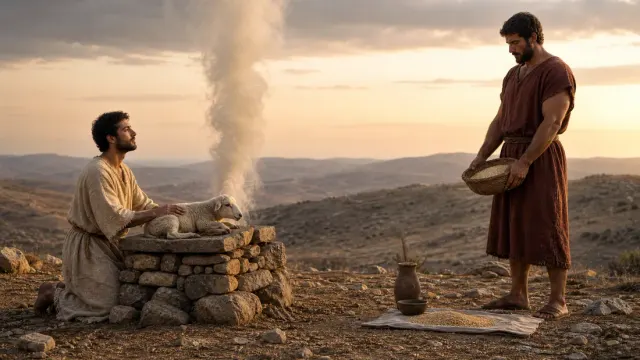
    Abel brings the firstborn of his flock and their fat portions. The LORD has regard for Abel and his offering. Nothing is said of his words or his manner; the gift itself is described in a way Cain's is not.

    Abel's offering is described in more detail than Cain's, and the detail is the point. He brings of the firstlings of his flock, the firstborn lambs, and of the fat thereof, the richest part. He gives first and best. Hebrews says he did it by faith, and that by faith he obtained witness that he was righteous, God testifying of his gifts. The LORD had respect unto Abel and to his offering: the man is named before the gift, and accepted before it. This is the first accepted worship in the Bible, and it is a shepherd's lamb, which every Passover and every sacrifice after will echo.

    Verse by verse

    1. 4:4

      Firstlings and fat: later required by the law, Exodus 13:12 and Leviticus 3:16. Hebrews 11:4 calls it a more excellent sacrifice.

    Genesis 4:4

    King James Version · 1 verse

    4:4And Abel, he also brought of the firstlings of his flock and of the fat thereof. And the LORD had respect unto Abel and to his offering:

    Genesis 4:4: The firstlings and the fat
  3. 03

    Genesis 4:8

    The field

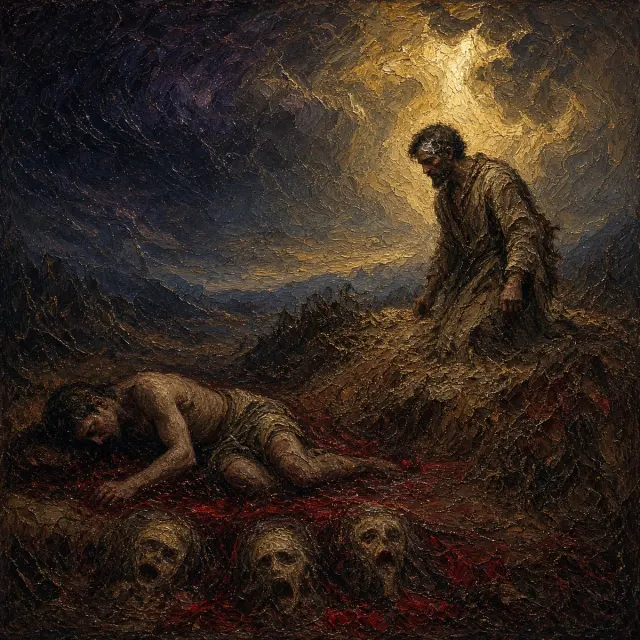
    Cain speaks with him, and in the field Cain rises against him and kills him. Abel is given no warning in the text and no last word. His death is the first in the Bible and it comes at the hand of his brother.

    Abel is led into the field by the brother who talked with him, and killed there. The verse gives him no warning, no defence and no last word. He dies as the first human being to die, and he dies righteous, at the hand of a man whose offering was refused. Jesus calls him righteous Abel, and John says Cain killed him because his own works were evil and his brother's righteous. The first death in the world is not the sentence of chapter 3 running its course but a murder, and the victim is the man God accepted.

    Verse by verse

    1. 4:8

      Abel his brother, twice in one verse: the text will not let the relationship be forgotten. See 1 John 3:12.

    Genesis 4:8

    King James Version · 1 verse

    4:8And Cain talked with Abel his brother: and it came to pass, when they were in the field, that Cain rose up against Abel his brother, and slew him.

    Genesis 4:8: The field
  4. 04

    Genesis 4:10-11

    Blood that cries

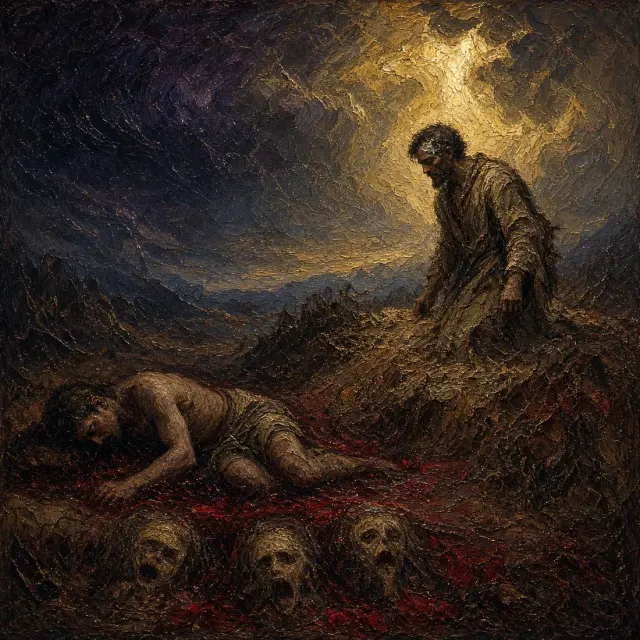
    God tells Cain that the voice of his brother's blood cries to him from the ground. The ground that opened its mouth to receive the blood becomes the ground that curses the one who spilled it.

    Abel is silent in life and eloquent in death. The voice of thy brother's blood crieth unto me from the ground: the Hebrew has bloods, plural, and the rabbis said it meant his blood and the blood of all the descendants he never had. The ground opened her mouth to receive it, and the ground becomes the witness and the instrument of Cain's sentence. Hebrews takes this verse in two directions. In chapter 11, Abel being dead yet speaketh, his faith still testifying. In chapter 12, the blood of Jesus speaketh better things than that of Abel, because Abel's blood cried for justice and Christ's cries for mercy.

    Verse by verse

    1. 4:10

      Crieth: the same verb as Israel's cry in Egypt, Exodus 3:7. Innocent blood has a voice God hears.

    2. 4:11

      Opened her mouth: the earth is personified as swallowing the blood, as it will swallow Korah in Numbers 16.

    Genesis 4:10-11

    King James Version · 2 verses

    4:10And he said, What hast thou done? the voice of thy brother’s blood crieth unto me from the ground.

    4:11And now art thou cursed from the earth, which hath opened her mouth to receive thy brother’s blood from thy hand;

    Genesis 4:10-11: Blood that cries
  5. 05

    Genesis 4:25

    Another seed instead of Abel

    Eve's third son is named Seth because God has appointed another seed in Abel's place. Abel is remembered in the naming of the brother through whom the line of promise continues.

    Abel is named once more in Genesis, in his mother's mouth, when Seth is born. God hath appointed me another seed instead of Abel, whom Cain slew. Eve does not forget him or soften what happened; she names the dead son and the killer together, and receives the new son as a replacement of the line that Abel's death had cut. Through Seth the promise of the woman's seed continues, and Abel, who had no children, is remembered in the child who takes his place.

    Verse by verse

    1. 4:25

      Instead of Abel: the only time a parent's grief for him is recorded.

    Genesis 4:25

    King James Version · 1 verse

    4:25And Adam knew his wife again; and she bare a son, and called his name Seth: For God, said she, hath appointed me another seed instead of Abel, whom Cain slew.

    Genesis 4:25: Another seed instead of Abel
  6. 06

    Matthew 23:35; Luke 11:51

    Righteous Abel

    Jesus names him first in the reckoning of all the righteous blood shed on the earth, from Abel to Zechariah, and calls him righteous. Abel becomes the first of the prophets and martyrs whose blood a hardened generation would answer for.

    Jesus makes Abel the first of the martyrs. Rebuking the scribes and Pharisees, he speaks of all the righteous blood shed upon the earth, from the blood of righteous Abel unto the blood of Zacharias, and Luke adds that it shall be required of this generation. In the Hebrew ordering of the books Abel is the first innocent killed and Zechariah in Chronicles the last, so the phrase spans the whole Old Testament. Jesus gives him the adjective the Genesis text withheld, righteous, and puts him at the head of a line of the killed that ends, in the next chapters of the gospel, with himself.

    Verse by verse

    1. 23:35

      Righteous Abel: Jesus' own verdict, the first time the word is attached to his name.

    2. 11:51

      Required of this generation: the blood that cried from the ground is still being heard.

    Matthew 23:35; Luke 11:51

    King James Version · 2 verses

    23:35That upon you may come all the righteous blood shed upon the earth, from the blood of righteous Abel unto the blood of Zacharias son of Barachias, whom ye slew between the temple and the altar.

    11:51From the blood of Abel unto the blood of Zacharias, which perished between the altar and the temple: verily I say unto you, It shall be required of this generation.

  7. 07

    Hebrews 11:4; 12:24

    He being dead yet speaks

    By faith Abel offered a more excellent sacrifice than Cain and obtained witness that he was righteous, God testifying of his gifts, and by it he still speaks though dead. Later the letter sets the blood of sprinkling, which speaks better things, against the blood of Abel.

    Hebrews opens its roll of faith with Abel, before Enoch and Noah. By faith he offered a more excellent sacrifice than Cain, and the witness that he was righteous came from God testifying of his gifts. Then the line that has been read over his account ever since: he being dead yet speaketh. Faith outlives the one who had it. Chapter 12 returns to him at the end of the book, in the list of what believers have come to: Jesus the mediator of the new covenant, and the blood of sprinkling, that speaketh better things than that of Abel. Abel's blood asked for justice against a brother. The blood of Christ asks for pardon for the ones who shed it.

    Verse by verse

    1. 11:4

      More excellent: literally more, greater. The excellence lay in the faith, not the animal.

    2. 12:24

      Better things: Abel's blood spoke accusation; Christ's speaks forgiveness. The two voices frame the whole Bible.

    Hebrews 11:4; 12:24

    King James Version · 2 verses

    11:4By faith Abel offered unto God a more excellent sacrifice than Cain, by which he obtained witness that he was righteous, God testifying of his gifts: and by it he being dead yet speaketh.

    12:24And to Jesus the mediator of the new covenant, and to the blood of sprinkling, that speaketh better things than that of Abel.

    Hebrews 11:4; 12:24: He being dead yet speaks

The people, the places and the rest of Scripture.

Reading Abel closely

The people he dealt with

Abel has one relationship in the text and it kills him. His brother Cain is older, works a different trade, and brings a different kind of offering. The account never records the two of them speaking to each other until the moment Cain invites him to the field, and the oldest witnesses to the text preserve that invitation as Cain's words. Abel goes. Whatever he thought his brother wanted, the reader is not told.

His parents stand at either end of his short account. Eve names him with a word for breath, and though the text does not explain the choice, it is hard to read after the fact as anything but grief foreseen. When Seth is born she names him as a replacement for Abel, which is the only time anyone in Genesis speaks Abel's name after his death. Adam is not mentioned in the chapter at all after the first verse.

With God, Abel's relationship is entirely one of acceptance. The LORD has regard for him and his offering, in that order. Later writers took the order seriously: the man was accepted, and so was his gift.

Why his offering was accepted

Genesis says what Abel brought and lets the reader draw the conclusion. The firstlings of the flock are the first animals born that season, the ones a herdsman would most want to keep, and the fat was the portion the law would later reserve for God on the altar. Cain's offering is described only as some of the fruit of the ground. One brother brought what cost him most and the other brought something.

Hebrews reads the scene from the inside. Abel offered by faith, and faith is what made the sacrifice more excellent, which is why God testified of his gifts. 1 John reads it from the outside: Abel's works were righteous and Cain's were evil. Between them the two letters say that what God regarded was the man's heart shown in the man's hands. The shepherd who kept sheep for a living gave up the best of them first, and that is the whole of what Scripture asks the reader to notice.

What came before and what followed

Before Abel there is a curse on the ground and a promise about a seed. He is born into a family already outside the garden, working soil that yields thorns, and his trade with the flocks is one way of living off land that has turned hard. The first animals to die in Scripture died so that his parents could be clothed, and it is fitting that the first accepted worship is a shepherd's lamb.

After him comes the long argument of the Bible about blood. Genesis 9 forbids the shedding of man's blood because man is made in God's image. The law appoints an avenger and cities of refuge so that innocent blood is neither ignored nor answered with more murder. The prophets accuse Jerusalem of being full of blood. All of it starts with a voice from the ground in Genesis 4, and it is answered, according to Hebrews, by a blood that speaks better things: not for vengeance but for forgiveness.

Where the rest of Scripture reaches back

Abel is named in the Gospels once, in a saying Jesus gives in both Matthew and Luke. All the righteous blood shed on the earth, from righteous Abel to Zechariah killed between the temple and the altar, will come upon a generation that murders the messengers sent to it. Abel is the first name in a list that ends with the prophets, which places a shepherd who never spoke among the witnesses of God.

Hebrews 11 opens its roll of faith with him, before Enoch and Noah and Abraham, and gives him the strange honour of speaking after death. Hebrews 12 returns to him at the summit of the letter: believers have come to the blood of sprinkling that speaks better things than that of Abel. 1 John 3:12 uses him to explain why the world hates the righteous. Every reference agrees on one thing the Genesis text only implies, that Abel was righteous, and that righteousness was the reason he died.

Why it matters

Abel gives the Bible its first picture of worship accepted, and it is worship that costs something: the firstborn of the flock and the fat, the best portions, given before anything else was taken. Every later law about firstlings and every later warning against offering God the leftovers has this scene behind it. He also gives the Bible its first innocent death, and with it the idea that shed blood is not silent. That idea runs through the law of the avenger, the cities of refuge, the prophets' charges against Jerusalem, and the words of Jesus about the blood required of a generation.

He is, finally, the first of the younger sons whom God prefers over the elder, a pattern Genesis repeats with Isaac, Jacob, Judah and Ephraim. That pattern is never explained as favouritism. It is God choosing whom he chooses, and Abel's acceptance rests on his faith rather than his birth, which is exactly what Hebrews 11 says.

2 songs

The music

Every song in the catalogue whose passage falls inside these chapters.

  1. Genesis 3:1-5:32

    Blood in the Ground

  2. Genesis 4:1-16

    The Blood Cries

Nearby

All the people

Report an error on this page