
Places of the Bible

The river Chebar

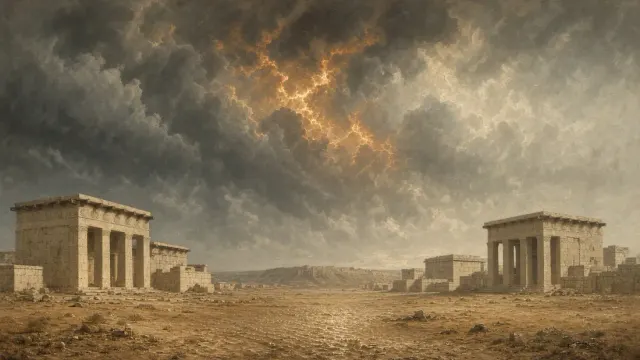
A canal in Babylon where a priest who could not reach a temple was shown one that had wheels.

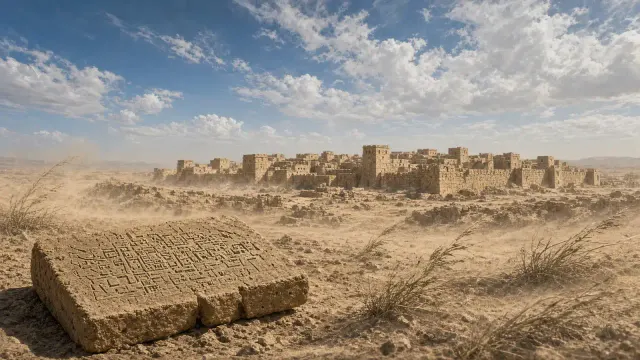
Ezekiel dates the vision like a clerk: in the thirtieth year, in the fourth month, in the fifth day of the month, as I was among the captives by the river of Chebar. He is a priest, thirty years old, which is the age a priest begins to serve, in a country where there is nothing for a priest to do. The place is an irrigation canal in Babylonian farmland, and the account keeps returning to it by name, seven times in the book.

Where it appearsEzekiel 1 · Ezekiel 3 · Ezekiel 10

Scroll down to the account

The movements, in the order the text gives them.

The Account of The river Chebar

  1. 01

    Ezekiel 1:1-3

    Among the captives by the river of Chebar

    The vision is given a date, a place and a legal status. The hand of the LORD was there upon him, and the there is doing the work.

    The small word carrying the weight is there. The hand of the LORD was there upon him, in the land of the Chaldeans, beside the waterway where the captives lived. The location is repeated because it is not incidental. Ezekiel is a priest, but the word reaches him far from Jerusalem's sanctuary.

    Even the calendar bears the mark of displacement. The fifth year is counted from Jehoiachin's captivity, not from a triumphant accession. A removed king supplies the date for a revelation of a throne that has not been removed. The thirtieth year in the opening line is left unexplained; treating it confidently as Ezekiel's age would supply a detail the verse does not identify. The captivity date, however, is explicit and places this vision before Jerusalem's final destruction.

    The heavens open while Ezekiel remains among the captives. The passage does not first take him home, restore the monarchy, or rebuild anything. Its sequence is more startling: foreign land, displaced people, opened heavens, the word of the LORD. Exile has changed the priest's circumstances, but it has not placed him beyond divine address. Nor is this merely a reassuring impression. Visions, word, and hand together announce an encounter that will commission him. Babylon can supply the place of captivity. It does not control who speaks there.

    Verse by verse

    1. 1:1

      The thirtieth year is not explicitly identified as Ezekiel's age; the fifth year of Jehoiachin's captivity is the stated chronological anchor.

    2. 1:2

      Jehoiachin's deportation precedes Jerusalem's final destruction; the temple has not already been burned at this opening date.

    3. 1:3

      Chebar is a Babylonian waterway, described in older lexicons as a river or possibly a canal; the verse gives no modern coordinates.

    4. 1:3

      Ezekiel is identified as a priest and the son of Buzi. The hand of the LORD expresses divine power acting upon him.

    Ezekiel 1:1-3

    King James Version · 3 verses

    1:1Now it came to pass in the thirtieth year, in the fourth month, in the fifth day of the month, as I was among the captives by the river of Chebar, that the heavens were opened, and I saw visions of God.

    1:2In the fifth day of the month, which was the fifth year of king Jehoiachin’s captivity,

    1:3The word of the LORD came expressly unto Ezekiel the priest, the son of Buzi, in the land of the Chaldeans by the river Chebar; and the hand of the LORD was there upon him.

    Ezekiel 1:1-3: Among the captives by the river of Chebar
  2. 02

    Ezekiel 1:15-21

    A wheel in the middle of a wheel

    The description is of something that can move any direction without turning, and the spirit of the living creature is in the wheels.

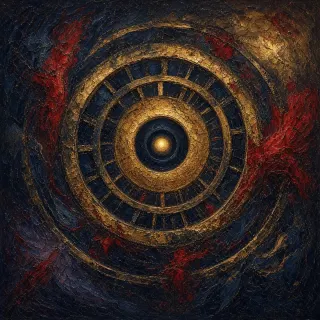
    Every wheel moves, and none goes its own way. That is the repeated fact beneath the extraordinary appearance. When the living creatures advance, the wheels advance; when they stop, the wheels stop; when they rise, the wheels rise. The passage spends more effort establishing coordinated movement than explaining the construction of a wheel within a wheel.

    The repeated they turned not denies the need to face a new direction before proceeding. Four-sided movement belongs to a vision in which mobility is not confined by the ordinary limitations of a vehicle. Yet the description remains comparison: as it were. Ezekiel is reporting what the wheels looked like, not supplying an assembly drawing. Treating the passage as hidden engineering instructions loses the emphasis its own repetitions establish.

    The rims are high, dreadful, and full of eyes. Even what appears to be supporting equipment is described with awareness rather than lifeless passivity. The decisive explanation comes twice: the spirit of the living creature was in the wheels. This is one coordinated vision, not a collection of competing forces. Above it, the chapter will describe the likeness of a throne. Beside a settlement of people whose movements have been controlled by conquerors, Ezekiel sees a manifestation of divine rule that moves without those restraints. Captivity is the setting, not the throne's condition.

    Verse by verse

    1. 1:16

      As it were marks a comparison of appearance; the verse does not specify a complete mechanical design.

    2. 1:18

      The rings are the wheels' rims. Their eyes belong to the vision's description, not to an explanation of ordinary transport.

    3. 1:20-21

      The repeated statement about the spirit explains why wheels and living creatures move, stop, and rise together.

    4. 1:21

      The throne appears above the living creatures in 1:26; the wheels are not described as carrying a temple building.

    Ezekiel 1:15-21

    King James Version · 7 verses

    1:15Now as I beheld the living creatures, behold one wheel upon the earth by the living creatures, with his four faces.

    1:16The appearance of the wheels and their work was like unto the colour of a beryl: and they four had one likeness: and their appearance and their work was as it were a wheel in the middle of a wheel.

    1:17When they went, they went upon their four sides: and they turned not when they went.

    1:18As for their rings, they were so high that they were dreadful; and their rings were full of eyes round about them four.

    1:19And when the living creatures went, the wheels went by them: and when the living creatures were lifted up from the earth, the wheels were lifted up.

    1:20Whithersoever the spirit was to go, they went, thither was their spirit to go; and the wheels were lifted up over against them: for the spirit of the living creature was in the wheels.

    1:21When those went, these went; and when those stood, these stood; and when those were lifted up from the earth, the wheels were lifted up over against them: for the spirit of the living creature was in the wheels.

    Ezekiel 1:15-21: A wheel in the middle of a wheel
  3. 03

    Ezekiel 1:28

    The appearance of the likeness of the glory

    Three words of distance are stacked before the noun. Having described everything else exactly, the text refuses to describe this directly.

    At the highest point of the description, Ezekiel becomes most careful with his words. Appearance. Likeness. Glory. The language does not grow casual as it approaches the presence on the throne. It layers comparisons, refusing to turn what he saw into an ordinary portrait.

    The final comparison is surprisingly familiar: the bow in the cloud on a rainy day. After fire, crystal, wings, and wheels, a feature of the visible sky helps describe the encircling brightness. Genesis 9 has already made the bow in the cloud a covenant sign. That earlier association belongs beside this passage, though Ezekiel does not explain every color or declare that the coming judgments have been canceled. The brightness surrounds the glory of the same LORD who is about to send a prophet to a rebellious people.

    Then seeing gives way to hearing. Ezekiel falls on his face, and a voice speaks. The vision has not been given merely to furnish an account of extraordinary objects. It brings him before the one who will address and commission him. In the next chapter, the Spirit sets him on his feet so that he can hear. His ability to stand is received, not displayed. The last sight in the chapter leads to a lowered face and an attentive ear. Splendor has become an encounter.

    Verse by verse

    1. 1:28

      The Hebrew mareh, appearance, is repeated three times in this verse; demuth means likeness.

    2. 1:28

      The bow is a rainbow, specified by cloud and rain. Genesis 9:13-16 uses the same cloud-and-bow setting for the covenant sign.

    3. 1:28

      The next verses, Ezekiel 2:1-2, distinguish the command to stand from the Spirit's action in setting Ezekiel on his feet.

    Ezekiel 1:28

    King James Version · 1 verse

    1:28As the appearance of the bow that is in the cloud in the day of rain, so was the appearance of the brightness round about. This was the appearance of the likeness of the glory of the LORD. And when I saw it, I fell upon my face, and I heard a voice of one that spake.

    Ezekiel 1:28: The appearance of the likeness of the glory
  4. 04

    Ezekiel 3:15

    I sat where they sat, and remained astonished seven days

    After the vision he goes to the exiles at Telabib and says nothing for a week. The verse is the whole of his preparation.

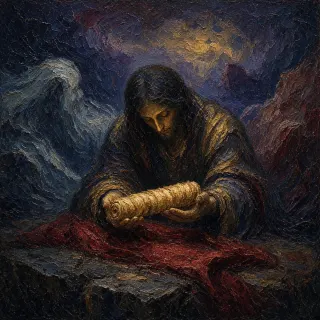
    The man sent to speak spends seven days sitting among the people he must address. The verse records no sermon. It records a place, a posture, and astonishment. After the noise of wings and wheels, the account comes down to a man seated where other displaced people sit.

    I sat where they sat is concrete before it is anything else. Ezekiel does not approach the captives as a visitor from an untouched homeland. He belongs among the displaced, and Chebar is already the setting of his own vision. The repeated among them keeps the commission from lifting him out of the community to which he is sent. A prophet has received a different responsibility, not a different history of exile.

    The preceding verse gives bitterness and the heat of his spirit, but it does not divide his feelings into a tidy modern explanation. Astonished is what the present verse says, and that is enough to give the pause its weight. At the end of the seven days, the word comes again and names his task as watchman. The warning will be serious, and his responsibility will be severe. The passage does not begin that work with an impressive public performance. Before the watchman is told how to warn them, the priest has sat among them.

    Verse by verse

    1. 3:15

      Telabib is the named settlement beside Chebar. This verse locates Ezekiel among fellow captives, not back in Jerusalem.

    2. 3:15

      Astonished describes his overwhelmed condition; the verse does not provide a medical diagnosis or an account of every thought.

    3. 3:15

      Ezekiel 3:16-17 places the word appointing him watchman after the seven days.

    4. 3:15

      Unlike Job 2:13, this verse does not explicitly state that nobody spoke a word throughout the entire period.

    Ezekiel 3:15

    King James Version · 1 verse

    3:15Then I came to them of the captivity at Tel-abib, that dwelt by the river of Chebar, and I sat where they sat, and remained there astonished among them seven days.

    Ezekiel 3:15: I sat where they sat, and remained astonished seven days
  5. 05

    Ezekiel 10:18-19

    The glory departed from off the threshold

    Chapters later the same wheels appear in Jerusalem, and this time they are leaving, which is the hardest thing the book has to say.

    The glory leaves while the building is still standing. That is the terrible distinction. The temple's destruction is not the first evidence of judgment in this vision. Its presence has already been desecrated by the worship and violence exposed in chapter 8, and now the glory moves away from its threshold.

    The movement is carefully located: over the cherubim, upward from the earth, then to the eastern gate. Ezekiel sees it happen. The wheels remain beside the living creatures, and the glory remains above them. Nothing suggests that Babylonian soldiers have seized the God of Israel as another piece of temple treasure. The departure is his own movement, in the same kind of vision first shown beside Chebar.

    That connection cuts in two directions. The throne's freedom to come among exiles is also its freedom to leave a defiled sanctuary. Distance from Jerusalem does not prevent divine presence, and possession of Jerusalem does not guarantee it. The following chapter makes the distinction explicit when God speaks of being a sanctuary to the scattered people in the countries where they have gone. The vision therefore refuses to let stone walls settle the question of where God can be present. At this point the glory stands above the eastern gate. The structure remains. The guarantee has gone.

    Verse by verse

    1. 10:18

      The house is the Jerusalem temple. Ezekiel 8:3 places this journey to Jerusalem within visions of God.

    2. 10:19

      The glory pauses at the eastern gate here; its movement beyond the city appears in Ezekiel 11:22-23.

    3. 10:19

      Ezekiel 10:20 identifies these cherubim with the living creatures previously seen beside Chebar.

    4. 10:19

      The return through the eastern gate in Ezekiel 43:4 is a later vision, not an event completed in this verse.

    Ezekiel 10:18-19

    King James Version · 2 verses

    10:18Then the glory of the LORD departed from off the threshold of the house, and stood over the cherubims.

    10:19And the cherubims lifted up their wings, and mounted up from the earth in my sight: when they went out, the wheels also were beside them, and every one stood at the door of the east gate of the LORD’s house; and the glory of the God of Israel was over them above.

    Ezekiel 10:18-19: The glory departed from off the threshold

Why it matters

What he sees is an object nobody has language for, and the writing shows the strain: the likeness of, the appearance of, as it were, hedged the whole way through. Four living creatures, four faces each, wheels within wheels, and rings full of eyes, and the whole thing goes straight forward without turning because it can face any direction already. The point is mobility. The throne room has arrived in Babylon under its own power, which answers the question the exiles were actually asking.

3 songs

The music

Every song in the catalogue whose passage falls inside these chapters.

  1. Ezekiel 1-3

    Wheels Within Wheels

  2. Ezekiel 2:1-3:27

    Eat This Roll

  3. Ezekiel 9:1-11:25

    The Glory Departed by the East Gate

Nearby

All the places

Report an error on this page