
Places of the Bible

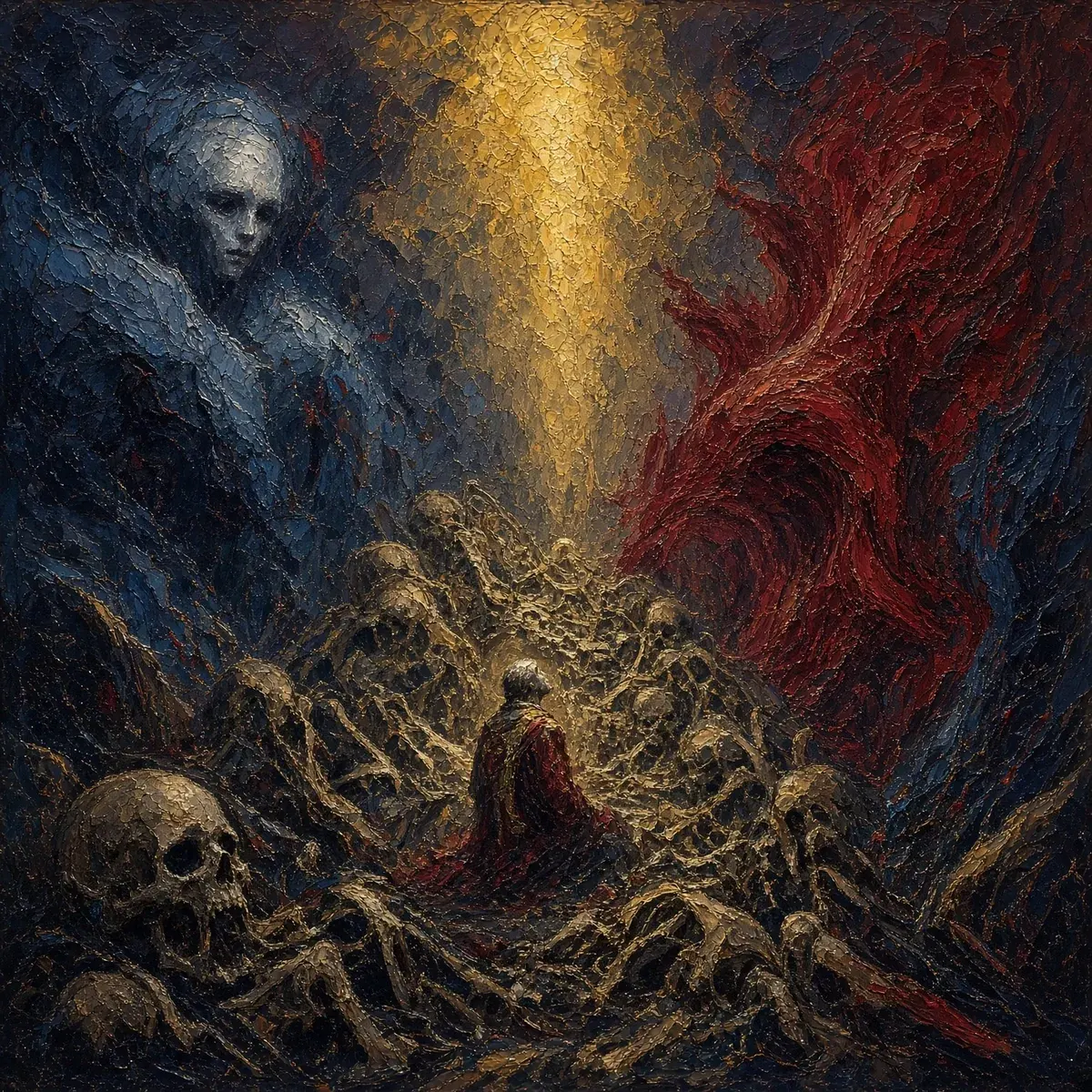
The valley of dry bones

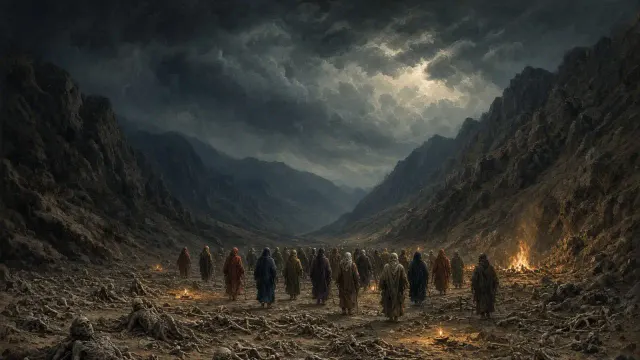
He was walked around it first, so that he would know how dry they were before he was asked the question.

It is a vision rather than a map, which is why it is the only place in this group with no geography. The sequence matters: he is set down in the midst of the valley, and then caused to pass by them round about, and only then is he asked. The walking tour is part of the method. By the time the question arrives he has seen that there were very many in the open valley, and lo, they were very dry, and both of those details are his own observation.

Where it appearsEzekiel 37

Scroll down to the account

The movements, in the order the text gives them.

The Account of The valley of dry bones

  1. 01

    Ezekiel 37:1-2

    He caused me to pass by them round about

    The survey comes before the question. He is given time to reach his own conclusion about the state of the valley.

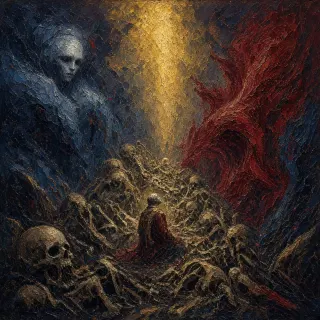
    The inspection comes before the question. Ezekiel is made to pass around the bones, not merely catch a distant glimpse of them. Two judgments emerge from that close attention: there are very many, and they are very dry. Number and condition each receive their own emphasis. This is not a small loss, and nothing in the remains suggests an interrupted recovery.

    The hand of the LORD brings the prophet into the scene, and the Spirit carries him there. The initiative is divine from the beginning, including the uncomfortable business of looking closely. No part of the promise will depend on pretending that the devastation is less severe than it appears. Before Ezekiel is told what God will do, he is made to see what lies before him.

    The Book of Ezekiel gives no named battle, no estimate of how many years the bones have lain there, and no account of the people who left them unburied. Those details would turn the vision into an invented reconstruction. What the passage supplies is more concentrated: an open expanse, a great multitude of remains, and dryness beyond dispute. The later explanation will identify the bones with Israel's own declaration that its hope is gone. The inspection gives that declaration its physical weight. The promise begins with a very thorough look at death.

    Verse by verse

    1. 37:1

      The hand and the Spirit of the LORD identify divine action as the source of Ezekiel's movement into the vision.

    2. 37:2

      Very many describes the number of bones; very dry describes their condition. The text emphasizes both separately.

    3. 37:2

      No particular battle or length of time since death is identified in these verses.

    Ezekiel 37:1-2

    King James Version · 2 verses

    37:1The hand of the LORD was upon me, and carried me out in the spirit of the LORD, and set me down in the midst of the valley which was full of bones,

    37:2And caused me to pass by them round about: and, behold, there were very many in the open valley; and, lo, they were very dry.

    Ezekiel 37:1-2: He caused me to pass by them round about
  2. 02

    Ezekiel 37:3

    O Lord GOD, thou knowest

    The answer is neither yes nor no. It is the only reply that is not a guess, and the vision proceeds on it.

    Ezekiel does not improve on what he has seen, and he does not make it the limit of what God can do. His reply holds those two things apart. O Lord GOD, thou knowest. The dryness is available to the prophet's inspection. The possibility of life is referred to the one asking about it.

    That is a notably restrained answer in a chapter famous for extraordinary sights. Ezekiel offers neither a confident prediction he has not been given nor a denial based on the condition of the bones. The passage does not call his answer cowardice or unbelief. God follows it with a command to prophesy, not a rebuke for failing a test of enthusiasm. The prophet's task is about to become quite specific: address the bones with the word he receives.

    Son of man matters in this setting. A human being stands among human remains and is asked about life beyond their visible condition. His prophetic office has not made him the source of that life. Nor will his later speech become an independent power. The repeated phrase as I was commanded will keep the distinction clear. Ezekiel knows whose knowledge governs the answer before he knows how the answer will unfold. He will supply the obedient voice. He will not supply the breath.

    Verse by verse

    1. 37:3

      Son of man is Ezekiel's recurring designation as a human being; its use here does not by itself identify him with the New Testament's messianic title.

    2. 37:3

      The text does not condemn Ezekiel's answer. The following verse gives him a command to speak.

    3. 37:3

      Thou knowest places the knowledge of the outcome with God without spelling out that outcome in advance.

    Ezekiel 37:3

    King James Version · 1 verse

    37:3And he said unto me, Son of man, can these bones live? And I answered, O Lord GOD, thou knowest.

    Ezekiel 37:3: O Lord GOD, thou knowest
  3. 03

    Ezekiel 37:7-8

    There was no breath in them

    The first stage works and stops short. Bodies assembled and standing and not alive, which is worse than the valley was.

    The valley acquires bodies before it acquires life. That distinction is the force of the last clause: but there was no breath in them. Everything visible has changed, yet the passage refuses to call the work complete. Joined bones, sinews, flesh, and skin are not interchangeable with living people.

    The movement is precise rather than merely spectacular. Bone comes to his bone, not into an impressive heap. The scattered remains receive order and bodily connection. Ezekiel's first report concerns what he hears, a noise and a shaking; his next concerns what he sees, flesh and skin covering the assembled bodies. The change engages both hearing and sight, but neither can erase the stated absence of breath.

    That pause does not mean the promise has failed halfway through. Verse 6 had already distinguished the provision of sinews, flesh, and skin from the entrance of breath. The visible sequence follows the announced sequence. It also recalls Genesis 2:7, where the formation of the human body and the breathing of life are separately described. The Book of Ezekiel is not dismissing the body as worthless. Its restoration receives painstaking attention. But restored structure is not yet the whole gift. The bodies have been reassembled; the power to stand alive has not arrived. The final clause keeps an extraordinary transformation from being mistaken for its completion.

    Verse by verse

    1. 37:7

      As I was commanded identifies obedience to a received word, not a technique Ezekiel devised.

    2. 37:7

      The Hebrew raash, rendered shaking, can describe a shaking or rattling disturbance. The verse does not specify an unrelated earthquake.

    3. 37:8

      The absence of breath is explicit even after the formation of complete bodies; the next command addresses this remaining difference.

    Ezekiel 37:7-8

    King James Version · 2 verses

    37:7So I prophesied as I was commanded: and as I prophesied, there was a noise, and behold a shaking, and the bones came together, bone to his bone.

    37:8And when I beheld, lo, the sinews and the flesh came up upon them, and the skin covered them above: but there was no breath in them.

    Ezekiel 37:7-8: There was no breath in them
  4. 04

    Ezekiel 37:9-10

    Come from the four winds, O breath

    The second command is addressed to the wind rather than the bones, and they stand up an exceeding great army.

    The command changes its addressee. Ezekiel has spoken to the bones; now he is to speak to the wind. The prophet does not discover a missing ingredient and improvise a remedy. A second divine instruction supplies the next action, and the same phrase returns: as he commanded me. The voice is Ezekiel's. The initiative remains God's.

    The Hebrew carries a connection that English has to distribute among different words. Wind and breath belong to the same word, ruach, and the chapter will use that word for God's spirit as well. The passage moves from the four winds to the breath entering the bodies and finally to God's explanation of the life he gives. Reducing every occurrence to ordinary air misses the final explanation; replacing every occurrence with an identical English label misses the movement of the language.

    These are called the slain, and what stands up is an exceeding great army. The contrast with the opening view could hardly be stronger: scattered remains become an organized multitude on its feet. No battle follows in this scene, and no military campaign is assigned to the restored people here. The army describes the scale and strength of the living assembly. The valley has not merely become less desolate. The people who could not move now stand.

    Verse by verse

    1. 37:9

      Slain identifies the bodies as those of people who were killed; it does not identify a particular historical battlefield.

    2. 37:9

      The four winds widen the summons in every direction; the verse gives no geographical coordinates for them.

    3. 37:10

      Army describes the multitude that stands alive. This verse does not send it into a new battle.

    4. 37:10

      Revelation 11:11 similarly joins the entry of the Spirit of life from God with the dead standing upon their feet.

    Ezekiel 37:9-10

    King James Version · 2 verses

    37:9Then said he unto me, Prophesy unto the wind, prophesy, son of man, and say to the wind, Thus saith the Lord GOD; Come from the four winds, O breath, and breathe upon these slain, that they may live.

    37:10So I prophesied as he commanded me, and the breath came into them, and they lived, and stood up upon their feet, an exceeding great army.

    Ezekiel 37:9-10: Come from the four winds, O breath
  5. 05

    Ezekiel 37:11-14

    Our bones are dried, and our hope is lost

    The interpretation quotes the people’s own sentence back, and answers it with graves rather than with argument.

    The valley's meaning is not left for someone else to invent. These bones are the whole house of Israel. God supplies the identification and then quotes the people's own language of exhaustion: dried bones, lost hope, complete separation. The vision has given visible form to what Israel is already saying about itself.

    The answer does not begin by agreeing that the relationship is over. O my people occurs twice in the promise of opened graves. The people describe themselves as cut off; God continues to name them as his. That repeated possessive carries substantial weight. Restoration is not merely the production of an anonymous living multitude. It concerns the people whose loss has been pictured and the land from which they have been displaced.

    The imagery moves from bones exposed in a valley to people brought out of graves. The picture changes, but the explanation remains explicit: life, the land of Israel, and God's Spirit placed within them. The passage should not be stripped of its powerful resurrection imagery, yet its stated interpretation cannot be replaced by a general message about personal recovery. The next action, joining the sticks of Judah and Joseph, will continue the concern with a reunited people. The closing assurance is equally concrete: the LORD will both speak and perform. The final word over the bones is not Israel's despair.

    Verse by verse

    1. 37:11

      God explicitly identifies the bones with the whole house of Israel; the people's quoted lament explains the vision's language of death.

    2. 37:12

      Sanhedrin 92b preserves differing rabbinic readings of Ezekiel's revived dead, including actual revival and a figurative portrayal of restoration.

    3. 37:13

      O my people repeats the address already used in 37:12, maintaining the relationship that Israel describes as lost.

    4. 37:14

      The gift of God's Spirit recalls Ezekiel 36:27; restoration includes renewed life with God, not only relocation.

    Ezekiel 37:11-14

    King James Version · 4 verses

    37:11Then he said unto me, Son of man, these bones are the whole house of Israel: behold, they say, Our bones are dried, and our hope is lost: we are cut off for our parts.

    37:12Therefore prophesy and say unto them, Thus saith the Lord GOD; Behold, O my people, I will open your graves, and cause you to come up out of your graves, and bring you into the land of Israel.

    37:13And ye shall know that I am the LORD, when I have opened your graves, O my people, and brought you up out of your graves,

    37:14And shall put my spirit in you, and ye shall live, and I shall place you in your own land: then shall ye know that I the LORD have spoken it, and performed it, saith the LORD.

    Ezekiel 37:11-14: Our bones are dried, and our hope is lost

Why it matters

Son of man, can these bones live. The answer he gives is the only honest one available and it is also a refusal to guess: O Lord GOD, thou knowest. Then the work is given to him rather than done in front of him: prophesy upon these bones. It happens in stages, with noise and shaking and sinews and flesh and skin, and then a pause, because there was no breath in them, and a second command addressed to the wind. The interpretation is given plainly at the end, and it is about a people saying our bones are dried and our hope is lost.

2 songs

The music

Every song in the catalogue whose passage falls inside these chapters.

  1. Ezekiel 37

    Breathe Upon These Bones

  2. Ezekiel 37:1-28

    Can These Bones Live?

Nearby

All the places

Report an error on this page