
El panorama
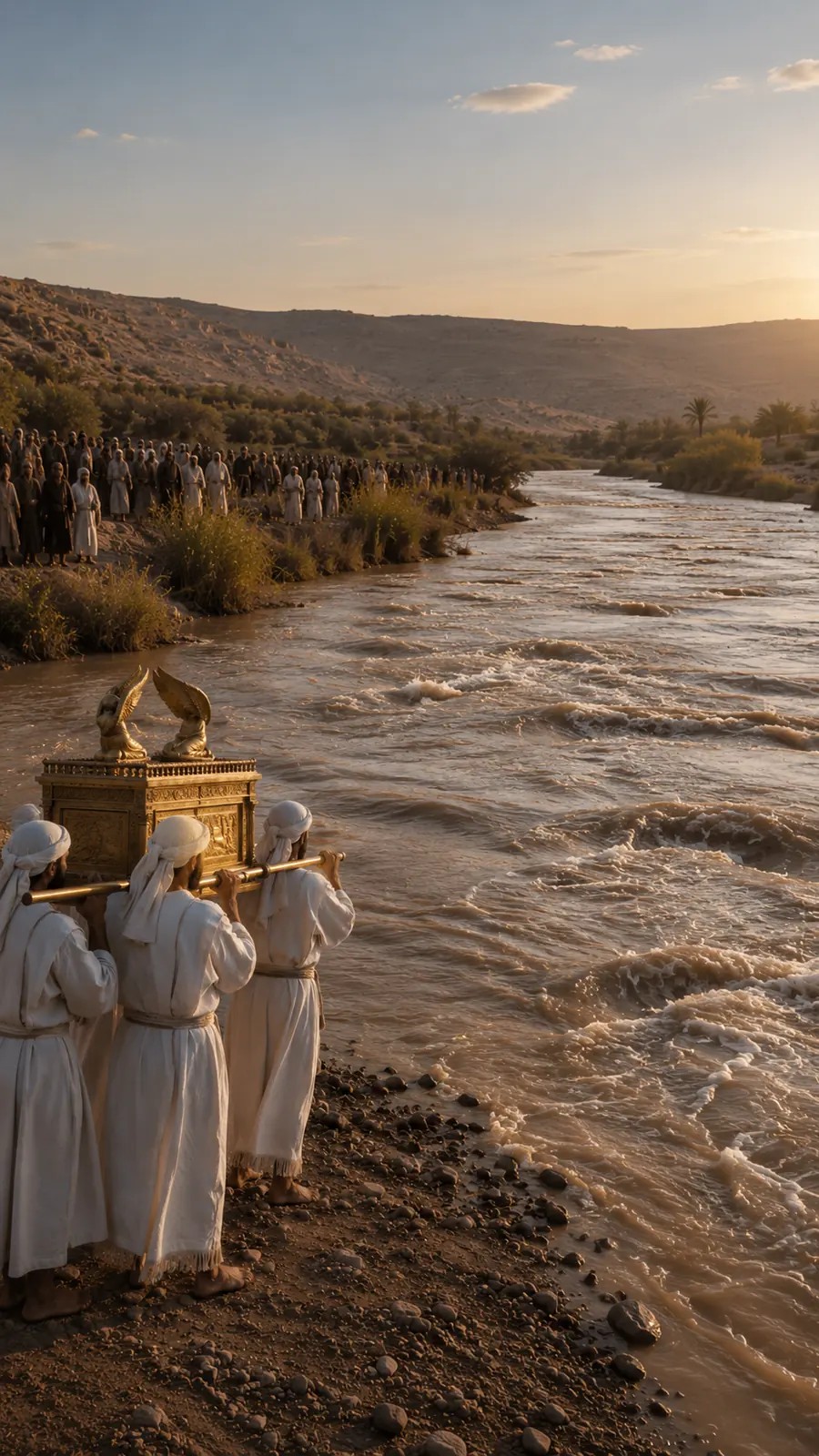
Josué 3 abre con “And Joshua rose early in the morning; and they removed from Shittim, and came to Jordan…”, cambia cerca del versículo 9 con “And Joshua said unto the children of Israel, Come hither, and hear the words of the LORD…” y termina con “And the priests that bare the ark of the covenant of the LORD stood firm on dry ground…”. Estos puntos trazan el movimiento propio del capítulo desde su inicio hasta su conclusión.
Las Escrituras junto al resumen
Josué · Versión King James · 17Josué 3:1-6
Versículos 1–6: Joshua rose early in the morning; and they removed from Shittim, and…
Josué 3:1–6 abre con “And Joshua rose early in the morning; and they removed from Shittim, and came to Jordan, he and…” y llega a “And Joshua spake unto the priests, saying, Take up the ark of the covenant, and pass over before…” en su último versículo. Ese recorrido desarrolla Josué 3 se desarrolla mediante sus propias voces, acciones, afirmaciones y consecuencias.
Contexto que da vida al pasaje
“And Joshua rose early in the morning; and they removed from Shittim, and came to Jordan, he and all the children of…” Nombrar a Israel y Jordan mantiene el relato unido a personas o lugares concretos. Sigue dónde reaparece el nombre y qué cambia a su alrededor.
“And it came to pass after three days, that the officers went through the host;” Esta señal narrativa conocida hace avanzar el tiempo. Lo que sigue es una nueva escena, consecuencia o respuesta a una tensión anterior.
Josué 3:1-6
Versión King James1And Joshua rose early in the morning; and they removed from Shittim, and came to Jordan, he and all the children of Israel, and lodged there before they passed over.
2And it came to pass after three days, that the officers went through the host;
3And they commanded the people, saying, When ye see the ark of the covenant of the LORD your God, and the priests the Levites bearing it, then ye shall remove from your place, and go after it.
4Yet there shall be a space between you and it, about two thousand cubits by measure: come not near unto it, that ye may know the way by which ye must go: for ye have not passed this way heretofore.
5And Joshua said unto the people, Sanctify yourselves: for to morrow the LORD will do wonders among you.
6And Joshua spake unto the priests, saying, Take up the ark of the covenant, and pass over before the people. And they took up the ark of the covenant, and went before the people.
Josué 3:7-12
Versículos 7–12: The LORD said unto Joshua, This day will I begin to magnify thee in the…
Josué 3:7–12 abre con “And the LORD said unto Joshua, This day will I begin to magnify thee in the sight of all Israel…” y llega a “Now therefore take you twelve men out of the tribes of Israel, out of every tribe a man.” en su último versículo. Ese recorrido desarrolla Josué 3 se desarrolla mediante sus propias voces, acciones, afirmaciones y consecuencias.
Contexto que da vida al pasaje
“And the LORD said unto Joshua, This day will I begin to magnify thee in the sight of all Israel, that they may know…” Nombrar a Israel y Joshua mantiene el relato unido a personas o lugares concretos. Sigue dónde reaparece el nombre y qué cambia a su alrededor.
“And thou shalt command the priests that bear the ark of the covenant, saying, When ye are come to the brink of the…” El lenguaje de promesa, bendición o pacto necesita su destinatario y alcance. Esos detalles impiden separar del contexto una palabra personal de la historia.
Josué 3:7-12
Versión King James7And the LORD said unto Joshua, This day will I begin to magnify thee in the sight of all Israel, that they may know that, as I was with Moses, so I will be with thee.
8And thou shalt command the priests that bear the ark of the covenant, saying, When ye are come to the brink of the water of Jordan, ye shall stand still in Jordan.
9And Joshua said unto the children of Israel, Come hither, and hear the words of the LORD your God.
10And Joshua said, Hereby ye shall know that the living God is among you, and that he will without fail drive out from before you the Canaanites, and the Hittites, and the Hivites, and the Perizzites, and the Girgashites, and the Amorites, and the Jebusites.
11Behold, the ark of the covenant of the Lord of all the earth passeth over before you into Jordan.
12Now therefore take you twelve men out of the tribes of Israel, out of every tribe a man.
Josué 3:13-17
Versículos 13–17: It shall come to pass, as soon as the soles of the feet of the priests…
Josué 3:13–17 abre con “And it shall come to pass, as soon as the soles of the feet of the priests that bear the ark of…” y llega a “And the priests that bare the ark of the covenant of the LORD stood firm on dry ground in the…” en su último versículo. Ese recorrido desarrolla Josué 3 se desarrolla mediante sus propias voces, acciones, afirmaciones y consecuencias.
Contexto que da vida al pasaje
“And it shall come to pass, as soon as the soles of the feet of the priests that bear the ark of the LORD , the Lord of…” El mandato no se entiende solo por el verbo. El destinatario, el propósito y su lugar dentro del pacto o argumento definen la responsabilidad.
“And it came to pass, when the people removed from their tents, to pass over Jordan, and the priests bearing the ark of…” Esta señal narrativa conocida hace avanzar el tiempo. Lo que sigue es una nueva escena, consecuencia o respuesta a una tensión anterior.
“And as they that bare the ark were come unto Jordan, and the feet of the priests that bare the ark were dipped in the…” Nombrar a Jordan mantiene el relato unido a personas o lugares concretos. Sigue dónde reaparece el nombre y qué cambia a su alrededor.
Josué 3:13-17
Versión King James13And it shall come to pass, as soon as the soles of the feet of the priests that bear the ark of the LORD , the Lord of all the earth, shall rest in the waters of Jordan, that the waters of Jordan shall be cut off from the waters that come down from above; and they shall stand upon an heap.
14And it came to pass, when the people removed from their tents, to pass over Jordan, and the priests bearing the ark of the covenant before the people;
15And as they that bare the ark were come unto Jordan, and the feet of the priests that bare the ark were dipped in the brim of the water, (for Jordan overfloweth all his banks all the time of harvest,)
16That the waters which came down from above stood and rose up upon an heap very far from the city Adam, that is beside Zaretan: and those that came down toward the sea of the plain, even the salt sea, failed, and were cut off: and the people passed over right against Jericho.
17And the priests that bare the ark of the covenant of the LORD stood firm on dry ground in the midst of Jordan, and all the Israelites passed over on dry ground, until all the people were passed clean over Jordan.
Detalles que vale la pena notar
La imagen inicial
Joshua 3:1 comienza con “And Joshua rose early in the morning; and they removed from Shittim, and came to Jordan, he and all the children of Israel, and lodged there before they…”
Dónde cambia el capítulo
Joshua 3:12 forma un giro natural: “Now therefore take you twelve men out of the tribes of Israel, out of every tribe a man.”
La nota final
Joshua 3:17 deja al lector con “And the priests that bare the ark of the covenant of the LORD stood firm on dry ground in the midst of Jordan, and all the Israelites passed over on dry…”
Un recorrido de palabras por el capítulo
Las palabras Jordan, LORD, people, covenant, priests, Joshua ayudan a revelar las preocupaciones que se repiten en el capítulo.
Primero el texto
Donde difieren los lectores
El resumen comienza con lo que dice el pasaje y cómo se relacionan sus partes. No supone que una denominación ya haya resuelto cada pregunta. Toda dependencia de una tradición, teoría literaria o reconstrucción histórica se identifica con claridad.
El texto KJV aparece primero. Las conclusiones interpretativas se identifican, y las diferencias se presentan cuando ayudan a explicar por qué las comunidades serias no siempre llegan a la misma respuesta.
Las notas interpretativas comparativas de este capítulo están en preparación. Hasta que las notas revisadas estén listas, esta página separa el texto KJV del resumen y la aplicación sin afirmar que todos los lectores serios coinciden en cada cuestión.