The big picture
Jehoshaphat succeeds his father Asa as king of Judah, the southern kingdom of God's people. Israel, the northern kingdom, remains a possible threat. The new king strengthens defences but also seeks God and sends teachers through his towns. Levites, members of the tribe assigned to sacred service, travel with priests and rulers. Their work brings God's law to the people. Peace, gifts and a large force follow a reign described as loyal in these early years.
In this chapter
- The New King Seeks God and Gains Strength 2 Chronicles 17:1-6
Jehoshaphat places forces in Judah's fortified towns and in northern towns his father captured.
- Teachers Carry God's Law Through the Towns 2 Chronicles 17:7-9
In his third year, Jehoshaphat sends named officials to teach in Judah's towns.
- Peace Makes Room for Gifts and Building 2 Chronicles 17:10-13
Fear of God falls on the surrounding kingdoms, and they do not make war on Jehoshaphat.
- Named Commanders Lead Prepared Forces 2 Chronicles 17:14-19
The fighting men are counted by their family houses under named leaders.
Central truth
Jehoshaphat strengthens Judah through loyalty to God, public teaching and prepared forces, while neighbouring peoples are restrained from attacking his kingdom.

Scripture beside the summary
2 Chronicles · King James Version · 192 Chronicles 17:1-6
The New King Seeks God and Gains Strength
Jehoshaphat places forces in Judah's fortified towns and in northern towns his father captured. God is with him because he follows the earlier ways of David, the royal ancestor, rather than seeking the Baalim, false gods. He keeps God's commands instead of copying the northern kingdom's conduct. God makes his rule secure, and Judah brings gifts that add wealth and honour. The king takes courage in God's ways and removes false worship sites. His strength is described through both practical defence and a chosen direction in worship.
In everyday life
A newly hired head gardener checks fences and removes plants known to damage the shared beds. She follows the sound methods used when the garden first flourished instead of copying a neighbouring site's shortcuts. Care for boundaries and care for growth happen together. The place begins to recover. Jehoshaphat's strength is attributed to God and loyalty in worship.
Notice
2 Chronicles 17:6 The king takes courage in God's ways before removing false worship. The growing confidence is directed toward obedience rather than being described only as pride in power.
2 Chronicles 17:1-6
King James Version1And Jehoshaphat his son reigned in his stead, and strengthened himself against Israel.
2And he placed forces in all the fenced cities of Judah, and set garrisons in the land of Judah, and in the cities of Ephraim, which Asa his father had taken.
3And the LORD was with Jehoshaphat, because he walked in the first ways of his father David, and sought not unto Baalim;
4But sought to the LORD God of his father, and walked in his commandments, and not after the doings of Israel.
5Therefore the LORD stablished the kingdom in his hand; and all Judah brought to Jehoshaphat presents; and he had riches and honour in abundance.
6And his heart was lifted up in the ways of the LORD: moreover he took away the high places and groves out of Judah.
2 Chronicles 17:7-9
Teachers Carry God's Law Through the Towns
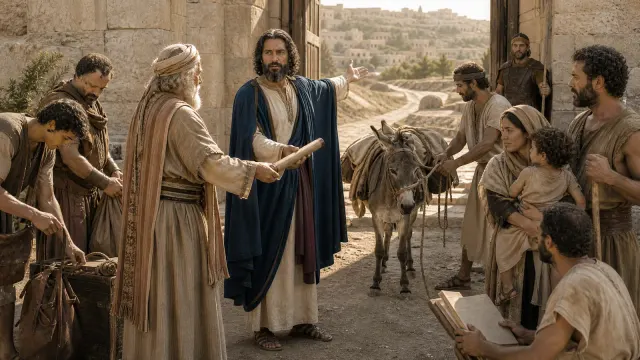
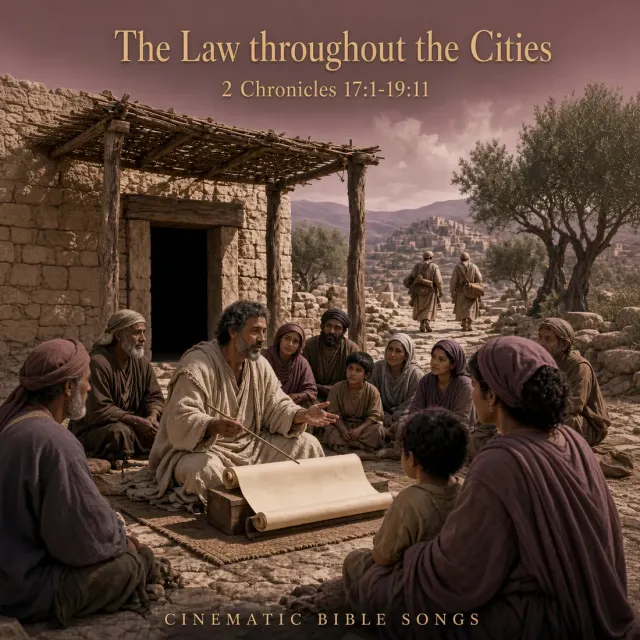
In his third year, Jehoshaphat sends named officials to teach in Judah's towns. Levites and priests go with them. They carry the book of God's law and travel throughout the kingdom, teaching the people. The effort reaches beyond the palace and temple. People need to hear the commands in the places where they live. Officials share the task with those whose usual role is sacred service. The written law gives their teaching a common source, so the programme is not left to each visitor's private opinions or favourite advice.
In everyday life
The literacy tutor loads the same course book into a mobile classroom before visiting remote villages. Local helpers join her so the teaching does not stop at the town centre. Each group receives the same basic material in its own place. Access requires travel and people willing to explain. Jehoshaphat's teams teach God's law as the kingdom's binding guide.
Notice
2 Chronicles 17:9 The teachers carry the written law with them as they travel. Their common source anchors the instruction given across many towns rather than leaving it to memory alone.
2 Chronicles 17:7-9
King James Version7Also in the third year of his reign he sent to his princes, even to Ben-hail, and to Obadiah, and to Zechariah, and to Nethaneel, and to Michaiah, to teach in the cities of Judah.
8And with them he sent Levites, even Shemaiah, and Nethaniah, and Zebadiah, and Asahel, and Shemiramoth, and Jehonathan, and Adonijah, and Tobijah, and Tob-adonijah, Levites; and with them Elishama and Jehoram, priests.
9And they taught in Judah, and had the book of the law of the LORD with them, and went about throughout all the cities of Judah, and taught the people.
2 Chronicles 17:10-13
Peace Makes Room for Gifts and Building
Fear of God falls on the surrounding kingdoms, and they do not make war on Jehoshaphat. Some Philistines, a neighbouring people, bring gifts and silver tribute. Arabians bring large flocks of rams and goats. The king grows stronger and builds forts and store towns. Much work takes place across Judah, and strong fighting men remain in Jerusalem, the royal city. Peace does not mean the kingdom has no forces. The account names God's restraint of neighbours alongside the continuing preparation, supplies and activity within the land.
In everyday life
The market inspector finds stalls reopening after a long period of threats on the roads. Traders bring goods that had stopped arriving, and store rooms fill again. Quiet creates space for ordinary work to expand. The guards remain, but fear no longer governs each trip. Judah's peace is traced to fear of God falling on neighbouring kingdoms.
Notice
2 Chronicles 17:10 The reason neighbours avoid war is stated as fear of God. The following wealth and building stand within that peace rather than fully explaining it by themselves.
2 Chronicles 17:10-13
King James Version10And the fear of the LORD fell upon all the kingdoms of the lands that were round about Judah, so that they made no war against Jehoshaphat.
11Also some of the Philistines brought Jehoshaphat presents, and tribute silver; and the Arabians brought him flocks, seven thousand and seven hundred rams, and seven thousand and seven hundred he goats.
12And Jehoshaphat waxed great exceedingly; and he built in Judah castles, and cities of store.
13And he had much business in the cities of Judah: and the men of war, mighty men of valour, were in Jerusalem.
2 Chronicles 17:14-19
Named Commanders Lead Prepared Forces
The fighting men are counted by their family houses under named leaders. Three large groups come from Judah, and two from Benjamin, the tribe joined with it. The list includes Amasiah, who willingly offers himself to God, and groups equipped with bows and shields. These men serve the king in addition to those stationed in fortified towns. The totals therefore describe more than local guards. The record joins readiness, leadership and one man's willing devotion. Large forces are not left anonymous, even though the list cannot give each soldier a separate entry.
In everyday life
The regatta organiser checks crews by captain and club before the boats launch. A volunteer captain has offered his time freely, but every boat still needs a clear list and proper equipment. Willingness and preparation belong together on the water. Named teams turn a crowd into a ready force. Jehoshaphat's list concerns soldiers serving a king before God.
Notice
2 Chronicles 17:16 Amasiah's willing offer to God is noted within the troop count. The brief personal detail gives motive a place among figures that otherwise describe military size.
2 Chronicles 17:14-19
King James Version14And these are the numbers of them according to the house of their fathers: Of Judah, the captains of thousands; Adnah the chief, and with him mighty men of valour three hundred thousand.
15And next to him was Jehohanan the captain, and with him two hundred and fourscore thousand.
16And next him was Amasiah the son of Zichri, who willingly offered himself unto the LORD; and with him two hundred thousand mighty men of valour.
17And of Benjamin; Eliada a mighty man of valour, and with him armed men with bow and shield two hundred thousand.
18And next him was Jehozabad, and with him an hundred and fourscore thousand ready prepared for the war.
19These waited on the king, beside those whom the king put in the fenced cities throughout all Judah.
Details worth noticing
The opening image
2 Chronicles 17:1 begins with “And Jehoshaphat his son reigned in his stead, and strengthened himself against Israel.”
Where the chapter turns
2 Chronicles 17:5 forms a natural hinge: “Therefore the LORD stablished the kingdom in his hand; and all Judah brought to Jehoshaphat presents; and he had riches and honour in abundance.”
The final note
2 Chronicles 17:19 leaves the reader with “These waited on the king, beside those whom the king put in the fenced cities throughout all Judah.”
A word trail through the chapter
The words Judah, cities, LORD, Jehoshaphat, mighty, seven help reveal the chapter’s repeated concerns.
KJV words made clear
- unto
- to
Music and video connected to the passage
Related media appears when its Scripture reference overlaps this study. Music and video can illuminate a theme while the biblical text remains the foundation.