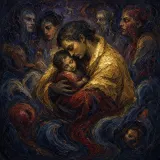
The big picture
The charges in Amos, the book named for God's messenger, turn from neighbouring nations towards God's own people. Moab, a neighbouring nation, is accused of abusing a dead king's remains. Judah, the southern kingdom, has rejected God's commands. Israel, the northern kingdom, sells poor people and mixes worship with exploitation. God recalls how he rescued and guided them. Their response has been to silence his messengers. The chapter ends with fighters unable to save themselves by strength or speed.
In this chapter
- Moab Is Judged for Desecrating Royal Remains Amos 2:1-3
God charges Moab with burning the bones of the king of Edom, another nation, until they became lime.
- Judah Has Rejected the Commands It Received Amos 2:4-5
God now addresses Judah.
- Worship Stands Beside the Abuse of People Amos 2:6-8
God accuses Israel of selling innocent people for money and poor people for the price of footwear.
- Past Rescue Meets Silenced Messengers Amos 2:9-12
God recalls removing the Amorite, a people described as tall and strong as great trees.
- Skill and Courage Cannot Secure Escape Amos 2:13-16
The people press upon God like grain bundles weighing down a full cart.
Central truth
God’s past care does not excuse his people’s wrongdoing, and their worship cannot hide the poor they exploit or the warnings they silence.
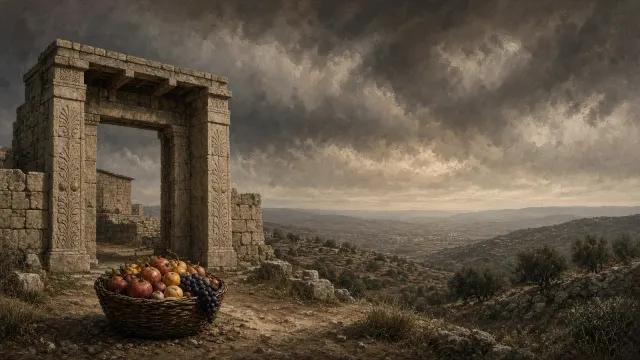
Scripture beside the summary
Amos · King James Version · 16Amos 2:1-3
Moab Is Judged for Desecrating Royal Remains
God charges Moab with burning the bones of the king of Edom, another nation, until they became lime. The act shows hostility continuing against a dead person's remains. God will send fire through Moab and consume the palaces of Kerioth, one of its cities. Shouting, trumpet blasts, and uproar will mark its fall. Its judge and princes will be killed. The repeated count of offences again presents guilt that has grown full. This charge does not depend on the victim belonging to God's people. The mistreatment of another nation's dead king still calls for an answer.
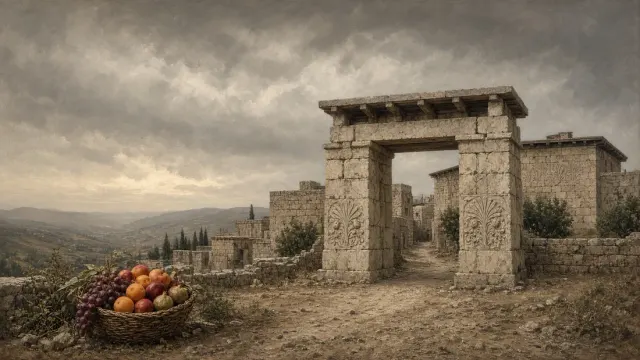
In everyday life
A cemetery conservator photographs a damaged grave before covering the exposed remains with care. The dead person's family comes from a community unlike her own. That difference does not make the damage less serious or the remains less worthy of respect. Amos announces Moab's violent fall under God's judgement, not a conservator's response to desecration.
Notice
Amos 2:1 The victim is Edom's king, not a ruler of Israel. God's charge reaches harm done to another nation. Concern for the dead is not limited to his own people.
Amos 2:1-3
King James Version1Thus saith the LORD; For three transgressions of Moab, and for four, I will not turn away the punishment thereof; because he burned the bones of the king of Edom into lime:
2But I will send a fire upon Moab, and it shall devour the palaces of Kerioth: and Moab shall die with tumult, with shouting, and with the sound of the trumpet:
3And I will cut off the judge from the midst thereof, and will slay all the princes thereof with him, saith the LORD.
Amos 2:4-5
Judah Has Rejected the Commands It Received
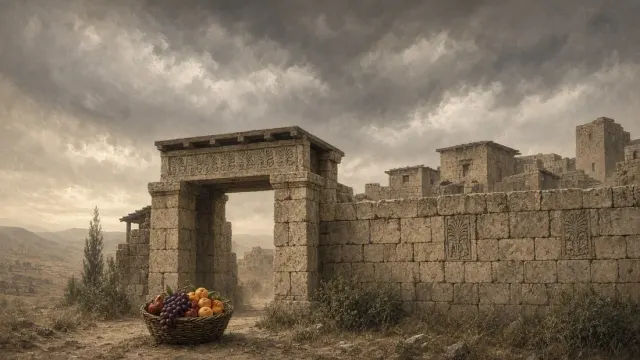
God now addresses Judah. Its people have treated his law with contempt and failed to keep his commands. The falsehoods that guided earlier generations have led them astray as well. An inherited practice is not cleared of blame because parents followed it. God will send fire into Judah and consume the palaces of Jerusalem, its chief city. The same kind of warning already spoken against foreign nations now reaches the people who possess God's law. Having received those commands gives them no shelter when they choose to despise them.
In everyday life
A workshop apprentice pulls an old safety sheet from a drawer while the owner points to a shortcut passed down through the family. The sheet shows that the practice has long broken the rule. Its age supplies no defence. Judah has rejected God's own commands, not a workplace procedure preserved in a drawer.
Notice
Amos 2:4 The falsehoods are linked with paths followed by earlier generations. Familiarity and family history do not turn a rejected command into a harmless tradition.
Amos 2:4-5
King James Version4Thus saith the LORD; For three transgressions of Judah, and for four, I will not turn away the punishment thereof; because they have despised the law of the LORD, and have not kept his commandments, and their lies caused them to err, after the which their fathers have walked:
5But I will send a fire upon Judah, and it shall devour the palaces of Jerusalem.
Amos 2:6-8
Worship Stands Beside the Abuse of People
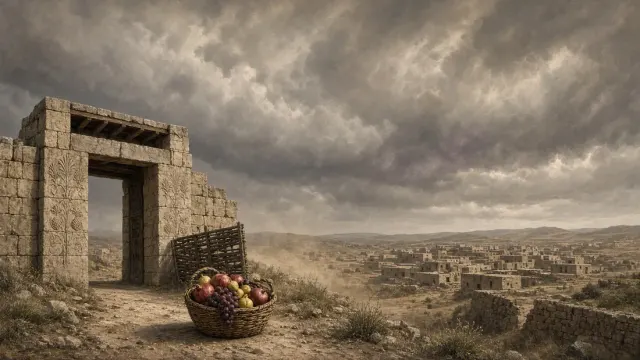
God accuses Israel of selling innocent people for money and poor people for the price of footwear. The weak are pushed aside and treated as dirt. A father and son have sex with the same young woman, dishonouring God's name. At the altars, people recline on clothes held as security for debts. They drink wine taken through fines from those they have condemned. Their religious gatherings do not stand apart from their abuse. The goods and pleasures enjoyed in worship come through the people they have harmed, so the altar cannot make their conduct acceptable.
In everyday life
A support-centre intake worker sets three reports beside each other: coerced debt, sexual mistreatment, and property taken under pressure. The same respected circle appears in each report. She keeps its public reputation from deciding whose account receives a hearing. Amos directly accuses worshippers before God, not through a support centre's investigation.
Notice
Amos 2:8 The clothes beside the altars were taken as debt security. Their presence ties the worshippers' comfort to another person's need rather than to generous giving.
Amos 2:6-8
King James Version6Thus saith the LORD; For three transgressions of Israel, and for four, I will not turn away the punishment thereof; because they sold the righteous for silver, and the poor for a pair of shoes;
7That pant after the dust of the earth on the head of the poor, and turn aside the way of the meek: and a man and his father will go in unto the same maid, to profane my holy name:
8And they lay themselves down upon clothes laid to pledge by every altar, and they drink the wine of the condemned in the house of their god.
Amos 2:9-12
Past Rescue Meets Silenced Messengers
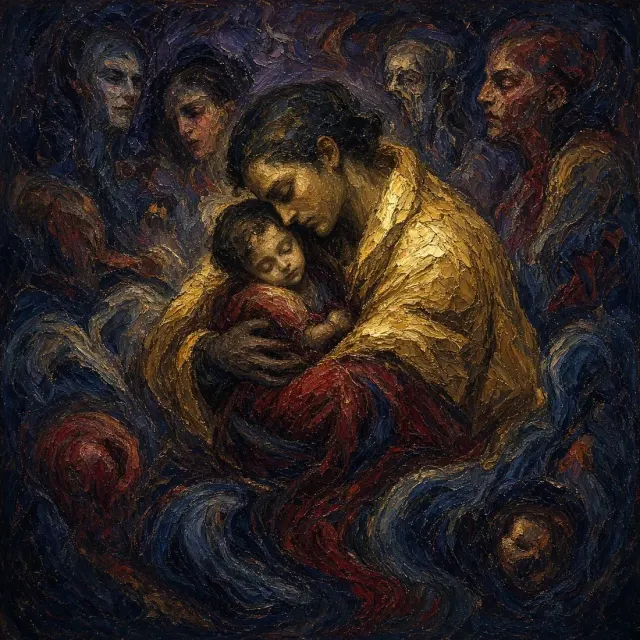
God recalls removing the Amorite, a people described as tall and strong as great trees. He destroyed their power from top to root. He had brought Israel out of Egypt, the land of bondage, and led them forty years through the wilderness. He also raised prophets, messengers speaking for him, and young people under special vows. Israel answered these gifts by making those under vows drink wine and ordering the prophets to stop speaking. The people did not lack care or warning. They worked against the signs of devotion and the voices God placed among them.
In everyday life
A hostel resident puts alcohol beside a housemate's signed abstinence pledge and then tells the duty mentor to keep quiet. Both the pledge and the mentor's warning interrupt the evening he wants. He tries to remove each obstacle instead of facing it. Amos describes resistance to people God set apart, not only broken rules in shared housing.
Notice
Amos 2:12 The people interfere with both vowed conduct and spoken warning. They press one group to break its commitment and another to stop delivering God's message.
Amos 2:9-12
King James Version9Yet destroyed I the Amorite before them, whose height was like the height of the cedars, and he was strong as the oaks; yet I destroyed his fruit from above, and his roots from beneath.
10Also I brought you up from the land of Egypt, and led you forty years through the wilderness, to possess the land of the Amorite.
11And I raised up of your sons for prophets, and of your young men for Nazarites. Is it not even thus, O ye children of Israel? saith the LORD.
12But ye gave the Nazarites wine to drink; and commanded the prophets, saying, Prophesy not.
Amos 2:13-16
Skill and Courage Cannot Secure Escape
The people press upon God like grain bundles weighing down a full cart. Their wrongdoing has become an intolerable weight. The warning then names the abilities on which fighters rely. Speed will not open a way out. Strong people will lack strength, and armed men will not save themselves. Archers cannot hold their ground, runners cannot escape, and riders cannot ride clear. Even the boldest fighter will flee with nothing on him. The list strips away each source of confidence. No form of human skill can guarantee safety on the day God announces.
In everyday life
A climbing instructor checks his rope, boots, and strength against a route now closed by a fresh collapse. Each skill remains real, but none creates the missing ledge. He stops treating confidence as a way across. Amos declares that every escape will fail under God's judgement, not that a climber should choose another route.
Notice
Amos 2:16 Even the bravest fighter ends by fleeing naked. The final image removes honour and equipment together, leaving courage unable to preserve either.
Amos 2:13-16
King James Version13Behold, I am pressed under you, as a cart is pressed that is full of sheaves.
14Therefore the flight shall perish from the swift, and the strong shall not strengthen his force, neither shall the mighty deliver himself:
15Neither shall he stand that handleth the bow; and he that is swift of foot shall not deliver himself: neither shall he that rideth the horse deliver himself.
16And he that is courageous among the mighty shall flee away naked in that day, saith the LORD.
Details worth noticing
The opening image
Amos 2:1 begins with “Thus saith the LORD; For three transgressions of Moab, and for four, I will not turn away the punishment thereof; because he burned the bones of the king…”
Where the chapter turns
Amos 2:5 forms a natural hinge: “But I will send a fire upon Judah, and it shall devour the palaces of Jerusalem.”
The final note
Amos 2:16 leaves the reader with “And he that is courageous among the mighty shall flee away naked in that day, saith the LORD.”
A word trail through the chapter
The words LORD, turn, deliver, Moab, punishment, transgressions help reveal the chapter’s repeated concerns.
KJV words made clear
- laid to pledge
- Held as security until a debt is repaid.
- Nazarites
- People set apart for God under vows that included avoiding wine.
- sheaves
- Bundles of cut grain gathered together during harvest.
Music and video connected to the passage
Related media appears when its Scripture reference overlaps this study. Music and video can illuminate a theme while the biblical text remains the foundation.