The big picture
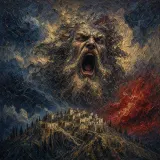
Amos, a herdsman from Tekoa, a town in Judah, receives words concerning Israel, the northern kingdom. His message begins with God's voice shaking the land. It then names surrounding peoples whose wars have crushed lives, traded captives, and torn apart families. Their walls and palaces will not keep them safe from God's answer. Each charge shows cruelty that has gone on and on. Each nation is told what it has done and what God will bring upon it.
In this chapter
- A Herdsman Announces God’s Roaring Voice Amos 1:1-2
The book introduces Amos among the herdsmen of Tekoa.
- Damascus Answers for Crushing Its Neighbours Amos 1:3-5
God charges Damascus, the chief city of Syria, with brutal treatment of Gilead, a region east of the river Jordan.
- Captive Trading Brings Down Philistine Cities Amos 1:6-8
God next addresses Gaza, a city of the Philistines, a neighbouring people.
- Broken Bonds and Lasting Hatred Receive Judgement Amos 1:9-12
Tyrus, a coastal trading city, also delivered captives to Edom.
- Territorial Gain Cannot Excuse Violence Against Mothers Amos 1:13-15
God charges Ammon, a neighbouring people, with cutting open pregnant women in Gilead to expand its border.
Central truth
Cruel nations face God’s judgement for breaking bonds, selling captives, and gaining land through acts that destroy the lives of others.
Scripture beside the summary
Amos · King James Version · 15Amos 1:1-2
A Herdsman Announces God’s Roaring Voice
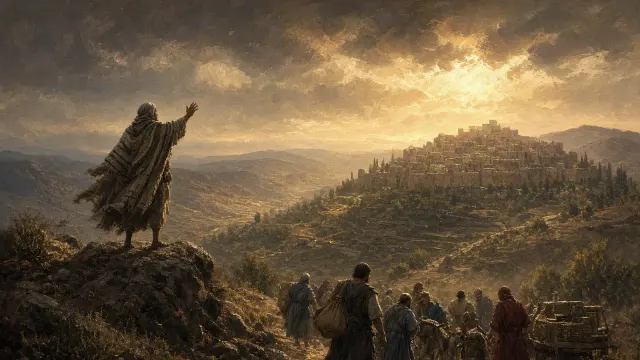
The book introduces Amos among the herdsmen of Tekoa. It places his message during the reigns of Uzziah, Judah's king, and Jeroboam, Israel's king, two years before an earthquake. Amos says the Lord will roar from Zion, the holy mountain in Jerusalem, Judah's chief city. That voice reaches out into the places where shepherds live. Even Carmel, a mountain known for growth, will wither. The warning begins with the land itself feeling God's presence. A man whose work involves herds announces a word that will dry their grazing places.
In everyday life
A hill farmer stops beside a shrinking pond when a loud warning reaches his pasture from the village. The sound concerns the land that feeds his animals, not an issue safely kept behind distant walls. He puts down his bucket to listen. Amos speaks of God's roar withering the land, not a warning carried by village equipment.
Notice
Amos 1:1 Amos is introduced through his work among herdsmen. The warning soon names shepherds' homes, bringing the word into the kind of life the speaker knows.
Amos 1:1-2
King James Version1The words of Amos, who was among the herdmen of Tekoa, which he saw concerning Israel in the days of Uzziah king of Judah, and in the days of Jeroboam the son of Joash king of Israel, two years before the earthquake.
2And he said, The LORD will roar from Zion, and utter his voice from Jerusalem; and the habitations of the shepherds shall mourn, and the top of Carmel shall wither.
Amos 1:3-5
Damascus Answers for Crushing Its Neighbours
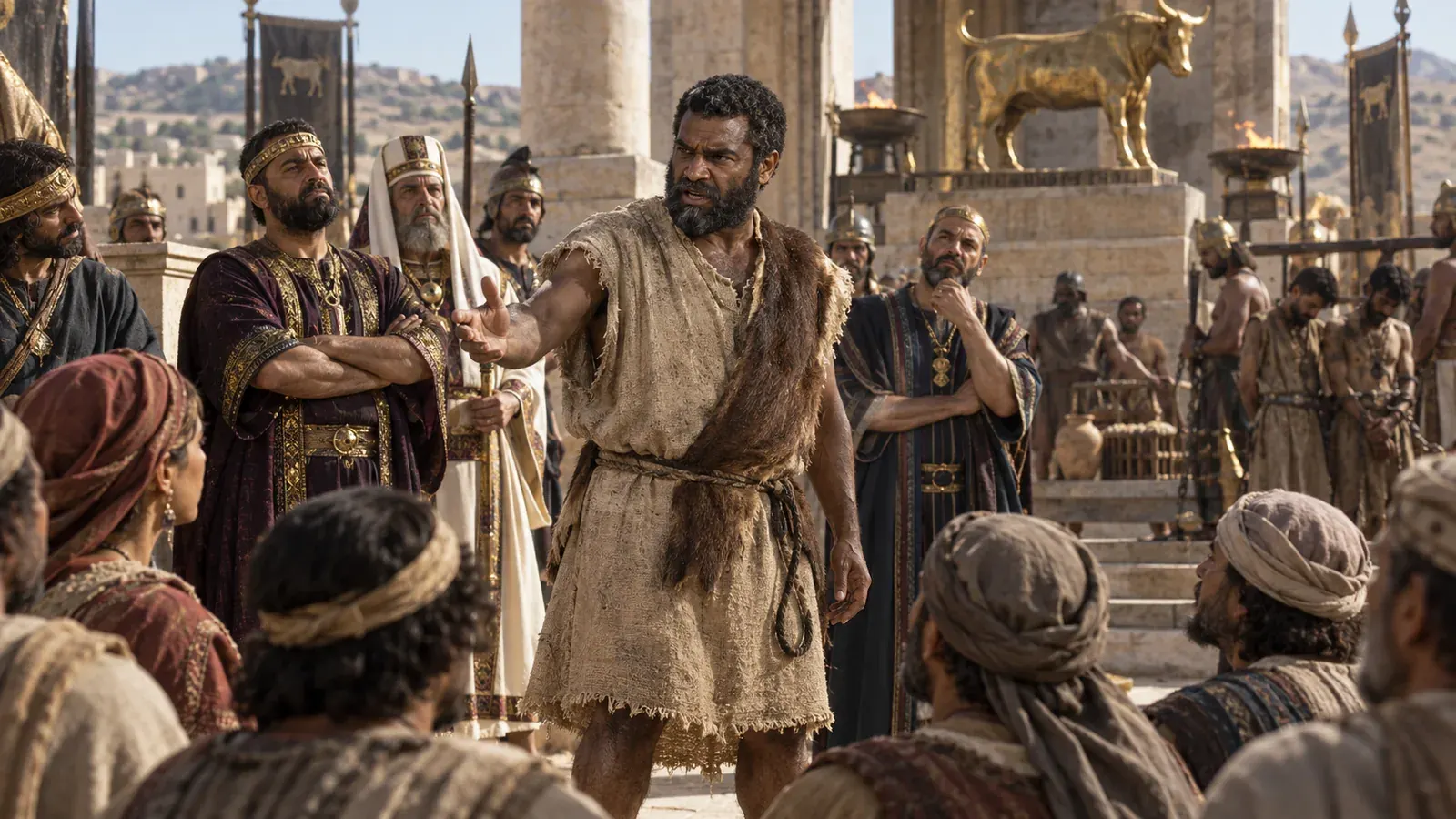
God charges Damascus, the chief city of Syria, with brutal treatment of Gilead, a region east of the river Jordan. Iron threshing tools, used to break harvested crops, describe how its people were crushed. The count of three offences and then four presents guilt that has kept growing. God will burn the palaces of Hazael and Ben-hadad, names tied to Syria's royal house. He will break the city's defences and remove its rulers. The people will be carried away to Kir, their named place of exile. Royal strength will not cancel the charge of cruelty.
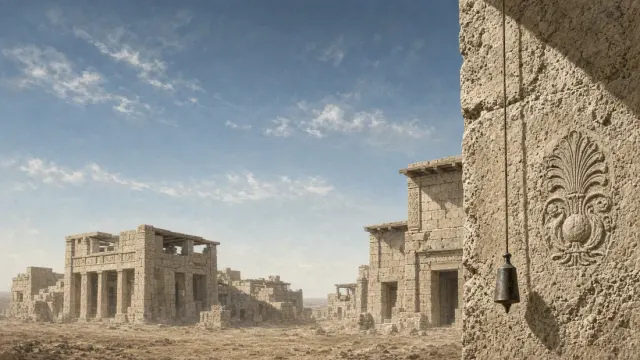
In everyday life
A war-injury archivist places a farm tool's photograph beside testimony from a devastated border district. She records the use of ordinary equipment in cruelty without displaying the victims' wounds. The label preserves what a tidy account of territorial gains leaves out. Amos announces divine judgement and exile, not an archive's power to document abuse.
Notice
Amos 1:3 Threshing tools belong to the treatment of crops, but the charge applies them to people. The image names crushing cruelty, not merely success in a border fight.
Amos 1:3-5
King James Version3Thus saith the LORD; For three transgressions of Damascus, and for four, I will not turn away the punishment thereof; because they have threshed Gilead with threshing instruments of iron:
4But I will send a fire into the house of Hazael, which shall devour the palaces of Ben-hadad.
5I will break also the bar of Damascus, and cut off the inhabitant from the plain of Aven, and him that holdeth the sceptre from the house of Eden: and the people of Syria shall go into captivity unto Kir, saith the LORD.
Amos 1:6-8
Captive Trading Brings Down Philistine Cities
God next addresses Gaza, a city of the Philistines, a neighbouring people. It took whole groups captive and handed them to Edom, another nation. God will burn Gaza's wall and palaces. The warning then reaches other Philistine cities: Ashdod will lose its inhabitants, Ashkelon its ruler, and Ekron will face God's hand. Even the remaining Philistines will perish. The trade in captives is not treated as a minor part of war. It stands as the stated reason for judgement on the cities that relied on their walls and rulers.
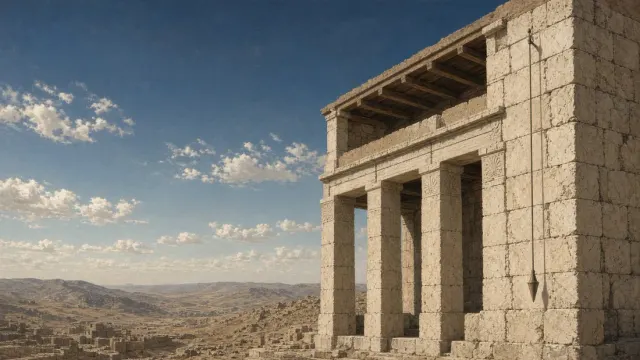
In everyday life
A tracing-service worker pins a list of missing households beside a map of transfer points. The gaps include children and older relatives, not only captured fighters. She follows the whole chain rather than treating each handover as a fresh beginning. Amos pronounces destruction on the captors, not the limited work of tracing families after displacement.
Notice
Amos 1:6 The charge concerns a whole captive group handed over to another people. The transfer does not remove the first captors' responsibility for those they seized.
Amos 1:6-8
King James Version6Thus saith the LORD; For three transgressions of Gaza, and for four, I will not turn away the punishment thereof; because they carried away captive the whole captivity, to deliver them up to Edom:
7But I will send a fire on the wall of Gaza, which shall devour the palaces thereof:
8And I will cut off the inhabitant from Ashdod, and him that holdeth the sceptre from Ashkelon, and I will turn mine hand against Ekron: and the remnant of the Philistines shall perish, saith the Lord GOD.
Amos 1:9-12
Broken Bonds and Lasting Hatred Receive Judgement
Tyrus, a coastal trading city, also delivered captives to Edom. God names a further offence: it forgot a bond of brotherhood. Fire will consume its walls and palaces. Edom is then accused of pursuing its brother with the sword and refusing pity. Its anger did not end with a single clash; it kept burning. God will send fire against Teman and Bozrah, places within Edom. Betrayal and cherished hatred stand beside the trade in people. Past ties have given these nations reasons for restraint, but they chose to discard them.
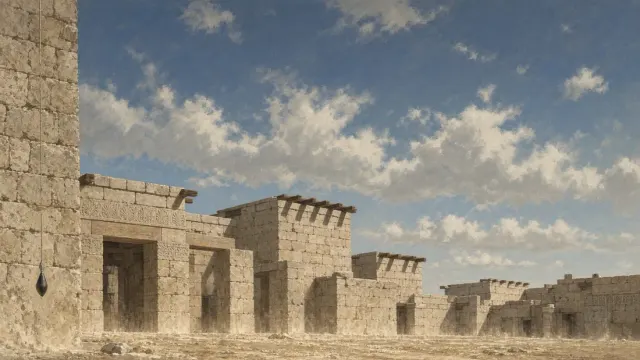
In everyday life
An estrangement counsellor sets an old mutual-care agreement beside letters that keep reviving a family feud. One signer has treated a former bond as worthless and preserved each fresh reason for anger. The counsellor names both choices without excusing either. Amos addresses nations and announces burning palaces, not a family's process of resolving resentment.
Notice
Amos 1:11 Edom is charged with keeping anger alive and casting pity aside. The fault includes the sustained refusal to relent, not only the first violent act.
Amos 1:9-12
King James Version9Thus saith the LORD; For three transgressions of Tyrus, and for four, I will not turn away the punishment thereof; because they delivered up the whole captivity to Edom, and remembered not the brotherly covenant:
10But I will send a fire on the wall of Tyrus, which shall devour the palaces thereof.
11Thus saith the LORD; For three transgressions of Edom, and for four, I will not turn away the punishment thereof; because he did pursue his brother with the sword, and did cast off all pity, and his anger did tear perpetually, and he kept his wrath for ever:
12But I will send a fire upon Teman, which shall devour the palaces of Bozrah.
Amos 1:13-15
Territorial Gain Cannot Excuse Violence Against Mothers
God charges Ammon, a neighbouring people, with cutting open pregnant women in Gilead to expand its border. The stated goal is more land. The victims' suffering is not hidden behind that goal. God will burn the wall and palaces of Rabbah, Ammon's chief city. Battle cries and a violent storm accompany the judgement. The king and his princes will go into captivity together. Those whose rule sought a larger border will lose their own freedom. The warning names the atrocity plainly without giving anyone permission to repeat it.
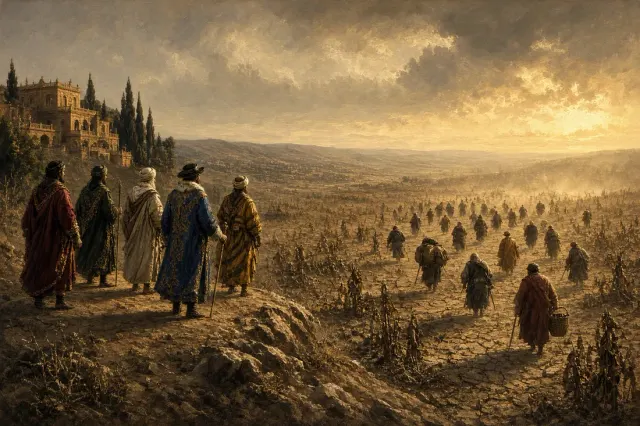
In everyday life
A memorial designer leaves space for mothers and unborn children on a plaque about a border war. She refuses a draft that records only land gained and commanders' names. The families' losses remain visible without a staged scene of violence. Amos also declares captivity for the rulers, which a memorial cannot impose.
Notice
Amos 1:13 The motive for the attack is a larger border. Placing that gain beside the violence exposes the human cost that a map alone would leave out.
Amos 1:13-15
King James Version13Thus saith the LORD; For three transgressions of the children of Ammon, and for four, I will not turn away the punishment thereof; because they have ripped up the women with child of Gilead, that they might enlarge their border:
14But I will kindle a fire in the wall of Rabbah, and it shall devour the palaces thereof, with shouting in the day of battle, with a tempest in the day of the whirlwind:
15And their king shall go into captivity, he and his princes together, saith the LORD.
Details worth noticing
The opening image
Amos 1:1 begins with “The words of Amos, who was among the herdmen of Tekoa, which he saw concerning Israel in the days of Uzziah king of Judah, and in the days of Jeroboam the…”
Where the chapter turns
Amos 1:7 forms a natural hinge: “But I will send a fire on the wall of Gaza, which shall devour the palaces thereof:”
The final note
Amos 1:15 leaves the reader with “And their king shall go into captivity, he and his princes together, saith the LORD.”
A word trail through the chapter
The words LORD, turn, devour, fire, palaces, punishment help reveal the chapter’s repeated concerns.
KJV words made clear
- transgressions
- Wrong acts that cross a boundary God has set.
- sceptre
- A royal staff used as a sign of rule.
Music and video connected to the passage
Related media appears when its Scripture reference overlaps this study. Music and video can illuminate a theme while the biblical text remains the foundation.