The big picture
Israel, the people enslaved in Egypt, is preparing to leave after God's final warning to Pharaoh, the Egyptian king. Moses and Aaron, God's messengers, receive instructions for a meal and a sign on each household's door. The night will bring death to Egypt's firstborn and protection to those marked homes. The departure must also be remembered afterward through shared food, annual worship, and clear rules for who takes part.
In this chapter
- Each Household Chooses a Lamb Exodus 12:1-6
Speaking to Moses and Aaron, the LORD makes this month the first month of Israel's year.
- Blood Marks the Protected Houses Exodus 12:7-13
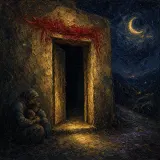
Blood from the animal goes on each house's side posts and upper doorpost.
- Flat Bread Will Preserve the Memory Exodus 12:14-20
God commands an enduring feast to remember this day.
- Children Will Ask About the Meal Exodus 12:21-28
Moses passes the instructions to Israel's elders, its household leaders.
- Death Brings Pharaoh's Order to Leave Exodus 12:29-32
At midnight, the LORD strikes Egypt's firstborn.
- The People Leave with Unrisen Dough Exodus 12:33-39
Egyptians urge Israel to leave quickly because they fear more death.
- A Long Stay Ends in One Night Exodus 12:40-42
Exodus records a stay of four hundred and thirty years and marks its end on the very day the LORD's people leave Egypt.
- Passover Has Rules for Shared Belonging Exodus 12:43-51
Further commands to Moses and Aaron give rules for the passover meal.
Central truth
God protects Israel during the final plague and brings them out of Egypt, giving them a meal to remember the rescue.
Scripture beside the summary
Exodus · King James Version · 51Exodus 12:1-6
Each Household Chooses a Lamb
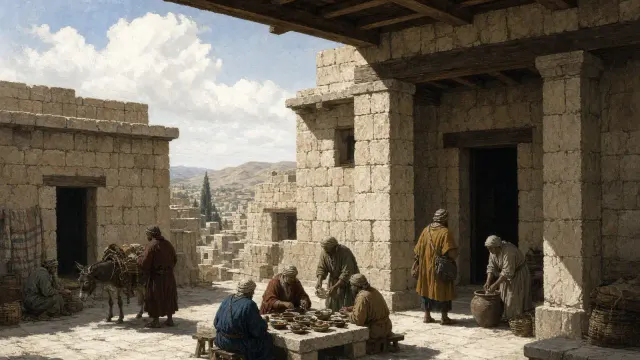
Speaking to Moses and Aaron, the LORD makes this month the first month of Israel's year. On its tenth day, each household must choose a year-old male sheep or goat without a defect. A small household should share with its nearest neighbour, counting how much each person can eat. The animal is kept until the fourteenth day, when the gathered people kill their animals in the evening. The instructions make this a shared act carried out through households. The calendar itself now gives the coming rescue a starting place.
In everyday life
One grandmother measures portions while her neighbour brings extra chairs for their annual remembrance supper. Two small households eat together so everyone has enough and nothing is treated carelessly. The date is circled on both calendars. Shared preparation gives memory a regular place in family life. Passover begins with God's command before the rescue itself occurs.
Notice
Exodus 12:4 Small households are told to share according to the number eating. The meal's arrangements make room for families that cannot use a whole animal alone.
Exodus 12:1-6
King James Version1And the LORD spake unto Moses and Aaron in the land of Egypt, saying,
2This month shall be unto you the beginning of months: it shall be the first month of the year to you.
3Speak ye unto all the congregation of Israel, saying, In the tenth day of this month they shall take to them every man a lamb, according to the house of their fathers, a lamb for an house:
4And if the household be too little for the lamb, let him and his neighbour next unto his house take it according to the number of the souls; every man according to his eating shall make your count for the lamb.
5Your lamb shall be without blemish, a male of the first year: ye shall take it out from the sheep, or from the goats:
6And ye shall keep it up until the fourteenth day of the same month: and the whole assembly of the congregation of Israel shall kill it in the evening.
Exodus 12:7-13
Blood Marks the Protected Houses
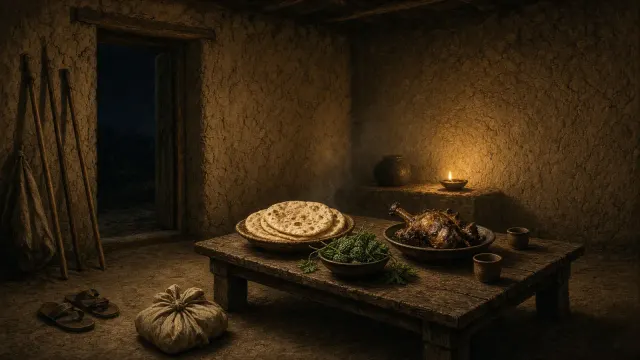
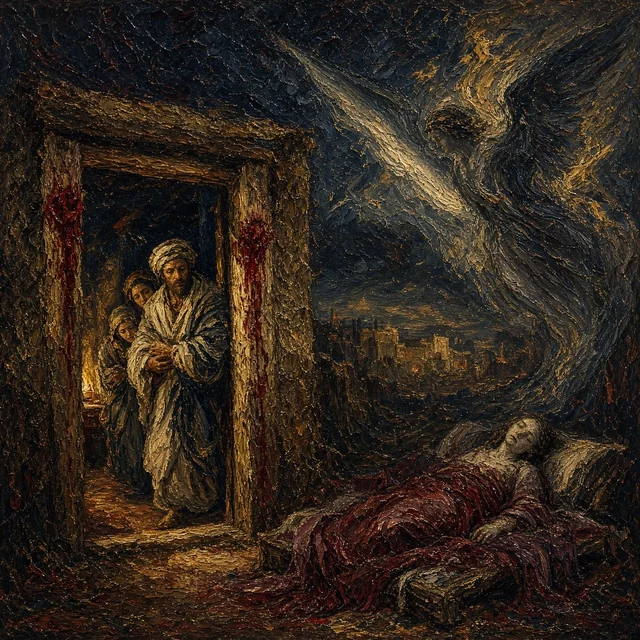
Blood from the animal goes on each house's side posts and upper doorpost. The people eat roasted meat with flat bread and bitter herbs. They must burn leftovers and eat dressed for departure, with shoes on and staff ready. God calls this his passover. That night he will kill Egypt's firstborn, both human and animal, and judge Egypt's gods. The blood marks the houses where Israel eats. God promises to pass over those homes so the destroying plague does not enter. Protection rests on the sign he has commanded.
In everyday life
The flood marshal checks a row of evacuation houses while residents sit in coats beside packed bags. Each approved doorway bears the mark his team has been told to recognize. The waiting families eat quickly, ready for the call to move. Their preparation joins a meal to urgent departure. A rescue mark cannot equal God's promise to spare firstborn lives.
Notice
Exodus 12:11 Shoes, tightened clothing, and a staff make this a meal ready for departure. The people prepare physically before Pharaoh gives permission to leave.
Exodus 12:7-13
King James Version7And they shall take of the blood, and strike it on the two side posts and on the upper door post of the houses, wherein they shall eat it.
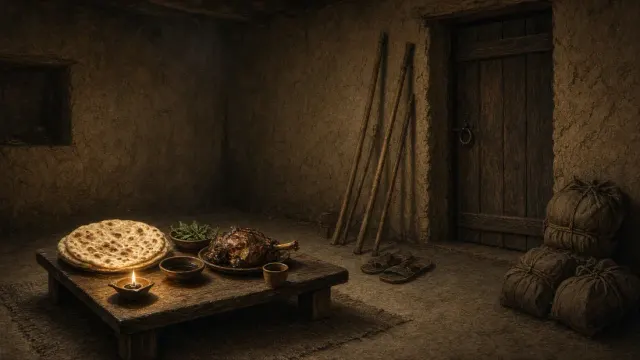
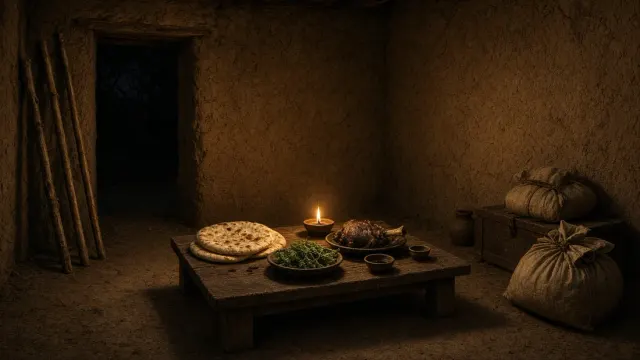
8And they shall eat the flesh in that night, roast with fire, and unleavened bread; and with bitter herbs they shall eat it.
9Eat not of it raw, nor sodden at all with water, but roast with fire; his head with his legs, and with the purtenance thereof.
10And ye shall let nothing of it remain until the morning; and that which remaineth of it until the morning ye shall burn with fire.
11And thus shall ye eat it; with your loins girded, your shoes on your feet, and your staff in your hand; and ye shall eat it in haste: it is the LORD’s passover.
12For I will pass through the land of Egypt this night, and will smite all the firstborn in the land of Egypt, both man and beast; and against all the gods of Egypt I will execute judgment: I am the LORD.
13And the blood shall be to you for a token upon the houses where ye are: and when I see the blood, I will pass over you, and the plague shall not be upon you to destroy you, when I smite the land of Egypt.
Exodus 12:14-20
Flat Bread Will Preserve the Memory
God commands an enduring feast to remember this day. For seven days the people must remove leaven, the substance that makes dough rise, and eat only unleavened bread. The first and seventh days have holy assemblies, with work limited to preparing food. Eating leaven during the feast brings exclusion from Israel, whether the person is native-born or an outsider living among them. God ties the practice to the day he brings the people out. This food rule is a serious part of belonging, not an optional family preference.
In everyday life
Every member of a rescue crew puts aside ordinary duties on the anniversary of a disaster. They gather around the old station bell, and the youngest recruit follows the same observance as the longest-serving captain. A fixed practice keeps the date from becoming vague memory. Their ceremony has no food law imposed by God or penalty of exclusion.
Notice
Exodus 12:19 The rule covers both a resident outsider and someone born among Israel. Sharing the community's life also brings responsibility for this act of remembrance.
Exodus 12:14-20
King James Version14And this day shall be unto you for a memorial; and ye shall keep it a feast to the LORD throughout your generations; ye shall keep it a feast by an ordinance for ever.
15Seven days shall ye eat unleavened bread; even the first day ye shall put away leaven out of your houses: for whosoever eateth leavened bread from the first day until the seventh day, that soul shall be cut off from Israel.
16And in the first day there shall be an holy convocation, and in the seventh day there shall be an holy convocation to you; no manner of work shall be done in them, save that which every man must eat, that only may be done of you.
17And ye shall observe the feast of unleavened bread; for in this selfsame day have I brought your armies out of the land of Egypt: therefore shall ye observe this day in your generations by an ordinance for ever.
18In the first month, on the fourteenth day of the month at even, ye shall eat unleavened bread, until the one and twentieth day of the month at even.
19Seven days shall there be no leaven found in your houses: for whosoever eateth that which is leavened, even that soul shall be cut off from the congregation of Israel, whether he be a stranger, or born in the land.
20Ye shall eat nothing leavened; in all your habitations shall ye eat unleavened bread.
Exodus 12:21-28
Children Will Ask About the Meal
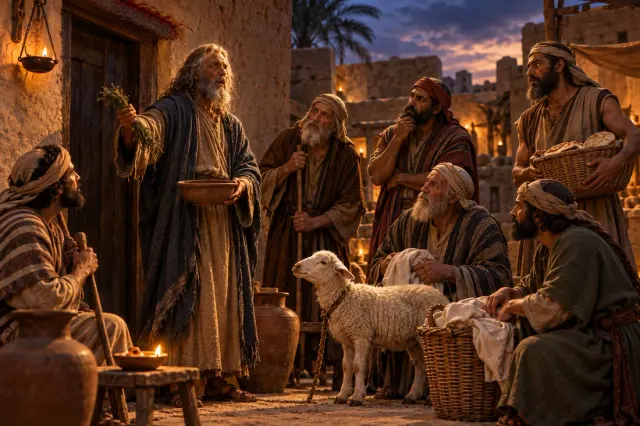
Moses passes the instructions to Israel's elders, its household leaders. Families must kill the animal and use a bunch of hyssop, a plant, to apply blood to the doorway. Everyone must stay inside until morning. The LORD will see the blood and prevent the destroyer from entering. Moses also looks ahead to the promised land. Children will ask what this service means, and parents must explain how God spared their homes while striking Egypt. The people bow in worship and carry out the command. Future explanation begins with present obedience.
In everyday life
A young daughter points to a smoke-stained key hanging above the stairs while guests arrive for the family's annual gathering. Her father tells her about the night neighbours led them from their burning home. The kept object gives her a question about the date. Passover requires a shared meal commanded by God, not a family's display of a rescued key.
Notice
Exodus 12:26 Children's questions are expected, not discouraged. The repeated meal gives parents an opening to explain a rescue their children did not witness.
Exodus 12:21-28
King James Version21Then Moses called for all the elders of Israel, and said unto them, Draw out and take you a lamb according to your families, and kill the passover.
22And ye shall take a bunch of hyssop, and dip it in the blood that is in the bason, and strike the lintel and the two side posts with the blood that is in the bason; and none of you shall go out at the door of his house until the morning.
23For the LORD will pass through to smite the Egyptians; and when he seeth the blood upon the lintel, and on the two side posts, the LORD will pass over the door, and will not suffer the destroyer to come in unto your houses to smite you.
24And ye shall observe this thing for an ordinance to thee and to thy sons for ever.
25And it shall come to pass, when ye be come to the land which the LORD will give you, according as he hath promised, that ye shall keep this service.
26And it shall come to pass, when your children shall say unto you, What mean ye by this service?
27That ye shall say, It is the sacrifice of the LORD’s passover, who passed over the houses of the children of Israel in Egypt, when he smote the Egyptians, and delivered our houses. And the people bowed the head and worshipped.
28And the children of Israel went away, and did as the LORD had commanded Moses and Aaron, so did they.
Exodus 12:29-32
Death Brings Pharaoh's Order to Leave
At midnight, the LORD strikes Egypt's firstborn. The loss reaches Pharaoh's own firstborn, prisoners' firstborn, and firstborn livestock. A great cry rises as households discover their dead. Pharaoh gets up in the night and summons Moses and Aaron. He orders them and Israel to leave and serve the LORD as they asked. He allows the flocks and herds to go too, then asks a blessing for himself. The conditions he argued over are gone. Release comes amid grief that reaches the rulers and the imprisoned alike.
In everyday life
An undertaker opens extra rooms as grieving families arrive from across a town. A wealthy shop owner stands beside a cleaner, both unable to speak. He puts away routine appointments and finds chairs and water. Ordinary differences feel small beside the grief. This quiet response cannot reproduce the death God brings upon Egypt's firstborn.
Notice
Exodus 12:32 Pharaoh now includes the herds he previously tried to keep. His final demand is departure, even as he asks the brothers to bless him.
Exodus 12:29-32
King James Version29And it came to pass, that at midnight the LORD smote all the firstborn in the land of Egypt, from the firstborn of Pharaoh that sat on his throne unto the firstborn of the captive that was in the dungeon; and all the firstborn of cattle.
30And Pharaoh rose up in the night, he, and all his servants, and all the Egyptians; and there was a great cry in Egypt; for there was not a house where there was not one dead.
31And he called for Moses and Aaron by night, and said, Rise up, and get you forth from among my people, both ye and the children of Israel; and go, serve the LORD, as ye have said.
32Also take your flocks and your herds, as ye have said, and be gone; and bless me also.
Exodus 12:33-39
The People Leave with Unrisen Dough
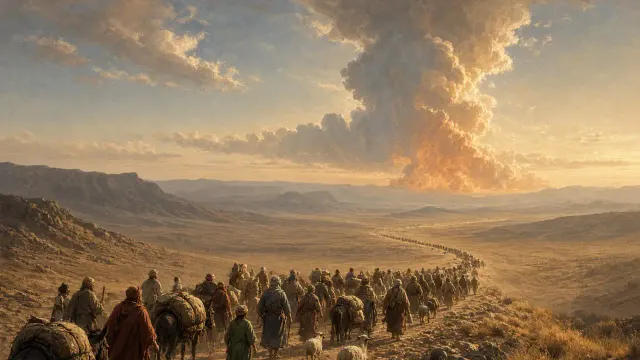
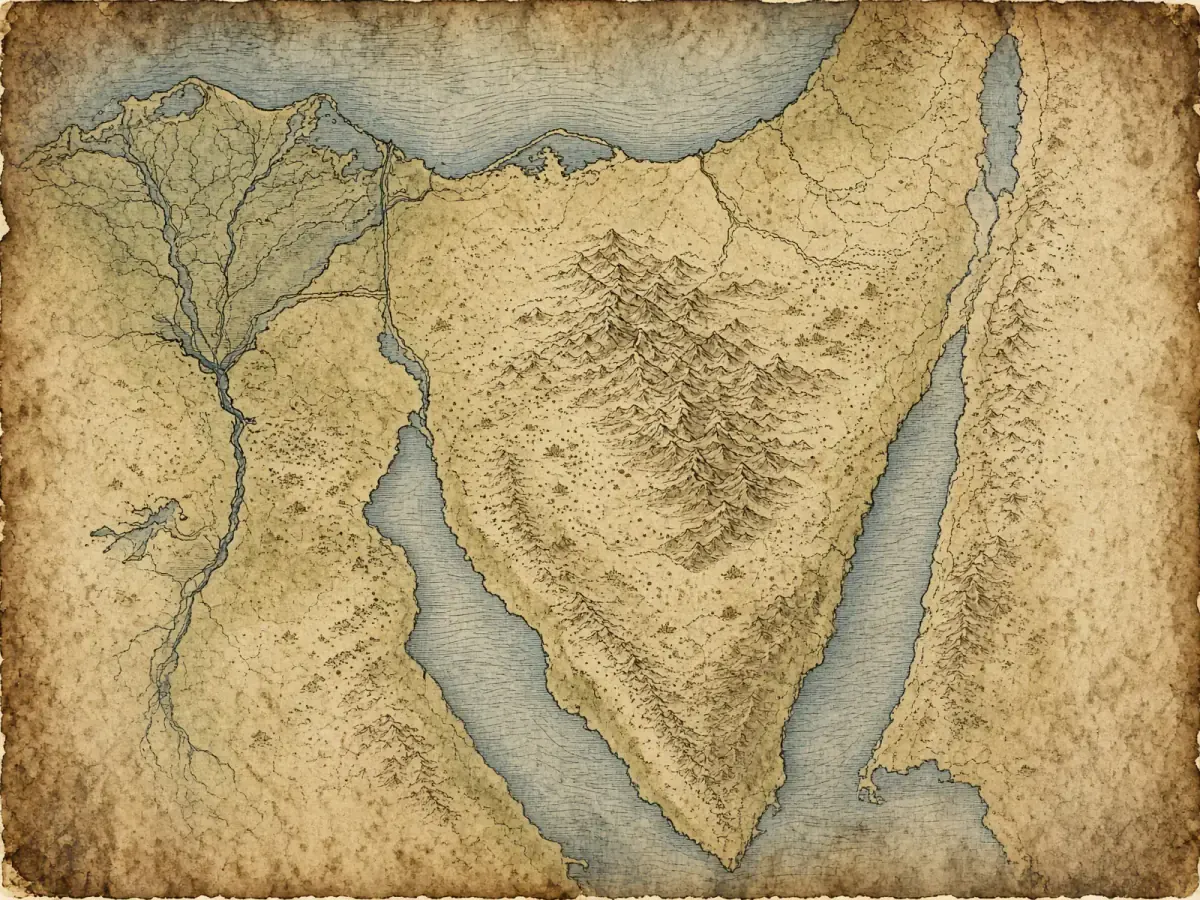
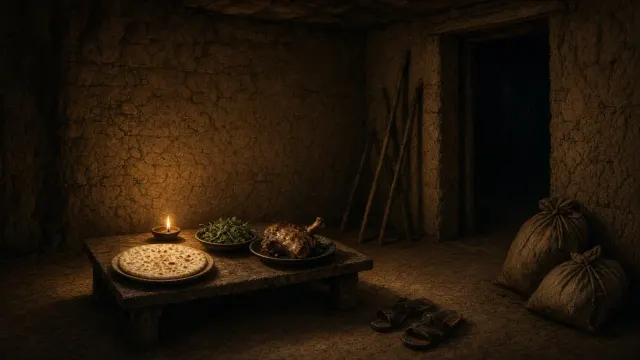
Egyptians urge Israel to leave quickly because they fear more death. The people carry dough before it rises, with their mixing bowls wrapped in clothing on their shoulders. They also receive silver, gold, and clothes from Egyptians, as Moses instructed. They travel from Rameses, their starting place, to Succoth, their next camp. Exodus counts about six hundred thousand men on foot, besides children, and says a mixed crowd accompanies them. Large herds travel too. The bread stays unleavened because they were driven out without time to prepare other food.
In everyday life
A mother lifts a half-packed food box as the last departure call sounds at a ferry terminal. Her children carry blankets; a neighbour presses spare clothes into their bags. The family takes what is ready because there is no time to finish preparations. Their meal preserves the mark of haste. Israel leaves slavery under God's judgment, not a ferry timetable.
Notice
Exodus 12:38 A mixed crowd leaves with Israel, alongside many animals. The departing company is broader than a list of Israelite men alone suggests.
Exodus 12:33-39
King James Version33And the Egyptians were urgent upon the people, that they might send them out of the land in haste; for they said, We be all dead men.
34And the people took their dough before it was leavened, their kneadingtroughs being bound up in their clothes upon their shoulders.
35And the children of Israel did according to the word of Moses; and they borrowed of the Egyptians jewels of silver, and jewels of gold, and raiment:
36And the LORD gave the people favour in the sight of the Egyptians, so that they lent unto them such things as they required. And they spoiled the Egyptians.
37And the children of Israel journeyed from Rameses to Succoth, about six hundred thousand on foot that were men, beside children.
38And a mixed multitude went up also with them; and flocks, and herds, even very much cattle.
39And they baked unleavened cakes of the dough which they brought forth out of Egypt, for it was not leavened; because they were thrust out of Egypt, and could not tarry, neither had they prepared for themselves any victual.
Exodus 12:40-42
A Long Stay Ends in One Night
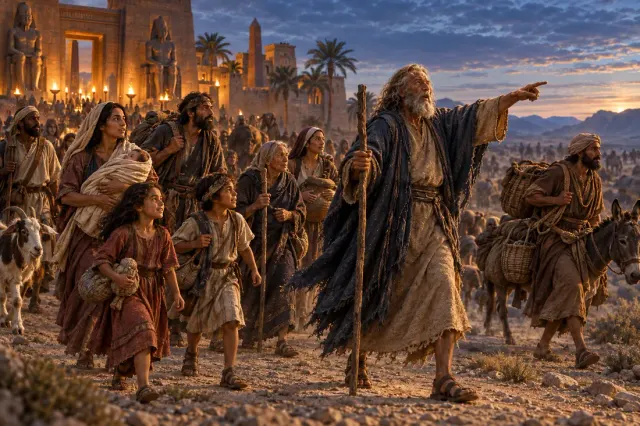
Exodus records a stay of four hundred and thirty years and marks its end on the very day the LORD's people leave Egypt. The long period closes in a night that must be remembered for generations. That night belongs to the LORD because he brought them out. The focus is no longer Pharaoh deciding terms but God completing the departure. What had lasted across many lives now has an ending. The annual observance will keep that ending present for descendants who know Egypt only through their families' account.
In everyday life
The oldest resident places a faded tenancy book beside a new deed at the housing cooperative's gathering. Decades of waiting have ended on a date everyone now records. Young families listen while she names what the change means. The paper joins a long past to one decisive day. Israel's remembered night celebrates God's deliverance of an enslaved people.
Notice
Exodus 12:42 The night is set aside for later generations because the LORD brought Israel out. Its importance comes from the rescue, not merely the passing of years.
Exodus 12:40-42
King James Version40Now the sojourning of the children of Israel, who dwelt in Egypt, was four hundred and thirty years.
41And it came to pass at the end of the four hundred and thirty years, even the selfsame day it came to pass, that all the hosts of the LORD went out from the land of Egypt.
42It is a night to be much observed unto the LORD for bringing them out from the land of Egypt: this is that night of the LORD to be observed of all the children of Israel in their generations.
Exodus 12:43-51
Passover Has Rules for Shared Belonging
Further commands to Moses and Aaron give rules for the passover meal. An outsider or hired worker cannot eat it merely by being present. A purchased servant can participate after circumcision, the bodily sign of Israel's covenant. A resident foreigner who wants to keep it must have every male in his household circumcised. He then shares the same standing and rule as someone born in the land. The meat stays inside one house, and no bone is broken. Israel obeys, and Exodus closes by repeating that the LORD brought them out that day.
In everyday life
An allotment secretary welcomes a new resident who has signed the same membership agreement as the older gardeners. She gives him the same key and the same duties for shared tools. Birth in the neighbourhood gives no separate rule once membership is settled. Admission to Passover requires the covenant's bodily sign, which no garden agreement demands.
Notice
Exodus 12:49 One law applies to the native-born and the admitted outsider. Different origins do not create two sets of rules for those sharing the meal.
Exodus 12:43-51
King James Version43And the LORD said unto Moses and Aaron, This is the ordinance of the passover: There shall no stranger eat thereof:
44But every man’s servant that is bought for money, when thou hast circumcised him, then shall he eat thereof.
45A foreigner and an hired servant shall not eat thereof.
46In one house shall it be eaten; thou shalt not carry forth ought of the flesh abroad out of the house; neither shall ye break a bone thereof.
47All the congregation of Israel shall keep it.
48And when a stranger shall sojourn with thee, and will keep the passover to the LORD, let all his males be circumcised, and then let him come near and keep it; and he shall be as one that is born in the land: for no uncircumcised person shall eat thereof.
49One law shall be to him that is homeborn, and unto the stranger that sojourneth among you.
50Thus did all the children of Israel; as the LORD commanded Moses and Aaron, so did they.
51And it came to pass the selfsame day, that the LORD did bring the children of Israel out of the land of Egypt by their armies.
Details worth noticing
The opening image
Exodus 12:1 begins with “And the LORD spake unto Moses and Aaron in the land of Egypt, saying,”
Where the chapter turns
Exodus 12:26 forms a natural hinge: “And it shall come to pass, when your children shall say unto you, What mean ye by this service?”
The final note
Exodus 12:51 leaves the reader with “And it came to pass the selfsame day, that the LORD did bring the children of Israel out of the land of Egypt by their armies.”
A word trail through the chapter
The words LORD, Egypt, Israel, land, children, Egyptians help reveal the chapter’s repeated concerns.
KJV words made clear
- unleavened
- Made without yeast or another raising agent, so the bread stays flat.
- sodden
- Boiled in water, which is forbidden for this meal's meat.
- convocation
- An assembly of people called together for worship.
- victual
- Food prepared or stored for people to eat.
Music and video connected to the passage
Related media appears when its Scripture reference overlaps this study. Music and video can illuminate a theme while the biblical text remains the foundation.