
Exodus

40 Chapters
Exodus: The Whole Book, Chapter by Chapter
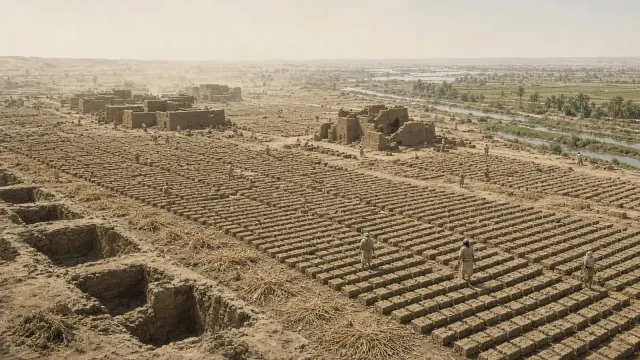
A Growing People and a King Who Cannot Stop Them
Exodus opens by letting the names of Jacob's household give way to a population large enough to alarm a new king. Pharaoh treats Israel's multiplication as a military and political threat, then discovers that forced labor does not produce the result he wants. His policy escalates from taskmasters to a private order for Hebrew sons to be killed at birth, but Shiphrah and Puah refuse him because they fear God. Their resistance does not end the danger. Pharaoh responds by widening responsibility for the killing to all his people and ordering newborn sons cast into the river. The chapter therefore begins with continuity from Genesis and ends with a public death decree, while the people he is trying to suppress continue to multiply.
One complete chapter pageOpen chapter →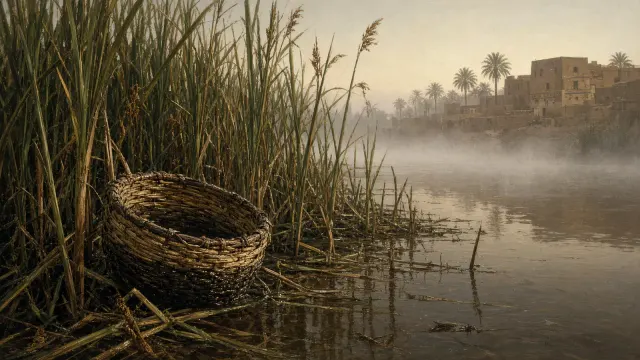
The Child Drawn from the Water Becomes a Fugitive
Moses enters Exodus through a chain of preservation that repeatedly turns Pharaoh's policy against itself. His mother places him in a waterproofed ark among the reeds, his sister watches, and Pharaoh's daughter recognizes exactly what kind of child she has found and saves him anyway. The result is almost comic in its reversal: Moses' own mother is paid from the royal household to nurse the Hebrew boy marked by royal decree. Adulthood is rougher. Moses kills an Egyptian who is beating a Hebrew, discovers that the act is known, and flees when Pharaoh seeks his life. In Midian he again intervenes for people being pushed aside, builds a household, and still calls himself a stranger. The chapter closes with Israel groaning, and God hearing, remembering, seeing, and attending before Moses knows he will be sent.
One complete chapter pageOpen chapter →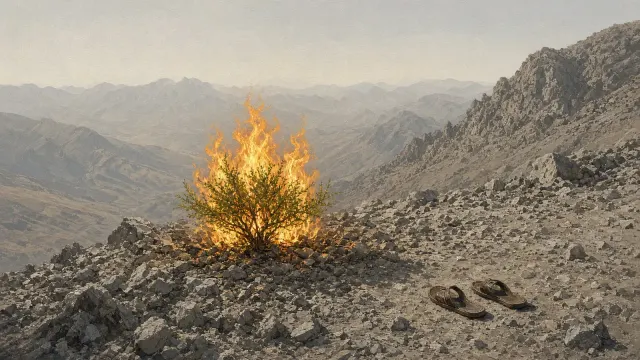
A Name, a Presence, and a Commission
A burning bush draws Moses aside, but the strange fire is only the threshold. The ground becomes holy because God is present, and the voice identifies itself with Abraham, Isaac, and Jacob before turning directly to Israel's suffering. God has seen, heard, and known the oppression, and Moses is sent into that answer. His first question is about himself; the reply is "I will be with thee." His next question concerns the name he is to carry, and the answer joins "I AM" to the ancestral covenant rather than replacing it. Moses is then told to gather Israel's elders, approach Pharaoh, and ask for a wilderness sacrifice. Resistance is announced in advance, as are the wonders, the eventual release, and the valuables Israel will carry away. The commission arrives with both opposition and outcome already in view.
One complete chapter pageOpen chapter →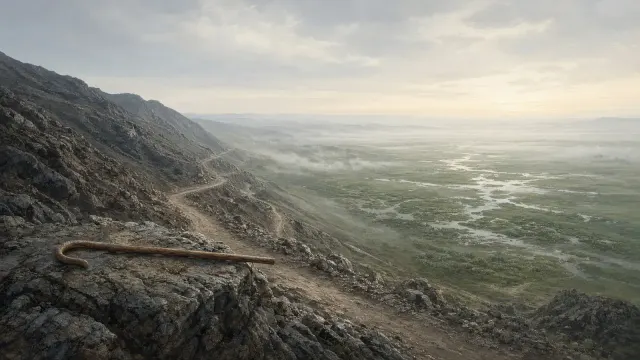
The Reluctant Messenger and the Dangerous Journey Home
Moses keeps finding reasons the commission may fail, and Exodus keeps answering them without pretending the task is comfortable. Signs address his prediction that Israel will not believe. God's promised presence with his mouth answers his concern about speech. When Moses finally asks for someone else to be sent, the exchange turns sharper, yet Aaron is provided as spokesman without removing Moses from responsibility. The journey back to Egypt then becomes unexpectedly dangerous. A brief, difficult encounter involving circumcision and threatened death is resolved by Zipporah's action, but the chapter refuses to explain every pronoun and motive. At the mountain Aaron meets Moses, the brothers gather Israel's elders, and the audience Moses expected to lose does the opposite: the people believe that the LORD has seen their affliction, and they bow in worship.
One complete chapter pageOpen chapter →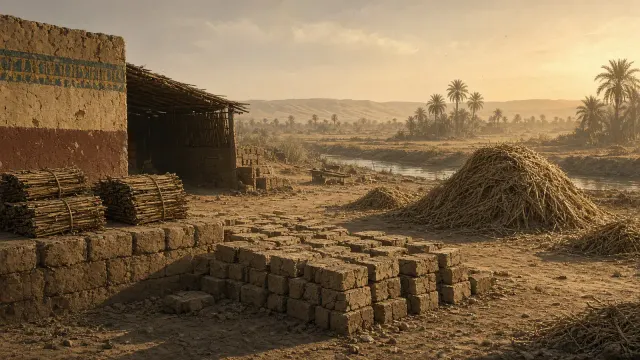
The First Demand Makes the Bondage Worse
The first audience with Pharaoh makes almost everything visibly worse. Moses and Aaron bring the LORD's demand for Israel to hold a feast in the wilderness, and Pharaoh answers by denying the LORD's authority and reading worship as idleness. His countermeasure is exact and cruel: the brick quota stays, but the workers must now gather their own straw. Israelite officers are beaten for failing under conditions deliberately designed to make the quota harder to meet. When they appeal to Pharaoh, they discover that no lower official has distorted the policy. The king himself repeats it. They turn on Moses and Aaron, and Moses in turn carries the contradiction back to the LORD. Exodus lets the chapter end with his blunt complaint that since the commission began, Pharaoh has harmed the people and no deliverance has yet appeared.
One complete chapter pageOpen chapter →
The Promise Is Repeated to People Too Crushed to Hear
God answers Moses' complaint by returning to identity, covenant, and promises rather than by pretending the new suffering is insignificant. Israel will be brought out, redeemed, taken as God's people, and brought into the promised land. The people, however, are too crushed by anguish and cruel bondage to listen, and Exodus explicitly names those conditions before Moses turns their response into another objection about Pharaoh. The chapter then pauses for a genealogy, moving through Reuben and Simeon before narrowing to Levi and the household of Moses and Aaron. That interruption grounds the messengers in a real family and introduces relatives who will matter later. When the dialogue resumes, nothing about Moses' insecurity has magically vanished. The same man with "uncircumcised lips" still faces the same king, but now the covenant, the promise, and the identity of the messengers have been firmly restated.
One complete chapter pageOpen chapter →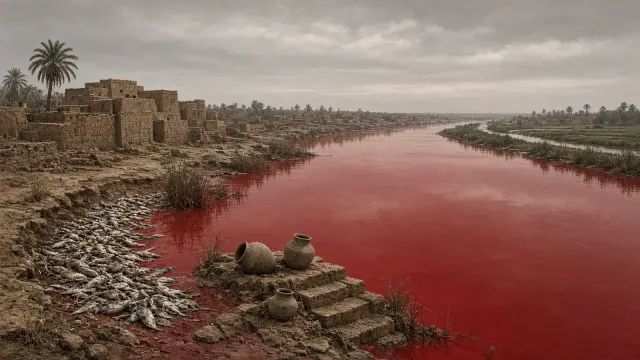
Egypt Begins to Learn the Name It Dismissed
The confrontation with Pharaoh resumes under a clarified arrangement: Moses represents God's authority, Aaron speaks as his prophet, and both are commanded rather than self-directed. Their ages, eighty and eighty-three, quietly remove any image of inexperienced young adventurers taking on Egypt. The first court sign is matched by Egyptian specialists, but the imitation does not settle the contest because Aaron's staff swallows theirs. Pharaoh still refuses. The first plague then moves from the palace floor to Egypt's water. Moses meets the king by the river, the place already tied to the death decree and Moses' survival, and announces that Egypt will know the LORD through what follows. Water turns to blood, fish die, the river stinks, and ordinary people dig for something to drink. The magicians reproduce the affliction, but neither they nor Pharaoh can remove it.
One complete chapter pageOpen chapter →
Frogs in the Bedroom and Limits at the Palace
The plagues now invade domestic life and expose limits inside Pharaoh's own court. Frogs enter houses, beds, ovens, and kneading troughs, and the magicians' ability to produce more frogs becomes useless when Pharaoh needs them gone. He chooses the time for relief, receives it, and hardens his heart when respite comes. The next infestation rises from the dust and cannot be reproduced by the Egyptian specialists, who tell Pharaoh that they see "the finger of God." He still refuses. Swarms then strike Egypt while Goshen is deliberately spared, making geography part of the sign. Pharaoh begins bargaining over worship, first proposing sacrifice inside Egypt and then allowing only a short journey. Moses refuses terms that leave the king controlling where Israel may serve. The swarms are removed completely, and Pharaoh again reverses himself.
One complete chapter pageOpen chapter →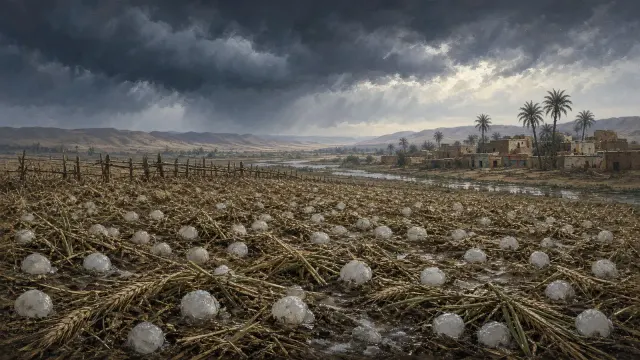
Judgment, Warning, and the Difference Between Hearing and Heeding
Disease, boils, and hail carry the judgments across Egypt's animals, bodies, fields, and court. The livestock plague includes an announced distinction between Egyptian and Israelite animals, and Pharaoh actually sends to verify it. The evidence is confirmed without producing release. Ashes then become the occasion of boils so severe that the magicians cannot even stand before Moses. The hail warning creates another kind of division: some of Pharaoh's servants fear the word of the LORD and bring servants and livestock under shelter, while others leave them exposed. The storm strikes as announced, with Goshen spared. Pharaoh responds with his strongest confession yet, calling the LORD righteous and himself and his people wicked. Moses does not mistake those words for settled change. When the thunder, hail, and rain stop, Pharaoh hardens his heart again.
One complete chapter pageOpen chapter →
The King Bargains Over Who and What May Leave
By Exodus 10, even Pharaoh's servants are asking how long the refusal can continue. The next plague is already framed for future retelling, while locusts are announced against the vegetation left by the hail. Pharaoh tries a new limit by permitting only the men to go, but Moses insists that the feast includes young and old, sons and daughters, flocks and herds. The locusts arrive on an east wind, consume the remaining green growth, and disappear on a strong west wind after another urgent confession and request for intercession. Release still does not follow. Three days of thick darkness then stop ordinary movement in Egypt while Israel has light. Pharaoh makes one final bargain, allowing the families but holding the livestock. Moses answers that not even a hoof will remain. The meeting ends not with agreement but with Pharaoh threatening Moses' life.
One complete chapter pageOpen chapter →
The Last Warning Leaves No Room for Bargaining
The final warning removes the last illusion that another round of bargaining will settle the conflict. One plague remains, and afterward Pharaoh will not merely permit Israel to leave but drive the people out. At the same time, ordinary Egyptians are giving silver and gold, and Moses has become highly regarded among Pharaoh's servants and the wider population. The king's resistance is increasingly isolated. Moses then announces death among the firstborn from the throne to the lowest social position, while Israel will be protected. The scale is household grief rather than another damaged resource, and the coming cry answers the long pressure already filling the book. Moses leaves Pharaoh in anger. A brief closing summary gathers the signs, the hardening, and the continued refusal before the account turns away from the court and toward what Israel's households must do that night.
One complete chapter pageOpen chapter →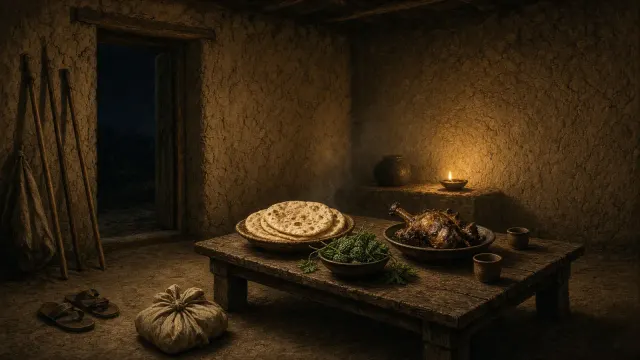
The Night That Gives Israel a Calendar
Exodus 12 gives Israel's departure a form that can outlive the generation leaving Egypt. The calendar is reset, households select and share an unblemished animal, blood marks the doorway, and the meal is eaten dressed for travel. Before the chapter reports the midnight judgment, it already gives future Israel an annual memorial, seven days of unleavened bread, holy assemblies, and answers for children who will ask what the observance means. At midnight the firstborn die throughout Egypt, and Pharaoh finally orders Israel out with the families and animals he had tried to keep. The people leave in haste with unleavened dough, valuables, livestock, and a mixed multitude. The chapter then looks backward over the long sojourn and forward into Passover participation, defining a guarded covenant meal that also gives a way for committed outsiders to enter its observance.
One complete chapter pageOpen chapter →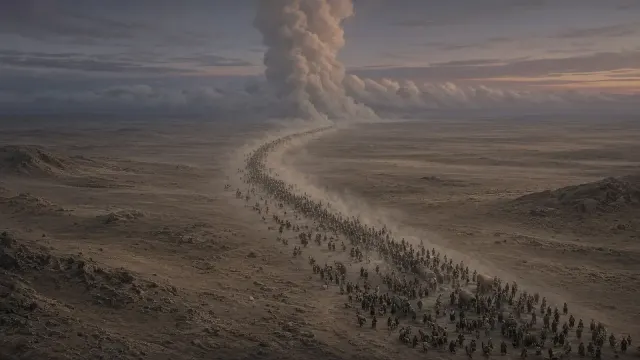
Freedom Is Remembered, Redeemed, and Led
Freedom immediately acquires memory, obligation, and direction. The firstborn belong to the LORD because Israel's firstborn were spared, yet human sons are not sacrificed. They are redeemed, and the distinction between sacrifice and redemption becomes something children are to ask about and parents are to explain. Unleavened bread likewise carries the departure into yearly household practice, joining food, speech, and remembrance. When the travel account resumes, God does not choose the shortest road. The nearby route risks immediate war and a frightened return to Egypt, so Israel is led toward the wilderness instead. Moses carries Joseph's bones, fulfilling an oath that reaches back before the bondage. At the edge of the wilderness, the pillar of cloud by day and fire by night makes divine guidance visible and continuous as the newly freed people move beyond familiar ground.
One complete chapter pageOpen chapter →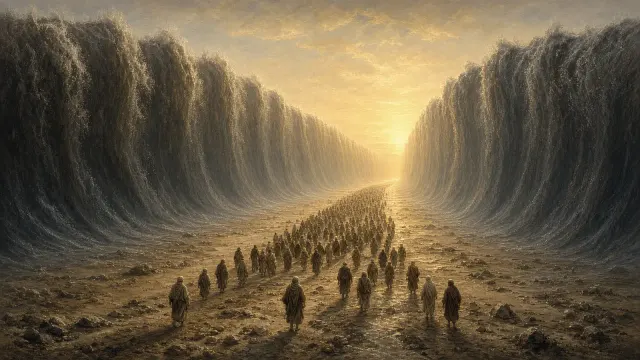
A Road Through the Sea and an End to Pursuit
Israel's first great danger outside Egypt begins with a camp chosen by divine instruction but interpreted by Pharaoh as a tactical mistake. Regretting the loss of Israel's service, he pursues with chariots and overtakes the people by the sea. Fear transforms their memory almost instantly, and bondage begins to sound safer than the wilderness. Moses answers that the LORD will fight for them, then the command comes to move forward. The pillar shifts behind the camp, separating Israel from Egypt through the night, while a strong east wind opens dry ground through the sea. Israel crosses. The pursuing chariots enter the same passage but cannot master it, and the Egyptians themselves recognize that the LORD fights for Israel. When the water returns, the pursuing force is destroyed. The chapter closes with Israel seeing that Egypt's army can no longer reach them and responding with fear of the LORD and belief.
One complete chapter pageOpen chapter →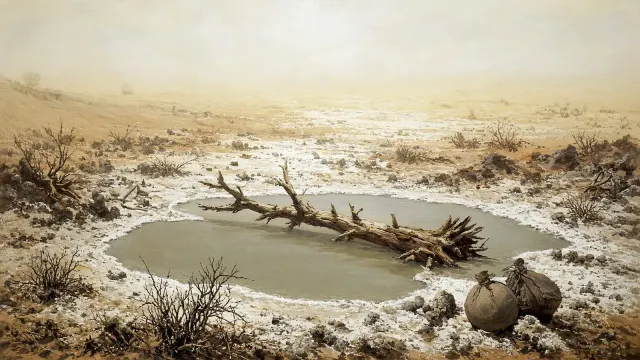
A Victory Sung, Then Water Too Bitter to Drink
Exodus 15 begins with Israel turning sight into song. The sea crossing is interpreted through praise that gives the victory to the LORD, contrasts the enemy’s many intentions with a single decisive act, and reaches forward toward a land the singers have not yet entered. Miriam then leads the women in a public response that repeats the song’s central line. The chapter refuses to let that high point remain suspended. Three days into the wilderness, there is no water, and the water at Marah cannot be drunk. The same people who sang of divine strength now face thirst. Provision comes with testing and instruction, and the chapter closes at Elim with twelve wells and seventy palms. The movement is from triumph to ordinary need without pretending the two belong to different kinds of faithfulness.
One complete chapter pageOpen chapter →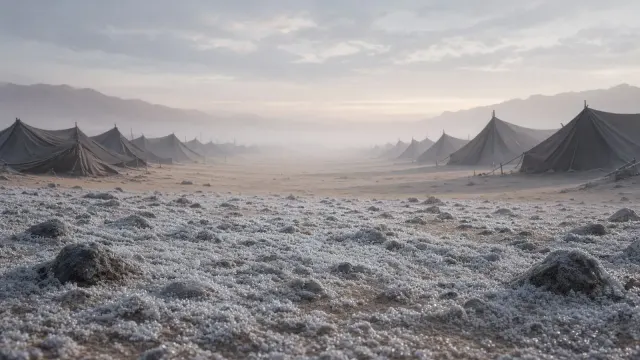
Bread Arrives with Instructions for Tomorrow
Exodus 16 turns hunger into a test of memory as much as appetite. Israel remembers Egypt as a place of full bread and cooking pots, leaving the brick quotas out of the recollection, while the LORD answers the real need with quail and unfamiliar bread. Manna is not merely dropped into the camp as a supply. Its gathering is structured by household need, daily limits, and a sixth-day exception that prepares for Sabbath rest. Attempts to redesign the gift fail in opposite directions: ordinary portions kept overnight spoil, while people who go looking on the seventh day find nothing. The chapter then stretches beyond the first week by preserving a measured portion for generations not yet born and by noting that Israel ate manna for forty years. Daily food becomes both discipline and memorial, tangible enough to measure, taste, gather, lose, keep, and remember.
One complete chapter pageOpen chapter →
Water from the Rock and Hands Held Steady
Exodus 17 presents two crises that expose how dependent Israel remains after the sea. At Rephidim the people travel according to the LORD’s command and still arrive where there is no water, turning physical thirst into a challenge about whether the LORD is among them. Water then comes from a rock struck under explicit instruction and before witnesses. The second danger comes from Amalek. Joshua fights below while Moses stands above with the rod of God, yet Moses’ heavy hands require a stone, Aaron, and Hur to keep them steady until sunset. The victory is neither reduced to Joshua’s sword nor to Moses’ physical endurance. A written memorial and an altar named “the LORD is my banner” carry the encounter forward. The chapter joins real human action, real bodily limitation, and divine provision without letting any one of them pretend to be sufficient by itself.
One complete chapter pageOpen chapter →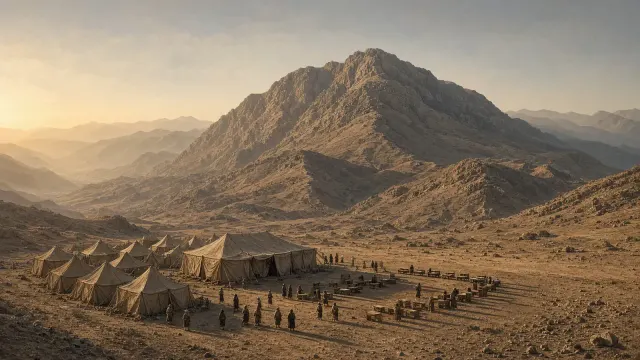
A Shared Meal, a Long Queue, and Work Too Heavy for One Man
Exodus 18 places a family reunion, a sacrificial meal, and an administrative reform in the same chapter. Jethro arrives with Zipporah and Moses’ sons after hearing what God has done, and the sons’ names still carry Moses’ earlier memories of alien status and divine help. Moses tells Jethro not only about triumph over Pharaoh but also about the hardships along the way. Jethro responds with praise, sacrifice, and a meal with Aaron and Israel’s elders. The next morning reveals another kind of strain: Moses judges alone while the people wait all day. Jethro does not dismiss the work. He calls the system unsustainable and proposes qualified judges who can share it while Moses retains teaching, mediation, and difficult cases. Moses implements the counsel. The chapter lets leadership become stronger through distributed responsibility rather than through the fiction that one indispensable man must personally handle everything.
One complete chapter pageOpen chapter →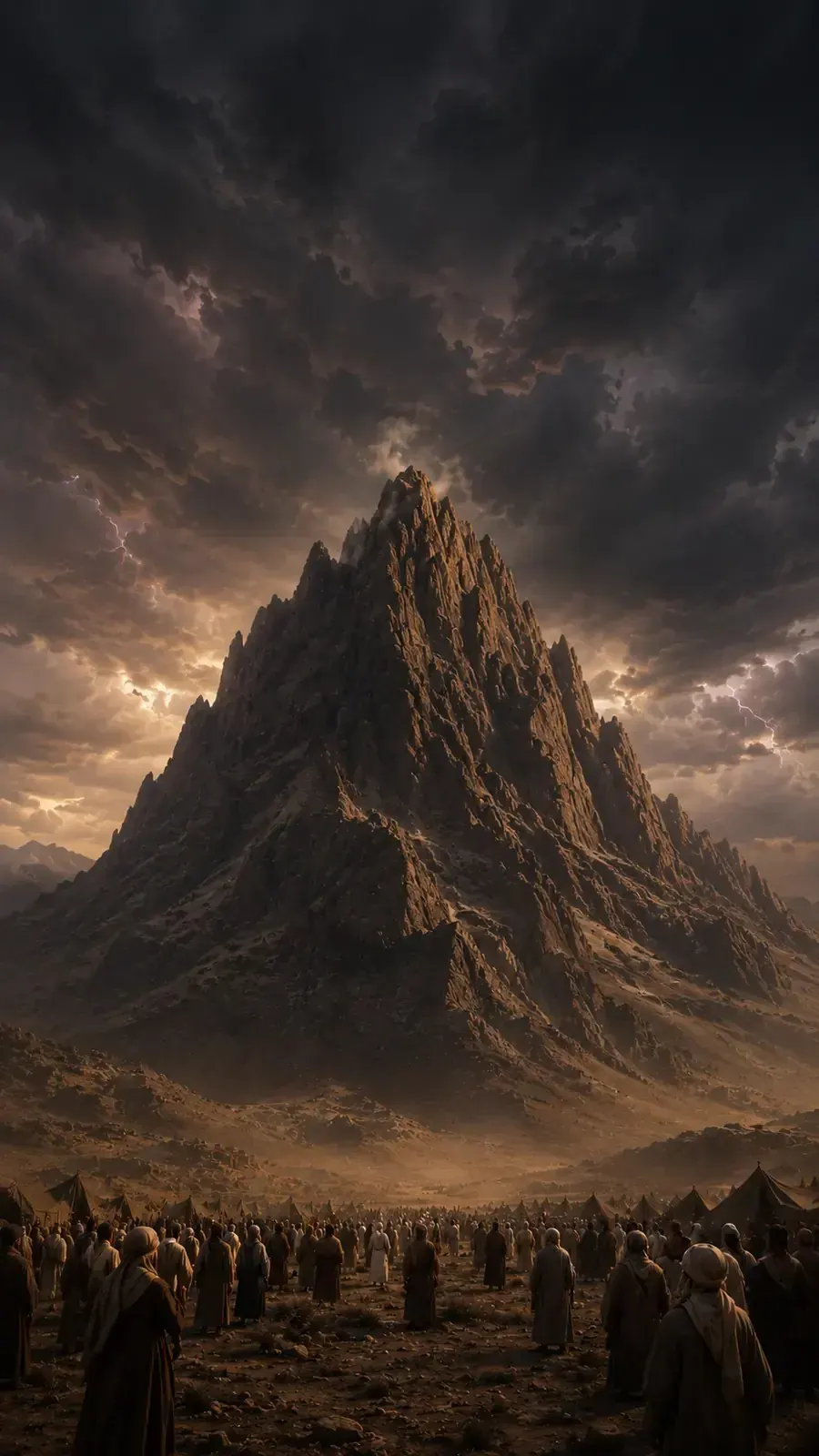
The Delivered People Gather Before the Mountain
Exodus 19 brings Israel to the mountain promised in Moses’ original commission and defines why the rescue from Egypt has been moving in this direction. The LORD begins with what the people have already seen, then calls them to covenant obedience as his treasured possession, a kingdom of priests, and a holy nation. Their assent is carried back by Moses, whose mediating role will be publicly confirmed. Preparation occupies two days, but washing and consecration do not erase the mountain’s boundary. On the third morning, thunder, lightning, cloud, trumpet, smoke, fire, and earthquake make the encounter impossible to treat as a quiet private experience. Moses is summoned upward, then immediately sent down to reinforce the limits. The chapter holds nearness and danger together. Israel is brought to meet God, but approach occurs by command, with preparation, positions, and repeated warnings rather than by unrestricted access.
One complete chapter pageOpen chapter →
The God Who Brought Them Out Tells Them How to Live Together
Exodus 20 gives the covenant’s central commands inside the sound and smoke of Sinai, and it begins by identifying the speaker as the God who has already brought Israel out of bondage. Exclusive allegiance, rejection of worship images, proper use of the divine name, Sabbath rest, honor of parents, and prohibitions concerning killing, adultery, theft, false testimony, and coveting all grow from that setting of completed rescue. The commands reach from worship into households, courts, work schedules, and hidden desire. When the people recoil from the thunder and ask Moses to mediate, he distinguishes panic from the fear meant to restrain sin. The chapter then moves from mountain-scale revelation to altar construction. Earth, unhewn stone, and the manner of approach are regulated. Divine nearness is promised, but neither an image of God nor an impressive altar may be invented as a substitute for the terms the LORD himself gives.
One complete chapter pageOpen chapter →
The Covenant Reaches the Doorway, the Sickbed, and the Open Pit
Exodus 21 moves from Sinai’s compact commandments into case law, where responsibility has to be worked out inside households, injuries, property ownership, and unequal social status. A Hebrew male servant receives a limit on service, yet family rules can make release painfully complicated. A daughter sold into a household receives protections tied to marriage obligations without the institution itself disappearing. Killing is distinguished by intent, kidnapping is condemned, and bodily injury generates compensation, punishment, or release depending on the case. The chapter does not hide the lower legal status of enslaved people, even while granting them specific protections. Liability then reaches animal owners and people who create hazards. A previously dangerous ox changes its owner’s responsibility, and an uncovered pit creates an obligation even without hostile intent. The chapter’s many distinctions keep justice from becoming a single slogan. Authority, ownership, violence, and negligence all carry consequences shaped by what was known and what was done.
One complete chapter pageOpen chapter →
What Is Owed, What Is Protected, and Whose Cry Is Heard
Exodus 22 begins with restitution for theft and damage, then widens into questions of custody, borrowing, marriage obligations, worship, lending, and protection of people with less power. Different losses produce different payments, and possession alone is not treated as proof of theft when property disappears. Oaths, judges, evidence, and the terms under which goods changed hands all matter. The chapter then places severe boundaries around sorcery, bestiality, and sacrifice to other gods before turning toward strangers, widows, fatherless children, and poor borrowers. Here Egypt becomes an ethical memory: Israel knows what it means to be a stranger, and the LORD promises to hear the cries of those who are afflicted. Even a lawful pledge has to be returned by sunset when it is also someone’s only covering. The chapter closes with first claims on produce and firstborns, respect for authority, and a food restriction that reaches all the way to meat torn in the field.
One complete chapter pageOpen chapter →
Justice Without Favorites, Rest Without Exceptions
Exodus 23 gathers courtroom integrity, treatment of enemies, agricultural rest, annual worship, and the journey toward the promised land into one covenant frame. False reports, majority pressure, favoritism, and bribes are all denied the right to determine judgment, while even an enemy’s wandering or burdened animal still creates an obligation. Rest then extends beyond one weekly schedule to the field itself, where the seventh year leaves produce for the poor and the beasts. Three annual feasts bind agricultural abundance to remembered deliverance from Egypt. The chapter then looks ahead: an angel will go before Israel, bearing extraordinary authority because God’s name is in him. Entry into the land remains tied to exclusive worship and is described as gradual rather than instantaneous, since empty territory brings its own danger. The promises are large, but the chapter keeps giving them practical edges: witnesses, livestock, fields, calendars, roads, boundaries, and the risks of adopting another people’s gods.
One complete chapter pageOpen chapter →
Blood at the Mountain and a Meal Beneath Heaven
Exodus 24 turns covenant words into a public ceremony. Moses reports the divine judgments, writes them, reads the covenant aloud, and receives Israel’s assent twice. An altar, twelve pillars, sacrifices, and blood then bind the declared words to an enacted covenant. Selected representatives ascend and experience one of the chapter’s most remarkable moments: they see the God of Israel, are not struck down, and eat and drink in his presence. Yet the privilege does not erase ordered access. Moses is summoned farther for the stone tablets, Joshua accompanies him partway, and Aaron and Hur remain available to handle matters in the camp. The final ascent includes six days of clouded waiting before the call comes on the seventh, while Israel below sees the divine glory like devouring fire. The chapter joins public hearing, written testimony, sacrificial blood, granted fellowship, administrative responsibility, and patient waiting without collapsing them into one undifferentiated encounter.
One complete chapter pageOpen chapter →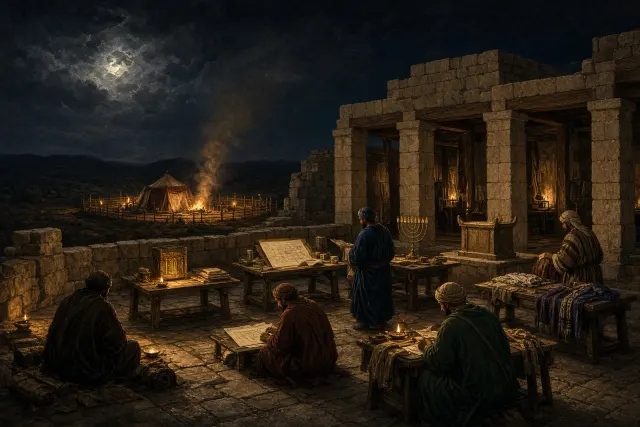
A Dwelling Begins with Willing Hands
Exodus 25 begins the sanctuary instructions with the people’s offerings and the purpose behind them: “let them make me a sanctuary; that I may dwell among them.” Willing giving supplies the materials, but the form is governed by a pattern shown to Moses. The chapter then moves through the ark, mercy seat, table, and lampstand. Each object is beautiful, yet none is presented as beauty without function. The ark is built to carry the testimony and to travel. The mercy seat with cherubim marks the place from which God promises to meet and speak, while refusing to provide a manufactured portrait of the divine speaker. The table carries bread continually, and the lampstand turns pure gold into a branching form whose lamps must actually give light. Repeated references to rings, poles, vessels, and maintenance keep sacred furniture inside the practical world of a people on the move. Human workmanship is extensive, but the design and purpose are received rather than invented.
One complete chapter pageOpen chapter →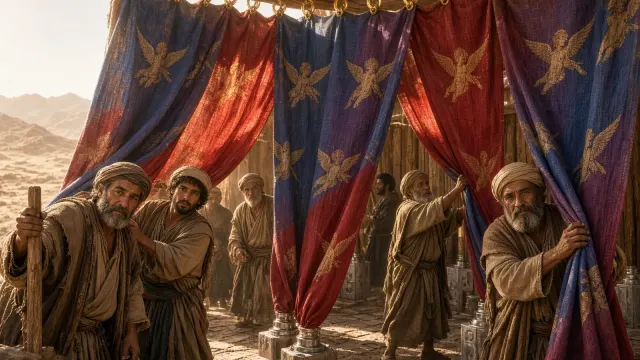
The Dwelling Is Joined Together and Carefully Divided
Exodus 26 builds the sanctuary around the furniture already described, moving through inner curtains, outer coverings, boards, bars, the veil, and the entrance screen. The chapter repeatedly combines many separate pieces into one dwelling while also creating deliberate divisions within it. Richly worked inner curtains are joined by matched loops and clasps; larger outer coverings protect them with practical overhangs. Upright boards stand in silver sockets and are stabilized by bars, producing a frame that can be assembled yet also travel. Inside, the veil separates the holy place from the most holy, placing the ark beyond a boundary while the table and lampstand remain outside it. A second hanging marks the tent’s entrance and is not identical to the inner veil. The sanctuary is therefore neither an open room nor a sealed container. It is a portable dwelling whose unity depends on precise joining and whose approach depends on equally precise distinctions of space.
One complete chapter pageOpen chapter →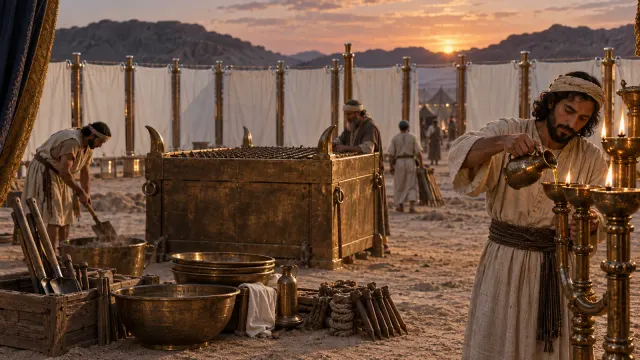
An Altar, a Courtyard, and a Light Kept Burning
Exodus 27 moves outward from the inner sanctuary to the bronze altar and the surrounding court, then ends with the recurring work required to keep the lamp burning. The altar is large, portable, and equipped not only for sacrifice but for the ash, tools, pans, hooks, and fire that sacrifice actually produces. The court defines a rectangular space around tent and altar with linen hangings, metal fittings, and a distinct eastern entrance. Even its pegs matter because a sacred enclosure still has to stand in the ground. The final verses then shift from construction to supply. Israel must bring pure beaten olive oil, and Aaron and his sons must tend the lamp from evening to morning. The chapter therefore closes by reminding the reader that the sanctuary is not finished simply because every object has been made. Worship requires continuing material service. A beautiful lampstand without oil goes dark, and an altar without tools cannot be tended.
One complete chapter pageOpen chapter →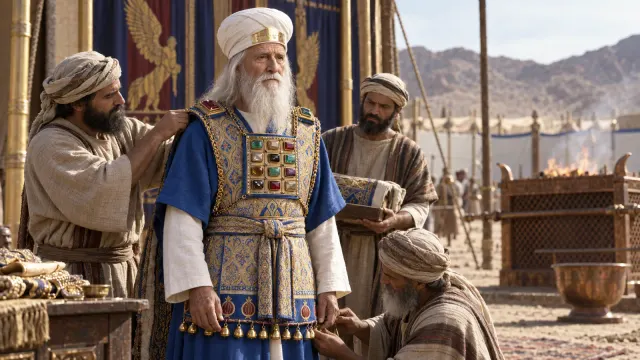
Israel's Names Are Carried Into the Holy Place
The Book of Exodus takes priestly clothing far beyond decoration. Aaron and his sons are appointed before the garments are described, and the splendor of gold, color, stone, and embroidery belongs to an office of service rather than private display. Israel's names are engraved first on Aaron's shoulders and then across the breastplate over his heart, turning workmanship into visible representation. Even the fastenings matter because those names are not supposed to work loose. The blue robe must survive being worn and must be heard in motion. The gold plate on the forehead joins "HOLINESS TO THE LORD" to the burden of bearing iniquity connected with holy gifts. After all that concentrated beauty, the chapter closes with linen covering and a warning about approach. Glory and ordinary bodily propriety occupy the same priestly wardrobe.
One complete chapter pageOpen chapter →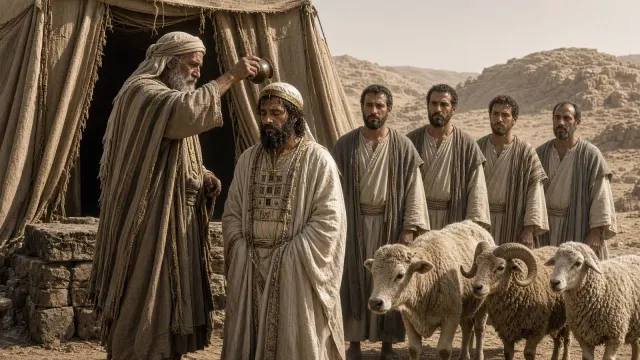
The Priests Must First Be Made Ready
The Book of Exodus makes the future priests the first people who need preparation. Aaron and his sons are washed, clothed, anointed, associated with a sin offering, marked with blood and oil, and given portions of an offering in their hands before regular service begins. The sequence refuses to let appointment be confused with automatic fitness. Even the altar receives seven days of cleansing, atonement, and anointing. The consecration meal has limits, and the holy garments are designed to outlast Aaron by passing to his successor. Then the chapter turns from the exceptional installation week to the ordinary rhythm of morning and evening offerings. Its final explanation reaches back to Egypt: God brought Israel out in order to dwell among them. The entire system of priests, altar, offerings, and meeting serves that declared purpose.
One complete chapter pageOpen chapter →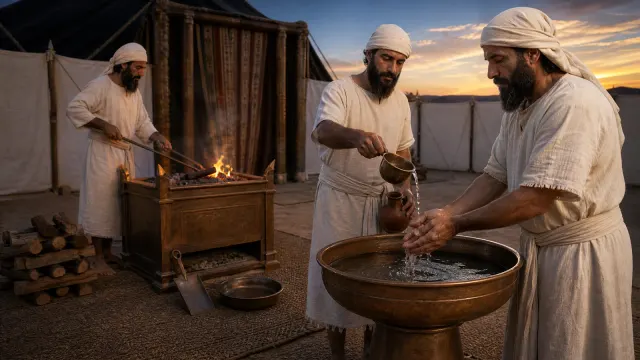
The Boundaries of Holy Service Reach Scent, Water, and Silver
The Book of Exodus widens the sanctuary's boundaries into smell, water, money, and repeated daily practice. The gold incense altar stands near the veil but has a sharply limited use; holiness does not make it a surface for whatever offering someone chooses. The census payment places rich and poor under the same half-shekel assessment and directs the money into the sanctuary's service. A brass laver makes washing recurrent rather than a one-time feature of ordination. The anointing oil and incense are both carefully made and carefully restricted. Their recipes can be known without becoming private property for ordinary use or personal pleasure. Across these instructions, sacred use is concrete and bounded. Nearness has locations, service has preparation, and beautiful materials remain governed by purpose rather than by the assumption that anything costly or fragrant is automatically acceptable.
One complete chapter pageOpen chapter →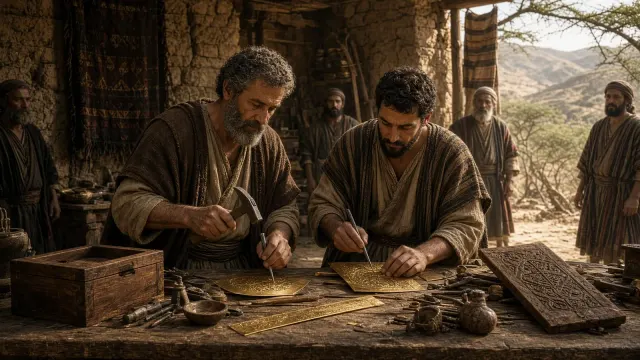
Skilled Hands Are Named, and Then the Work Must Stop
The Book of Exodus names the hands that will turn the sanctuary pattern into material form. Bezaleel is called by name and filled with wisdom, understanding, knowledge, and workmanship for metal, stone, wood, and design. Aholiab and a wider company of wisehearted workers stand with him, so the project is both personally accountable and genuinely collective. The inventory then gathers the whole commission into one view, including furniture, garments, oil, and incense. The final instruction is not another item to make but a command to stop making on the Sabbath. Sacred construction does not outrank the covenant sign of rest. Only after that limit is stated does Moses receive the two stone tablets written by God. The chapter ends the mountain conversation with divine testimony in Moses' hands while the next scene below the mountain will reveal a very different use of human craftsmanship.
One complete chapter pageOpen chapter →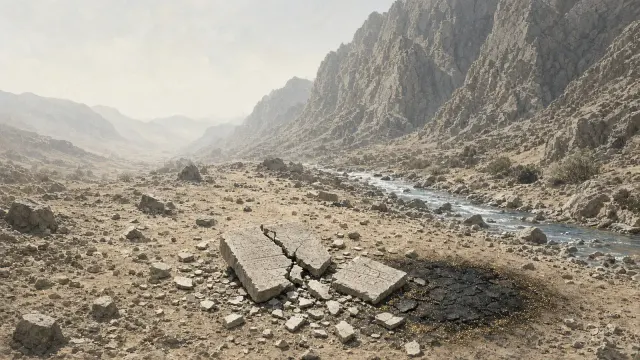
The Calf Is Made While the Dwelling Is Being Revealed
The Book of Exodus sets two works of hands against each other. While Moses is receiving the pattern for God's dwelling, Israel uses donated gold to demand a visible object to go before the camp. Aaron fashions the calf, builds an altar, and attaches the LORD's name to the feast, showing that familiar religious language does not authorize the form. Moses intercedes from God's promises rather than from Israel's innocence, then descends carrying tablets identified as God's own work. Those tablets break where the covenant has already been broken. Aaron's later explanation conveniently loses the graving tool, altar, and feast, but the earlier account has preserved them. Judgment within the camp is severe, and Moses returns to intercede again. He offers his own name, yet God does not let him dictate whose guilt can be transferred. Israel survives, but guilt and consequence are not treated as imaginary.
One complete chapter pageOpen chapter →
The Land Is Promised, but the Presence Is in Question
The Book of Exodus turns the promised land itself into bad news when God's presence is placed in question. An angelic escort and a land flowing with milk and honey remain on offer, yet Israel mourns because God says he will not go in their midst. A meeting tent stands outside the camp, giving physical form to the distance created by the covenant crisis. Moses refuses to treat his own favor as enough. He keeps putting the people back into the conversation, insisting that God's presence with both mediator and nation is what distinguishes Israel. When Moses finally asks to see glory, the answer is both generous and limited. God promises goodness, the proclamation of the divine name, grace, and mercy, but also a protective boundary on sight. The chapter makes presence the prize while refusing to turn presence into something Moses can possess or control.
One complete chapter pageOpen chapter →
The Covenant Is Renewed Under the Name Proclaimed
The Book of Exodus renews the covenant without pretending the first tablets never shattered. Moses cuts replacement stones, ascends alone, and hears the divine name proclaimed through mercy, grace, patience, goodness, truth, forgiveness, and judgment. Moses immediately turns that revelation into a plea for pardon and continued presence among a stiffnecked people. The renewed commands then strike directly at the danger exposed by the calf: rival altars, other gods, religious alliances, and molten images. Yet renewal also returns to calendars, firstborn redemption, Sabbath in the busiest farm seasons, annual appearances, sacrifices, and firstfruits. The covenant belongs to ordinary life as much as to the mountain. Written words preserve its terms beyond the emotional force of the encounter. Moses descends with a shining face he does not know is shining, carrying the commands to people who can see that the meeting has left a visible mark.
One complete chapter pageOpen chapter →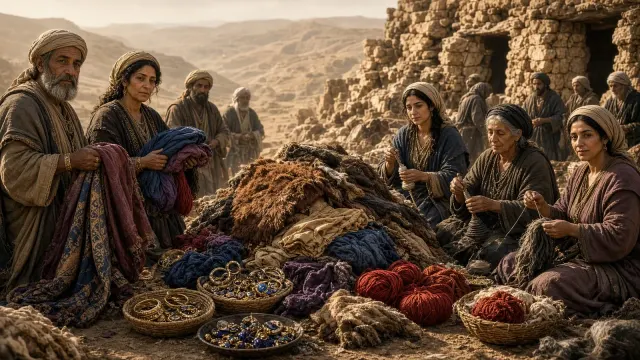
The Congregation Gathers to Build, Not to Replace
The Book of Exodus begins the building campaign with a command not to work. Sabbath comes before collection, design, or craftsmanship, placing a firm limit around even this sacred project. Moses then invites willing gifts for a design that has already been given. Participation is voluntary, but the sanctuary itself is not a community improvisation. Men and women return with jewelry, fabric, skins, metals, wood, oil, and stones. Skilled women are specifically remembered for what they spin with their own hands, while rulers bring materials required for priestly garments and sanctuary service. The same kinds of gold that could feed an unauthorized image can now serve commanded work, so material alone never explains the difference. The chapter closes by naming Bezaleel and Aholiab publicly and adding a crucial gift to their craftsmanship: they can teach. The work is designed to spread through capable hands rather than remain trapped in two experts.
One complete chapter pageOpen chapter →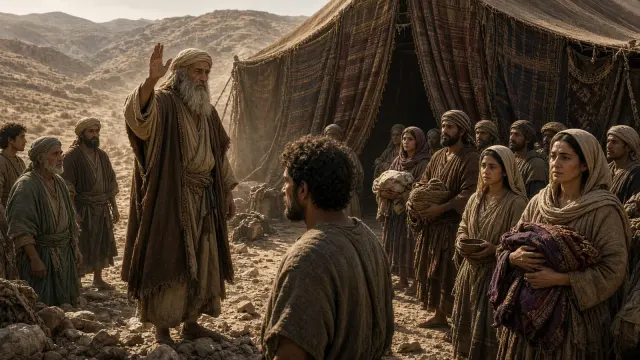
The Giving Stops, and the Making Continues
The Book of Exodus turns generosity into a problem Moses must stop. The craftsmen report that Israel has brought more than the assigned work requires, and the collection ends because the project has a defined size. No one uses surplus enthusiasm as permission to enlarge the design. From there, the chapter records familiar specifications as finished workmanship: curtains joined by loops and clasps, outer coverings, boards seated in silver sockets, bars binding the frame, and distinct hangings marking entrance and inner boundary. The repetition is purposeful because the grammar has changed from "make" to "made." After the calf, the distance between what God commanded and what human hands actually produced matters. Precious gold stands on practical joinery, and beautiful fabric depends on seams, fastenings, and structural fit. The result is not just ornament but a dwelling whose separate parts are made to become one without losing their distinct functions.
One complete chapter pageOpen chapter →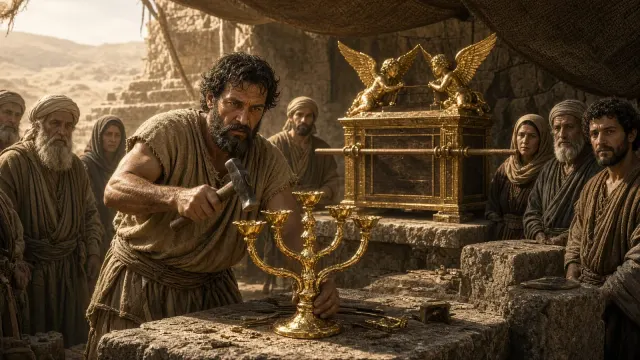
The Furnishings Are Made to the Pattern
The Book of Exodus follows the craftsmen into the sanctuary's inner furnishings. Bezaleel makes the ark and mercy seat, but the finest goldwork still contains no portrait of God. The cherubim face the mercy seat, and the place of divine speech remains associated with testimony rather than a manufactured divine image. The table is made not only to look complete but to travel and to support an actual service, with poles and vessels included. The lampstand becomes one integrated beaten work of pure gold, intricate in form yet accompanied by the plain tools needed to maintain it. The incense altar shares gold and wood with other furnishings without becoming interchangeable with them. Finally, the chapter moves from carpentry and metalwork to the apothecary's craft in making oil and incense. The inventory of obedience includes what can be carried, what can be lit, and what can only be smelled.
One complete chapter pageOpen chapter →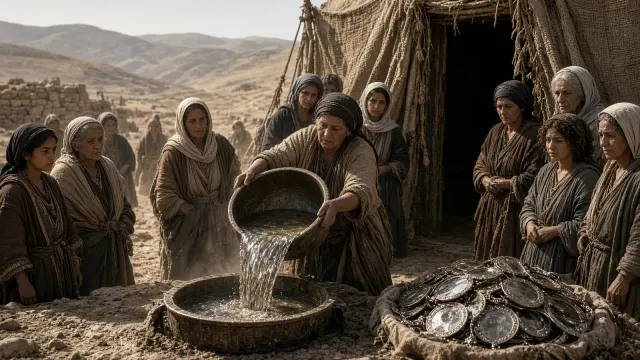
The Sanctuary Has a Courtyard and an Account Book
The Book of Exodus brings the work into the outer court and then opens the account book. The burnt offering altar is completed with the equipment required for actual use, while the laver receives one memorable source note: its brass comes from the mirrors of women who assembled at the entrance. The courtyard is measured, hung, supported, fastened, and given a distinct gate, showing that outer boundaries matter as much as interior furniture. Then the language shifts from making to reckoning. Moses, Ithamar, Bezaleel, and Aholiab are named in relation to administration and craftsmanship, and the metals are weighed. The silver is especially transparent. The equal half-shekel assessment of 603,550 men becomes the sockets and fittings beneath the sanctuary. A census payment once described as ransom is now physically present under the boards. Holiness has room for both artistry and arithmetic.
One complete chapter pageOpen chapter →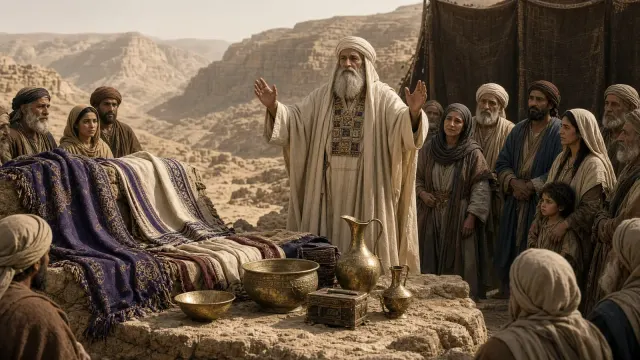
The Work Is Finished, Inspected, and Blessed
The Book of Exodus completes the garments and then subjects the whole project to inspection. Gold is beaten thin enough to become thread in the ephod, while engraved stones place Israel's names on the priest's shoulders and breastplate. Rings, chains, and blue lace keep those names attached during service. The blue robe, bells, pomegranates, linen garments, bodily covering, and inscribed gold plate make beauty wearable rather than merely displayable. Throughout the chapter, "as the LORD commanded Moses" becomes the decisive refrain. The finished tent, furniture, supplies, tools, and garments are then brought to Moses as one coordinated body of work. Finished does not yet mean installed, but it does mean ready to be checked. Moses looks at what Israel has made, finds that it matches the command, and blesses the people. The contrast with his earlier descent to the calf could hardly be sharper.
One complete chapter pageOpen chapter →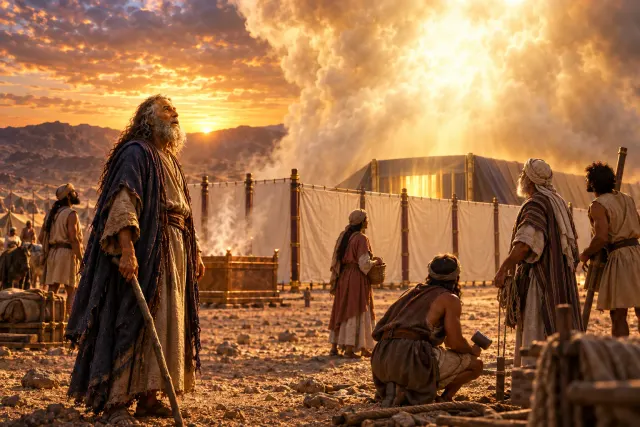
The Glory Fills the Dwelling, and the Journey Remains Open
The Book of Exodus moves from finished components to an inhabited sanctuary. God appoints the day, and Moses sets up the dwelling from its center outward: testimony inside the ark, veil before it, furniture in place, oil applied, priests prepared, bread ordered, lamps lit, incense burned, offerings made, and water used for washing. The repeated measure remains obedience to the command. Only after the court is raised does the Book of Exodus say Moses has finished the work. Then the decisive event comes from outside human workmanship. Cloud covers the tent and the glory of the LORD fills it so completely that even Moses cannot enter. The book ends by looking beyond the assembly day. When the cloud rises, Israel travels; when it stays, Israel waits. Cloud and fire remain visible to the whole house. The sanctuary is complete, but the journey is not.
One complete chapter pageOpen chapter →Source: eBible.org · eng-kjv2006