

The big picture
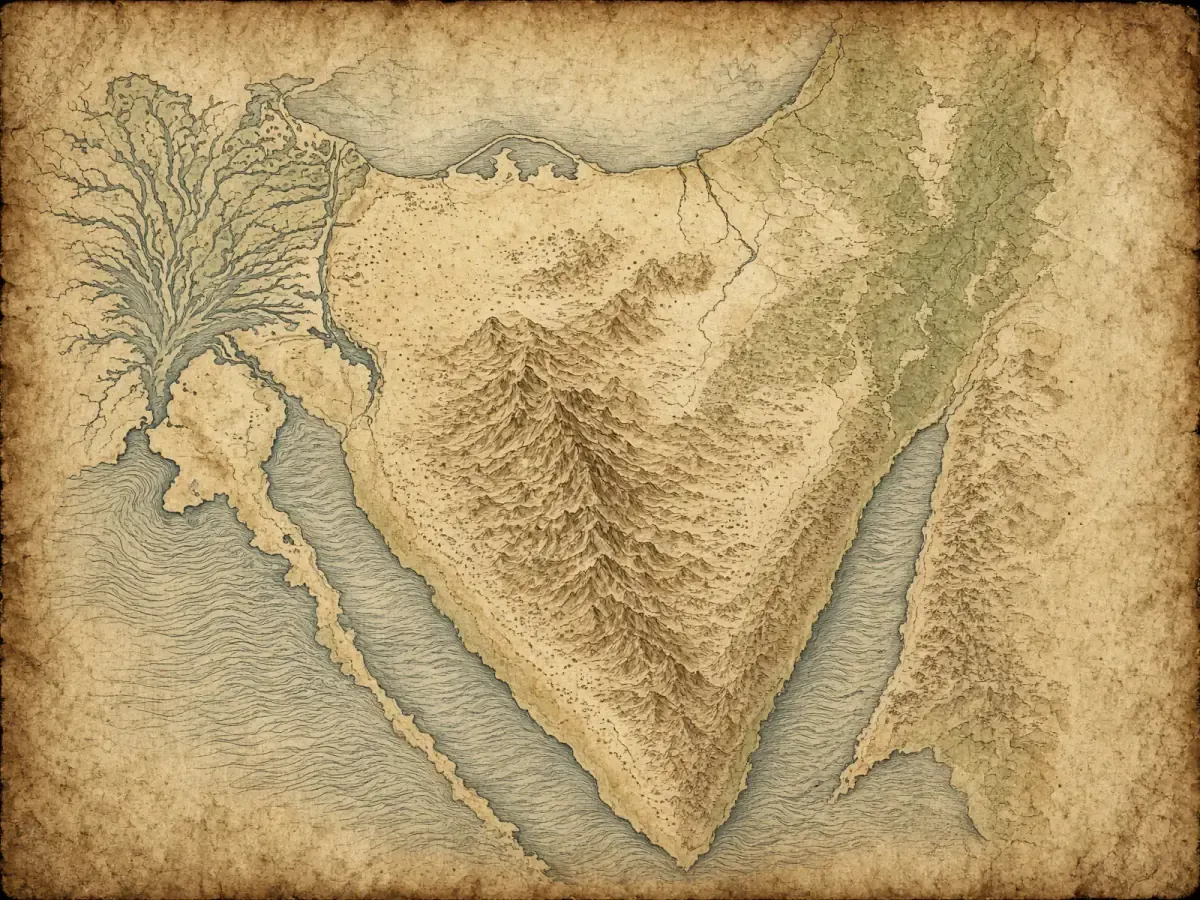
God has provided daily food for Israel, the people travelling after their release from Egyptian slavery. At Rephidim, their next camp, they find no drinking water. Moses, their leader, faces angry demands and fears an attack from his own people. Once water is supplied, an outside enemy arrives. The chapter moves from thirst within the camp to battle beyond it, with Moses needing help in both crises.
In this chapter
- The Thirsty People Turn Against Moses Exodus 17:1-4
Following God's command, Israel leaves its previous wilderness camp and reaches Rephidim.
- Water Comes from the Rock Exodus 17:5-7
Moses is told to go ahead with Israel's elders and the rod used to strike the river in Egypt.
- Tired Hands Need Two Helpers Exodus 17:8-13
Amalek, an attacking people, fights Israel at Rephidim.
- The Battle Must Be Remembered Exodus 17:14-16
The LORD commands Moses to write a record and repeat it to Joshua.
Central truth
God supplies water amid Israel's complaints and victory in battle, while Moses depends on others to hold up his tired hands.
Scripture beside the summary
Exodus · King James Version · 16Exodus 17:1-4
The Thirsty People Turn Against Moses
Following God's command, Israel leaves its previous wilderness camp and reaches Rephidim. There is no water. The people demand that Moses provide it and accuse him of bringing them from Egypt to kill them, their children, and their livestock through thirst. Moses asks why they quarrel with him and test the LORD. He then cries to God for help, saying the people are almost ready to stone him. Their need is real, but their accusation treats the rescue from slavery as an intended act of harm.
In everyday life
One bus escort stops beside a closed service station with a group whose drinking water has run out. Frightened parents crowd her, accusing her of choosing the route to endanger them. She calls for help while trying to keep the group calm. Their need and their accusation are different matters. Moses faces a test of God's presence, not a failed travel plan.
Notice
Exodus 17:1 The people reach the dry camp while following God's command. Their lack of water is not explained here as the result of taking a wrong route.
Exodus 17:1-4
King James Version1And all the congregation of the children of Israel journeyed from the wilderness of Sin, after their journeys, according to the commandment of the LORD, and pitched in Rephidim: and there was no water for the people to drink.
2Wherefore the people did chide with Moses, and said, Give us water that we may drink. And Moses said unto them, Why chide ye with me? wherefore do ye tempt the LORD?
3And the people thirsted there for water; and the people murmured against Moses, and said, Wherefore is this that thou hast brought us up out of Egypt, to kill us and our children and our cattle with thirst?
4And Moses cried unto the LORD, saying, What shall I do unto this people? they be almost ready to stone me.
Exodus 17:5-7
Water Comes from the Rock
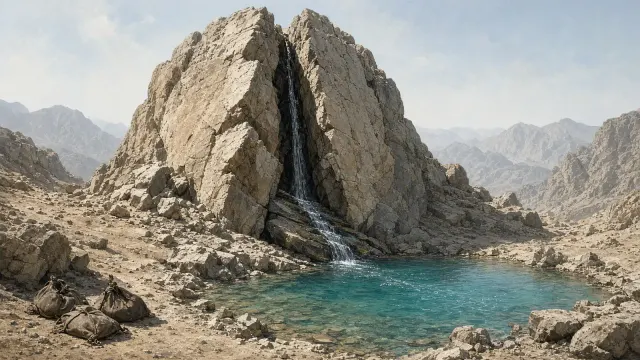
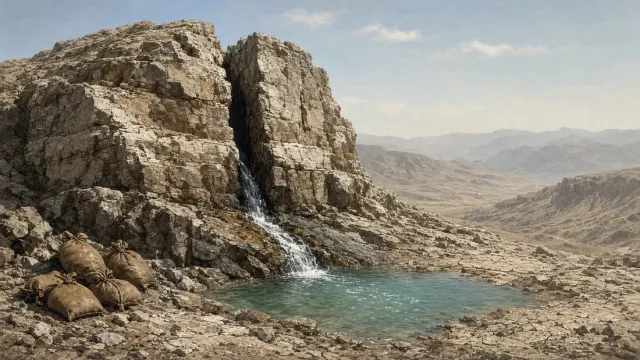
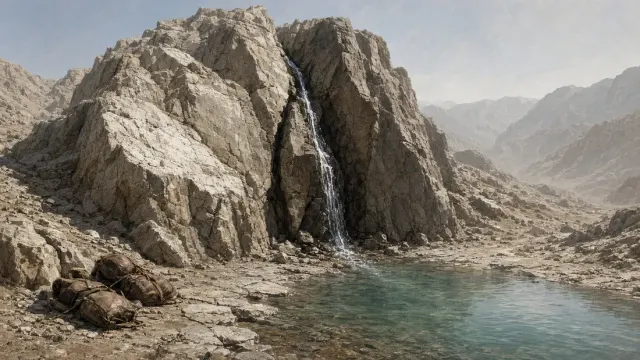
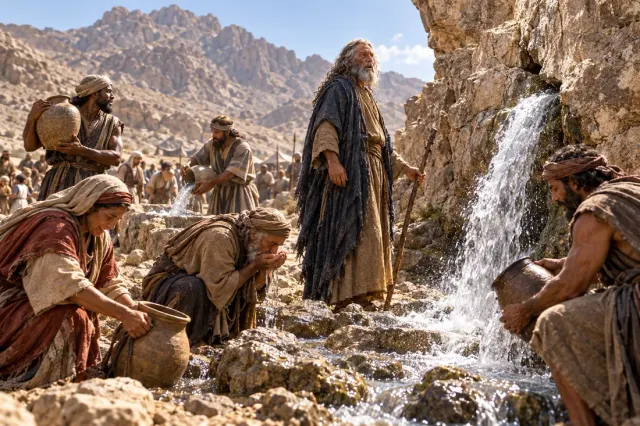
Moses is told to go ahead with Israel's elders and the rod used to strike the river in Egypt. At a rock in Horeb, the mountain region named here, God will stand before him. Moses must strike the rock, and water will come for the people. He does this in the elders' sight. The place receives names that recall testing and quarrelling because Israel questioned whether the LORD was among them. Water answers the immediate need, while the names preserve the troubling question that accompanied it.
In everyday life
The mine engineer brings worker representatives to an emergency water reserve deep below ground. They watch him open the sealed line after hours of angry doubt. Their presence gives the rest of the trapped shift witnesses to the provision. Opening a reserve releases an existing supply; God brings water from a rock at his command.
Notice
Exodus 17:7 The place names preserve Israel's questioning rather than only the relief. The memory of water includes the accusation that God might not be among them.
Exodus 17:5-7
King James Version5And the LORD said unto Moses, Go on before the people, and take with thee of the elders of Israel; and thy rod, wherewith thou smotest the river, take in thine hand, and go.
6Behold, I will stand before thee there upon the rock in Horeb; and thou shalt smite the rock, and there shall come water out of it, that the people may drink. And Moses did so in the sight of the elders of Israel.
7And he called the name of the place Massah, and Meribah, because of the chiding of the children of Israel, and because they tempted the LORD, saying, Is the LORD among us, or not?
Exodus 17:8-13
Tired Hands Need Two Helpers
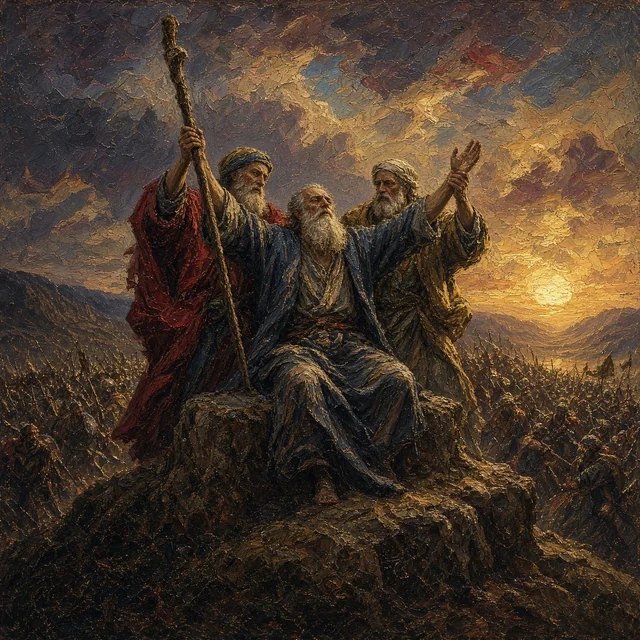
Amalek, an attacking people, fights Israel at Rephidim. Moses sends Joshua, a man chosen to lead the fighters, to select men and meet them. Moses stands on a hill with God's rod, joined by Aaron and Hur, two companions. Israel gains while Moses holds his hand up; Amalek gains when he lowers it. As his hands grow heavy, the companions seat him on a stone and support one hand each. They keep them steady until sunset. Joshua defeats Amalek with the sword. Victory involves fighters below and sustained support above.
In everyday life
An emergency signaller holds a heavy lamp above a crowded landing so boats can find the safe approach. Her arms begin to shake. Two colleagues place a seat beneath her and help support the lamp until the last boat arrives. The visible task depends on practical help. Israel's battle turns on God's power, not the usefulness of a lamp.
Notice
Exodus 17:12 Aaron and Hur answer Moses' tiredness with a seat and their hands. His leading role does not remove the physical limits that make their help necessary.
Exodus 17:8-13
King James Version8Then came Amalek, and fought with Israel in Rephidim.
9And Moses said unto Joshua, Choose us out men, and go out, fight with Amalek: to morrow I will stand on the top of the hill with the rod of God in mine hand.
10So Joshua did as Moses had said to him, and fought with Amalek: and Moses, Aaron, and Hur went up to the top of the hill.
11And it came to pass, when Moses held up his hand, that Israel prevailed: and when he let down his hand, Amalek prevailed.
12But Moses’ hands were heavy; and they took a stone, and put it under him, and he sat thereon; and Aaron and Hur stayed up his hands, the one on the one side, and the other on the other side; and his hands were steady until the going down of the sun.
13And Joshua discomfited Amalek and his people with the edge of the sword.
Exodus 17:14-16
The Battle Must Be Remembered
The LORD commands Moses to write a record and repeat it to Joshua. God will erase Amalek's remembrance from under heaven. Moses builds an altar and names it Jehovah-nissi, linking the victory with the LORD. He declares that the LORD will have war with Amalek through the generations. This is not presented as a quarrel settled permanently by one afternoon's fighting. The memorial carries both the rescue they experienced and a severe promise of future judgment. Joshua must hear it because the account reaches beyond Moses' immediate role.
In everyday life
One coast-radio operator records a dangerous attack reported by a vessel offshore. She reads the entry aloud to the colleague taking the next watch so the threat is not lost in the change of staff. The written record preserves unfinished responsibility. God's declared war against Amalek concerns lasting judgment, not an open radio incident.
Notice
Exodus 17:14 The record must be written and spoken to Joshua. Remembering the event involves both a lasting document and a named person who must hear it.
Exodus 17:14-16
King James Version14And the LORD said unto Moses, Write this for a memorial in a book, and rehearse it in the ears of Joshua: for I will utterly put out the remembrance of Amalek from under heaven.
15And Moses built an altar, and called the name of it Jehovah-nissi:
16For he said, Because the LORD hath sworn that the LORD will have war with Amalek from generation to generation.
Details worth noticing
The opening image
Exodus 17:1 begins with “And all the congregation of the children of Israel journeyed from the wilderness of Sin, after their journeys, according to the commandment of the LORD…”
Where the chapter turns
Exodus 17:8 forms a natural hinge: “Then came Amalek, and fought with Israel in Rephidim.”
The final note
Exodus 17:16 leaves the reader with “For he said, Because the LORD hath sworn that the LORD will have war with Amalek from generation to generation.”
A word trail through the chapter
The words Moses, LORD, people, Amalek, Israel, hand help reveal the chapter’s repeated concerns.
KJV words made clear
- chide
- Quarrel with or angrily rebuke another person.
- discomfited
- Defeated and threw into disorder during a battle.
Music and video connected to the passage
Related media appears when its Scripture reference overlaps this study. Music and video can illuminate a theme while the biblical text remains the foundation.
 Till the Sun Goes DownExodus 17:8-13Listen to related music →
 Bread from HeavenExodus 16:1-17:7Listen to related music →
 Bread from Heaven, Water from StoneExodus 15:22-17:16Listen to related music →
 Exodus, Through Fire and SeaExodus 1:1-40:38Listen to related music →Till the Sun Goes DownExodus 17:8–13Watch a related video →