
The big picture
Exodus 19 opens in verse 1 with “In the third month, when the children of Israel were gone forth out of the land of…”, reaches its middle movement near verse 13 with “There shall not an hand touch it, but he shall surely be stoned, or shot through…”, and closes in verse 25 with “So Moses went down unto the people, and spake unto them.” Repeated or prominent terms include LORD, people, mount, Moses, Sinai. Together, those details trace this chapter’s own movement from its opening to its conclusion.
Scripture beside the summary
Exodus · King James Version · 25Exodus 19:1-7
1–7: In the third month, when the children of Israel were gone forth out of…
Exodus 19:1–7 opens with “In the third month, when the children of Israel were gone forth out of the land of Egypt, the…” and reaches “And Moses came and called for the elders of the people, and laid before their faces all these…” by its final verse. That movement develops the focus on Exodus 19 develops its own movement around LORD, people, mount, Moses, Sinai, with particular weight carried by Israel, children, LORD.
Context that brings the passage to life
“In the third month, when the children of Israel were gone forth out of the land of Egypt, the same day came they into…” Naming Egypt and Israel keeps the account rooted in particular people or places. Follow where the name returns and what changes around it.
“For they were departed from Rephidim, and were come to the desert of Sinai, and had pitched in the wilderness; and…” This line supplies a reason, result, or conclusion. It should stay attached to the claim or action that gives it meaning.
Exodus 19:1-7
King James Version1In the third month, when the children of Israel were gone forth out of the land of Egypt, the same day came they into the wilderness of Sinai.
2For they were departed from Rephidim, and were come to the desert of Sinai, and had pitched in the wilderness; and there Israel camped before the mount.
3And Moses went up unto God, and the LORD called unto him out of the mountain, saying, Thus shalt thou say to the house of Jacob, and tell the children of Israel;
4Ye have seen what I did unto the Egyptians, and how I bare you on eagles’ wings, and brought you unto myself.
5Now therefore, if ye will obey my voice indeed, and keep my covenant, then ye shall be a peculiar treasure unto me above all people: for all the earth is mine:
6And ye shall be unto me a kingdom of priests, and an holy nation. These are the words which thou shalt speak unto the children of Israel.
7And Moses came and called for the elders of the people, and laid before their faces all these words which the LORD commanded him.
Exodus 19:8-14
8–14: All the people answered together, and said, All that the LORD hath…
Exodus 19:8–14 opens with “And all the people answered together, and said, All that the LORD hath spoken we will do. And…” and reaches “And Moses went down from the mount unto the people, and sanctified the people; and they washed…” by its final verse. That movement develops the focus on Exodus 19 develops its own movement around LORD, people, mount, Moses, Sinai, with particular weight carried by people, LORD, Moses.
Context that brings the passage to life
“And all the people answered together, and said, All that the LORD hath spoken we will do. And Moses returned the words…” Naming All and Moses keeps the account rooted in particular people or places. Follow where the name returns and what changes around it.
“And the LORD said unto Moses, Lo, I come unto thee in a thick cloud, that the people may hear when I speak with thee…” Naming Moses keeps the account rooted in particular people or places. Follow where the name returns and what changes around it.
“And the LORD said unto Moses, Go unto the people, and sanctify them to day and to morrow, and let them wash their…” Naming Moses keeps the account rooted in particular people or places. Follow where the name returns and what changes around it.
Exodus 19:8-14
King James Version8And all the people answered together, and said, All that the LORD hath spoken we will do. And Moses returned the words of the people unto the LORD .
9And the LORD said unto Moses, Lo, I come unto thee in a thick cloud, that the people may hear when I speak with thee, and believe thee for ever. And Moses told the words of the people unto the LORD .
10And the LORD said unto Moses, Go unto the people, and sanctify them to day and to morrow, and let them wash their clothes,
11And be ready against the third day: for the third day the LORD will come down in the sight of all the people upon mount Sinai.
12And thou shalt set bounds unto the people round about, saying, Take heed to yourselves, that ye go not up into the mount, or touch the border of it: whosoever toucheth the mount shall be surely put to death:
13There shall not an hand touch it, but he shall surely be stoned, or shot through; whether it be beast or man, it shall not live: when the trumpet soundeth long, they shall come up to the mount.
14And Moses went down from the mount unto the people, and sanctified the people; and they washed their clothes.
Exodus 19:15-21
15–21: He said unto the people, Be ready against the third day: come not at…
Exodus 19:15–21 opens with “And he said unto the people, Be ready against the third day: come not at your wives.” and reaches “And the LORD said unto Moses, Go down, charge the people, lest they break through unto the LORD…” by its final verse. That movement develops the focus on Exodus 19 develops its own movement around LORD, people, mount, Moses, Sinai, with particular weight carried by mount, LORD, Moses.
Context that brings the passage to life
“And he said unto the people, Be ready against the third day: come not at your wives.” The line’s distinctive content terms include people, ready, third. Its relationship to verses 16 shows what work it does in this passage.
“And it came to pass on the third day in the morning, that there were thunders and lightnings, and a thick cloud upon…” This familiar narrative signal moves the clock forward. What follows is a new scene, consequence, or answer to an earlier tension.
“And Moses brought forth the people out of the camp to meet with God; and they stood at the nether part of the mount.” Naming Moses keeps the account rooted in particular people or places. Follow where the name returns and what changes around it.
Exodus 19:15-21
King James Version15And he said unto the people, Be ready against the third day: come not at your wives.
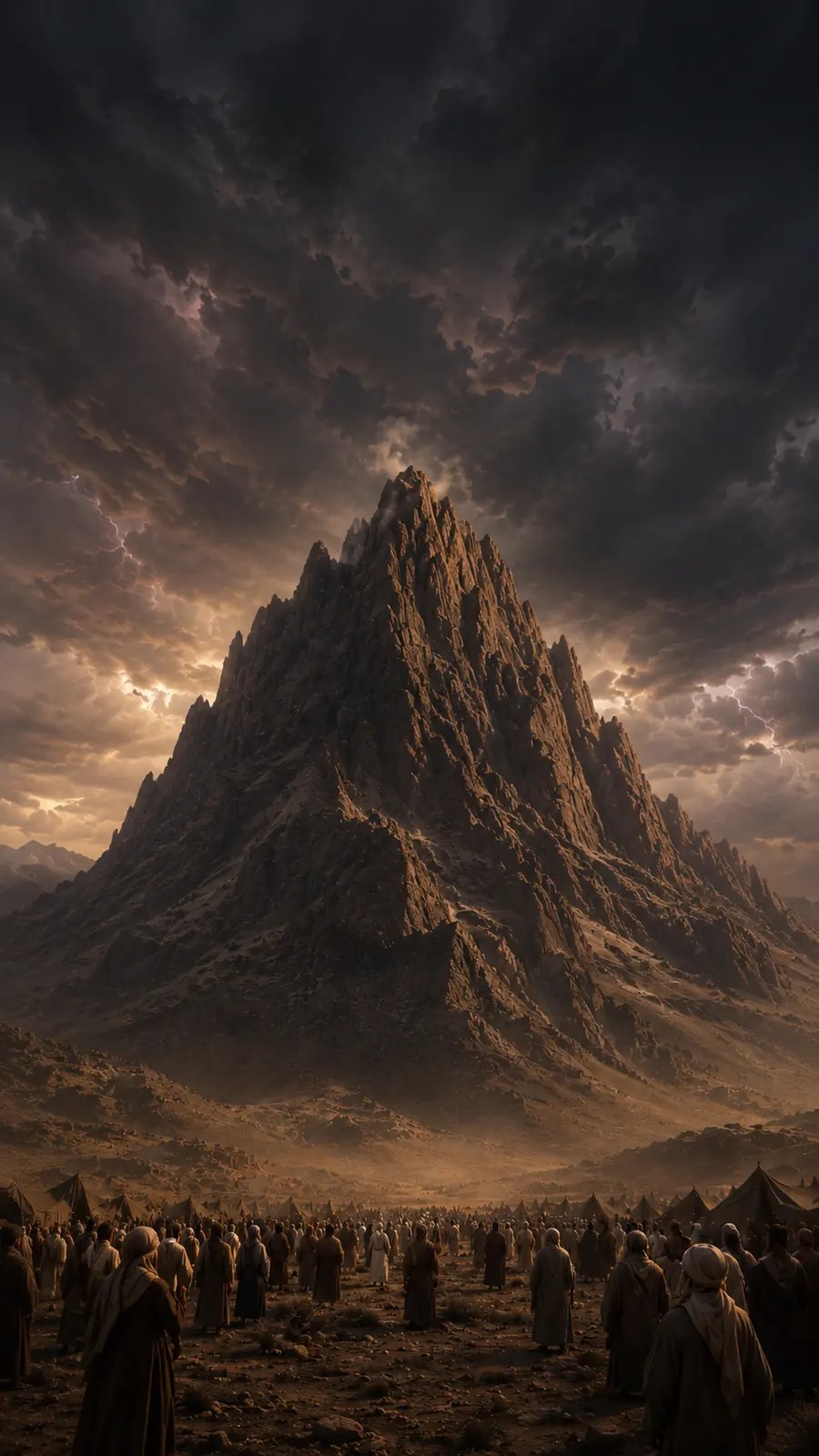
16And it came to pass on the third day in the morning, that there were thunders and lightnings, and a thick cloud upon the mount, and the voice of the trumpet exceeding loud; so that all the people that was in the camp trembled.
17And Moses brought forth the people out of the camp to meet with God; and they stood at the nether part of the mount.
18And mount Sinai was altogether on a smoke, because the LORD descended upon it in fire: and the smoke thereof ascended as the smoke of a furnace, and the whole mount quaked greatly.
19And when the voice of the trumpet sounded long, and waxed louder and louder, Moses spake, and God answered him by a voice.
20And the LORD came down upon mount Sinai, on the top of the mount: and the LORD called Moses up to the top of the mount; and Moses went up.
21And the LORD said unto Moses, Go down, charge the people, lest they break through unto the LORD to gaze, and many of them perish.
Exodus 19:22-25
22–25: Let the priests also, which come near to the LORD , sanctify themselves…
Exodus 19:22–25 opens with “And let the priests also, which come near to the LORD , sanctify themselves, lest the LORD break…” and reaches “So Moses went down unto the people, and spake unto them.” by its final verse. That movement develops the focus on Exodus 19 develops its own movement around LORD, people, mount, Moses, Sinai, with particular weight carried by LORD, break, people.
Context that brings the passage to life
“And let the priests also, which come near to the LORD , sanctify themselves, lest the LORD break forth upon them.” The line’s distinctive content terms include LORD, break, lest. Its relationship to verses 23 shows what work it does in this passage.
Exodus 19:22-25
King James Version22And let the priests also, which come near to the LORD , sanctify themselves, lest the LORD break forth upon them.
23And Moses said unto the LORD , The people cannot come up to mount Sinai: for thou chargedst us, saying, Set bounds about the mount, and sanctify it.
24And the LORD said unto him, Away, get thee down, and thou shalt come up, thou, and Aaron with thee: but let not the priests and the people break through to come up unto the LORD , lest he break forth upon them.
25So Moses went down unto the people, and spake unto them.
Details worth noticing
The opening image
Exodus 19:1 begins with “In the third month, when the children of Israel were gone forth out of the land of Egypt, the same day came they into the wilderness of Sinai.”
Where the chapter turns
Exodus 19:16 forms a natural hinge: “And it came to pass on the third day in the morning, that there were thunders and lightnings, and a thick cloud upon the mount, and the voice of the…”
The final note
Exodus 19:25 leaves the reader with “So Moses went down unto the people, and spake unto them.”
A word trail through the chapter
The words LORD, people, mount, Moses, Sinai, third help reveal the chapter’s repeated concerns.
What does the narrator emphasize about the rescue?
Mercy amid hesitation and God remembering Abraham, rather than Lot's flawless judgment.
How does the ending resist a simple happy ending?
Fear and abusive choices continue after physical escape.
KJV words made clear
- unto
- to
- thee
- you
- thou
- you
- hath
- has
- spake
- spoke
Text first
Where readers differ
The chapter summary begins with what the passage says and how its parts fit together. It does not assume one denomination has already settled every question. Where a conclusion depends on a tradition, literary theory, or historical reconstruction, that dependence is named openly.
The KJV text is presented first. Interpretive conclusions are labeled, and differences are introduced only when they help a reader understand why serious communities do not always reach the same answer.
Comparative interpretive notes for this chapter are in preparation. Until reviewed notes are ready, this page separates the KJV text from summary and application without claiming that serious readers agree on every question.