
John

21 Chapters
John: The Whole Book, Chapter by Chapter

The Word Enters the World He Made
The Book of John opens farther back than Bethlehem, placing the Word before creation and on the creator’s side of everything that came into being. That immense claim then moves steadily into human scale. The Word becomes flesh, John the Baptist refuses titles that would distract from his witness, and disciples begin following through invitations as ordinary as “Come and see.” Recognition grows, but never all at once. Jesus is called Lamb of God, Messiah, Son of God, King of Israel, and Son of man, yet each title opens more than it closes. The chapter’s rhythm is therefore one of disclosure without exhaustion. The one through whom all things were made can be encountered beside a river, during an afternoon visit, and in a conversation about Nazareth. Heaven and earth meet in a person people are only beginning to know.
One complete chapter pageOpen chapter →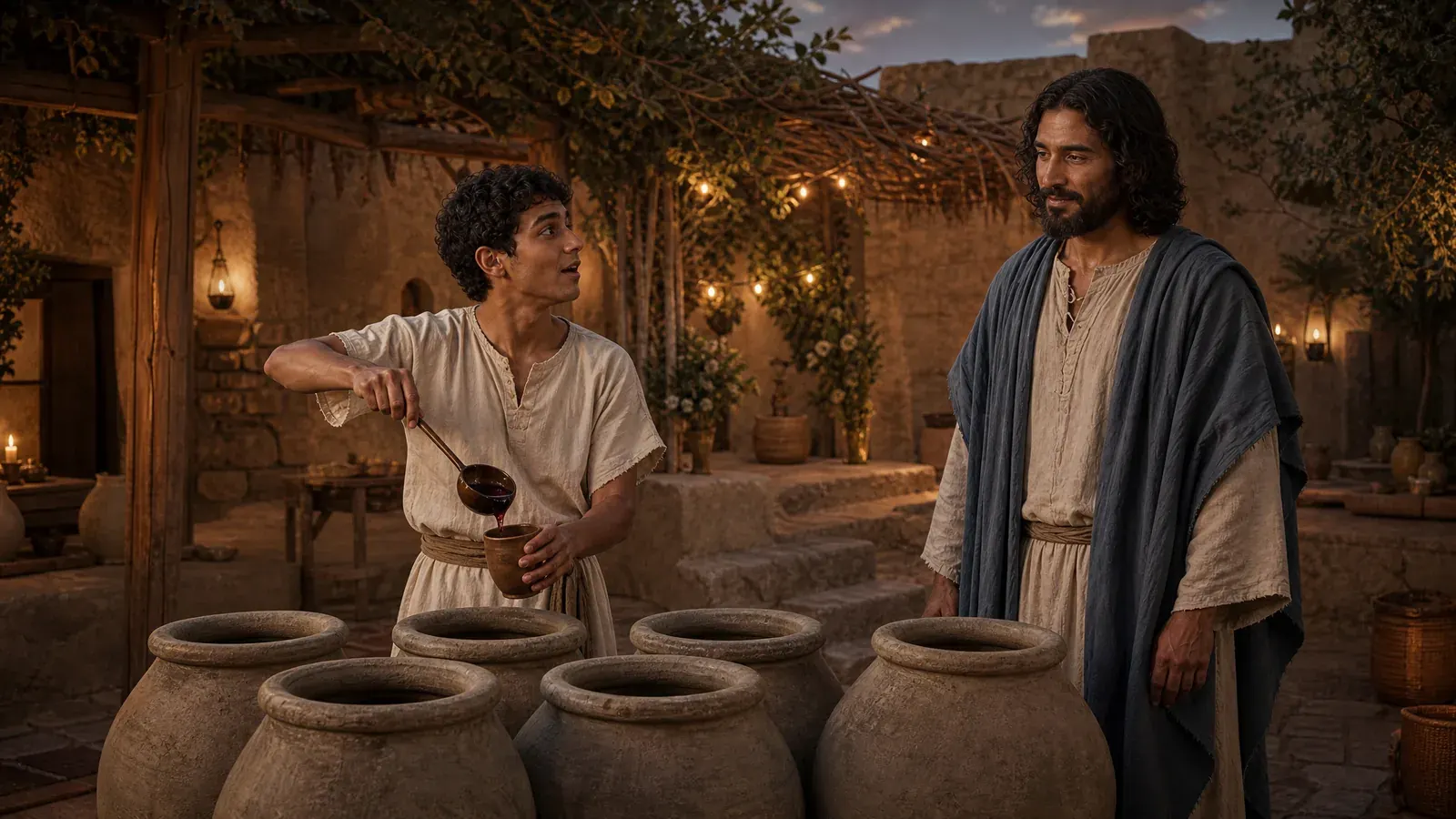
A Wedding Sign and a Temple Argument
A wedding and a temple could hardly look less alike, yet the Book of John uses both to test what people recognize in Jesus. At Cana, the sign happens quietly. Servants know where the wine came from, the feast governor does not, and the bridegroom receives credit he never earned. In Jerusalem, Jesus acts publicly, naming the temple “my Father’s house” and provoking a demand for authority. His answer shifts the meaning of temple toward his own body and a resurrection nobody present yet understands. The chapter closes by complicating belief itself. Many respond to signs, but Jesus does not entrust himself to their enthusiasm because he knows what is in people. Seeing a work, understanding what it discloses, and receiving the person who performs it are not treated as the same thing.
One complete chapter pageOpen chapter →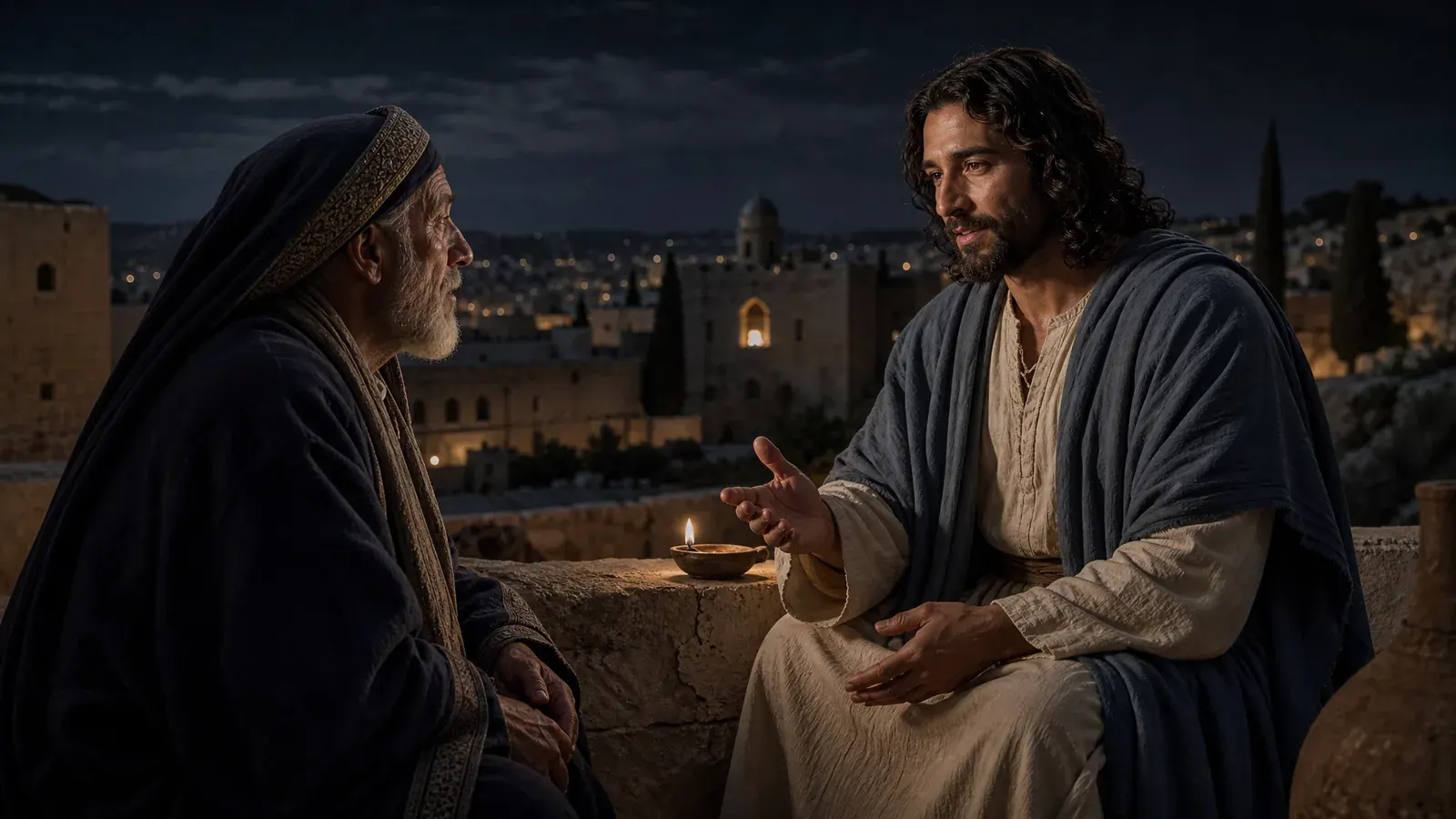
Birth from Above and the Witness Who Steps Aside
Nicodemus enters with status, learning, and a conclusion based on signs, but Jesus speaks of a birth no pedigree can produce. The conversation moves from flesh and Spirit to heavenly testimony, then to the lifted Son of man and the life received through belief. God’s love is directed toward the world, while the coming of light also exposes what people prefer to keep hidden. The second half of the chapter turns to John the Baptist, whose disciples worry about Jesus drawing the larger following. John refuses the rivalry. His joy is fulfilled when attention moves toward the one he was sent to announce: “He must increase, but I must decrease.” The Book of John closes the chapter by making origin decisive. The Son comes from above, carries the Father’s testimony, and holds everlasting life in relation to himself.
One complete chapter pageOpen chapter →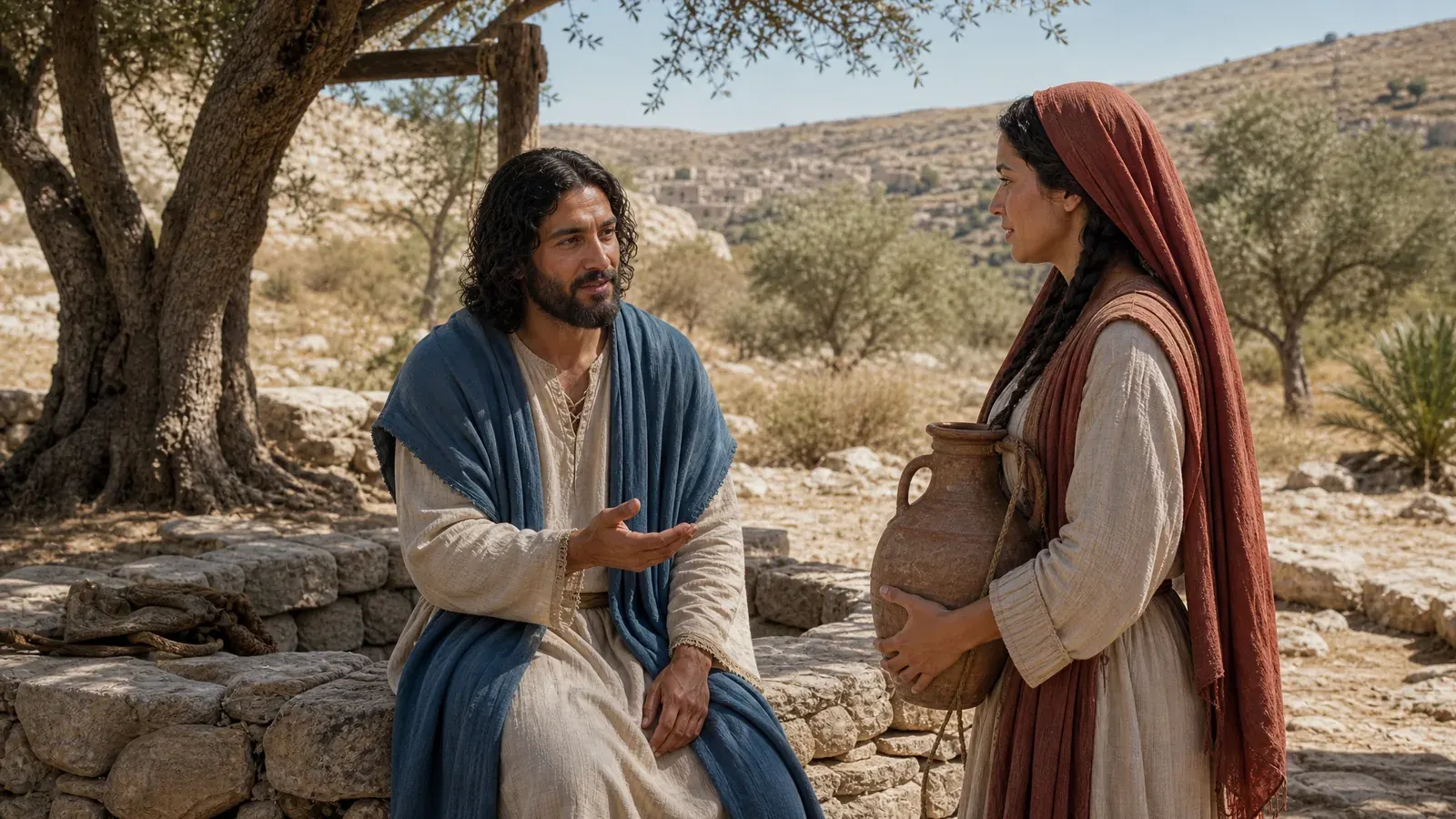
A Conversation Crosses the Boundary
At Jacob’s well, a request for water crosses a social boundary and opens into questions of gift, identity, and worship. Jesus is tired enough to sit and thirsty enough to ask for a drink, yet he is also the one offering living water. The Samaritan woman moves from practical objections to recognition that he knows her life, then to the question of Messiah. Her testimony brings the town, and the townspeople move from believing her report to hearing Jesus for themselves and calling him “the Saviour of the world.” Meanwhile the disciples misunderstand food just as she first misunderstood water, discovering that outsiders do not have a monopoly on literal thinking. The Book of John ends the chapter with a nobleman who must trust Jesus’ word before seeing its result, turning distance itself into a test of whether life depends on physical proximity.
One complete chapter pageOpen chapter →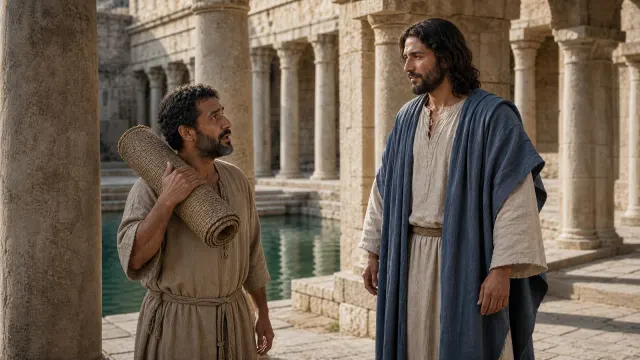
A Healed Man and the Authority to Give Life
A man disabled for thirty-eight years is healed without reaching the pool he has watched, and the carried bed immediately becomes the center of a Sabbath dispute. Jesus answers by tying his work to the Father’s continuing work, which pushes the argument from one healing into claims about divine authority, life, judgment, and resurrection. The Son does what the Father does, gives life, and will call those in graves. Jesus then names the witnesses supporting those claims: John the Baptist, the works themselves, the Father, and the Scriptures. The Book of John refuses to treat Scripture as the problem. The sharper accusation is that people can search it, trust Moses, and still refuse the one to whom those writings testify. A chapter that begins with bodily restoration ends with the question of whether revered testimony will actually be received.
One complete chapter pageOpen chapter →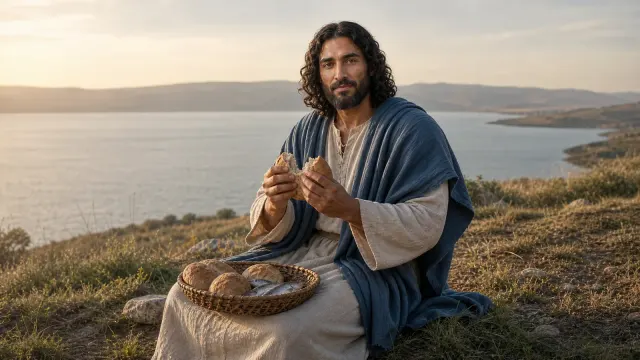
Bread Given, a King Refused, Disciples Divided
Bread fills a crowd, a king is refused, a troubled sea is crossed, and then the sign becomes a long argument about what people are really seeking. The crowd wants another provision and eventually asks for a sign after having eaten one. Jesus identifies himself, not merely his supply, as the bread of life. Coming, believing, eating, and drinking all gather around life that comes through him and reaches to resurrection at the last day. His flesh given for the world brings death into the meaning of the bread, making the gift costly rather than merely abundant. The Book of John then allows the discourse to reduce the audience. Many disciples leave because the saying is hard. Peter remains because Jesus has the words of eternal life, yet even the Twelve are not presented as a safe circle. Judas stands inside them as the unresolved betrayer.
One complete chapter pageOpen chapter →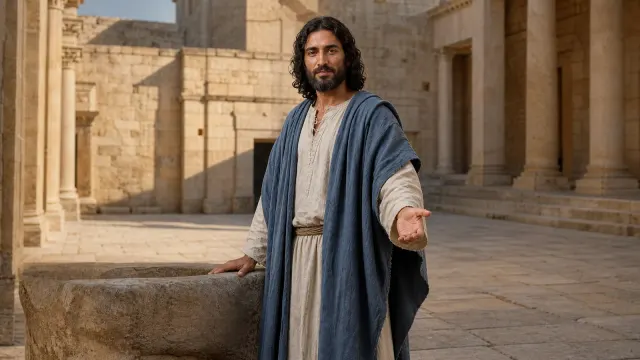
A Feast Full of Questions About One Man
The feast of tabernacles becomes a public argument over one man. Jesus’ brothers recommend visibility without belief, crowds divide over whether he is good or deceptive, authorities question his learning and origin, and officers sent to arrest him return impressed by his words. Again and again, supposed knowledge becomes the obstacle. People know Galilee, know what Scripture says about Bethlehem, know what rulers think, or know what lawful procedure should be, yet none of those pieces alone settles Jesus’ identity. His promise of living water points toward the Spirit and the coming glorification, widening the feast’s imagery beyond its immediate setting. The Book of John closes with Nicodemus asking a simple legal question about hearing a man before judging him. The answer he receives is not legal reasoning but contempt, exposing how easily certainty can outrun the process it claims to defend.
One complete chapter pageOpen chapter →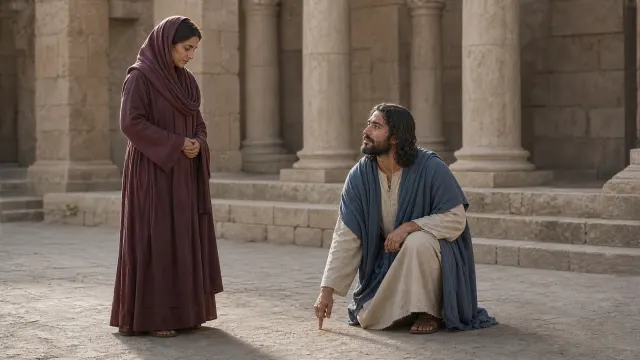
The Light Exposes the Accusation
The chapter begins with a woman placed in the middle of a trap and ends with stones raised against Jesus. Between those scenes, the Book of John presses the language of light, witness, freedom, fatherhood, truth, and origin until inherited claims are tested by conduct. Jesus refuses the accusers’ intended use of judgment without pretending adultery is harmless. He calls himself the light of the world, speaks of the Father’s witness, and warns that refusal of his identity leaves people in sin. Even those described as believing are told that discipleship is shown by continuing in his word. Abrahamic descent is acknowledged but denied the power to excuse murderous intent. The dispute finally reaches Abraham himself. When Jesus says, “Before Abraham was, I am,” ordinary chronology can no longer contain the claim, and the response is attempted stoning rather than a softened interpretation.
One complete chapter pageOpen chapter →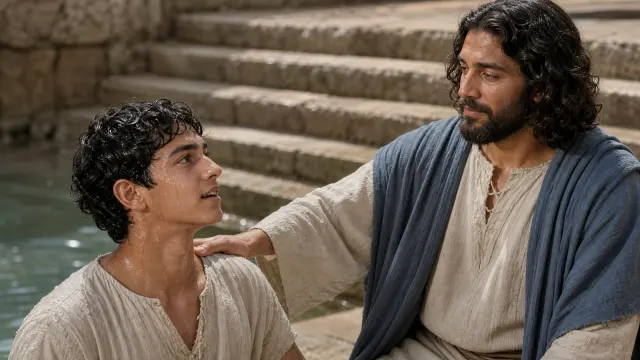
A Man Receives Sight and Becomes an Inconvenient Witness
A man born blind receives sight, but the healing creates a problem for people committed to a Sabbath verdict against Jesus. The Book of John follows the man through repeated questioning while his understanding grows. He begins with “a man that is called Jesus,” advances to “a prophet,” argues that the healer must be from God, and finally confesses belief when Jesus finds him after his expulsion. The authorities move in the opposite direction. They investigate the facts, confirm through the parents that the man really was born blind, and still demand a conclusion that fits their prior judgment. The irony becomes sharp enough for the healed man himself to expose it. The chapter closes by reversing the language of sight. Physical blindness was never evidence of personal sin here. The deeper danger is claiming to see while refusing correction from the evidence standing in front of you.
One complete chapter pageOpen chapter →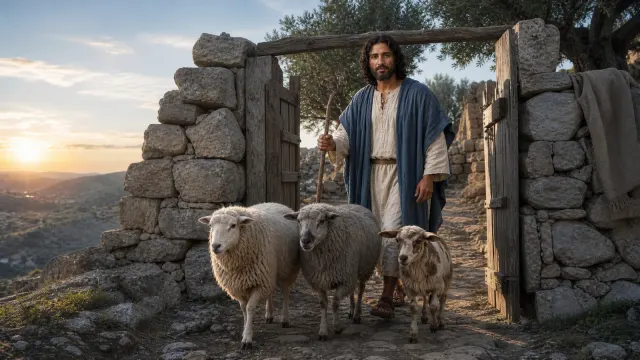
The Shepherd Knows the Sheep and Gives His Life
The shepherd discourse grows directly out of the previous chapter’s expulsion of the healed man. Jesus describes a shepherd who knows, calls, leads, protects, and gives his life, in contrast with thieves, robbers, and a hireling who disappears when danger arrives. The good shepherd’s care is therefore measured by what he does when the flock costs him something. His life is laid down willingly and taken up again under the Father’s command. At the feast of dedication, the same dispute about identity returns. Jesus points to his works, the sheep who hear his voice, and the shared keeping of Father and Son before saying, “I and my Father are one.” The Book of John ends beyond Jordan, where people remember that John performed no miracle but told the truth. A faithful witness can recede while his words continue leading people to Jesus.
One complete chapter pageOpen chapter →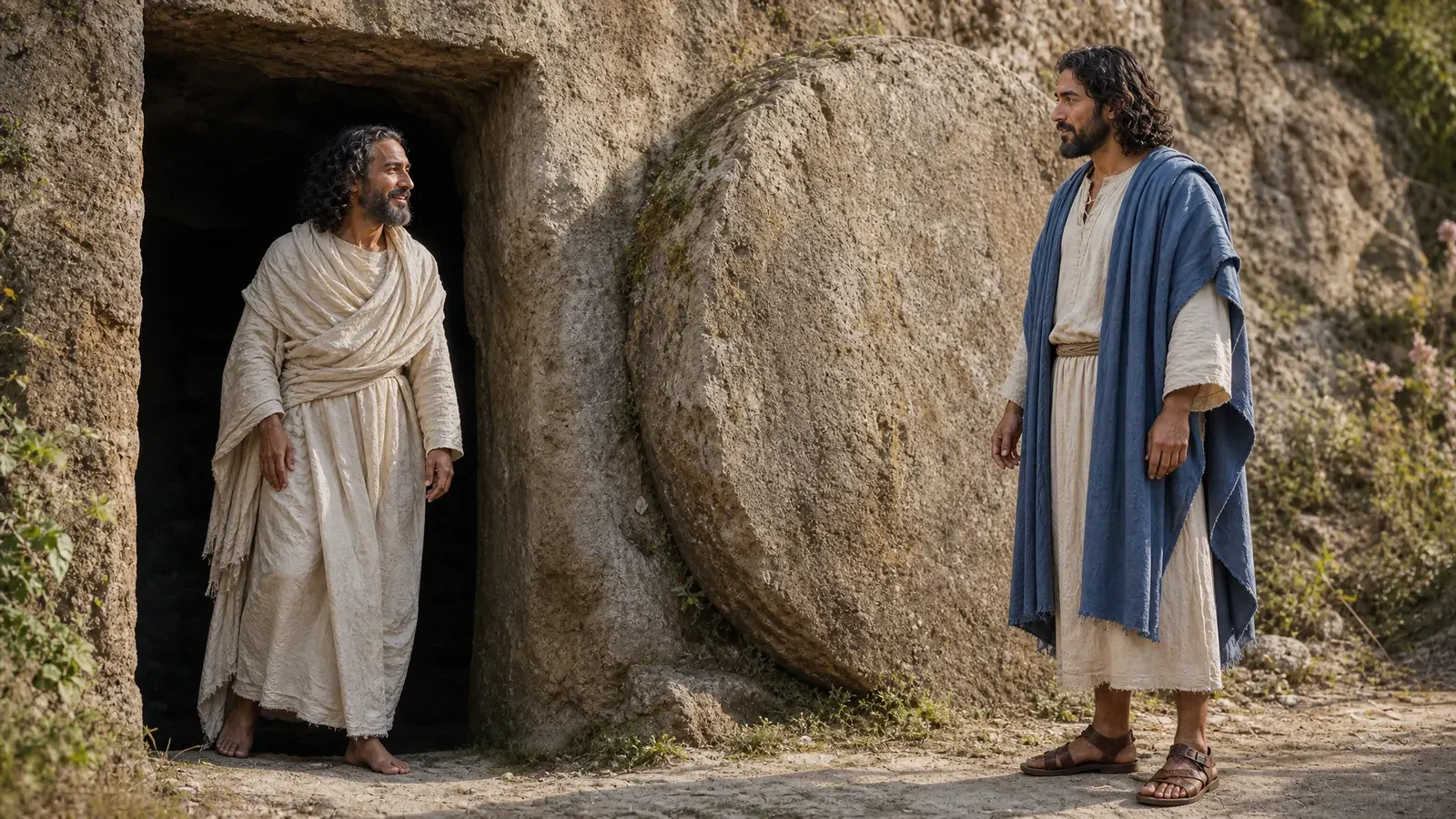
At the Tomb, Life Provokes a Death Sentence
Lazarus’ illness brings love and delay into the same sentence. Jesus does not hurry to Bethany, yet the Book of John repeatedly affirms his love for the household and refuses to pretend the death is unreal. Martha confesses Jesus as Christ before the tomb opens, Mary’s grief draws tears from him even though he knows the outcome, and the stone is removed only after Martha names the physical reality of four days in the grave. Jesus then calls Lazarus out, and the man who was dead returns still wrapped in burial cloths. The sign produces belief, but it also accelerates the plan to kill Jesus. Caiaphas argues that one man should die for the nation, while the Gospel identifies a saving meaning beyond his political calculation. The chapter closes with Passover approaching, an arrest order in place, and Jesus withdrawn from public view.
One complete chapter pageOpen chapter →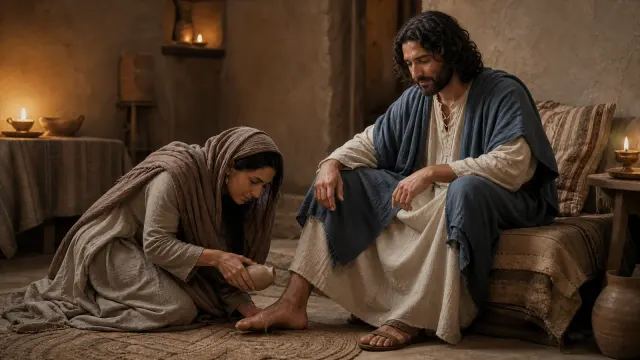
The Hour Arrives Through the Grain That Dies
A meal with living Lazarus, Mary’s burial anointing, a royal entrance, and the arrival of Greeks all drive the Book of John toward one announcement: “The hour is come.” Glory is now explained through a grain that falls into the ground and dies so that it can bear much fruit. Jesus does not treat that death as painless. His soul is troubled, yet he identifies the hour as the purpose for which he came and speaks of being lifted up as the means of drawing others. The public response remains divided. Isaiah is used to interpret persistent unbelief, while rulers who believe secretly are criticized for loving human praise more than God’s. Jesus’ final public words return everything to the Father who sent him. Light, salvation, judgment, and everlasting life meet in the words he has faithfully spoken.
One complete chapter pageOpen chapter →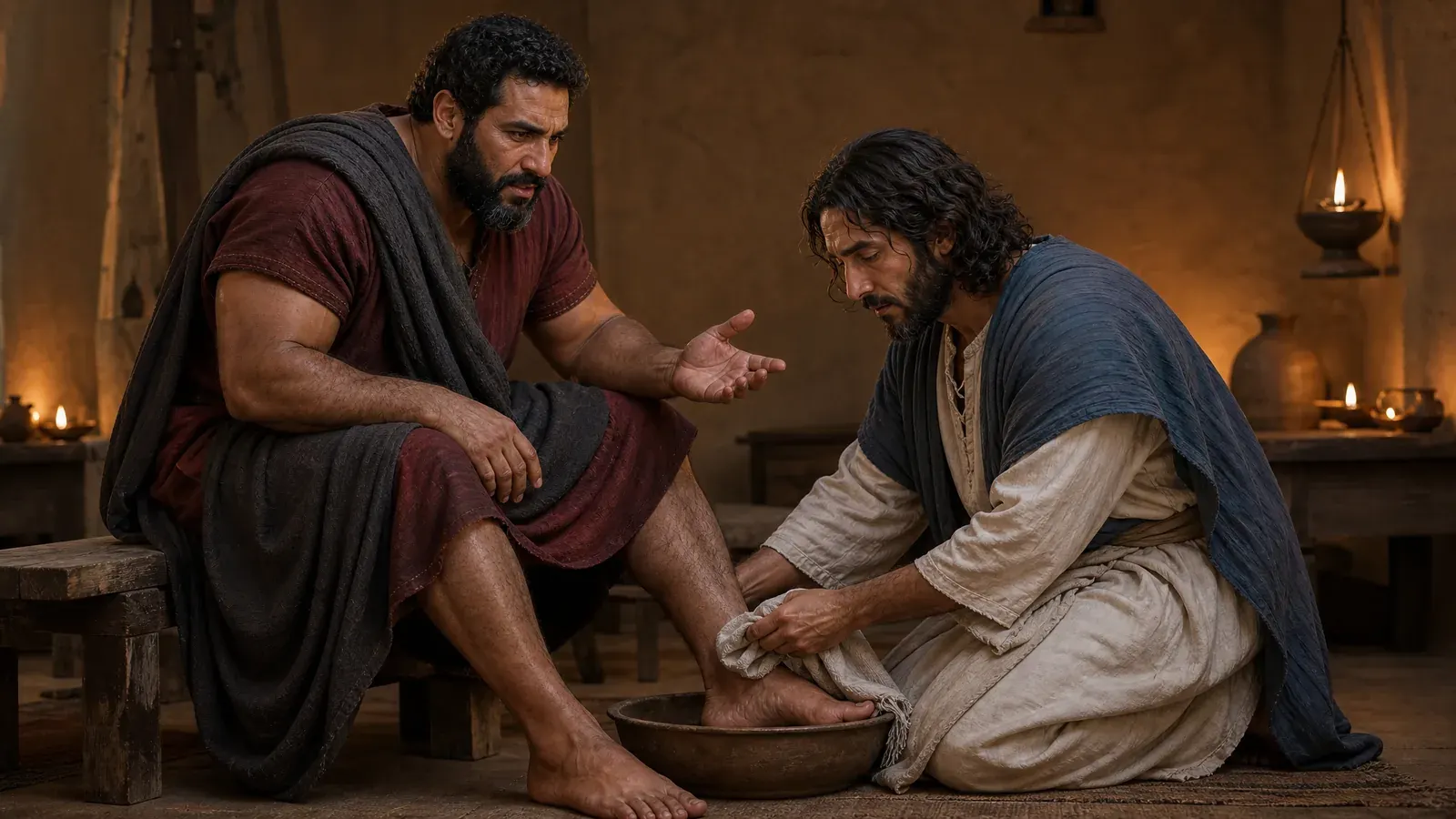
The Hands That Hold All Things Take Up a Towel
The Book of John begins the final evening by placing extraordinary authority behind an ordinary towel. Jesus knows where he came from, where he is going, what the Father has placed in his hands, and who will betray him, yet that knowledge moves him toward service rather than distance. Peter resists being washed before he understands that receiving must come before imitation. Betrayal then unfolds inside a meal where Judas remains difficult for the others to identify, even after the dipped morsel. Once he leaves, Jesus speaks not of collapse but of glory, love, and departure. Peter answers the warning of separation with a promise to lay down his life. Jesus answers that confidence with a prediction of three denials before morning, leaving loyalty sincere but untested and insufficient.
One complete chapter pageOpen chapter →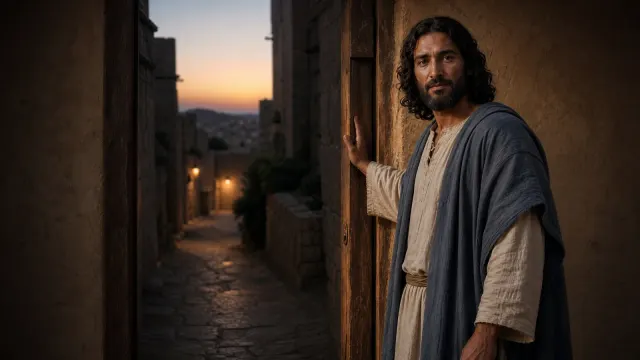
Departure Becomes a Promise of Abiding Presence
A prediction of denial is followed not by dismissal but by reassurance. In the Book of John, Jesus answers troubled disciples with a place in the Father's house, a way that is not a map but a person, and a promise that departure will not mean abandonment. Thomas and Philip expose how much remains unclear, yet their questions draw out the relation of Father, Son, and Spirit with unusual directness. The Comforter will teach and bring Jesus' words to remembrance, while Father and Son will make their abode with those who love him. Prayer, works, obedience, and presence all remain tied to the mission Jesus receives from the Father. The chapter ends with peace given before arrest, not after danger disappears, and with Jesus moving toward the world's prince as an act of obedience rather than surrender to a superior power.
One complete chapter pageOpen chapter →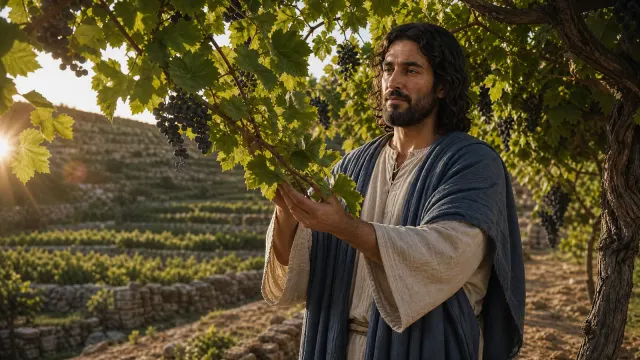
The Branches Live by Remaining in the Vine
The vine gives the chapter its controlling grammar: life and fruit do not originate in the branch. The Book of John makes abiding a relation of dependence before it becomes a catalogue of activity. The Father tends the vine, Jesus is the source, and the disciples bear fruit only by remaining in him. That remaining takes visible form in love, obedience, joy, friendship, prayer, and a mission Jesus chose them to carry. The warmth of friendship does not remove command or sending. Nor does fruitful service guarantee public approval. The chapter pivots sharply from love within the community to hatred from the world, then ends by joining the Spirit's testimony with the witness of disciples who have been with Jesus from the beginning. Intimacy and opposition are not presented as alternatives. They belong to the same continuing mission.
One complete chapter pageOpen chapter →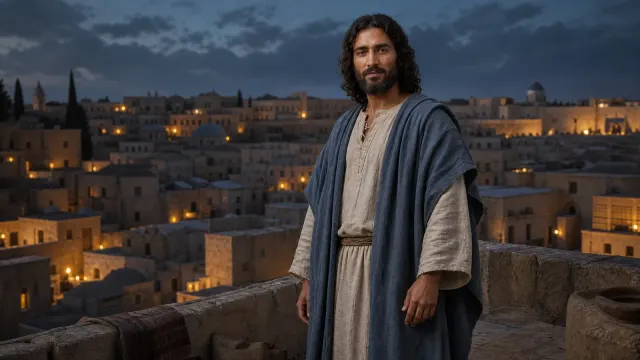
The Coming Sorrow Will Not Have the Last Word
The Book of John prepares the disciples for a contradiction that could otherwise break their understanding: people may exclude or kill them while believing they serve God. Jesus names that danger in advance so later hostility will not look like evidence that his promises failed. His departure is described as advantageous because it belongs to the Comforter's coming work of exposing the world's verdict and guiding the disciples into truth centered on Jesus. Their grief will be real, but it will not be final; the childbirth image makes joy emerge through the same event that causes anguish. Even the disciples' new burst of confidence is not romanticized. Jesus predicts that they will scatter and leave him. Peace therefore rests neither on their steadiness nor on the world's cooperation. It rests on his declaration, before arrest, that he has overcome the world.
One complete chapter pageOpen chapter →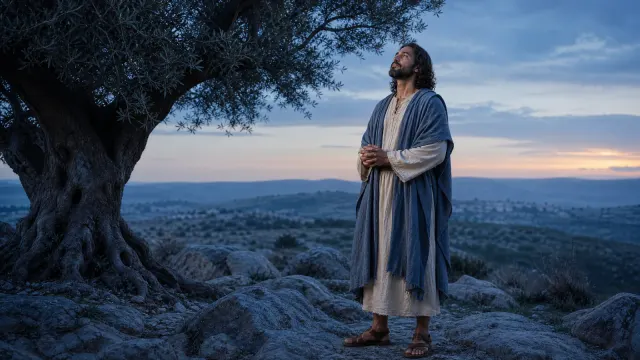
The Son Prays for the People His Word Will Gather
The farewell discourse becomes prayer, and the disciples hear Jesus address the Father about the very realities he has been explaining to them. The Book of John gathers glory, eternal life, revelation, protection, holiness, mission, unity, and love into the relation of Father and Son. Jesus speaks of completing the work before the crucifixion occurs, viewing the mission at the edge of its appointed fulfillment. He prays for disciples whose reception is genuine even though their coming scattering is known, asking not that they be removed from the world but kept and sanctified within it. The prayer then reaches beyond the room to people who will believe through their word. Unity is tied to witness, future presence to ancient love, and the community's life to a relation that precedes creation. The horizon is immense, but the means remain testimony, truth, sending, and divine presence among actual people.
One complete chapter pageOpen chapter →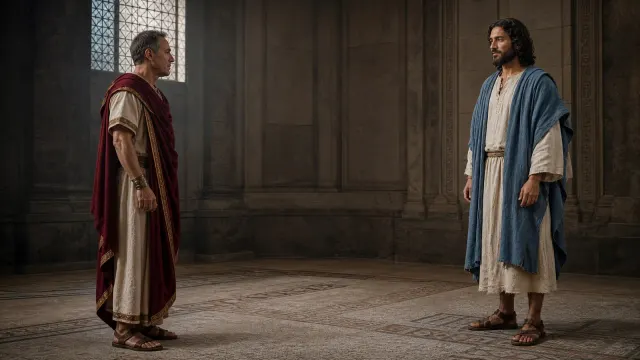
The One Being Seized Directs the Encounter
Arrest does not begin with Jesus being surprised or overpowered. The Book of John places knowledge and initiative in his hands even as the ropes close around them. He steps forward, identifies himself, protects the disciples, and refuses Peter's sword because the cup before him comes from the Father. The chapter then alternates between Jesus' open witness and Peter's denial, making the contrast sharper without supplying private motives for either man. Religious questioning yields violence when Jesus asks for witnesses, while the movement to Pilate shifts the case into Roman categories of kingship and power. Jesus' kingdom is not sourced from this world, so its servants do not preserve it by force. Pilate says he finds no fault, yet turns innocence into an option within a release custom. The chapter closes with Barabbas preferred and the declared innocent man still bound.
One complete chapter pageOpen chapter →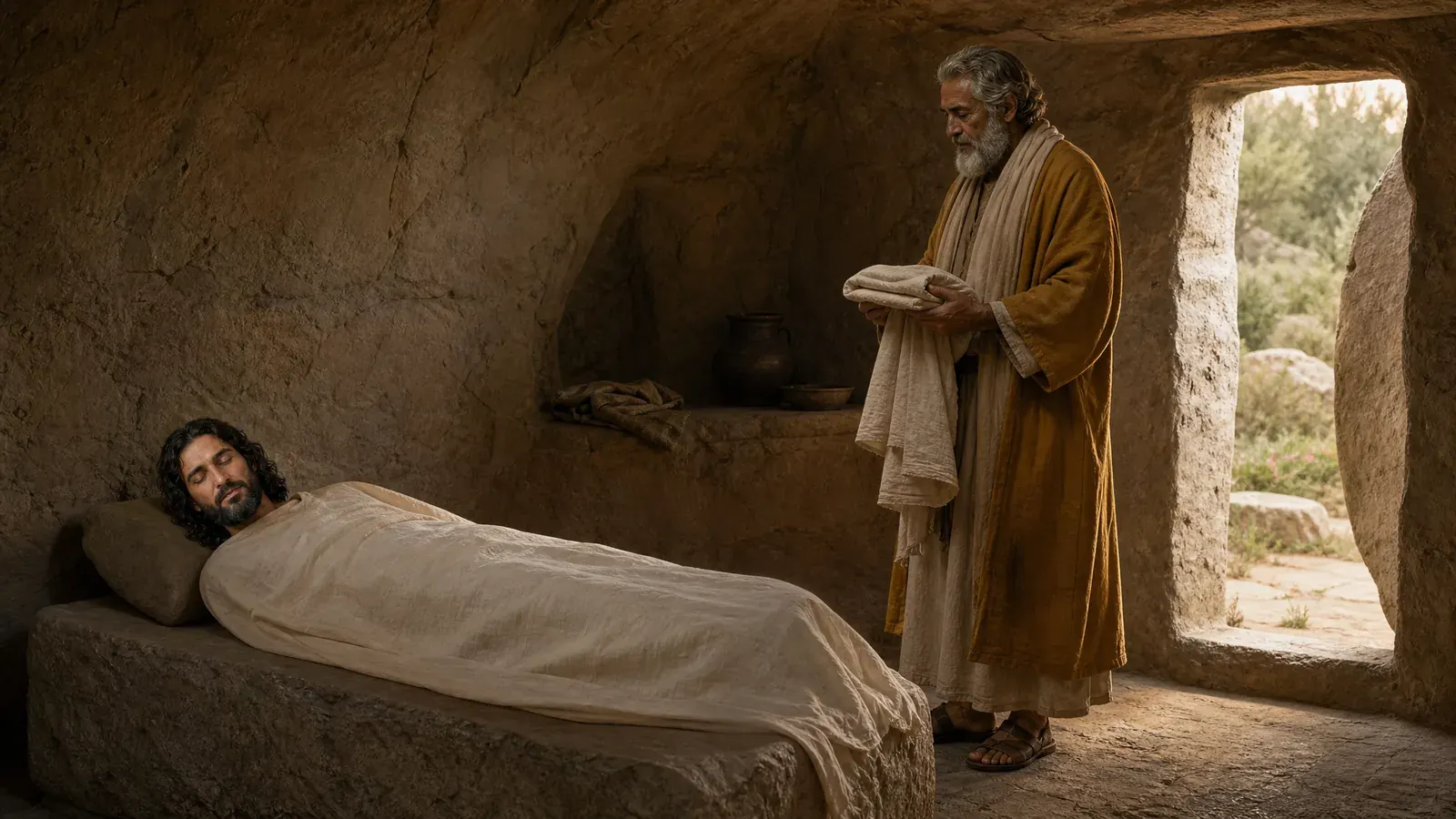
The King Is Crucified and the Work Is Finished
The Book of John makes the crucifixion chapter a collision between declared innocence and actual punishment. Pilate repeatedly says he finds no fault, yet Jesus is scourged, mocked, displayed, and finally delivered under pressure tied to Caesar. The title above the cross keeps the kingship question public in three languages, even after the chief priests ask Pilate to reduce it to a mere claim. Around the execution, the account moves between Scripture and concrete human detail: garments are divided, Jesus provides for his mother, thirst is spoken, and death is witnessed through the pierced side and unbroken legs. "It is finished" names the completion of the Father's work rather than simply the stopping of suffering. Joseph and Nicodemus then handle the body according to Jewish burial practice and place it in a new nearby tomb. The chapter ends not in abstraction but with a known body in a known grave.
One complete chapter pageOpen chapter →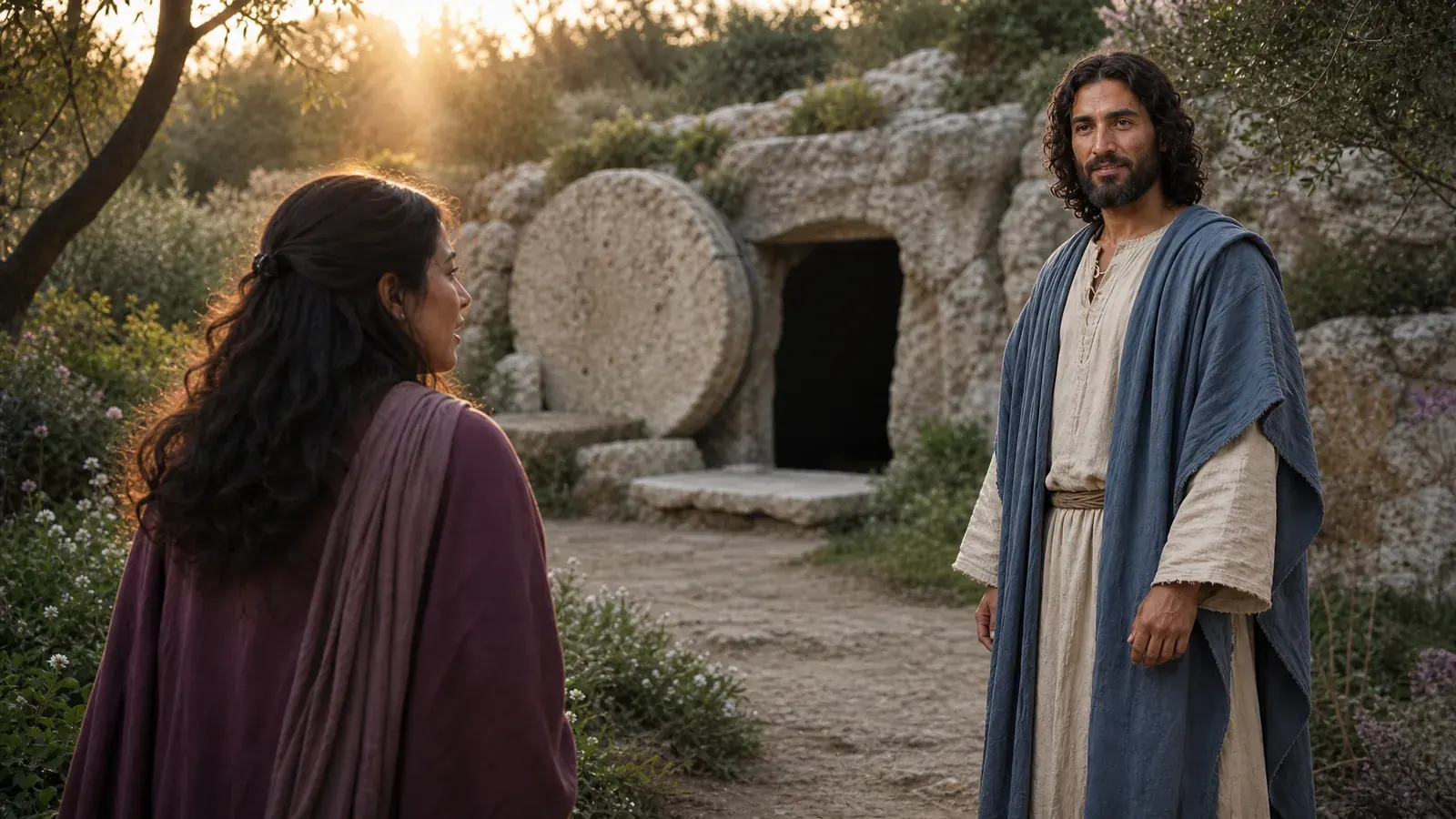
The Missing Body Becomes the Presence of the Risen Lord
The Book of John lets resurrection dawn through incomplete interpretations rather than instant certainty. Mary sees the stone moved and first assumes the body has been taken. Peter and the beloved disciple inspect the burial cloths, with seeing and believing arriving before a full scriptural understanding. Mary then encounters Jesus without recognizing him until he speaks her name. By evening, the risen Lord stands among disciples behind shut doors, showing the wounds that identify him with the crucified Jesus and sending them as the Father sent him. Thomas, absent from that meeting, demands the same bodily evidence the others received and answers the later encounter with "My Lord and my God." The chapter then turns from eyewitness experience to written testimony. The signs have been selected so later readers may believe without standing in that room and may have life through Jesus' name.
One complete chapter pageOpen chapter →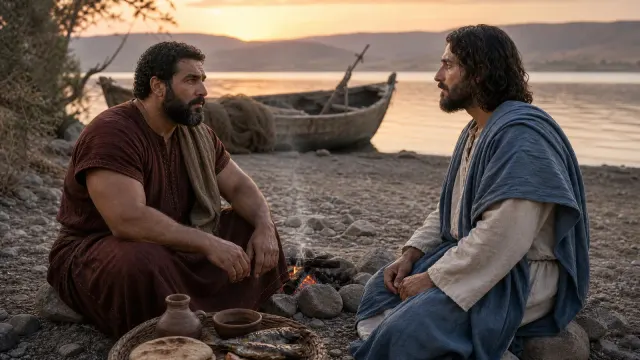
Breakfast, a Renewed Commission, and the Limits of a Rumor
The final chapter moves resurrection testimony to the shore of the Sea of Tiberias, where an empty night's work becomes another act of recognition. Jesus directs the net, already has breakfast waiting, and still asks the disciples to bring some of what they caught. Gift and participation sit together without confusion about who supplied the abundance. The Book of John then returns to Peter beside a coal fire. Three questions about love answer the shape of three denials, and each answer receives responsibility for Jesus' flock. Peter's future includes a death by which he will glorify God, transforming his earlier boast about following into a commission he will not control. When Peter asks about the beloved disciple, Jesus refuses comparison and redirects him to his own following. The book ends by correcting a rumor, affirming testimony, and admitting that the works of Jesus exceed what any written selection can contain.
One complete chapter pageOpen chapter →Source: eBible.org · eng-kjv2006