The big picture
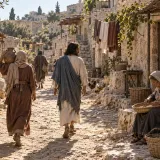
The feast of tabernacles, a festival of shelters recalling wilderness life, is approaching. Jesus remains in Galilee, the northern region, because opponents in Judæa to the south seek his death. His brothers urge a public display, but he chooses his own time and later teaches at Jerusalem's temple, God's worship centre. The crowd divides over his origins and authority. He offers living water, explained as the Spirit's gift. Officials sent to arrest him return empty-handed, impressed by words their leaders refuse to hear.
In this chapter
- Jesus Goes on His Own Timing John 7:1-13
Jesus' brothers tell him to leave for the feast in Judæa and show his works publicly.
- True Judgement Looks Past Appearance John 7:14-24
Halfway through the feast Jesus teaches in the temple.
- Questions About His Origin Miss His Sender John 7:25-36
Some Jerusalem residents know the death plot and wonder why Jesus can speak openly.
- Living Water Is Offered to the Thirsty John 7:37-44
On the feast's final great day, Jesus calls thirsty people to come and drink.
- Officers and Nicodemus Question the Leaders John 7:45-53
The officers return without Jesus.
Central truth
Jesus speaks from the Father and offers the Spirit, while assumptions about status and origins divide those who hear him.

Scripture beside the summary
John · King James Version · 53John 7:1-13
Jesus Goes on His Own Timing
Jesus' brothers tell him to leave for the feast in Judæa and show his works publicly. They do not yet believe in him. Jesus says his proper time has not arrived, though they can go whenever they choose. The world hates him because he exposes its evil deeds. He stays behind, then travels without a public procession after they leave. At the feast, leaders seek him and people quietly debate whether he is good or deceptive. Fear of the religious authorities keeps them from speaking openly. His relatives do not set his time to act. Nor do those who seek to kill him.
In everyday life
A safety campaigner declines her relatives' demand to stage a dramatic announcement before a hostile board has received the evidence. She later attends quietly and waits for the right opening to speak. Visibility alone does not decide the timing of her work. Jesus follows his divinely appointed time, not a strategy based only on public risk.
Notice
John 7:5 The brothers' advice comes without belief in Jesus. A plan for greater publicity can sound supportive while missing the purpose of the person being promoted.
John 7:1-13
King James Version1After these things Jesus walked in Galilee: for he would not walk in Jewry, because the Jews sought to kill him.
2Now the Jews’ feast of tabernacles was at hand.
3His brethren therefore said unto him, Depart hence, and go into Judæa, that thy disciples also may see the works that thou doest.
4For there is no man that doeth any thing in secret, and he himself seeketh to be known openly. If thou do these things, shew thyself to the world.
5For neither did his brethren believe in him.
6Then Jesus said unto them, My time is not yet come: but your time is alway ready.
7The world cannot hate you; but me it hateth, because I testify of it, that the works thereof are evil.
8Go ye up unto this feast: I go not up yet unto this feast; for my time is not yet full come.
9When he had said these words unto them, he abode still in Galilee.
10But when his brethren were gone up, then went he also up unto the feast, not openly, but as it were in secret.
11Then the Jews sought him at the feast, and said, Where is he?
12And there was much murmuring among the people concerning him: for some said, He is a good man: others said, Nay; but he deceiveth the people.
13Howbeit no man spake openly of him for fear of the Jews.
John 7:14-24
True Judgement Looks Past Appearance
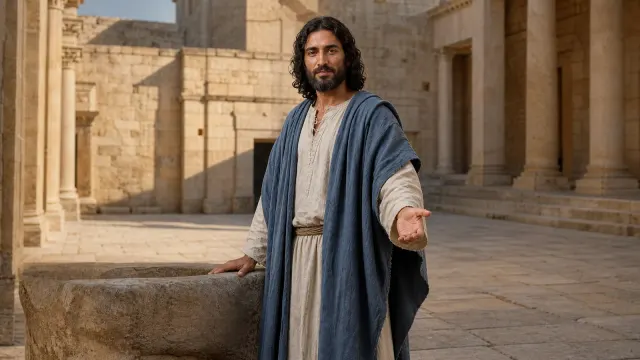
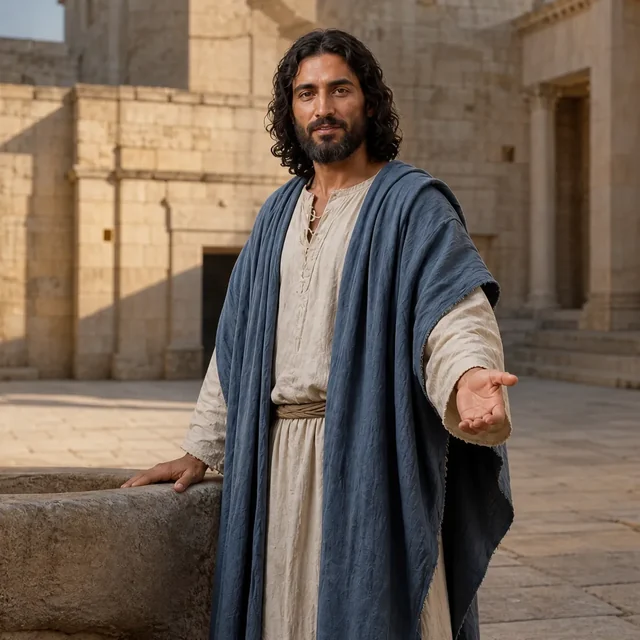
Halfway through the feast Jesus teaches in the temple. People wonder how he knows so much without their expected formal training. He says his teaching belongs to the one who sent him. A willingness to do God's will helps a person recognise its source. Seeking the sender's honour differs from self-promotion. Jesus asks why those claiming Moses' law seek to kill him. The crowd denies the threat. He recalls their anger over a healing on the sabbath, the weekly rest day. They perform circumcision, the covenant's bodily sign, on that day to keep the law. Why resent a whole person's healing? He calls for right judgement, not surface judgement.
In everyday life
A clinic receptionist dismisses an unfamiliar volunteer's useful suggestion because she lacks the expected badge. A colleague asks whether the suggestion serves the patient's need before judging the speaker's appearance. The role label has obscured the substance. Jesus' teaching comes from God and his healing fulfils divine purpose, not a volunteer's practical insight alone.
Notice
John 7:24 Jesus contrasts appearance with right judgement after comparing circumcision and healing. They must ask what the law is for. A first glance does not settle what is right.
John 7:14-24
King James Version14Now about the midst of the feast Jesus went up into the temple, and taught.
15And the Jews marvelled, saying, How knoweth this man letters, having never learned?
16Jesus answered them, and said, My doctrine is not mine, but his that sent me.
17If any man will do his will, he shall know of the doctrine, whether it be of God, or whether I speak of myself.
18He that speaketh of himself seeketh his own glory: but he that seeketh his glory that sent him, the same is true, and no unrighteousness is in him.
19Did not Moses give you the law, and yet none of you keepeth the law? Why go ye about to kill me?
20The people answered and said, Thou hast a devil: who goeth about to kill thee?
21Jesus answered and said unto them, I have done one work, and ye all marvel.
22Moses therefore gave unto you circumcision; (not because it is of Moses, but of the fathers;) and ye on the sabbath day circumcise a man.
23If a man on the sabbath day receive circumcision, that the law of Moses should not be broken; are ye angry at me, because I have made a man every whit whole on the sabbath day?
24Judge not according to the appearance, but judge righteous judgment.
John 7:25-36
Questions About His Origin Miss His Sender
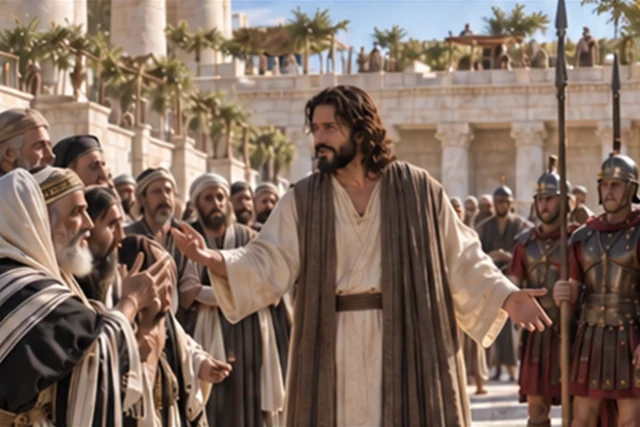
Some Jerusalem residents know the death plot and wonder why Jesus can speak openly. Have the rulers accepted him as Christ, God's promised king? Others object that they know his home, while they expect Christ's origin to be hidden. Jesus says they do not know the one who truly sent him, though he knows him. Attempts to seize him fail because his hour has not come. Many believe because of his signs. Pharisees, a strict religious group, and chief priests send officers to arrest him. Jesus says he will soon return to his sender. They misunderstand this as travel among Gentiles, people outside the Jewish nation.
In everyday life
The visiting engineer tells factory staff that she answers to the owner who commissioned the repair. They keep debating which town she grew up in, as if that settles her authority to work. Facts about her home do not tell who sent her. Jesus comes from and returns to the Father, not a distant commercial owner.
Notice
John 7:29 Jesus distinguishes knowing his familiar background from knowing his sender. The crowd's confidence about his origins has not reached the claim he is making.
John 7:25-36
King James Version25Then said some of them of Jerusalem, Is not this he, whom they seek to kill?
26But, lo, he speaketh boldly, and they say nothing unto him. Do the rulers know indeed that this is the very Christ?
27Howbeit we know this man whence he is: but when Christ cometh, no man knoweth whence he is.
28Then cried Jesus in the temple as he taught, saying, Ye both know me, and ye know whence I am: and I am not come of myself, but he that sent me is true, whom ye know not.
29But I know him: for I am from him, and he hath sent me.
30Then they sought to take him: but no man laid hands on him, because his hour was not yet come.
31And many of the people believed on him, and said, When Christ cometh, will he do more miracles than these which this man hath done?
32The Pharisees heard that the people murmured such things concerning him; and the Pharisees and the chief priests sent officers to take him.
33Then said Jesus unto them, Yet a little while am I with you, and then I go unto him that sent me.
34Ye shall seek me, and shall not find me: and where I am, thither ye cannot come.
35Then said the Jews among themselves, Whither will he go, that we shall not find him? will he go unto the dispersed among the Gentiles, and teach the Gentiles?
36What manner of saying is this that he said, Ye shall seek me, and shall not find me: and where I am, thither ye cannot come?
John 7:37-44
Living Water Is Offered to the Thirsty
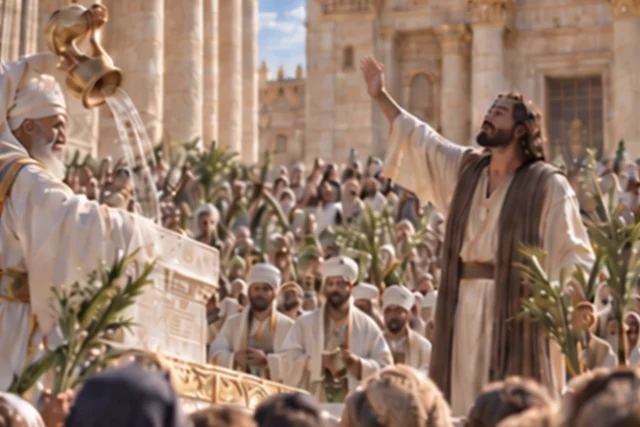
On the feast's final great day, Jesus calls thirsty people to come and drink. Believers will receive living water flowing abundantly from within. John explains that he means the Spirit, whom believers will receive after Jesus is glorified. The crowd divides again. Some identify him as the expected prophet, others as the Christ. Others question a king from Galilee, recalling Scripture about David's family and Bethlehem, David's town in the south. What they think they know about his home shapes how they hear him. Some want to seize him, but no one does. The open invitation meets both belief and dispute.
In everyday life
A drought-relief teacher demonstrates a household rain tank to residents who have relied on carrying water from far away. She speaks of an ongoing source rather than a single delivered bucket. The promise changes how they imagine daily need. Jesus offers God's Spirit after his glorification, not a system dependent on rainfall and storage.
Notice
John 7:39 John explains the water image through the promised Spirit. He also ties this gift to Jesus' glorification, so the invitation points toward events still ahead.
John 7:37-44
King James Version37In the last day, that great day of the feast, Jesus stood and cried, saying, If any man thirst, let him come unto me, and drink.
38He that believeth on me, as the scripture hath said, out of his belly shall flow rivers of living water.
39(But this spake he of the Spirit, which they that believe on him should receive: for the Holy Ghost was not yet given; because that Jesus was not yet glorified.)
40Many of the people therefore, when they heard this saying, said, Of a truth this is the Prophet.
41Others said, This is the Christ. But some said, Shall Christ come out of Galilee?
42Hath not the scripture said, That Christ cometh of the seed of David, and out of the town of Bethlehem, where David was?
43So there was a division among the people because of him.
44And some of them would have taken him; but no man laid hands on him.
John 7:45-53
Officers and Nicodemus Question the Leaders
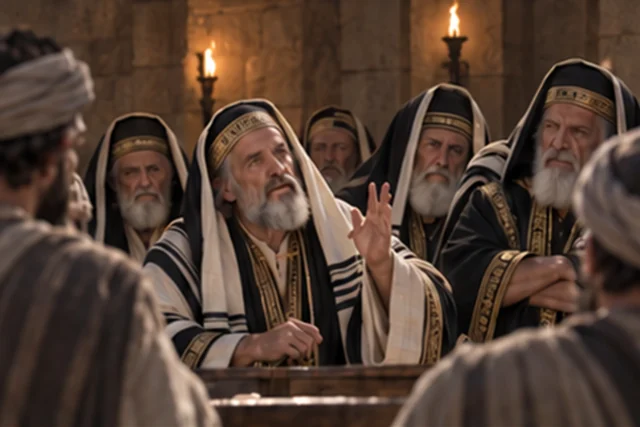
The officers return without Jesus. Asked why, they say no one has spoken like him. The Pharisees accuse them of being deceived and appeal to the rulers' refusal to believe. They dismiss the crowd as ignorant and cursed. Nicodemus, one of their own who had earlier visited Jesus, asks whether their law judges a person without first hearing him and learning his acts. They answer with a taunt about Galilee rather than meeting his legal point. They insist no prophet comes from there. The meeting ends as people go home. Their fixed views have blocked the fair hearing Nicodemus sought.
In everyday life
A disciplinary panel member asks to hear a worker's account before signing a finding. Other members mock the worker's neighbourhood and question the member's loyalty for asking. Their answer exposes the missing fairness more clearly than silence would. Nicodemus appeals to God's law during a dispute over Jesus, not only a workplace procedure.
Notice
John 7:51 Nicodemus asks for a hearing and knowledge of Jesus' deeds. The reply attacks his association with Galilee instead of answering that requirement of the law.
John 7:45-53
King James Version45Then came the officers to the chief priests and Pharisees; and they said unto them, Why have ye not brought him?
46The officers answered, Never man spake like this man.
47Then answered them the Pharisees, Are ye also deceived?
48Have any of the rulers or of the Pharisees believed on him?
49But this people who knoweth not the law are cursed.
50Nicodemus saith unto them, (he that came to Jesus by night, being one of them,)
51Doth our law judge any man, before it hear him, and know what he doeth?
52They answered and said unto him, Art thou also of Galilee? Search, and look: for out of Galilee ariseth no prophet.
53And every man went unto his own house.
Details worth noticing
The opening image
John 7:1 begins with “After these things Jesus walked in Galilee: for he would not walk in Jewry, because the Jews sought to kill him.”
Where the chapter turns
John 7:26 forms a natural hinge: “But, lo, he speaketh boldly, and they say nothing unto him. Do the rulers know indeed that this is the very Christ?”
The final note
John 7:53 leaves the reader with “And every man went unto his own house.”
A word trail through the chapter
The words Jesus, know, people, feast, Christ, Jews help reveal the chapter’s repeated concerns.
KJV words made clear
- doctrine
- Teaching or instruction about what is true.
- every whit
- Completely, in every part or respect.
Music and video connected to the passage
Related media appears when its Scripture reference overlaps this study. Music and video can illuminate a theme while the biblical text remains the foundation.