The big picture
News of a friend's illness reaches Jesus, the teacher facing threats for his claims about God. Lazarus, the sick man, lives in Bethany, a town near Jerusalem, the chief Jewish city. His sisters Mary and Martha send for Jesus. He loves this family, yet does not leave at once. When he arrives, their brother is already buried. The chapter holds their grief beside Jesus' claim to give life, then shows how the resulting sign deepens the threat against him.
In this chapter
- A Delay Before the Return John 11:1-16
The sisters' message appeals to Jesus' love for Lazarus.
- Martha Meets the Giver of Life John 11:17-27
Lazarus has been in the grave for four days when Jesus arrives.
- Jesus Weeps with the Mourners John 11:28-37
Martha privately tells Mary that Jesus is asking for her.
- The Dead Man Comes Out John 11:38-44
At the cave tomb, Jesus orders the stone removed.
- The Council Plans His Death John 11:45-53
Many witnesses believe, but some report the event to the Pharisees, a strict religious group.
- A Retreat and a Search John 11:54-57
Jesus stops moving openly among those who threaten him.
Central truth
Jesus raises Lazarus from death and reveals himself as the giver of life, while religious leaders plan to kill him.

Scripture beside the summary
John · King James Version · 57John 11:1-16
A Delay Before the Return
The sisters' message appeals to Jesus' love for Lazarus. He says the illness will lead to God's glory rather than death as its final result. Still, he waits two days. Then he proposes returning to Judæa, the region where his enemies threatened to stone him. His followers fear the danger. Jesus speaks of walking while daylight lasts, with time to do his work. He calls Lazarus asleep, then explains plainly that he has died. They will go so their faith can grow. Thomas, a follower also called Didymus, urges the others to go even at the cost of death.
In everyday life
A flood-response leader packs to return to a district where an angry crowd threatened her team. Her colleagues watch the road report and hesitate. One lifts his bag and says he is coming with her despite the risk. Trust in the leader does not remove their fear. Jesus returns to raise a dead friend, not to resume relief work.
Notice
John 11:6 The delay follows an explicit statement that Jesus loves the family. The account places those facts together instead of explaining the wait as indifference.
John 11:1-16
King James Version1Now a certain man was sick, named Lazarus, of Bethany, the town of Mary and her sister Martha.
2(It was that Mary which anointed the Lord with ointment, and wiped his feet with her hair, whose brother Lazarus was sick.)
3Therefore his sisters sent unto him, saying, Lord, behold, he whom thou lovest is sick.
4When Jesus heard that, he said, This sickness is not unto death, but for the glory of God, that the Son of God might be glorified thereby.
5Now Jesus loved Martha, and her sister, and Lazarus.
6When he had heard therefore that he was sick, he abode two days still in the same place where he was.
7Then after that saith he to his disciples, Let us go into Judæa again.
8His disciples say unto him, Master, the Jews of late sought to stone thee; and goest thou thither again?
9Jesus answered, Are there not twelve hours in the day? If any man walk in the day, he stumbleth not, because he seeth the light of this world.
10But if a man walk in the night, he stumbleth, because there is no light in him.
11These things said he: and after that he saith unto them, Our friend Lazarus sleepeth; but I go, that I may awake him out of sleep.
12Then said his disciples, Lord, if he sleep, he shall do well.
13Howbeit Jesus spake of his death: but they thought that he had spoken of taking of rest in sleep.
14Then said Jesus unto them plainly, Lazarus is dead.
15And I am glad for your sakes that I was not there, to the intent ye may believe; nevertheless let us go unto him.
16Then said Thomas, which is called Didymus, unto his fellowdisciples, Let us also go, that we may die with him.
John 11:17-27
Martha Meets the Giver of Life
Lazarus has been in the grave for four days when Jesus arrives. Many mourners have come to comfort his sisters. Martha goes out to meet Jesus while Mary stays home. Martha says his presence would have prevented her brother's death. She still trusts that God hears him. Jesus promises that her brother will rise. She understands this as the raising of the dead at the end. Jesus brings the promise into the present through himself: he is the source of risen life. Martha affirms her faith that he is God's Son and promised Christ.
In everyday life
A bereavement visitor sits beside a widow holding the last letter from her husband. The widow speaks of a future reunion she hopes for but cannot bring about. The visitor listens rather than treating that hope as a timetable anyone can control. Martha hears a much greater claim: the person before her holds life itself.
Notice
John 11:25 A future event gives way to a claim about Jesus himself. Life after death is tied to who he is, not only to a date.
John 11:17-27
King James Version17Then when Jesus came, he found that he had lain in the grave four days already.
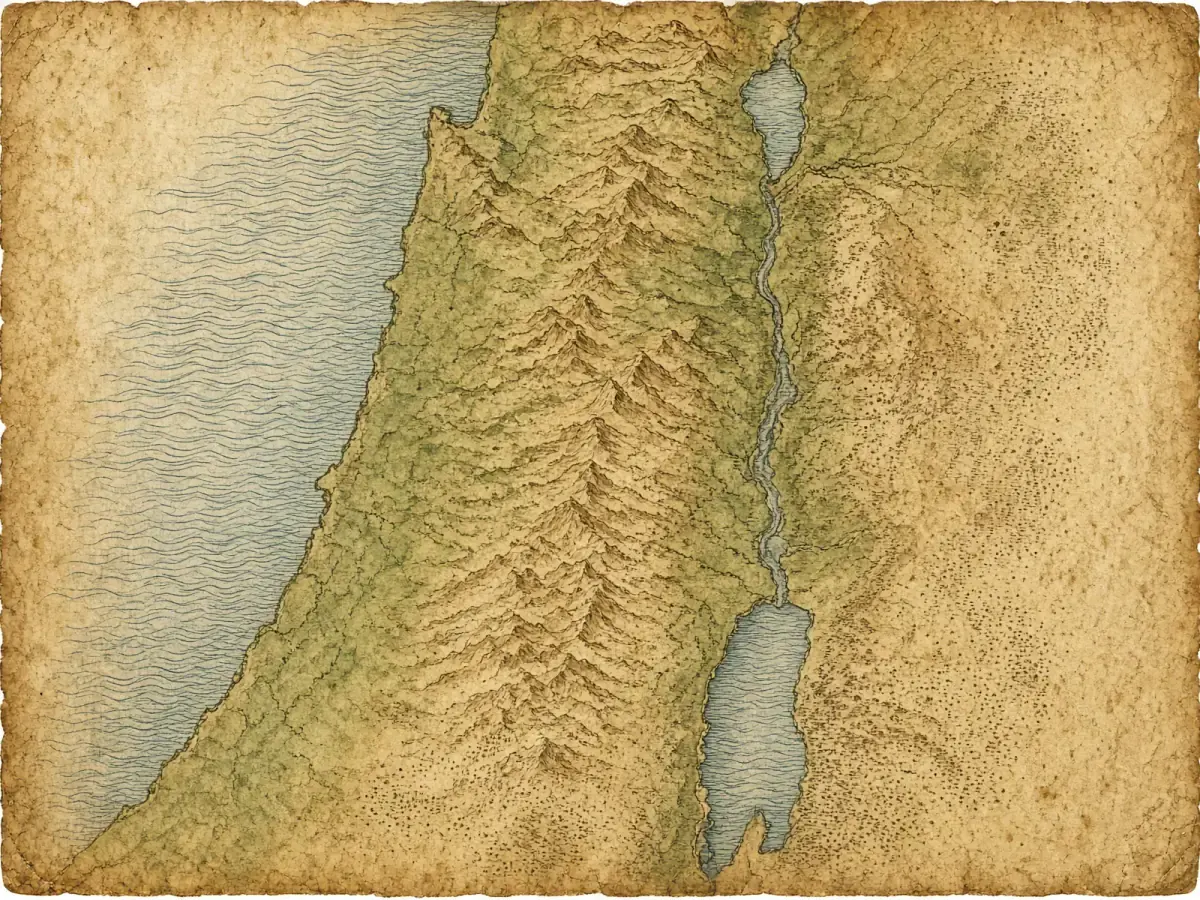
18Now Bethany was nigh unto Jerusalem, about fifteen furlongs off:
19And many of the Jews came to Martha and Mary, to comfort them concerning their brother.
20Then Martha, as soon as she heard that Jesus was coming, went and met him: but Mary sat still in the house.
21Then said Martha unto Jesus, Lord, if thou hadst been here, my brother had not died.
22But I know, that even now, whatsoever thou wilt ask of God, God will give it thee.
23Jesus saith unto her, Thy brother shall rise again.
24Martha saith unto him, I know that he shall rise again in the resurrection at the last day.
25Jesus said unto her, I am the resurrection, and the life: he that believeth in me, though he were dead, yet shall he live:
26And whosoever liveth and believeth in me shall never die. Believest thou this?
27She saith unto him, Yea, Lord: I believe that thou art the Christ, the Son of God, which should come into the world.
John 11:28-37
Jesus Weeps with the Mourners
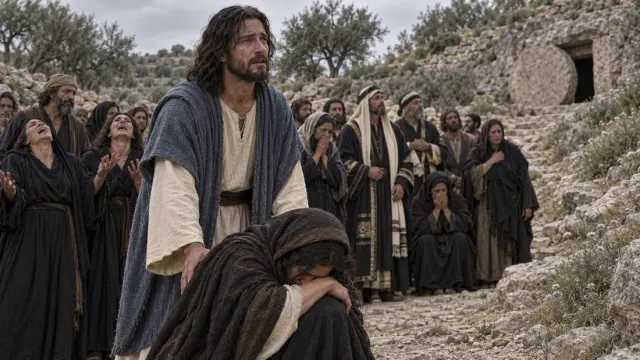
Martha privately tells Mary that Jesus is asking for her. Mary rises and goes out, followed by mourners who think she is heading for the grave. She falls at Jesus' feet and voices the same grief as her sister. If he had been there, Lazarus would not have died. Jesus sees her tears and those of the people around her. Deeply moved and troubled, he asks where the body lies. He weeps. Some take this as evidence of his love. Others wonder why the man who restored sight did not prevent this death.
In everyday life
A funeral florist arrives with a wreath for an old friend's service. Seeing the friend's sister beside the empty chair, he sets down the flowers and begins to cry with her. His task does not keep him at a professional distance from the loss. Jesus shares grief while also possessing the power to reverse this death.
Notice
John 11:35 Jesus' tears stand alongside his earlier promise of life. Knowing what he will do does not keep him from entering the family's grief.
John 11:28-37
King James Version28And when she had so said, she went her way, and called Mary her sister secretly, saying, The Master is come, and calleth for thee.
29As soon as she heard that, she arose quickly, and came unto him.
30Now Jesus was not yet come into the town, but was in that place where Martha met him.
31The Jews then which were with her in the house, and comforted her, when they saw Mary, that she rose up hastily and went out, followed her, saying, She goeth unto the grave to weep there.
32Then when Mary was come where Jesus was, and saw him, she fell down at his feet, saying unto him, Lord, if thou hadst been here, my brother had not died.
33When Jesus therefore saw her weeping, and the Jews also weeping which came with her, he groaned in the spirit, and was troubled,
34And said, Where have ye laid him? They said unto him, Lord, come and see.
35Jesus wept.
36Then said the Jews, Behold how he loved him!
37And some of them said, Could not this man, which opened the eyes of the blind, have caused that even this man should not have died?
John 11:38-44
The Dead Man Comes Out
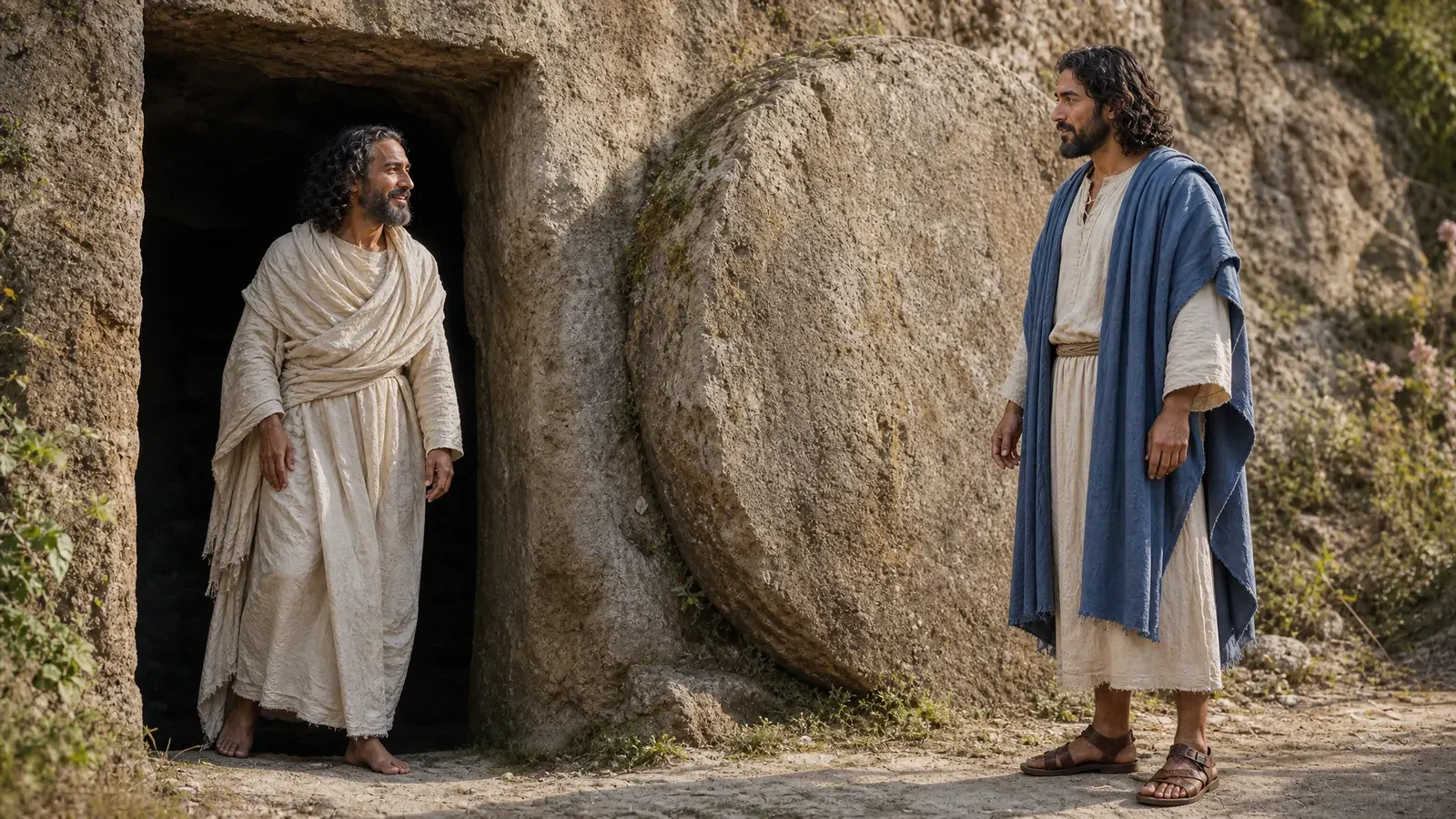
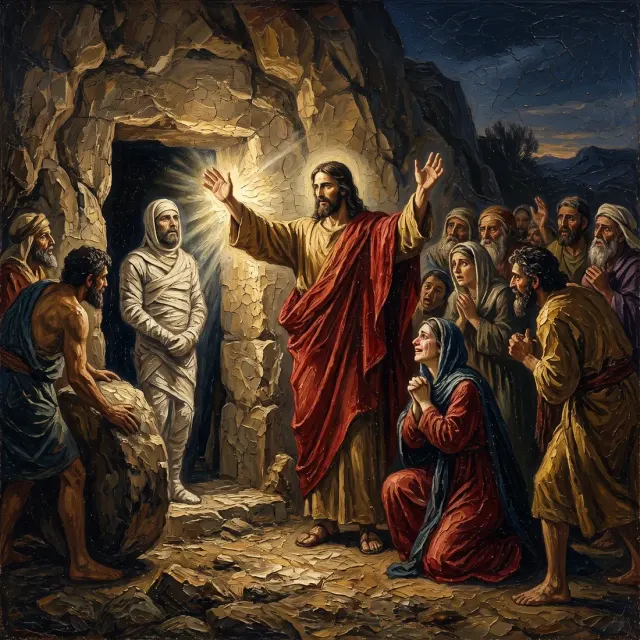
At the cave tomb, Jesus orders the stone removed. Martha warns that four days have passed and the body will smell. He recalls his promise that belief will see God's glory. With the stone moved, Jesus thanks his Father for hearing him. He speaks aloud for the crowd's sake, so they can recognise that God sent him. Then he calls Lazarus out. The dead man emerges still wrapped for burial, with cloth around his face. Jesus tells those nearby to free him from the wrappings. Death gives way to life at his command.
In everyday life
A search coordinator opens a reunion room when a missing adult is found alive. The family steps forward, stunned that the absence they feared permanent has ended. Staff move aside and help remove the wet rescue blankets. The room fills with contact that had seemed lost. Lazarus is actually raised from death; he is not a missing survivor.
Notice
John 11:44 Lazarus comes out wearing the signs of burial. Others must remove the cloths, making his return a public event in which the waiting people take part.
John 11:38-44
King James Version38Jesus therefore again groaning in himself cometh to the grave. It was a cave, and a stone lay upon it.
39Jesus said, Take ye away the stone. Martha, the sister of him that was dead, saith unto him, Lord, by this time he stinketh: for he hath been dead four days.
40Jesus saith unto her, Said I not unto thee, that, if thou wouldest believe, thou shouldest see the glory of God?
41Then they took away the stone from the place where the dead was laid. And Jesus lifted up his eyes, and said, Father, I thank thee that thou hast heard me.
42And I knew that thou hearest me always: but because of the people which stand by I said it, that they may believe that thou hast sent me.
43And when he thus had spoken, he cried with a loud voice, Lazarus, come forth.
44And he that was dead came forth, bound hand and foot with graveclothes: and his face was bound about with a napkin. Jesus saith unto them, Loose him, and let him go.
John 11:45-53
The Council Plans His Death
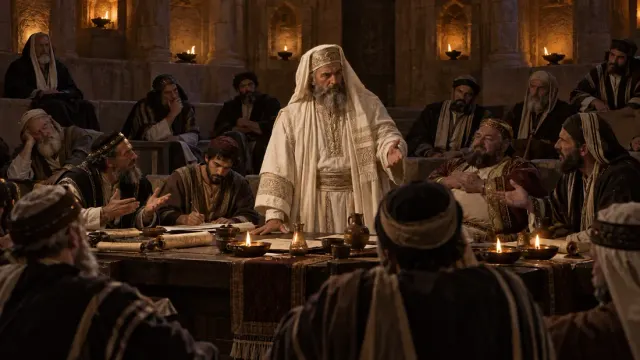
Many witnesses believe, but some report the event to the Pharisees, a strict religious group. They and the chief priests call a council. They fear that growing belief in Jesus will bring Roman intervention. The Romans are the ruling imperial power; the leaders fear losing their place and nation. Caiaphas, the chief priest, proposes one man's death to protect everyone else. The Book of John says his words carry a meaning he does not grasp. Jesus will die for the nation and gather God's scattered children. The council now plans to kill him.
In everyday life
A residents' historian reads minutes from a committee that blamed one tenant to protect its own standing. The tidy wording hides the human cost of what they approved. She sets the victim's letters beside the official record, refusing to let the claimed benefit erase the loss. Caiaphas' words also point to salvation he does not intend.
Notice
John 11:51 Caiaphas intends a calculation about public survival. John reads his words as a prophecy about Jesus' death, whose purpose exceeds the speaker's plan.
John 11:45-53
King James Version45Then many of the Jews which came to Mary, and had seen the things which Jesus did, believed on him.
46But some of them went their ways to the Pharisees, and told them what things Jesus had done.
47Then gathered the chief priests and the Pharisees a council, and said, What do we? for this man doeth many miracles.
48If we let him thus alone, all men will believe on him: and the Romans shall come and take away both our place and nation.
49And one of them, named Caiaphas, being the high priest that same year, said unto them, Ye know nothing at all,
50Nor consider that it is expedient for us, that one man should die for the people, and that the whole nation perish not.
51And this spake he not of himself: but being high priest that year, he prophesied that Jesus should die for that nation;
52And not for that nation only, but that also he should gather together in one the children of God that were scattered abroad.
53Then from that day forth they took counsel together for to put him to death.
John 11:54-57
A Retreat and a Search
Jesus stops moving openly among those who threaten him. He stays with his followers in Ephraim, a town near the wilderness. Meanwhile, people travel to Jerusalem for passover, the feast recalling God's rescue of their ancestors from slavery. They prepare themselves for worship and look for Jesus in the temple. People wonder whether he will attend the feast at all. The chief priests and Pharisees have ordered anyone who knows his location to report it. The coming public celebration therefore carries a private danger: authorities are using it to hunt him.
In everyday life
A union witness under threat stays with relatives outside town while a large annual gathering draws near. Friends arriving at the hall scan the doors and ask whether she will come. A notice asks attendees to report any sighting to the people pursuing her. The public event offers no neutral meeting ground. Jesus faces a plan for his death.
Notice
John 11:57 The order turns knowledge of Jesus' whereabouts into a means of arrest. Questions about his attendance now sit under a specific, organised threat.
John 11:54-57
King James Version54Jesus therefore walked no more openly among the Jews; but went thence unto a country near to the wilderness, into a city called Ephraim, and there continued with his disciples.
55And the Jews’ passover was nigh at hand: and many went out of the country up to Jerusalem before the passover, to purify themselves.
56Then sought they for Jesus, and spake among themselves, as they stood in the temple, What think ye, that he will not come to the feast?
57Now both the chief priests and the Pharisees had given a commandment, that, if any man knew where he were, he should shew it, that they might take him.
Details worth noticing
The opening image
John 11:1 begins with “Now a certain man was sick, named Lazarus, of Bethany, the town of Mary and her sister Martha.”
Where the chapter turns
John 11:30 forms a natural hinge: “Now Jesus was not yet come into the town, but was in that place where Martha met him.”
The final note
John 11:57 leaves the reader with “Now both the chief priests and the Pharisees had given a commandment, that, if any man knew where he were, he should shew it, that they might take him.”
A word trail through the chapter
The words Jesus, Jews, Lord, Martha, Mary, dead help reveal the chapter’s repeated concerns.
KJV words made clear
- furlongs
- Units of distance, each about two hundred metres.
- graveclothes
- Strips or cloths used to wrap a body for burial.
- expedient
- Useful for achieving a purpose, especially avoiding a feared loss.
Music and video connected to the passage
Related media appears when its Scripture reference overlaps this study. Music and video can illuminate a theme while the biblical text remains the foundation.