
The big picture
The Book of 1 Timothy closes by putting social inequality, money, endurance, generosity, and doctrine under the same entrusted charge. Enslaved believers are instructed within a real and unequal social order, including when masters share their faith, without turning the passage into either a complete defense or a complete abolition program. False teachers then expose another distortion: they treat godliness as a route to profit. Paul answers with contentment, warning that determination to become rich can end in traps, drowning, wandering, and self-inflicted sorrow. Timothy is told to flee that pattern and pursue righteousness, faith, love, patience, and meekness before God and the coming Christ. Those already rich are redirected toward generous good works. The letter ends where it began, with Timothy guarding what was entrusted to him against impressive-sounding claims that have wandered from the faith.
In this chapter
- Shared Faith Exists Within an Unequal Social Arrangement 1 Timothy 6:1-2
The Book of 1 Timothy is speaking about actual slavery when it addresses servants "under the yoke." The instruction concerns conduct inside an unequal social arrangement and gives the reputation of God's name and teaching as one reason enslaved believers are to honor their masters.
- The Profit-Seeking Teacher Has Misread the Balance Sheet 1 Timothy 6:3-10
The profit-seeking teacher has confused the account books.
- Timothy's Charge Stands Before a Larger Sovereignty 1 Timothy 6:11-16
Timothy receives a different set of verbs from the profit-seeking teachers: flee, follow, fight, lay hold, keep.
- The Rich Are Given Something Better to Be Rich in 1 Timothy 6:17-19
The chapter now speaks to people who are already rich, which keeps the earlier warning from becoming a claim that possession itself is the whole problem.
- The Closing Word Returns to the Entrusted Deposit 1 Timothy 6:20-21
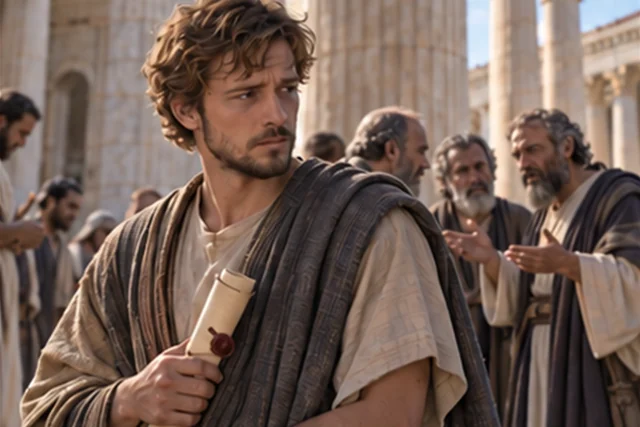
The final appeal gathers the letter into one compact charge: "O Timothy, keep that which is committed to thy trust." The Book of 1 Timothy treats the truth as an entrusted deposit, something received and guarded rather than raw material for endless reinvention.


Scripture beside the summary
1 Timothy · King James Version · 211 Timothy 6:1-2
Shared Faith Exists Within an Unequal Social Arrangement
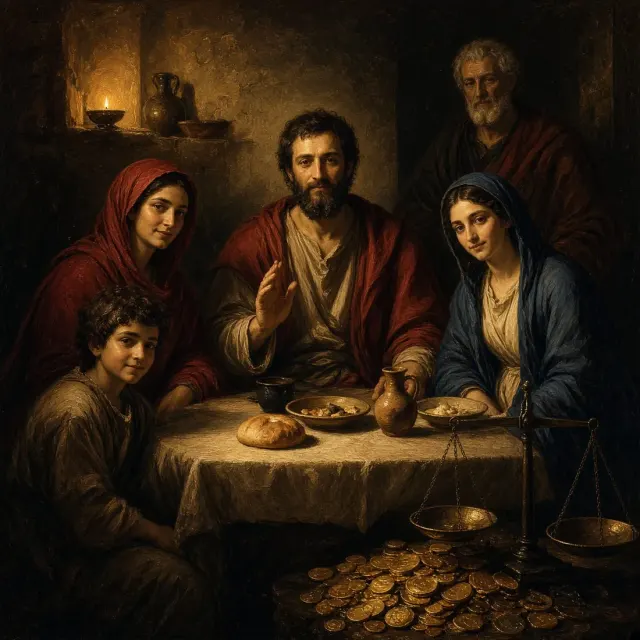
The Book of 1 Timothy is speaking about actual slavery when it addresses servants "under the yoke." The instruction concerns conduct inside an unequal social arrangement and gives the reputation of God's name and teaching as one reason enslaved believers are to honor their masters. When a master is also a believer, spiritual brotherhood does not automatically erase the existing social relation in this paragraph. Paul specifically forbids contempt on the ground that the master is a brother and directs service toward one described as faithful and beloved. That is what the passage says, and it should not be rewritten into an abolition decree it does not contain. It should not be expanded in the opposite direction either, as though ownership of another person were presented as the ideal shape of Christian fellowship. Earlier in the same letter, menstealing has been condemned. The statements belong to distinct questions and should not be forced beyond their stated scope.
Deep dive
"Under the yoke" identifies actual slavery, not merely ordinary employment under an inconvenient supervisor. The instructions address people living within that unequal arrangement and give the reputation of God's name and teaching as a reason for the conduct required. The paragraph neither narrates the institution's origin nor provides a complete moral evaluation of every practice by which it operates.
Believing masters introduce a particular tension: spiritual brotherhood does not automatically dissolve the existing social relation in this instruction. Paul forbids contempt on the ground of shared faith and instead connects service with the benefit received by a fellow believer. That is the direction the passage actually gives, and it should not be rewritten as an abolition decree. Equally, it should not be expanded into a claim that owning another person is the intended ideal of Christian fellowship. The same letter has condemned menstealing in 1 Timothy 1:10. Its statements must be read in their distinct scopes rather than made to say more than either supplies.
Words to trace: masters, believing, beloved, benefit, blasphemed, brethren
Verse-by-verse path
- 1 Timothy 6:1
“Masters” here is despotes, the word for an owner with full rights over property, from which despot comes, rather than the gentler kyrios. The concern for God’s name echoes Isaiah 52:5, “my name continually every day is blasphemed”, which Paul quotes in Romans 2:24 of outsiders reviling God because of his people’s conduct.
- 1 Timothy 6:2
“The benefit” is euergesia, the word for a public benefaction, the kind of gift a wealthy patron gave a city (Acts 4:9 uses it of the healing of the lame man). The phrase can be read so that the slave, by willing service, becomes the benefactor and the master the recipient, turning the usual roles upside down.
1 Timothy 6:1-2
King James Version1Let as many servants as are under the yoke count their own masters worthy of all honour, that the name of God and his doctrine be not blasphemed.
2And they that have believing masters, let them not despise them, because they are brethren; but rather do them service, because they are faithful and beloved, partakers of the benefit. These things teach and exhort.
1 Timothy 6:3-10
The Profit-Seeking Teacher Has Misread the Balance Sheet
The profit-seeking teacher has confused the account books. The Book of 1 Timothy links unsound words with pride, ignorance, obsessive verbal disputes, envy, strife, slander, suspicion, and finally the belief that godliness is a means of gain. Paul answers by keeping the financial language and changing the calculation: "godliness with contentment is great gain." Nothing is brought into the world and nothing can be carried out, so food and covering become the immediate measure of sufficiency. The warning then distinguishes money itself from the "love of money" and focuses especially on those determined to become rich. Their desire is pictured as a trap, a drowning, and a self-piercing source of many sorrows. The point is not that every possession is evil. Later verses will address people who already have wealth. Here the corrosive force is the attachment that makes riches the goal and can pull a person away from the faith supposedly being used to obtain them.
Deep dive
The contrast is between wholesome words joined to godliness and a teacher swollen with claims but lacking knowledge. Disputes generate envy, hostility, slander, and suspicion. The financial motive appears at the end of that sequence: godliness has become a means of gain. Paul's answer turns the phrase rather than conceding its meaning. Godliness really is gain when joined to contentment, because the calculation no longer depends on extracting profit from the profession.
Birth and death establish the limits of possession, while food and covering provide the immediate reference point for sufficiency. The warning is directed at those determined to become rich; later verses will address those who already possess wealth. Love of money, not money considered as an object, is the named root. The KJV's sweeping language of "all evil" emphasizes the generative reach of that attachment, with wandering from faith and self-inflicted sorrows as its specified effects. The imagery moves from trap to drowning to piercing. The hoped-for profit has become a sequence of losses the original calculation did not include.
Words to trace: godliness, nothing, words, evil, gain, carry
Verse-by-verse path
- 1 Timothy 6:3
“Teach otherwise” is heterodidaskaleo again, from 1:3, so the letter closes on the problem it opened with. “Consent” is proserchomai, to come toward, to draw near. “Wholesome” is the medical word, healthy. “The words of our Lord Jesus Christ” may mean sayings of Jesus himself, one of which was quoted in 5:18.
- 1 Timothy 6:4
“Doting” is noseo, to be sick, set against the healthy words of verse 3: these teachers are ill with a fever for questions. “Proud” is the smoke-fogged typhoo of 3:6. “Strifes of words” is logomachia, word-battles, and “evil surmisings” is hyponoiai, suspicions; neither occurs anywhere else in the New Testament.
- 1 Timothy 6:5
“Perverse disputings” is paradiatribai, endless friction, people rubbing each other raw. The King James reverses the Greek, which means “supposing that godliness is a means of gain”: religion treated as a business. The closing words, “from such withdraw thyself”, are missing from the oldest manuscripts.
- 1 Timothy 6:6
“Contentment” is autarkeia, self-sufficiency, a prized virtue of the Stoic and Cynic philosophers, who taught that the wise man needs nothing outside himself. Paul used the adjective in Philippians 4:11, “I have learned, in whatsoever state I am, therewith to be content.” The Stoics made the self the source of sufficiency; the verse attaches it to godliness.
- 1 Timothy 6:7
The thought is Job’s: “Naked came I out of my mother’s womb, and naked shall I return thither” (Job 1:21), and Ecclesiastes 5:15. The Greek is oddly phrased, “we brought nothing in, because we can carry nothing out”, and copyists smoothed it by adding “it is certain”, which the King James follows.
- 1 Timothy 6:8
“Raiment” is skepasmata, coverings, a word that can take in shelter as well as clothing, found only here. “Let us be content” can also be read as a future, “we shall be content”. Proverbs 30:8 is the prayer behind it: “feed me with food convenient for me.”
- 1 Timothy 6:9
“Snare” is pagis, the bird-trap of 3:7, where it was the devil’s snare. “Drown” is bythizo, to send to the bottom, the verb Luke 5:7 uses of the fishing boats so loaded with the catch that “they began to sink”. The catch that was wanted is the thing that sinks the boat.
- 1 Timothy 6:10
The Greek is “a root of all kinds of evils”, without an article on root and with evils in the plural. Similar sayings circulated in Greek moral teaching; Diogenes the Cynic was remembered for calling love of money the mother city of all evils. “Coveted after” is orego, to reach for, the verb of 3:1. “Pierced” is to run oneself through on a spit.
1 Timothy 6:3-10
King James Version3If any man teach otherwise, and consent not to wholesome words, even the words of our Lord Jesus Christ, and to the doctrine which is according to godliness;
4He is proud, knowing nothing, but doting about questions and strifes of words, whereof cometh envy, strife, railings, evil surmisings,
5Perverse disputings of men of corrupt minds, and destitute of the truth, supposing that gain is godliness: from such withdraw thyself.
6But godliness with contentment is great gain.
7For we brought nothing into this world, and it is certain we can carry nothing out.
8And having food and raiment let us be therewith content.
9But they that will be rich fall into temptation and a snare, and into many foolish and hurtful lusts, which drown men in destruction and perdition.
10For the love of money is the root of all evil: which while some coveted after, they have erred from the faith, and pierced themselves through with many sorrows.
1 Timothy 6:11-16
Timothy's Charge Stands Before a Larger Sovereignty
Timothy receives a different set of verbs from the profit-seeking teachers: flee, follow, fight, lay hold, keep. The Book of 1 Timothy directs him toward righteousness, godliness, faith, love, patience, and meekness, so the "good fight of faith" cannot be reduced to quarrelsomeness. His own public confession stands beside Christ's witness before Pontius Pilate, and the charge is extended until Christ's appearing. Its timing belongs to God rather than to Timothy's calculation. The praise that follows lifts the horizon still further: the blessed and only Potentate, "King of kings, and Lord of lords," possesses immortality and dwells in unapproachable light. That language places every human authority and every ministerial office beneath a larger sovereignty without turning the paragraph into a judgment on one particular government. Timothy's responsibility is serious because it is carried out before that presence, not because it grants the prestige or material gain condemned earlier in the chapter.

Deep dive
The contrast begins personally: Timothy is to flee the named pattern and pursue righteousness, godliness, faith, love, patience, and meekness. The fight of faith is therefore not defined by quarrelsomeness, which the chapter has just condemned. The good confession before witnesses connects his vocation with publicly acknowledged allegiance, though the exact occasion is not identified.
Christ's witness before Pontius Pilate supplies a corresponding confession under public authority. The charge is then extended until Christ's appearing, whose timing belongs to God rather than Timothy's calculation. The praise of the only Potentate, King of kings, and Lord of lords places all lesser power in a dependent position without turning the paragraph into an assessment of a particular government. Immortality and unapproachable light express the divine life beyond human possession or control. Timothy's task is weighty because it is carried out before that presence, not because it offers the wealth or prestige the false teachers seek.
Words to trace: good, Christ, faith, fight, Jesus, Lord
Verse-by-verse path
- 1 Timothy 6:11
“Man of God” is the Old Testament title of Moses (Deuteronomy 33:1), Elijah and Elisha, and here it is given to Timothy. The two verbs are run from and run after, flight and pursuit. “Meekness” is praupatheia, a gentle temper, found only here in the New Testament.
- 1 Timothy 6:12
“Fight the good fight” is agonizou ton kalon agona, contend in the good contest, the language of the athletic games more than of battle. Paul uses the same words of his own race in 2 Timothy 4:7. The first verb is present, keep contending; “lay hold” is a single decisive grasp, as a runner seizes the prize.
- 1 Timothy 6:13
“Quickeneth” is zoogoneo, to give life or keep alive, the verb used in the Greek of Exodus 1:17 for the midwives who “saved the men children alive”. This is the only mention of Pilate in Paul’s letters, and the phrase later settled into the creed. John 18:37 gives the confession: “To this end was I born... that I should bear witness unto the truth.”
- 1 Timothy 6:14
“Unrebukeable” is anepilemptos again, the overseer’s “blameless” of 3:2. “Appearing” is epiphaneia, which in these letters becomes the usual word for Christ’s coming (2 Timothy 4:1, 4:8; Titus 2:13). “This commandment” may be the charge just given or the whole gospel entrusted to Timothy; readers divide.
- 1 Timothy 6:15
“In his times” is the phrase of 2:6, “in its own seasons”. “Potentate” is dynastes, the word of Luke 1:52, “He hath put down the mighty from their seats”. “Lord of lords” comes from Deuteronomy 10:17, and Revelation 17:14 gives both titles to the Lamb. Persian kings had called themselves “king of kings”.
- 1 Timothy 6:16
Immortality is something believers “put on” in 1 Corinthians 15:53; God alone has it by nature. The unseeable God is the God of Exodus 33:20, “there shall no man see me, and live”, and of Psalm 104:2, who covers himself “with light as with a garment”. The doxology closes a sentence that began in verse 13.
1 Timothy 6:11-16
King James Version11But thou, O man of God, flee these things; and follow after righteousness, godliness, faith, love, patience, meekness.
12Fight the good fight of faith, lay hold on eternal life, where unto thou art also called, and hast professed a good profession before many witnesses.
13I give thee charge in the sight of God, who quickeneth all things, and before Christ Jesus, who before Pontius Pilate witnessed a good confession;
14That thou keep this commandment without spot, unrebukeable, until the appearing of our Lord Jesus Christ:
15Which in his times he shall shew, who is the blessed and only Potentate, the King of kings, and Lord of lords;
16Who only hath immortality, dwelling in the light which no man can approach unto; whom no man hath seen, nor can see: to whom be honour and power everlasting. Amen.
1 Timothy 6:17-19
The Rich Are Given Something Better to Be Rich in
The chapter now speaks to people who are already rich, which keeps the earlier warning from becoming a claim that possession itself is the whole problem. The Book of 1 Timothy identifies two dangers in present wealth: pride and trust in riches that are explicitly called uncertain. The alternative is trust in the living God, who "giveth us richly all things to enjoy." That description also prevents suspicion of created goods from returning through the back door after chapter 4 has already rejected it. Wealth language is then redirected rather than discarded. The rich are to become rich in good works, ready to distribute and willing to share. Their resources acquire a different purpose when those resources are no longer asked to provide permanent security. The "good foundation" laid up for the future is not described as a purchase price for eternal life. It is the conduct that follows when confidence moves from unstable possessions to the giver.
Deep dive
Paul now addresses the rich rather than only people consumed by the determination to become rich. The dangers are high-mindedness and trust in uncertain possessions. The alternative is the living God, whose giving is described as rich and includes enjoyment. This prevents the chapter's criticism of greed from becoming a claim that every created good is intrinsically suspect, a position already rejected in chapter 4.
The repeated wealth language is redirected toward good works. "Willing to communicate" means ready to share, not merely willing to discuss the subject. Distribution and generosity give tangible form to the changed trust. The foundation laid up for the future is not explained as a purchase price that makes God sell eternal life. The paragraph concerns the conduct that follows locating security in the giver rather than the gift. Present resources acquire a different use when they are no longer required to perform the impossible task of making their owner permanently secure.
Words to trace: good, rich, Charge, communicate, distribute, enjoy
Verse-by-verse path
- 1 Timothy 6:17
“In this world” is “in the present age”, set against “the time to come” in verse 19. “Uncertain riches” is literally “the uncertainty of riches”, adelotes, found only here: wealth whose one sure quality is that it is unsure. “Highminded” is to think lofty thoughts about oneself.
- 1 Timothy 6:18
Four phrases, two of them single words found nowhere else in the New Testament: eumetadotous, generous in giving, and koinonikous, ready to share, from the koinonia word for fellowship. The pun turns on “rich”: those rich in this age are told to be rich in good works.
- 1 Timothy 6:19
“Laying up in store” is apothesaurizo, to store up treasure, recalling Matthew 6:20, “lay up for yourselves treasures in heaven”. The oldest manuscripts read “that which is life indeed”, using ontos, the “indeed” of the widows “indeed” in 5:3, where the King James follows copies reading “eternal life”.
1 Timothy 6:17-19
King James Version17Charge them that are rich in this world, that they be not highminded, nor trust in uncertain riches, but in the living God, who giveth us richly all things to enjoy;
18That they do good, that they be rich in good works, ready to distribute, willing to communicate;
19Laying up in store for themselves a good foundation against the time to come, that they may lay hold on eternal life.
1 Timothy 6:20-21
The Closing Word Returns to the Entrusted Deposit
The final appeal gathers the letter into one compact charge: "O Timothy, keep that which is committed to thy trust." The Book of 1 Timothy treats the truth as an entrusted deposit, something received and guarded rather than raw material for endless reinvention. Against it stand profane babblings and "oppositions of science falsely so called." In the KJV, "science" carries the older sense of knowledge, so the phrase is not a rejection of modern empirical science as a category. It targets claims to knowledge that oppose the faith Timothy has been charged to preserve. Some who profess such knowledge have already erred concerning the faith, echoing the swerving teachers at the beginning of the letter. Between those two warnings lie prayer, conscience, leadership, food, widows, illness, slavery, and wealth. Those subjects are not side trips. They show how entrusted truth is joined to the practical life of the household that confesses it.
Deep dive
The appeal to guard the trust returns to the language of commission that has framed the letter. What Timothy holds is received responsibility, not raw material for endless reinvention. "Science falsely so called" uses science in the older sense of knowledge. The line is not an attack on modern empirical investigation as a category, nor does it identify a complete later philosophical system by name. The target is a professed knowledge whose claims oppose the entrusted faith.
The consequence is again described as missing or deviating from the faith, echoing the swerving teachers of chapter 1. Between those warnings the letter has addressed conscience, prayer, teaching, households, widows, elders, food, illness, slavery, and wealth. These are not diversions from the entrusted truth; they disclose the kind of communal life with which the truth is joined. The final blessing of grace closes a charge that has demanded vigilance without making Timothy the source of the gift he is responsible to preserve.
Words to trace: Amen, avoiding, babblings, committed, concerning, erred
Verse-by-verse path
- 1 Timothy 6:20
“Committed to thy trust” is paratheke, a deposit left with someone for safekeeping, a banking and legal word that returns in 2 Timothy 1:12 and 1:14. “Oppositions” is antitheseis; in the second century Marcion wrote a book called Antitheses, and some nineteenth-century scholars, F. C. Baur among them, took this verse as aimed at him. Most now doubt the link.
- 1 Timothy 6:21
In the best manuscripts “Grace be with thee” is plural, “with you”: the letter to one man closes with a blessing for the whole church that would hear it. The King James subscription placing the writing at Laodicea, “the chiefest city of Phrygia Pacatiana”, is a later addition using a province name from the fourth century.
1 Timothy 6:20-21
King James Version20O Timothy, keep that which is committed to thy trust, avoiding profane and vain babblings, and oppositions of science falsely so called:
21Which some professing have erred concerning the faith. Grace be with thee. Amen.
Questions to keep in mind while reading
- Identify the audience, problem, argument, command, and pastoral purpose.
- Follow connecting words so that one sentence remains inside the author’s reasoning.
- Distinguish a universal theological claim from an instruction shaped by a particular situation.
Text first
Where readers differ
The chapter summary begins with what the passage says and how its parts fit together. It does not assume one denomination has already settled every question. Where a conclusion depends on a tradition, literary theory, or historical reconstruction, that dependence is named openly.
The KJV text is presented first. Interpretive conclusions are labeled, and differences are introduced only when they help a reader understand why serious communities do not always reach the same answer.
Comparative interpretive notes for this chapter are in preparation. Until reviewed notes are ready, this page separates the KJV text from summary and application without claiming that serious readers agree on every question.
Questions beneath the surface
- What account of God, human freedom, responsibility, and the good life emerges from 1 Timothy 6?
- Which tension does the chapter refuse to resolve quickly?
- What changes when the chapter is read as part of the whole canon rather than as an isolated moral lesson?
- Where might a sincere reader confuse a familiar tradition with something the text states directly?
Questions for serious personal contemplation
These open-ended questions make room for tension, honest response, prayer, and conclusions that remain accountable to the chapter.
Observe without rushing
What part of 1 Timothy 6 makes you stop, feel unsettled, or feel surprised, and why?
Which detail in the passage would be easiest to overlook? How does that detail change your understanding?
Where do you see tension between what happens and this focus: A content worker resisting greed, a wealthy believer becoming generous, and Timothy guarding what has been entrusted?
What important question does the passage leave open instead of resolving quickly?
Examine your inner life honestly
Which person, response, fear, or desire in the passage feels most like your own life right now?
What assumption about God, other people, or yourself does this text challenge?
Which part would you rather soften, avoid, or explain away too quickly? What might that reaction reveal?
If this Scripture could ask you one direct question, what do you think it would ask?
Respond with wisdom and courage
What do you need to remember, confess, grieve, thank God for, or trust after reading this passage?
How might another faithful person read this situation differently without ignoring the text?
What obedient response would be costly, uncomfortable, or slow, yet still faithful to Scripture?
What question will you carry into prayer this week, and which verses will you keep in front of you?
Music and video connected to the passage
Related media appears when its Scripture reference overlaps this study. Music and video can illuminate a theme while the biblical text remains the foundation.