

The big picture
The second chapter asks how the message keeps moving when its present messenger is chained. Timothy is to be strong “in the grace” of Christ and pass what he has heard to faithful people who can teach others, creating a succession rather than a one-man performance. Soldier, athlete, and farmer each add discipline to that task, but none becomes a complete rulebook by itself. Paul then gives the chapter its sharp contrast: he suffers “even unto bonds,” but “the word of God is not bound.” That freedom does not excuse sloppy teaching. Empty disputes can subvert hearers, false doctrine can spread like a canker, and the approved worker must handle the truth accurately. Yet correction is equally governed by manner. The Lord’s servant “must not strive,” but teach with gentleness, patience, and meekness. The chapter’s strongest teacher is neither passive nor combative. Truthfulness and temperament are tested together.
In this chapter
- A Succession of Teachers, Not a Solitary Performance 2 Timothy 2:1-7
The first instruction is strength, but 2 Timothy locates it “in the grace that is in Christ Jesus” before handing Timothy a demanding assignment.
- A Chained Messenger and an Unchained Word 2 Timothy 2:8-13
In the middle of instructions about endurance, Paul says “Remember that Jesus Christ” and recenters the entire task.
- Accuracy Is Not the Same Thing as Winning an Argument 2 Timothy 2:14-18
2 Timothy is not against careful words.
- A Firm Foundation and Vessels Fit for Use 2 Timothy 2:19-21
After false teaching has overturned the faith of some, 2 Timothy does not announce that everything has collapsed.
- The Soldier Is Forbidden to Become a Quarrelsome Teacher 2 Timothy 2:22-26
The chapter’s earlier soldier imagery could be misused as permission for a combative teacher, so its closing paragraph removes that option.


Scripture beside the summary
2 Timothy · King James Version · 262 Timothy 2:1-7
A Succession of Teachers, Not a Solitary Performance
The first instruction is strength, but 2 Timothy locates it “in the grace that is in Christ Jesus” before handing Timothy a demanding assignment. What he heard from Paul among many witnesses is to be committed to faithful people who will be able to teach others also. The line refuses to make Timothy a solitary successor whose importance depends on being irreplaceable. The teaching is public, received, entrusted, and meant to keep traveling. Then come three compressed pictures. The soldier avoids entanglement that defeats assigned service. The athlete does not replace lawful competition with raw enthusiasm. The farmer’s participation in the fruit is connected to labor. None of the three offers a shortcut, and none is expanded into a universal ban on normal work, family life, or ordinary enjoyment. Paul finally tells Timothy to consider what he has said and trusts the Lord to give understanding. Thought and divine help appear in the same sentence, cooperating rather than competing.
Deep dive
The opening places strength "in the grace" found in Christ Jesus before setting out a demanding task. Timothy is not simply to become Paul's replacement as a solitary indispensable figure. The message passes from Paul to Timothy, from Timothy to faithful men able to teach, and through them to others. The reference to many witnesses also keeps this transmission public. It is not a secret insight whose authority depends on one person's inaccessible experience.
The soldier, athlete, and farmer contribute different pressures to the picture. The soldier cannot let entanglements defeat his assigned service; the athlete cannot substitute enthusiasm for competing lawfully; the farmer's share is connected to labor. None is promised a shortcut. These are comparisons directed toward Timothy's work, not three complete rulebooks that forbid every ordinary occupation, family responsibility, or enjoyment. The final instruction to consider the images is itself worth noticing. Paul expects thought and trusts the Lord to give understanding. Reflection and divine help are put in the same sentence, not set up as rival explanations for how understanding happens.
Words to trace: Christ, Jesus, soldier, strive, able, affairs
Verse-by-verse path
- 2 Timothy 2:1
“Be strong” is passive in Greek, be strengthened, the verb of 1 Timothy 1:12, where Christ “enabled” Paul: the strength is received, not summoned up. “Thou therefore” sets Timothy against the deserters of 1:15 and beside Onesiphorus, who has just been praised.
- 2 Timothy 2:2
“Commit” is paratithemi, the verb form of the “deposit” of 1:12 and 1:14: what was entrusted to Timothy is now to be entrusted onward. “Among many witnesses” may mean in their presence, perhaps at his commissioning, when he “professed a good profession before many witnesses” (1 Timothy 6:12). “Men” is anthropoi, people.
- 2 Timothy 2:3
The best manuscripts have the compound verb of 1:8, “share in suffering”, which later copies simplified to the verb the King James renders “endure hardness”. Paul gives the soldier’s title to his co-workers elsewhere: Epaphroditus is his “fellowsoldier” (Philippians 2:25), and so is Archippus (Philemon 2).
- 2 Timothy 2:4
“Entangleth” is empleko, to be woven or braided into something. Roman soldiers on active service were barred from legal marriage until the reforms of Septimius Severus around AD 197, and discouraged from trade. “Chosen him to be a soldier” is one word, stratologeo, to enlist: the soldier’s aim is to satisfy the officer who signed him up.
- 2 Timothy 2:5
“Strive for masteries” is athleo, to compete in the games, from which athlete comes. “Lawfully” is nomimos, the adverb of 1 Timothy 1:8. At Olympia competitors swore an oath before the statue of Zeus that they had trained for ten months and would keep the rules (Pausanias 5.24.9). The prize was a wreath.
- 2 Timothy 2:6
The Greek puts “labouring” first for weight: it is the farmer who works hard who has first claim on the crop. Deuteronomy 20:6 released from battle the man who had planted a vineyard and not yet eaten of it, and Paul had argued in 1 Corinthians 9:10 that “he that ploweth should plow in hope”.
- 2 Timothy 2:7
Paul leaves the three pictures unexplained and asks Timothy to think them through. “Consider” is noeo, to perceive, work out the sense. The oldest manuscripts read a promise, “the Lord will give thee understanding”, where later copies, followed by the King James, turned it into a prayer.
2 Timothy 2:1-7
King James Version1Thou therefore, my son, be strong in the grace that is in Christ Jesus.
2And the things that thou hast heard of me among many witnesses, the same commit thou to faithful men, who shall be able to teach others also.
3Thou therefore endure hardness, as a good soldier of Jesus Christ.
4No man that warreth entangleth himself with the affairs of this life; that he may please him who hath chosen him to be a soldier.
5And if a man also strive for masteries, yet is he not crowned, except he strive lawfully.
6The husbandman that laboureth must be first partaker of the fruits.
7Consider what I say; and the Lord give thee understanding in all things.
2 Timothy 2:8-13
A Chained Messenger and an Unchained Word
In the middle of instructions about endurance, Paul says “Remember that Jesus Christ” and recenters the entire task. Jesus is identified as risen from the dead and as the seed of David, joining resurrection to the identity of the promised king. Paul’s own circumstances could hardly look less royal. He suffers “as an evil doer, even unto bonds.” Then 2 Timothy snaps the chain at exactly one point: “but the word of God is not bound.” The messenger is confined, the message is not, and Paul’s endurance is directed toward the salvation of others rather than toward proving his toughness. The faithful saying that follows keeps comfort and warning together. Death with Christ is answered by life, endurance by reigning, and denial by being denied. The final statement, that Christ remains faithful even when people are faithless, does not erase the previous warning. His faithfulness includes the stability of his own character. “He cannot deny himself.”

Deep dive
The instruction to remember Jesus Christ comes amid instructions about demanding work. The work is not allowed to become its own center. Jesus is identified as risen from the dead and descended from David, joining resurrection to the particular identity of the promised king. Paul then describes himself as suffering like an evildoer, even to bonds. The next clause refuses to let the condition of the messenger define the condition of the message: God's word is not bound. The chain is real, but its jurisdiction is limited.
The faithful saying in verses 11–13 moves through paired conditions and outcomes. Death with Christ is answered by life, endurance by reigning, and denial by being denied. Its final assertion that Christ remains faithful when people are faithless has been read both as reassurance of his constancy and as a warning that he remains true to his declared judgments. The preceding line prevents faithfulness from becoming a convenient eraser for denial. At the same time, divine identity is not made as unstable as human response. Christ cannot deny himself. The passage preserves both the gravity of human disloyalty and the refusal to make God's character dependent on it.
Words to trace: deny, Christ, dead, faithful, Jesus, suffer
Verse-by-verse path
- 2 Timothy 2:8
“Raised” is a perfect participle: raised and still living. The pairing of David’s line and resurrection is the same as in the opening of Romans (1:3-4), “made of the seed of David according to the flesh; and declared to be the Son of God with power... by the resurrection from the dead”. “My gospel” also occurs in Romans 2:16.
- 2 Timothy 2:9
“Evil doer” is kakourgos, a criminal, the word Luke 23:32-33 uses for the two men crucified beside Jesus. Paul is classed with them. The Greek pivots on one verb: Paul is in bonds, but the word “is not bound”, dedetai, the same root.
- 2 Timothy 2:10
“For the elect’s sakes” is the reason Paul gives for his endurance, and Colossians 1:24 says the same of his sufferings “for his body’s sake, which is the church”. “Obtain” is tynchano, to hit the mark or attain. “Eternal glory” recalls 2 Corinthians 4:17, “a far more exceeding and eternal weight of glory.”
- 2 Timothy 2:11
The fourth faithful saying in these letters, and the only one set out in lines of verse. “Be dead with him” is a past tense, pointing most naturally to baptism, as Romans 6:8 puts it: “if we be dead with Christ, we believe that we shall also live with him.”
- 2 Timothy 2:12
“Suffer” is hypomeno, to endure or hold out, not the usual verb for suffering. “Reign with him” is a single compound verb, to be king together. The last line echoes Jesus in Matthew 10:33: “whosoever shall deny me before men, him will I also deny before my Father.”
- 2 Timothy 2:13
“Believe not” is apisteo, to be unfaithful, and the line turns on the contrast with Christ, who remains pistos, faithful. The final clause breaks the pattern of the hymn: no “if”, and a reason instead of a result, which suggests Paul’s own comment on the lines he has quoted. Numbers 23:19: “God is not a man, that he should lie.”
2 Timothy 2:8-13
King James Version8Remember that Jesus Christ of the seed of David was raised from the dead according to my gospel:
9Where in I suffer trouble, as an evil doer, even unto bonds; but the word of God is not bound.
10Therefore I endure all things for the elect’s sakes, that they may also obtain the salvation which is in Christ Jesus with eternal glory.
11It is a faithful saying: For if we be dead with him, we shall also live with him:
12If we suffer, we shall also reign with him: if we deny him, he also will deny us:
13If we believe not, yet he abideth faithful: he can not deny himself.
2 Timothy 2:14-18
Accuracy Is Not the Same Thing as Winning an Argument
2 Timothy is not against careful words. It is against verbal activity that damages the people listening. The warning about striving “about words to no profit” sits beside the command to become a workman “rightly dividing the word of truth,” so the distinction cannot be between caring about language and not caring about it. The question is what kind of handling produces truth and what kind subverts hearers. In the KJV, “Study” carries the older sense of diligence, while “rightly dividing” points to handling the message straight and correctly rather than supplying, by itself, a later system for partitioning Scripture. Hymenaeus and Philetus make the danger concrete. Their claim that the resurrection is already past has overthrown the faith of some. Paul does not reconstruct their whole theory. He names its effect. Their speech spreads like a “canker,” proof that talk can grow more extensive while becoming less sound. Volume and accuracy are not the same achievement.

Deep dive
The objection to disputes about words is not that words never matter. The command to handle the word of truth correctly would make little sense on that reading. The distinction concerns what the speech does: one kind builds an approved worker's faithful instruction; the other overturns hearers. In the KJV, "Study" carries the sense of diligence, not merely the modern activity of academic reading. The Greek verb orthotomeo behind "rightly dividing" means to cut straight and here concerns handling the message correctly. The metaphor does not, by itself, prescribe a particular later system for dividing Scripture into categories.
Hymenaeus and Philetus provide a specific example rather than a warning against all disagreement. Their claim that the resurrection has already occurred overturns the faith of some. The letter does not explain their entire theory, so a reconstruction of its precise philosophical or ritual basis remains a reconstruction. The image of a spreading "canker" emphasizes the damage and reach of their teaching. Paul is not impressed by verbal activity simply because there is a great deal of it. Speech can become more extensive while its handling of truth becomes less sound. The approved worker's audience may hear fewer performances and receive something substantially better.
Words to trace: truth, word, already, approved, ashamed, babblings
Verse-by-verse path
- 2 Timothy 2:14
“Strive about words” is logomacheo, the verb of the word-battles of 1 Timothy 6:4. “Subverting” is katastrophe, from which catastrophe comes, the word the Greek Old Testament uses for the overthrow of Sodom (Genesis 19:29), as 2 Peter 2:6 does after it. Many manuscripts read “before God” instead of “before the Lord”.
- 2 Timothy 2:15
“Workman” is ergates, a hired labourer, the “labourer” of 1 Timothy 5:18 who is worthy of his hire. “That needeth not to be ashamed” is one word, anepaischyntos, found only here, closing the theme of the first chapter: Paul was not ashamed, Onesiphorus was not ashamed, and the worker should have no cause to be.
- 2 Timothy 2:16
“Shun” is periistemi, to go round something to avoid it, giving it a wide berth. “Increase” is prokopto, to make progress, the word used of Timothy’s “profiting” in 1 Timothy 4:15; here it is ironic. These men will advance, but in ungodliness, and 3:9 and 3:13 return to the same verb.
- 2 Timothy 2:17
“Canker” is gangraina, gangrene, a medical term found only here. “Eat” is literally “will have pasture”, nome, the word Greek doctors used for an ulcer spreading into healthy flesh. Hymenaeus was named in 1 Timothy 1:20; Philetus appears only here.
- 2 Timothy 2:18
“Overthrow” is anatrepo, to turn upside down, used in Titus 1:11 of men who “subvert whole houses”. The claim may have made resurrection a purely spiritual event already undergone in baptism; later writings found at Nag Hammadi, like the Treatise on the Resurrection, teach something similar. That link is a comparison, not a report of what these two men taught.
2 Timothy 2:14-18
King James Version14Of these things put them in remembrance, charging them before the Lord that they strive not about words to no profit, but to the subverting of the hearers.
15Study to shew thyself approved unto God, a workman that needeth not to be ashamed, rightly dividing the word of truth.
16But shun profane and vain babblings: for they will increase unto more ungodliness.
17And their word will eat as doth a canker: of whom is Hymenaeus and Philetus;
18Who concerning the truth have erred, saying that the resurrection is past already; and overthrow the faith of some.
2 Timothy 2:19-21
A Firm Foundation and Vessels Fit for Use
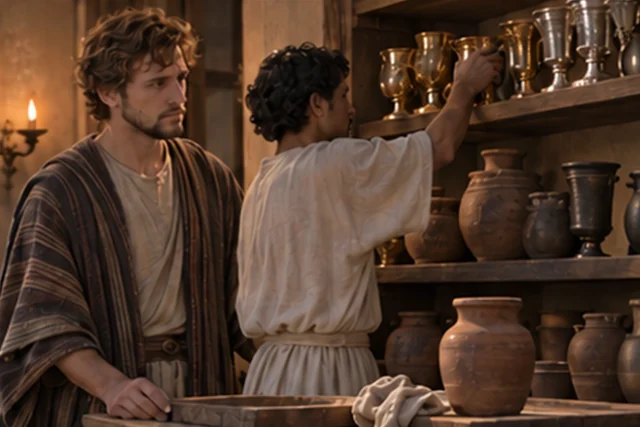
After false teaching has overturned the faith of some, 2 Timothy does not announce that everything has collapsed. “The foundation of God standeth sure,” and its seal carries two statements that belong together: “The Lord knoweth them that are his,” and those who name Christ are to depart from iniquity. Divine recognition does not make conduct irrelevant, and the call to depart from evil does not replace divine knowledge with self-made security. The image then changes from foundation to household vessels. Gold, silver, wood, and earth have different uses, but the point does not freeze people permanently into the material of a pot. Verse 21 introduces cleansing, sanctification, and preparation. The exact reference of “these” has been debated, whether it points toward dishonorable people, influences, or associated evils, but the direction is plain. Fitness is measured by readiness for the master’s use and for good work, not by a vessel announcing how valuable it looks.
Deep dive
The foundation's seal bears two statements, and the pairing matters. The Lord knows those who belong to him; those who name Christ are to depart from iniquity. The first does not replace the second, and the second is not presented as a substitute for the first. After the report that false teaching has overturned some people's faith, the foundation supplies stability without making conduct irrelevant.
The image then shifts to vessels in a great house. Gold, silver, wood, and earth are not all put to the same use, but the paragraph does not conclude that a person's usefulness is fixed as permanently as a pot's material. Verse 21 introduces cleansing and preparation. The exact reach of "these" in the cleansing instruction is discussed: it can point toward the dishonorable influences and people just described, or toward the evils associated with them. In either case, the emphasis falls on becoming fit for the master's use and ready for good work. The picture is less interested in a vessel advertising its value than in whether it is clean and available for its purpose.
Words to trace: honour, some, Christ, depart, dishonour, earth
Verse-by-verse path
- 2 Timothy 2:19
The first inscription quotes Moses in Numbers 16:5, “the LORD will shew who are his”, in the Greek wording, spoken during Korah’s rebellion; the second echoes Numbers 16:26, “Depart, I pray you, from the tents of these wicked men.” Hymenaeus and Philetus are quietly cast as a new Korah. Foundation stones often carried an inscription marking ownership.
- 2 Timothy 2:20
The great house takes up the “house of God” of 1 Timothy 3:15. The image recalls Romans 9:21, the potter making “one vessel unto honour, and another unto dishonour”. Wood and earthenware were the everyday vessels, used for kitchen work and for waste; gold and silver came out for guests.
- 2 Timothy 2:21
“Purge” is ekkathairo, to clean out thoroughly, the verb of 1 Corinthians 5:7, “Purge out therefore the old leaven”. “Meet” is euchrestos, useful, the word Paul puns on in Philemon 11 about Onesimus, whose name means useful. “Master” is despotes, the owner of the house and its vessels.
2 Timothy 2:19-21
King James Version19Nevertheless the foundation of God standeth sure, having this seal, The Lord knoweth them that are his. And, Let every one that nameth the name of Christ depart from iniquity.
20But in a great house there are not only vessels of gold and of silver, but also of wood and of earth; and some to honour, and some to dishonour.
21If a man therefore purge himself from these, he shall be a vessel unto honour, sanctified, and meet for the master’s use, and prepared unto every good work.
2 Timothy 2:22-26
The Soldier Is Forbidden to Become a Quarrelsome Teacher
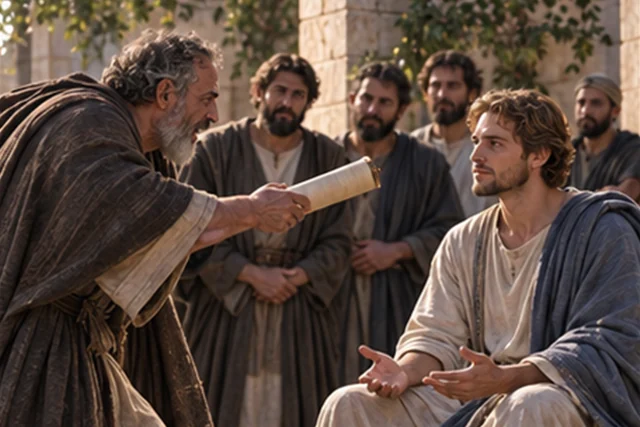
The chapter’s earlier soldier imagery could be misused as permission for a combative teacher, so its closing paragraph removes that option. Timothy is to flee youthful lusts and pursue righteousness, faith, love, and peace “with them that call on the Lord out of a pure heart.” The movement is both away from destructive desire and toward a shared pattern of life. The surrounding emphasis on quarrels makes it too narrow to reduce every youthful lust in view to sexual temptation. Foolish questions that generate strife are to be avoided, but opponents are not ignored. The Lord’s servant must be gentle, patient, capable of teaching, and meek in correction. That manner governs the very moment when error is being confronted. The hoped-for result is repentance and acknowledgment of truth, which God may grant. Timothy still teaches, but he is not cast as the one who can manufacture repentance. The opponents are pictured as captives in a snare, not prizes won in an argument.
Deep dive
Fleeing youthful lusts is paired with pursuing righteousness, faith, love, and peace. The instruction is not simply negative, and the pursuit is not solitary: it takes place with those who call on the Lord from a pure heart. The surrounding concern with quarrels also cautions against reducing every youthful desire here to sexual temptation. The passage addresses the direction of Timothy's conduct and teaching as a whole.
The chapter's soldier image does not license a combative manner toward opponents. The Lord's servant must not strive; he must be gentle, capable of teaching, patient, and meek in correction. These requirements govern the very encounter in which error is most directly challenged. Repentance and acknowledgment of truth are the hoped-for result, not public embarrassment or a display of the teacher's superiority. The final image makes the opponents captives in a snare rather than trophies to be collected. God grants repentance, but Timothy still teaches. As earlier in the chapter, divine action does not eliminate human responsibility; it changes the confidence and manner in which that responsibility is exercised.
Words to trace: Lord, acknowledging, avoid, call, captive, charity
Verse-by-verse path
- 2 Timothy 2:22
“Flee” and “follow” are the same pair of verbs, run from and run after, given to Timothy in 1 Timothy 6:11. “Youthful” is neoterikos, found only here. “Call on the Lord” is the Old Testament description of the worshippers of God (Joel 2:32), which Paul uses in 1 Corinthians 1:2 for Christians everywhere.
- 2 Timothy 2:23
“Unlearned” is apaideutos, uneducated or undisciplined: questions that pass for learning are in fact untrained. “Gender” is the 1611 short form of engender, the Greek gennao, to beget. Quarrels are pictured as the offspring such questions produce.
- 2 Timothy 2:24
“Servant of the Lord” is a title with a history: Moses bore it (Joshua 1:1), and Isaiah’s Servant “shall not strive, nor cry” (Isaiah 42:2, quoted in Matthew 12:19). “Patient” is anexikakos, literally “putting up with evil”, patient under wrong, found only here. “Apt to teach” repeats the overseer’s qualification of 1 Timothy 3:2.
- 2 Timothy 2:25
“Instructing” is paideuo, to train, the verb used of Hymenaeus and Alexander in 1 Timothy 1:20, where they were to “learn” not to blaspheme. “Oppose themselves” is antidiatithemi, to set oneself in opposition, found only here. “Peradventure” is meposte, “if perhaps”, leaving the outcome in God’s hands.
- 2 Timothy 2:26
“Recover themselves” is ananepho, found only here, to come back to sobriety after a drunken stupor: the captives are pictured as people who have been drugged. “Taken captive” is zogreo, to take alive, the verb of Luke 5:10, “thou shalt catch men.” The Greek uses two different pronouns for “him” and “his”, so some read “to do God’s will”.
2 Timothy 2:22-26
King James Version22Flee also youthful lusts: but follow righteousness, faith, charity, peace, with them that call on the Lord out of a pure heart.
23But foolish and unlearned questions avoid, knowing that they do gender strifes.
24And the servant of the Lord must not strive; but be gentle unto all men, apt to teach, patient,
25In meekness instructing those that oppose themselves; if God peradventure will give them repentance to the acknowledging of the truth;
26And that they may recover themselves out of the snare of the devil, who are taken captive by him at his will.
Questions to keep in mind while reading
- Identify the audience, problem, argument, command, and pastoral purpose.
- Follow connecting words so that one sentence remains inside the author’s reasoning.
- Distinguish a universal theological claim from an instruction shaped by a particular situation.
Text first
Where readers differ
The chapter summary begins with what the passage says and how its parts fit together. It does not assume one denomination has already settled every question. Where a conclusion depends on a tradition, literary theory, or historical reconstruction, that dependence is named openly.
The KJV text is presented first. Interpretive conclusions are labeled, and differences are introduced only when they help a reader understand why serious communities do not always reach the same answer.
Comparative interpretive notes for this chapter are in preparation. Until reviewed notes are ready, this page separates the KJV text from summary and application without claiming that serious readers agree on every question.
Questions beneath the surface
- What account of God, human freedom, responsibility, and the good life emerges from 2 Timothy 2?
- Which tension does the chapter refuse to resolve quickly?
- What changes when the chapter is read as part of the whole canon rather than as an isolated moral lesson?
- Where might a sincere reader confuse a familiar tradition with something the text states directly?
Questions for serious personal contemplation
These open-ended questions make room for tension, honest response, prayer, and conclusions that remain accountable to the chapter.
Observe without rushing
What part of 2 Timothy 2 makes you stop, feel unsettled, or feel surprised, and why?
Which detail in the passage would be easiest to overlook? How does that detail change your understanding?
Where do you see tension between what happens and this focus: A soldier, athlete, farmer, and approved worker illustrating focused endurance and faithful handling of the word?
What important question does the passage leave open instead of resolving quickly?
Examine your inner life honestly
Which person, response, fear, or desire in the passage feels most like your own life right now?
What assumption about God, other people, or yourself does this text challenge?
Which part would you rather soften, avoid, or explain away too quickly? What might that reaction reveal?
If this Scripture could ask you one direct question, what do you think it would ask?
Respond with wisdom and courage
What do you need to remember, confess, grieve, thank God for, or trust after reading this passage?
How might another faithful person read this situation differently without ignoring the text?
What obedient response would be costly, uncomfortable, or slow, yet still faithful to Scripture?
What question will you carry into prayer this week, and which verses will you keep in front of you?
Music and video connected to the passage
No exact media match is cataloged for this passage yet. New material can be connected when it becomes available.