The big picture
The chapter begins with an oracle and then fills the page with names. David's "last words" describe just rule as morning light after rain and place the future of his house in an everlasting covenant. The ideal is luminous, but the Book of 2 Samuel has already shown how far royal households can fall short of their ideals, which gives the covenant language its weight. The mighty men then refuse to let David's greatness become solitary. Eleazar's hand clings to his sword, Shammah stands in a lentil field others have abandoned, and Benaiah's exploits are remembered with enough specificity to include snow in a pit. Three men risk their lives to bring David water from Bethlehem, and he refuses to drink what has become too costly for an ordinary thirst. The final list widens the reign into a network of service, then ends with Uriah the Hittite. That last name will not let honor erase betrayal.
Central truth
David's final poetic words hold just rule beneath God's covenant, while the mighty men's distinct acts reveal costly courage and victories the Lord gives.
The study notes have a page of their own
The movement by movement analysis, the words to trace, the verse by verse notes and where readers differ are written for someone studying alone. They are on the Deep Personal Reflections page for this chapter. This page is the lesson.
A chapter-specific teaching brief
These anchors come from this chapter itself. They help a teacher use the Level 1 overview, the Level 2 study, and the Scripture text as one lesson.
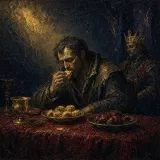
Open with the chapter’s first image
2 Samuel 23:1: “Now these be the last words of David. David the son of Jesse said, and the man who was raised up on high, the anointed of the God of Jacob, and the sweet…”
Slow down at the turning point
2 Samuel 23:19: “Was he not most honourable of three? therefore he was their captain: howbeit he attained not unto the first three.”
Keep this word trail visible
David, Philistines, slew, spear, LORD, mighty
What to explain, in order
Teach the passage in this order. Each step names the verses it rests on, so every point can be shown in the text before it is applied.
2 Samuel 23:1-2
The last words of David
Begin with the heading. These are David's last words, and four titles describe him: son of Jesse, raised up on high, anointed of the God of Jacob, “the sweet psalmist of Israel”. Explain that the first title recalls his humble start and the last his gift of song. Then read 23:2: “The Spirit of the LORD spake by me, and his word was in my tongue.” Teach this first so the class hears what follows as words given by God, not only a king's reflection at the end of his life.
2 Samuel 23:3-4
The just ruler like morning light
Read 23:3 slowly and mark the two conditions, just and ruling in the fear of God. Then read 23:4 as the picture of what such a ruler gives: sunrise after a clear night, grass after rain. Explain that the image is of life and growth flowing from justice. Ask the class to think back over 2 Samuel and say when David ruled like this, as in 8:15, and when he did not, as in chapter 11. Teach this step to give the class the measure by which the whole book has been judging its kings.
2 Samuel 23:5-7
Although my house, yet his covenant
Read 23:5 and point to its two hinges, although and yet. Explain that David admits his house has not been what 23:3-4 describes, and rests instead on God's “everlasting covenant, ordered in all things, and sure”. Connect it with 7:12-16. Note that some translations read the opening as a question, but keep the contrast the King James gives. Then read 23:6-7 briefly: the worthless are like thorns, which no one can take by hand. Teach this to show that David's hope at the end is God's faithfulness, not his own.
2 Samuel 23:8-12
The three and their great victories
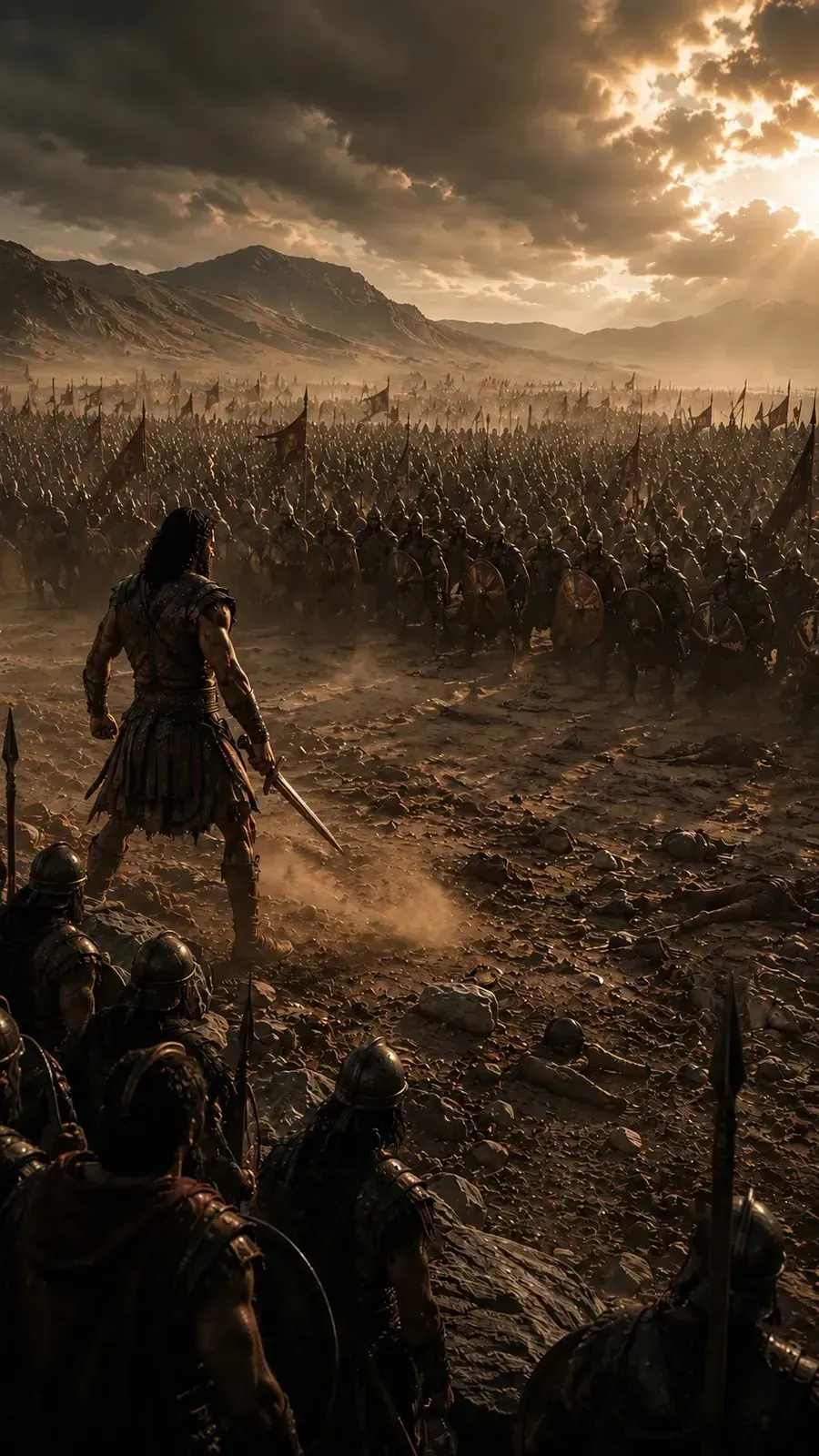
Now the list of mighty men. Read the first three. Adino lifted his spear against eight hundred (23:8). Eleazar fought until his hand stuck to his sword (23:9-10). Shammah held a field of lentils alone (23:11-12). Point out that the people “returned after him only to spoil” (23:10) and that Shammah stood when others fled. Then show the repeated line: “the LORD wrought a great victory.” Teach the three as different kinds of courage, each credited to God.
2 Samuel 23:13-17
Water poured out to the LORD
Set the scene: David in the cave of Adullam, as in 1 Samuel 22:1, with a Philistine garrison in his home town. He longs aloud for water from the well by the gate. Three men break through and bring it. Read 23:16-17 slowly and explain that pouring it out was an offering, treating the water as holy because it had been bought with risk of blood. Compare 1 Chronicles 11:15-19. Teach this step at the centre of the chapter because it shows a leader refusing to spend his people's lives on his wishes.
2 Samuel 23:18-39
Names to remember, ending with Uriah
Read Abishai's and Benaiah's deeds, keeping Benaiah's three separate acts distinct. Then read the thirty-seven names steadily; they are people, not a list to skip. Point out Asahel at the head of the thirty (23:24), whose death the class read in 2:23, and Eliam son of Ahithophel (23:34). Then end with 23:39, “Uriah the Hittite”. Let the class sit with it. The Book of 2 Samuel does not comment, but the reader who has come through chapter 11 cannot hear the name without remembering what was done to him.
Where learners get stuck
The misreadings this passage tends to produce, and how to answer each from the text.
“David's last words prove his family was godly.”
23:5 says the opposite: “Although my house be not so with God”. David has seen Amnon's crime, Absalom's revolt and the deaths of three sons. His hope does not rest on his family's record but on God's covenant, “ordered in all things, and sure”. Teach the class to read the although honestly, and to notice that the promise of chapter 7 was always about God's faithfulness rather than the family's goodness.
“The mighty men won because they were the strongest.”
The text credits the LORD twice in four verses: “the LORD wrought a great victory” (23:10, 23:12). Their courage was real, and the chapter honours it by name. But the victory is described as God's work through them. Teach both: God works through human courage, and human courage does not replace God. This is the same pattern as Joab's words in 10:12, “the LORD do that which seemeth him good”.
“David wasted the water and insulted his men.”
David's own words explain it: “is not this the blood of the men that went in jeopardy of their lives” (23:17). He does not throw it away; he “poured it out unto the LORD”, the language of a drink offering. The gift was too precious to drink casually. Far from insulting his men, he honours their risk as something holy. Ask the class how a leader can value people's sacrifice without demanding it.
“Uriah's name at the end proves the list was written to shame David.”
The text gives no reason for the order of names. Uriah may simply have been the last of the thirty-seven listed. What the reader can notice is the effect: a roll of honour that ends with the man David wronged, after a chapter that opens with David's last words about justice. Let the class feel the weight without claiming the text states a motive it does not state.
Learning objectives
- Identify the standard for a ruler in 23:3.
- Explain the contrast within the KJV wording of 23:5.
- Distinguish Eleazar's, Shammah's, and Benaiah's actions.
- Identify whom the passage credits for great victory.
- Explain David's refusal to drink the Bethlehem water.
- Recognize Uriah's place among the honored warriors.
Teacher preparation
- Read 22:51 beside 23:1-5; connect enduring mercy with the everlasting covenant.
- Explain 'Belial' as wickedness and 'jeoparded' as endangered in 23:6,17.
- Keep the KJV wording 'Although my house be not so' in 23:5 visible; do not substitute another translation's question.
- Prepare separate cards for Eleazar, Shammah, the unnamed water-fetching three, and Benaiah; do not merge their exploits.
- Read 11:14-17 before reaching Uriah in 23:39; handle the honored name without turning his death into a surprise-game reveal.
Evidence and interpretation checks
Explicit
State that 23:3 requires just rule in the fear of God, and that 23:10,12 credit the Lord with the great victories.
Scripture-supported
Connect the everlasting covenant of 23:5 with the enduring house and kingdom promised in 7:16; its security is not David's claim to flawless conduct.
Strong inference
Read Uriah's honored name in 23:39 alongside David's order in 11:15; infer a sobering contrast between the soldier's loyalty and the king's betrayal.
Possible or traditional reading
Present a messianic reading of the ideal ruler in 23:3-4 as a Christian connection developed alongside Luke 1:32-33, not the passage's naming of Jesus.
Limit
Do not identify the unnamed three in 23:13-17 with particular earlier warriors or invent biographies for everyone listed in 23:24-39.
Discussion with answer guidance
1. What makes the ruler in 23:3-4 life-giving rather than merely powerful?
What a good answer contains
Justice and the fear of God come first. The LORD says, “He that ruleth over men must be just, ruling in the fear of God” (23:3). Only then come the pictures: “as the light of the morning, when the sun riseth, even a morning without clouds; as the tender grass springing out of the earth by clear shining after rain” (23:4). A good answer sees that the ruler's life-giving effect depends on his justice and reverence. A weak answer jumps to the morning light and makes the verse about charisma, or skips the condition altogether.
Show teacher guidance
Point to justice and the fear of God before discussing morning light and growing grass. Strength alone is not the stated qualification.
2. What tension does David preserve between his house and God's covenant?
What a good answer contains
Between what his household has been and what God has promised. “Although my house be not so with God; yet he hath made with me an everlasting covenant, ordered in all things, and sure” (23:5). The although admits that his family has not matched the just rule of 23:3-4, and the yet rests everything on God's covenant of chapter 7. A good answer keeps both halves. A weak answer reads 23:5 as a claim that David's sons were all righteous, which the chapters about Amnon and Absalom make impossible.
Show teacher guidance
Follow 'Although' and 'yet' in 23:5. Keep the KJV contrast rather than claiming David certifies every member of his household.
3. How do Eleazar's and Shammah's victories differ, and what joins them?
What a good answer contains
Eleazar fights until “his hand was weary, and his hand clave unto the sword” (23:10), so that he cannot let go. Shammah stands alone in “a piece of ground full of lentiles” when the people flee, and “defended it” (23:11-12). One is a battle of endurance, the other of standing firm on ordinary ground. Both end with the same words: “the LORD wrought a great victory” (23:10, 23:12). A good answer names the difference and the shared credit. A weak answer lists two strong men and forgets who is said to win the victory.
Show teacher guidance
Use 23:9-12: a hand clings to a sword, and a man holds a lentil field. Both accounts explicitly credit the Lord.
4. Why does David pour out the water he had wanted?
What a good answer contains
Because his men risked their lives for it. They broke through the Philistine lines to the well of Beth-lehem (23:16), and David “would not drink thereof, but poured it out unto the LORD” (23:16). He says, “is not this the blood of the men that went in jeopardy of their lives” (23:17). A good answer sees that David refuses to treat their lives as cheap, and offers the gift to God as too costly for himself. A weak answer thinks he no longer wanted the water, or that he was ungrateful.
Show teacher guidance
Read 23:15-17: the men risked their lives, and he regards drinking it as drinking their blood. This is not a complaint about the water.
5. What belongs to Benaiah's account rather than to the other warriors?
What a good answer contains
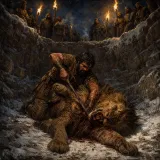
Three separate deeds. He “slew two lionlike men of Moab”, he went down “and slew a lion in the midst of a pit in time of snow” (23:20), and he fought an Egyptian armed with a spear, going down with only a staff, plucking the spear from his hand and killing him with it (23:21). The text adds that David set him over his guard (23:23). A good answer keeps the three events distinct. A weak answer blurs them into one heroic scene, or adds details about the pit or the Egyptian that the verses do not give.
Show teacher guidance
Name the Moabite opponents, the lion in the snowy pit, and the Egyptian's seized spear in 23:20-23. Keep these separate events separate.
6. What changes when the roll of honored men ends with Uriah?
What a good answer contains
It brings chapter 11 back to mind. The last name in the list is “Uriah the Hittite: thirty and seven in all” (23:39). Earlier in the list is “Eliam the son of Ahithophel” (23:34), and Bathsheba was “the daughter of Eliam” (11:3). A good answer feels the weight of ending a roll of honour with the man David had killed, and notes that Uriah is honoured among the mighty. A weak answer claims the text explains why his name is last; it does not, and the class should notice rather than invent a reason.
Show teacher guidance
Read 23:39 with 11:14-17. Accept the moral contrast; do not claim the list explicitly states why his name comes last.
Responsible application
Heart and habits
Compare a fictional leader's impressive achievements with the standard of justice in 23:3; refuse to let success answer every moral question.
Relationships and community
Ask how an institution can honor costly service without treating loyal people as resources for a leader's wishes.
Remember the person behind the achievement
Write a text-based acknowledgment of one warrior that names both the act and its cost, without inventing his private thoughts.
Session plans
Two timings of the same lesson. The shorter keeps the reading, the central discussion and one response; the longer gives the confusions and the application their own time.
45 minutes
Last words
Read 23:1-4. Take question one, writing just and fear of God on the board.
A house and a covenant
Read 23:5-7. Take question two and confusion one, with 7:16 read beside it.
Different kinds of courage
Read 23:8-12. Take question three and confusion two.
Water too costly to drink
Read 23:13-17. Take question four and confusion three.
Names that remain names
Read 23:18-23, then 23:24-39 steadily. Take questions five and six and confusion four.
Handout and prayer
Read the key verse together, give out the handout, and pray for just leaders.
90 minutes
What makes a good ruler
Ask the group to list what makes a leader good. Then read 23:1-4 and compare their list with 23:3. Take question one.
Although and yet
Read 23:5-7. Take question two and confusion one, recalling chapters 13 to 18.
The three
Read 23:8-12. Take question three and confusion two, with 10:12 read alongside.
The well of Beth-lehem
Read 23:13-17 and 1 Chronicles 11:15-19. Take question four and confusion three.
Abishai and Benaiah
Read 23:18-23. Take question five, keeping Benaiah's three deeds apart.
The thirty-seven
Read 23:24-39 aloud, one name per person if possible. Take question six and confusion four. Recall 2:23 and 11:3.
Response
Use the application on remembering the person behind the achievement. Each person writes a short acknowledgment of one warrior, naming the act and its cost.
Handout and prayer
Read the key verse, point to the take-home line, and pray for those whose service goes unnoticed.
Adapting the lesson
Children
Children will love the mighty men. Act out Shammah standing in the lentil field when everyone else runs, and Benaiah in the snowy pit with a lion, but keep the fighting simple. Then tell the water account: three friends brought David water from far away, and David poured it out to God because his friends had risked so much. Give each child a cup of water to pour out as a thank you.
Youth
Ask young people who their heroes are and what makes them heroes. Read 23:3 and test their answers against it. Then read the water account and ask what it means to value what others give up for you. End by reading the list of names and stopping at Uriah, and let them work out why that name hurts. Keep the battle scenes from becoming the whole lesson.
Adults
Give time to 23:3-5 and ask how leaders today measure up to the standard of justice and the fear of God. Discuss the honesty of 23:5, a man at the end of life admitting his household's failures and resting on God's covenant. Then discuss the water account as a model for leaders who refuse to spend others' lives on their wishes. Let the final name, Uriah, prompt reflection on wrongs that cannot be undone.
One to one
Read 23:5 together and ask the person whether there is something in their family or life that is not what it should be. Let them answer before reading the yet. Then read the water account and ask who has risked something for them. If they are ageing or ill, these last words may help them speak honestly about what they hope in at the end.
Song and video learning lab
A song or video may interpret, compress, or dramatize the text. Its value becomes clearer when its choices are compared with Scripture.
- Before the media: the exact passage and its central movement.
- During the media: the words, people, events, and emotions the artist emphasizes.
- After the media: what it clarifies, what it leaves out, and what belongs back in the biblical text.
Handout
One page for learners to take home. The print button prints this section alone.
2 Samuel 23:1–39
The passage in brief
In his last words, David says God spoke through him: a ruler must be just and fear God, and such a ruler is like morning light. David admits his own house has not been like that, but he rests on God's everlasting covenant. Then the chapter lists David's mighty men and their brave deeds. When three of them risk their lives to bring David water, he pours it out to the LORD. The list ends with the name of Uriah the Hittite.
A verse to keep
The God of Israel said, the Rock of Israel spake to me, He that ruleth over men must be just, ruling in the fear of God. And he shall be as the light of the morning, when the sun riseth, even a morning without clouds; as the tender grass springing out of the earth by clear shining after rain.
2 Samuel 23:3-4 · King James Version
Questions to take home
What two things does 23:3 say a ruler must be?
Why did David pour out the water in 23:16-17?
Whose name ends the list of mighty men, and why does it matter?
This week
This week, thank someone who gave up something for you, and do not take their sacrifice lightly.
Music and video connected to the passage
Related media appears when its Scripture reference overlaps this study. Music and video can illuminate a theme while the biblical text remains the foundation.