The big picture
Psalm 129 lets Israel remember long affliction without turning survival into a claim of having escaped unhurt. The Book of Psalms repeats that enemies have afflicted Israel “from my youth,” then says they have not prevailed. The next line makes clear what that does not mean: the people’s back is pictured as ground cut by plowers into long furrows. Deliverance preserves the scars in the account. The LORD’s righteousness appears in cutting the cords of the wicked, ending their control rather than pretending the injury never happened. The second half reverses the agricultural imagery. Enemies who plowed long furrows are compared with rooftop grass that withers before it can produce a harvest. Their apparent growth will not fill a mower’s hand or receive the customary blessing. The surviving people keep their voice, while hostile strength is asked to become barren and brief.
Central truth
Psalm 129 gives Israel a voice for long memory of repeated affliction: enemies have cut deep furrows, yet they have not prevailed because the righteous Lord has severed the wicked cords.


The study notes have a page of their own
The movement by movement analysis, the words to trace, the verse by verse notes and where readers differ are written for someone studying alone. They are on the Deep Personal Reflections page for this chapter. This page is the lesson.
A chapter-specific teaching brief
These anchors come from this chapter itself. They help a teacher use the Level 1 overview, the Level 2 study, and the Scripture text as one lesson.
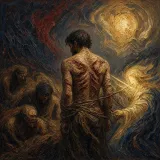
Open with the chapter’s first image
Psalms 129:1: “Many a time have they afflicted me from my youth, may Israel now say:”
Slow down at the turning point
Psalms 129:4: “The LORD is righteous: he hath cut asunder the cords of the wicked.”
Keep this word trail visible
LORD, afflicted, back, time, youth, afore
What to explain, in order
Teach the passage in this order. Each step names the verses it rests on, so every point can be shown in the text before it is applied.
Psalms 129:1-2
Many a time
Start with the call: “may Israel now say”. The people rehearse their history: afflicted many times, from their youth. Explain from my youth as Israel's shared memory reaching back to Egypt, not one person's childhood. Then the second line adds the turn: they have not prevailed. Teach this first because it shows the purpose of the psalm, to give a battered people words to remember both their suffering and their survival together.
Psalms 129:3-4
Furrows on the back
Read verse 3 without hurrying: the plowers ploughed on my back and made their furrows long. Explain it as the image of a body torn by lashes, oppression written into flesh. Do not let it sound quaint. Then verse 4: the Lord is righteous; he has cut the cords of the wicked. Explain the cords as the ropes of the plough team; cut them and the ploughing ends. Teach this as the centre of the psalm, wounds and rescue in two verses.
Psalms 129:5-7
Grass on the roof
Now the prayer against those who hate Zion: let them be ashamed and turned back, let them be like grass on the housetops. Explain the flat roofs of packed earth where seeds sprouted and then withered in the sun before they grew tall. No mower fills his hand, no binder his arms. Teach this as a prayer that hostile power would prove shallow and fruitless. Note that it is addressed to God and concerns those who hate Zion, the place of his presence.
Psalms 129:8
No harvest blessing
End with the missing greeting. At harvest, travellers called, the blessing of the Lord be upon you, and the reapers answered, we bless you in the name of the Lord, as in Ruth 2:4. Over rooftop grass no one says it, because there is nothing to bless. Explain that the psalm ends on that silence. Teach the group to hear in it both the end of oppression and an invitation: the blessing belongs where God's people gather, and it is theirs to speak.
Where learners get stuck
The misreadings this passage tends to produce, and how to answer each from the text.
“If I have suffered for a long time, God must have abandoned me.”
Israel says it was afflicted many a time from its youth (129:1-2), and still the Lord “hath cut asunder the cords of the wicked” (129:4). Long suffering is part of the memory of God's people, not proof of abandonment. The key word is yet: “yet they have not prevailed against me”. Teach this with care for those who carry long affliction.
“The ploughing image is just farm language.”
129:3 describes deliberate bodily violence, a back scored like a field, and it is one of the most painful images in the Psalms. Christians have heard in it the scourging of Jesus, foreshadowed in Isaiah 50:6 and described in Matthew 27:26. Let it stay severe; that honours those whose suffering has been physical and long.
“Verses 5-8 give us permission to hate our enemies.”
The prayer concerns those “that hate Zion” (129:5), and it is addressed to God, asking that their power wither like rooftop grass. It hands judgment over rather than taking it up. Jesus taught his followers to love their enemies and pray for them (Matthew 5:44). Teach the psalm as a prayer that hostile power would not last, not as fuel for hatred.
“Verse 8 means we should not bless people.”
Verse 8 describes a harvest custom, a greeting called to the reapers (Ruth 2:4). Over rooftop grass there is no harvest, so no greeting is spoken. The verse is a picture of barrenness, not a rule against blessing anyone. In fact it reminds God's people of the blessing they speak to one another in the Lord's name.
Learning objectives
- Identify the repeated phrase about affliction from Israel’s youth.
- Explain the farming image of plowers cutting long furrows on the back.
- State what verse 4 credits the Lord with doing.
- Interpret rooftop grass as an image of brief, fruitless flourishing.
- Explain the withholding of blessing in verse 8.
- Distinguish communal memory of persecution from permission for personal vengeance.
Teacher preparation
- Prepare 'from my youth' as Israel’s corporate memory language, not necessarily the age of one individual speaker.
- Explain flat ancient roofs where shallow soil could support grass that withered quickly before producing a useful harvest.
- Read the plowing image in verse 3 as deliberate bodily violence. Do not make it quaint simply because it uses farm vocabulary.
- Note that verses 5–8 turn from testimony about survival to prayer against those who hate Zion.
- Keep Psalm 129 beside Psalm 124: both remember enemies rising against Israel, but this psalm emphasizes repeated affliction and the cutting of cords.
Evidence and interpretation checks
Explicit
Verses 1–2 repeat that Israel has been afflicted many times from youth and immediately add, 'yet they have not prevailed against me.'
Scripture-supported
Verse 4 explicitly grounds deliverance in the Lord’s righteousness and says he cut the cords of the wicked.
Strong inference
The plowing and cord images together strongly portray oppression as sustained, organized harm that is finally interrupted by divine action.
Possible or traditional reading
Some interpreters connect 'youth' especially with Egypt, while others take it as Israel’s whole early national history. The psalm leaves the reference broad enough to carry repeated affliction.
Limit
The psalm does not identify one enemy or command Israel to enact the punishments of verses 5–8 personally. It voices judgment against those who hate Zion.
Discussion with answer guidance
1. Why is verse 1 repeated almost word for word in verse 2?
What a good answer contains
Because memory becomes shared testimony. “Many a time have they afflicted me from my youth, may Israel now say” (129:1), and again, “Many a time have they afflicted me from my youth: yet they have not prevailed against me” (129:2). The second time adds the decisive clause. A good answer sees that the repetition lets the whole people say it together, and that suffering does not get the last word. A weak answer calls the repetition filler.
Show teacher guidance
The repetition turns suffering into communal testimony, but verse 2 refuses to let affliction have the final clause: the enemies did not prevail.
2. What does the plowing image in verse 3 make the reader picture?
What a good answer contains
A back cut open like a field: “The plowers plowed upon my back: they made long their furrows” (129:3). It is a picture of lashing or harsh oppression, leaving long weals like furrows. A good answer lets the image stay severe and bodily before moving on to relief. A weak answer makes it quaint farming language.
Show teacher guidance
Long furrows cut across a back. Let the image remain severe before moving to the relief of verse 4.
3. What exactly does the Lord cut in verse 4?
What a good answer contains
“The LORD is righteous: he hath cut asunder the cords of the wicked” (129:4). The cords may be the harness ropes that dragged the plough across Israel's back, or the bonds of captivity; when God cuts them, the ploughing stops. A good answer links the cords to the ploughing image and sees God's righteousness at work. A weak answer misses the connection between the two verses.
Show teacher guidance
He cuts the cords of the wicked. The image suggests the mechanism holding oppression in place has been severed.
4. Why is rooftop grass an effective judgment image in verses 5–7?
What a good answer contains
Because it springs up fast and dies fast. “Let them be as the grass upon the housetops, which withereth afore it groweth up: Wherewith the mower filleth not his hand; nor he that bindeth sheaves his bosom” (129:6-7). On flat earthen roofs a thin layer of soil let grass sprout and then scorch, never making a harvest. A good answer sees shallow, short lived power that comes to nothing. A weak answer gives the grass meanings the verse does not support.
Show teacher guidance
It can appear quickly but lacks depth, withers before maturity, and yields nothing worth gathering into hand or sheaf.
5. What ordinary harvest greeting is missing in verse 8?
What a good answer contains
“Neither do they which go by say, The blessing of the LORD be upon you: we bless you in the name of the LORD” (129:8). At harvest, passers by called a blessing to the reapers, as Boaz does in Ruth 2:4. Over rooftop grass there is no harvest and no blessing. A good answer sees the image end in barrenness. A weak answer reads verse 8 as a refusal to bless people in general.
Show teacher guidance
Passersby do not pronounce the Lord’s blessing over this crop. The image ends in barrenness rather than communal celebration.
6. How does the psalm remember deep injury without saying the enemies prevailed?
What a good answer contains
By holding two things together. Verse 3 names the wounds without softening them; verses 2 and 4 refuse to give the oppressors the final word: “yet they have not prevailed against me” and “he hath cut asunder the cords of the wicked”. A good answer sees honest memory and confident faith side by side. A weak answer either denies the wounds or lets them have the last say.
Show teacher guidance
Verse 3 refuses to minimize the wounds, while verses 2 and 4 refuse to grant the oppressors final control.
Responsible application
Tell the truth about the furrows
Use verse 3 when reviewing institutional harm: describe what happened accurately before rushing to a success narrative about survival.
Celebrate broken cords, not stronger chains
Use verse 4 to measure recovery by whether oppressive mechanisms are actually interrupted, not merely whether the harmed community endures them better.
Do not bless what destroys
Use verses 5–8 to discuss why a community need not speak approval over practices that are hostile to its worship and well-being.
Session plans
Two timings of the same lesson. The shorter keeps the reading, the central discussion and one response; the longer gives the confusions and the application their own time.
45 minutes
May Israel now say
Read the psalm aloud, with the group repeating verses 1 and 2. Take question one.
Furrows
Read 129:3-4. Take questions two and three and confusion two.
Grass on the roof
Read 129:5-7 and take question four and confusion three.
No harvest blessing
Read 129:8 and Ruth 2:4. Take questions five and six, and confusion four.
Handout
Take confusion one. Give out the handout and read the key verse together.
90 minutes
Long memory
Ask how families or churches remember hard times together. Read Psalm 124 and Psalm 129.
From my youth
Read 129:1-2 and take question one and confusion one. Trace Israel's afflictions briefly from Egypt to the exile.
The plough and the cords
Read 129:3-4 with Isaiah 50:6. Take questions two and three and confusion two.
Rooftop grass
Read 129:5-7 and Isaiah 37:27, and take question four and confusion three.
The blessing
Read 129:8 and Ruth 2:1-4. Take question five and confusion four, then have the group speak the harvest blessing to one another.
Wounds and yet
Take question six. Give quiet time for people to bring long sorrows to God, and pray for persecuted believers.
Handout
Give out the handout and read the key verse together.
Adapting the lesson
Children
Keep the ploughing image gentle: say that bad people hurt God's people many times, but they could not win, because God cut the ropes. Tie a piece of string round a toy and cut it. Then teach the blessing of verse 8 and let the children say it to one another: the blessing of the Lord be upon you.
Youth
Ask whether they know of Christians who suffer for their faith today. Read 129:1-4 and talk about the word yet. Discuss rooftop grass: what kinds of power look impressive and then wither? Then practise the blessing of verse 8 together and ask whom they could bless this week.
Adults
Adults can discuss shared memory, the severity of 129:3 and its echo in the sufferings of Christ, and the farming images of judgment. Some will carry long personal suffering; let the yet of verse 2 speak to them. Keep verses 5-8 as prayer handed to God, and pray for the persecuted church by name where you can.
One to one
If the person has suffered over a long time, read 129:1-2 and let them say it of their own life, if they wish. Do not minimise the furrows. Read 129:4 and pray that God would cut the cords that bind them. Close by speaking the blessing of verse 8 over them.
Song and video learning lab
A song or video may interpret, compress, or dramatize the text. Its value becomes clearer when its choices are compared with Scripture.
- Before the media: the exact passage and its central movement.
- During the media: the words, people, events, and emotions the artist emphasizes.
- After the media: what it clarifies, what it leaves out, and what belongs back in the biblical text.
Handout
One page for learners to take home. The print button prints this section alone.
Psalms 129:1–8
The passage in brief
Psalm 129 lets God's people remember how often they have been hurt, all the way back to their beginnings. Enemies ploughed long furrows on their backs, but they did not win, because the righteous Lord cut the ropes of the wicked. The psalm prays that those who hate Zion would be like grass on a roof, which dries up before it grows and gives no harvest, so that no one passing by ever blesses it.
A verse to keep
Many a time have they afflicted me from my youth: yet they have not prevailed against me. The plowers plowed upon my back: they made long their furrows. The LORD is righteous: he hath cut asunder the cords of the wicked.
Psalms 129:2-4 · King James Version
Questions to take home
What does Israel say twice at the start of the psalm, and what changes the second time?
What does the Lord do in 129:4?
What long hurt in your life do you need to bring to God?
This week
Speak the blessing of 129:8 over someone this week: the blessing of the Lord be upon you.
Music and video connected to the passage
Related media appears when its Scripture reference overlaps this study. Music and video can illuminate a theme while the biblical text remains the foundation.