The big picture
Heaven answers Babylon's fall with repeated Alleluias whose reasons are stated: God's judgments are true and righteous, and the blood of his servants has been answered. The scene then turns from the fallen city to the marriage of the Lamb, where the bride receives clean fine linen and guests are blessed at the supper. John briefly misdirects worship toward the angel and is sharply corrected. Heaven opens again, this time upon a white horse and a rider called Faithful and True, the Word of God, King of kings and Lord of lords. His sword comes from his mouth, and his judgment is described as righteous. The chapter ends by placing two suppers against one another. The marriage feast celebrates union with the Lamb, while birds are summoned over the forces gathered against him. The Book of Revelation gives the hostile coalition much preparation but very little battle. The beast and false prophet are simply taken.
Central truth
Revelation 19 contrasts two suppers and two verdicts: heaven celebrates the righteous judgment of the corrupt woman and the marriage of the Lamb, while the beast's rebellion ends before the Faithful and True rider.

The study notes have a page of their own
The movement by movement analysis, the words to trace, the verse by verse notes and where readers differ are written for someone studying alone. They are on the Deep Personal Reflections page for this chapter. This page is the lesson.
A chapter-specific teaching brief
These anchors come from this chapter itself. They help a teacher use the Level 1 overview, the Level 2 study, and the Scripture text as one lesson.
Open with the chapter’s first image
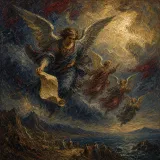
Revelation 19:1: “And after these things I heard a great voice of much people in heaven, saying, Alleluia; Salvation, and glory, and honour, and power, unto the Lord our…”
Slow down at the turning point
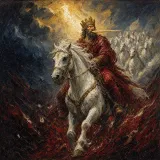
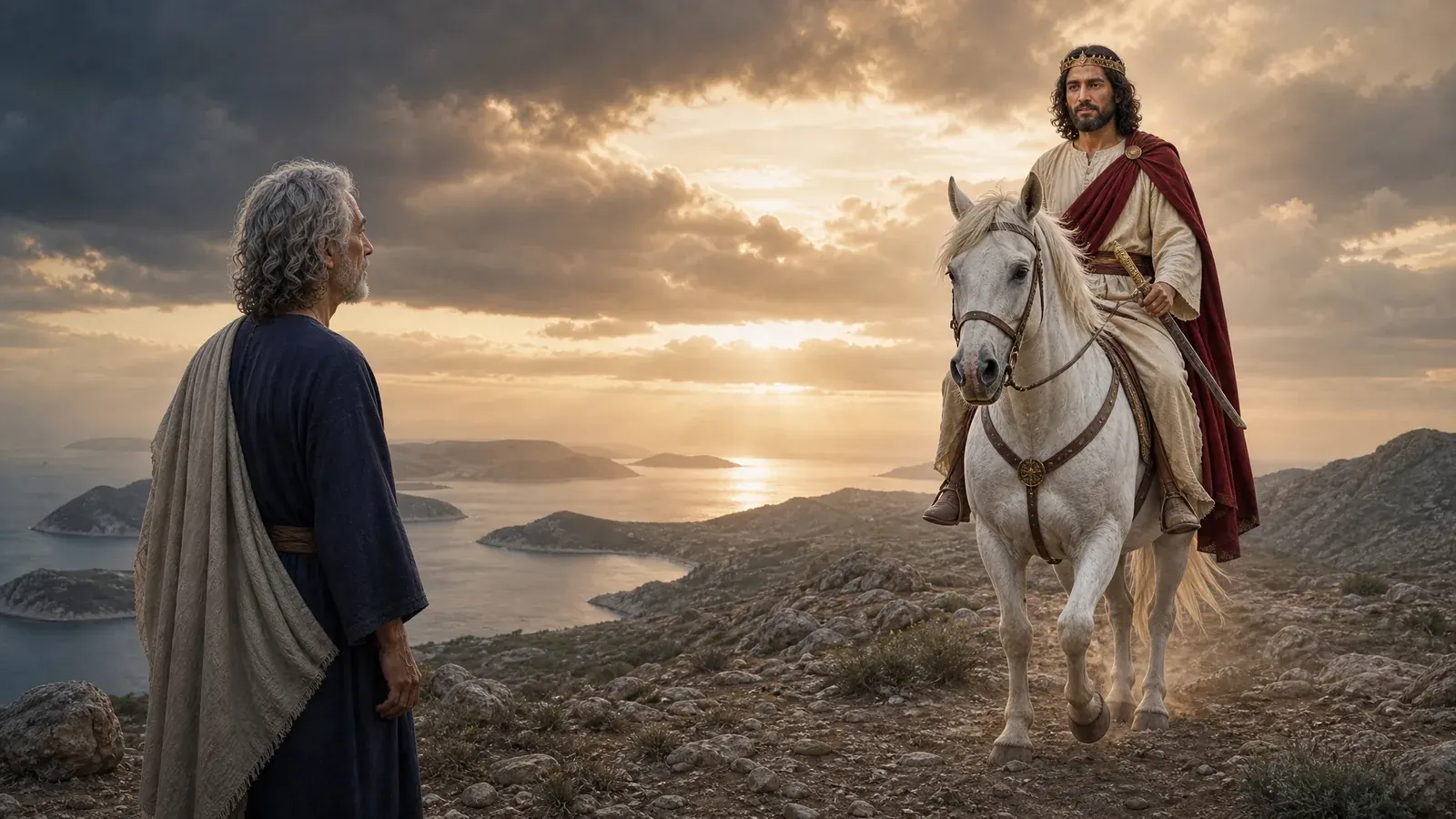
Revelation 19:11: “And I saw heaven opened, and behold a white horse; and he that sat upon him was called Faithful and True, and in righteousness he doth judge and make war.”
Keep this word trail visible
flesh, voice, Alleluia, both, heaven, white
What to explain, in order
Teach the passage in this order. Each step names the verses it rests on, so every point can be shown in the text before it is applied.
Revelation 19:1-6
Alleluia over a true judgement
Begin by connecting this to chapter 18: Babylon has fallen, and now the voice of heaven answers. The word Alleluia, praise the LORD, appears in the New Testament only here, four times. Read Psalms 113 and 146 to 150, which begin or end with it. List the reasons given: salvation, true and righteous judgements, the corrupter judged, the blood of servants avenged. Explain the smoke rising for ever as the finality of Babylon's fall, recalling Isaiah 34:10. Then reach the climax in verse 6: "the Lord God omnipotent reigneth". This is what all the judgements were about.
Revelation 19:7-10
The bride is ready
Move from judgement to a wedding. Read Isaiah 54:5, 62:5 and Hosea 2:19-20, where God is Israel's husband, and Ephesians 5:25-27, where Christ loves the church as his bride. Explain the marriage of the Lamb as the full union of Christ and his people. The bride has "made herself ready", and yet her linen is "granted". Present the debate about the relation between grace and the saints' righteous acts fairly. Then teach John's mistake in verse 10 as a gift to the church: the angel refuses worship, and the book makes clear that only God is to be worshipped.
Revelation 19:11-13
Heaven opened, a white horse
Heaven opened in 4:1 to show a throne; now it opens to show a rider. Read his names and features: Faithful and True, eyes like fire as in 1:14, many crowns against the dragon's seven, a hidden name, a robe dipped in blood, and the name The Word of God, as in John 1:1. Present the reading of the blood fairly: some see his own blood, shed before the battle, since the robe is already dipped; others read Isaiah 63:1-3 and see the blood of his enemies. Do not choose. The rider judges "in righteousness", which is the point that governs the rest.
Revelation 19:14-16
The King of kings
Describe the armies following in clean white linen, the same linen as the bride, and note they carry no weapons. Then put the weight on the rider: a sword from his mouth, a rod of iron from Psalm 2:9, and the winepress of God's wrath from Isaiah 63:3 and Revelation 14:19-20. Read the name on his vesture and thigh, KING OF KINGS, AND LORD OF LORDS, and compare 17:14. Explain that every power that claimed lordship in this book, the dragon, the beast, Babylon, now stands before the one who holds that title truly.
Revelation 19:17-21
Two suppers and a short war
Read Ezekiel 39:17-20 before these verses, and then read them with restraint and without dwelling on detail. The angel calls the birds to the supper of the great God, the grim opposite of the Lamb's wedding feast. Then note how short the battle is: the beast and kings gather, and the next verse says the beast was taken. There is no clash of armies. The beast and the false prophet are cast into the lake of fire, and the rest fall by the sword of his mouth. Teach that the war Revelation has been dreading ends by a word, because the outcome was settled at the cross.
Where learners get stuck
The misreadings this passage tends to produce, and how to answer each from the text.
"Christians should celebrate when evil people are destroyed."
Heaven's Alleluia praises God because "true and righteous are his judgments" and because he has "avenged the blood of his servants" (19:2). The joy is in God's justice and in the end of corruption and violence, not in suffering itself. Ezekiel 33:11 says God has no pleasure in the death of the wicked. Believers can rejoice that God puts things right and still grieve for those who refused him. Help learners hold both.
"It is fine to honour angels with worship because they are so glorious."
John, overwhelmed, falls at the angel's feet, and the angel says, "See thou do it not: I am thy fellowservant" (19:10), and commands, "worship God". The same happens again in 22:8-9. Angels are servants with believers, not mediators to be worshipped. Revelation reserves worship for God and the Lamb (5:13). Different traditions honour angels in different ways, but all agree that worship belongs to God alone, and the text is clear.
"The armies with Christ fight the battle, so believers will one day wage war."
The armies follow him "upon white horses, clothed in fine linen, white and clean" (19:14), but the text never says they strike anyone. The sword comes from the rider's mouth (19:15, 19:21). Readers differ on whether the armies are angels, the saints, or both. The emphasis is that Christ alone wins the victory by his word. Revelation never gives believers a weapon; it calls them to faithful witness (12:11).
"The lake of fire proves exactly what eternal punishment is like."
Verse 20 says the beast and false prophet "were cast alive into a lake of fire burning with brimstone", and 20:10 says they are tormented for ever. Christians have understood the lake of fire as unending conscious punishment, and others read the imagery as final destruction, the second death (20:14). Present these views with respect, without resolving the debate between traditions. The text's concern here is clear: the powers that deceived and persecuted are finally and fully removed.
Learning objectives
- Trace the reasons for heaven's repeated alleluias.
- Explain the marriage supper and the bride's linen.
- Describe the white-horse rider from the chapter.
- Distinguish the rider's action from the armies' role.
- Contrast the chapter's two suppers.
- State the fate of beast, false prophet, and rebels.
Teacher preparation
- Read Isaiah 63 and Psalm 2 for warrior imagery.
- Mark Alleluia, righteous, marriage, linen, faithful, Word, King, supper, and beast.
- Prepare separate columns for the two suppers.
- Keep the rider's revealed names beside the unrevealed name.
- Do not turn the battle into an action-film storyboard.
Evidence and interpretation checks
Explicit
Verses 1 to 6 repeatedly praise God because his judgments are true and righteous and because he has judged the great whore and avenged his servants' blood.
Scripture-supported
Verses 11 to 16 explicitly name the rider Faithful and True, the Word of God, and King of kings and Lord of lords, while describing fiery eyes, many crowns, a blood-dipped vesture, and a sharp sword.
Strong inference
The rider's titles, righteous judgment, Word-of-God name, and supreme kingship make his identification with Christ unmistakable within Revelation's wider presentation.
Possible or traditional reading
Readers differ over whether the blood on the rider's vesture in verse 13 primarily evokes his own sacrificial blood or the blood of judged enemies as in Isaiah 63; the chapter states the garment is dipped in blood before describing the battle.
Limit
The chapter does not identify the armies' individual members, does not say they win by their own weapons, and does not turn the marriage supper into permission for speculative calculations about heavenly menus.
Discussion with answer guidance
1. Why does heaven say Alleluia in verses 1 to 3?
What a good answer contains
A great multitude says, "Alleluia; Salvation, and glory, and honour, and power, unto the Lord our God" (19:1), "For true and righteous are his judgments: for he hath judged the great whore, which did corrupt the earth with her fornication, and hath avenged the blood of his servants at her hand" (19:2). A strong answer gives the reasons the text gives: God's judgements are true and righteous, the corrupter of the earth is judged, and the blood of his servants is answered. Explain Alleluia as Hebrew for praise the LORD. A weak answer offers general joy without the stated reasons.
Show teacher guidance
Tie praise to salvation, glory, honor, power, true judgment of the great whore, and vengeance for servants' blood; the celebration has a moral reason.
2. What does verse 8 say the bride's fine linen represents?
What a good answer contains
Verse 8 says "to her was granted that she should be arrayed in fine linen, clean and white: for the fine linen is the righteousness of saints" (19:8). The verse interprets itself. A good answer notes both halves: the linen is "granted", a gift, and it is "the righteousness of saints", which many read as the righteous deeds of believers. Traditions explain the relation between gift and deeds differently, and a teacher can present that fairly. The bride's dress stands against the harlot's purple and gold in 17:4. A weak answer skips the verse's own explanation.
Show teacher guidance
The fine linen is clean and white and is identified as the righteousness of saints; use the chapter's interpretation before supplying theological systems around it.
3. What happens when John falls before the angel in verse 10?
What a good answer contains
"I fell at his feet to worship him. And he said unto me, See thou do it not: I am thy fellowservant, and of thy brethren that have the testimony of Jesus: worship God: for the testimony of Jesus is the spirit of prophecy" (19:10). A strong answer notices that even John, overwhelmed, makes a mistake, and the angel corrects it at once. Angels are servants alongside believers, not objects of worship. It also explains the last clause: prophecy at its heart bears witness to Jesus. A weak answer ignores John's error as embarrassing.
Show teacher guidance
The angel forbids worship, identifies himself as a fellow servant, commands worship of God, and connects Jesus' testimony with the spirit of prophecy.
4. Which names of the rider are revealed and which remains unrevealed?
What a good answer contains
He is "called Faithful and True" (19:11), "his name is called The Word of God" (19:13), and he bears "a name written, KING OF KINGS, AND LORD OF LORDS" (19:16). But "he had a name written, that no man knew, but he himself" (19:12). A good answer collects the known names and keeps the unknown one unknown. The rider is Christ, as the titles make clear, and yet there remains something about him beyond our grasp. A weak answer tries to guess the hidden name.
Show teacher guidance
Collect Faithful and True, Word of God, King of kings and Lord of lords, then preserve the unnamed name of verse 12 as an intentional limit.
5. Who actually strikes the nations in verses 15 and 21?
What a good answer contains
Verse 15 says "out of his mouth goeth a sharp sword, that with it he should smite the nations" (19:15), and at the end "the remnant were slain with the sword of him that sat upon the horse, which sword proceeded out of his mouth" (19:21). The armies follow "upon white horses, clothed in fine linen" (19:14), but no one else strikes a blow. A strong answer sees that the victory is won by Christ's word alone, as in Isaiah 11:4 and 2 Thessalonians 2:8. The battle described in 16:14 and 19:19 never really takes place; it is ended by his word.
Show teacher guidance
The sharp sword proceeds from the rider's mouth; the armies follow in fine linen, but the text centers the rider's judgment and rule.
6. How do the two suppers differ?
What a good answer contains
Verse 9 says, "Blessed are they which are called unto the marriage supper of the Lamb." Verses 17 and 18 summon the birds to "the supper of the great God", to eat the flesh of the defeated. One supper is a wedding feast for the Lamb's people; the other is the end of those who made war on him. A good answer sees the contrast as deliberate and drawn from Ezekiel 39:17-20. Teach it soberly. Every reader is invited to one supper or the other. A weak answer either lingers on the imagery or misses the contrast.
Show teacher guidance
Verse 9 blesses those called to the Lamb's marriage supper; verses 17 to 18 summon birds to consume the defeated rebellious powers, creating a severe deliberate contrast.
Responsible application
Worship God, not the messenger
Use verse 10 whenever a servant or messenger begins receiving devotion reserved for God.
Let righteous judgment have a reason
Attach heaven's alleluias to truth, righteousness, and vindication rather than vague triumph.
Follow the rider, do not compete with him
Let the rider retain the decisive titles, sword, rule, and victory in the passage.
Session plans
Two timings of the same lesson. The shorter keeps the reading, the central discussion and one response; the longer gives the confusions and the application their own time.
45 minutes
Alleluia
Read 19:1-6 aloud together. Ask question one and underline the reasons for praise.
The bride
Read 19:7-10. Ask questions two and three, and take the confusion about worshipping angels.
The rider
Read 19:11-16. Ask question four and list his names on the board.
The sword of his mouth
Read 19:17-21 calmly. Ask questions five and six, and take the confusion about the armies.
Invited
Read the key verse together, give out the handout and pray in thanks for the invitation to the Lamb's supper.
90 minutes
After Babylon
Recall the silenced weddings of 18:23. Read 19:1-3 and ask question one.
The Lord reigns
Read 19:4-6 with Psalm 146:1-10. Take the confusion about celebrating destruction.
The marriage of the Lamb
Read 19:7-9 with Isaiah 62:5 and Ephesians 5:25-27. Ask question two and present the readings of verse 8 fairly.
John's mistake
Read 19:10 and 22:8-9. Ask question three and take the confusion about angels.
Faithful and True
Read 19:11-16 with John 1:1, Isaiah 63:1-3 and Psalm 2:9. Ask question four and present the readings of the blood-dipped robe.
Two suppers
Read 19:17-21 with Ezekiel 39:17-20. Ask questions five and six, and take the confusions about the armies and the lake of fire.
Which supper
Choose one application. Read the key verse, give out the handout and pray for those not yet at the Lamb's table.
Adapting the lesson
Children
Make this a wedding celebration. Tell the children that heaven sings Alleluia and that Jesus, the Lamb, has a great wedding feast for everyone who loves him. Show a picture of a white horse and read Jesus' names in 19:11, 13 and 16. Leave out the birds and the lake of fire. End by teaching them to say Alleluia, praise the Lord.
Youth
Ask what makes a great celebration. Read 19:6-9 and talk about being invited to the Lamb's wedding. Then read the rider's names and ask which one they need to know most. Point out that he wins by his word, not by weapons. Handle 19:17-21 briefly and soberly.
Adults
Work through the background in the Psalms, Isaiah 62 and 63, Ezekiel 39 and John 1. Present the debates about the bride's linen, the blood on the robe, the armies and the lake of fire fairly. Discuss what it means for the church's posture in the world that Christ's victory is won by his word.
One to one
Read 19:9 to the person and ask whether they know they are invited. If they are unsure, talk about what the Lamb has done for them. Read the names of the rider and ask which one speaks to their situation: Faithful and True for the disappointed, King of kings for the powerless.
Song and video learning lab
A song or video may interpret, compress, or dramatize the text. Its value becomes clearer when its choices are compared with Scripture.
- Before the media: the exact passage and its central movement.
- During the media: the words, people, events, and emotions the artist emphasizes.
- After the media: what it clarifies, what it leaves out, and what belongs back in the biblical text.
Handout
One page for learners to take home. The print button prints this section alone.
Revelation 19
The passage in brief
In Revelation 19 heaven shouts Alleluia because God has judged Babylon truly and justly, and because the Lord God reigns. The marriage of the Lamb has come, and his bride is dressed in fine white linen. Then heaven opens, and Christ rides out on a white horse, called Faithful and True and the Word of God, with the name King of kings and Lord of lords. The beast and the false prophet are captured, and the enemies are defeated by the sword of his mouth.
A verse to keep
And he saith unto me, Write, Blessed are they which are called unto the marriage supper of the Lamb. And he saith unto me, These are the true sayings of God.
Revelation 19:9 · King James Version
Questions to take home
Why does heaven say Alleluia (19:1-2)?
What does the bride's fine linen stand for (19:8)?
Which of the rider's names means the most to you, and why (19:11-16)?
This week
Begin and end each day this week with the word Alleluia, and invite one person to the Lamb's supper by telling them about Jesus.
Music and video connected to the passage
Related media appears when its Scripture reference overlaps this study. Music and video can illuminate a theme while the biblical text remains the foundation.