


Lyrics · Exodus
Fire That Would Not Burn Away
Exodus 2:11-4:17
Lyrics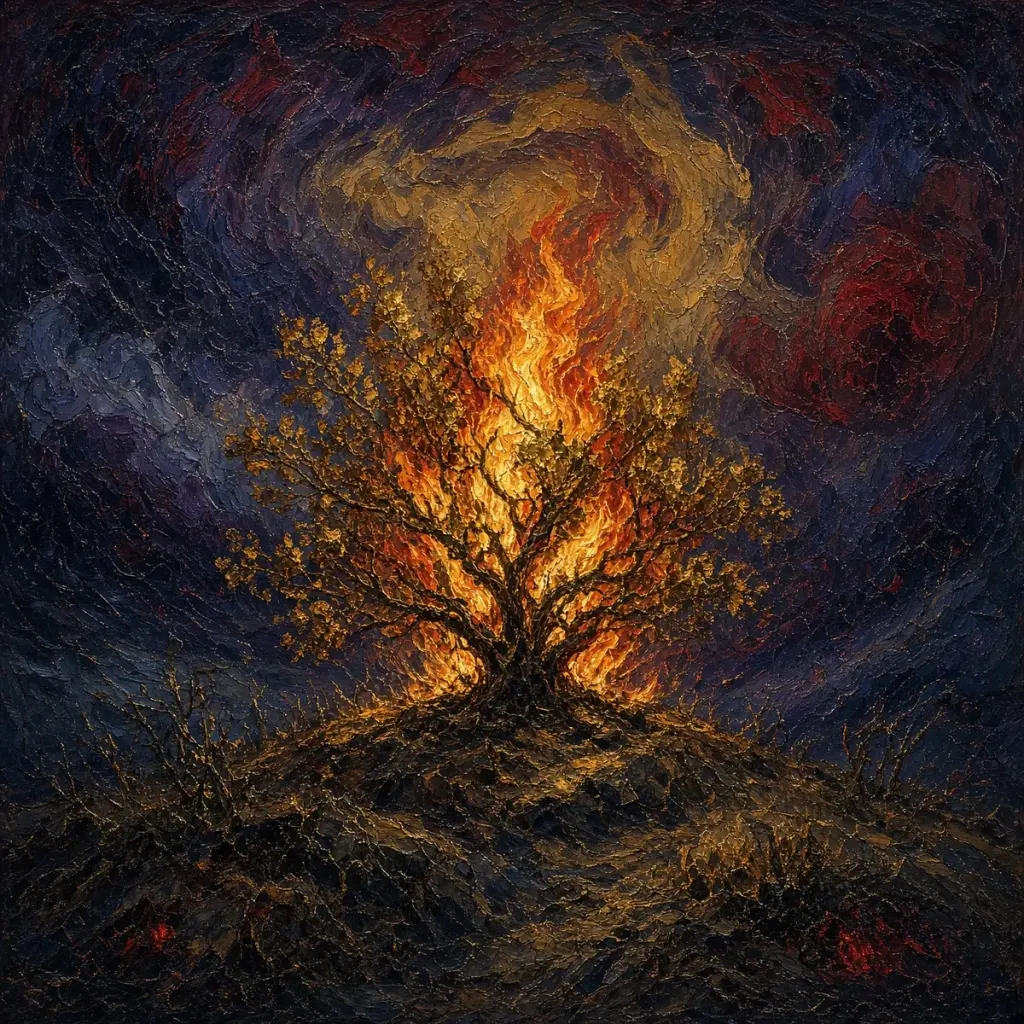
Playing next
About this song
About this song
This song belongs to the Exodus collection. One recording is available to play here, with the complete lyrics below.
- Bible book
- Exodus
- Collection
- Exodus
- Musical styles
- Electronic
Named in this songMosesPharaohHorebAbrahamAaronEgypt
About the passage
Exodus 2: The child drawn from the water becomes a fugitive
Moses enters Exodus through a chain of preservation that repeatedly turns Pharaoh's policy against itself. His mother places him in a waterproofed ark among the reeds, his sister watches, and Pharaoh's daughter recognizes exactly what kind of child she has found and saves him anyway. The result is almost comic in its reversal: Moses' own mother is paid from the royal household to nurse the Hebrew boy marked by royal decree. Adulthood is rougher. Moses kills an Egyptian who is beating a Hebrew, discovers that the act is known, and flees when Pharaoh seeks his life. In Midian he again intervenes for people being pushed aside, builds a household, and still calls himself a stranger. The chapter closes with Israel groaning, and God hearing, remembering, seeing, and attending before Moses knows he will be sent.
Study Exodus 2 in depthExodus 3: A name, a presence, and a commission
A burning bush draws Moses aside, but the strange fire is only the threshold. The ground becomes holy because God is present, and the voice identifies itself with Abraham, Isaac, and Jacob before turning directly to Israel's suffering. God has seen, heard, and known the oppression, and Moses is sent into that answer. His first question is about himself; the reply is "I will be with thee." His next question concerns the name he is to carry, and the answer joins "I AM" to the ancestral covenant rather than replacing it. Moses is then told to gather Israel's elders, approach Pharaoh, and ask for a wilderness sacrifice. Resistance is announced in advance, as are the wonders, the eventual release, and the valuables Israel will carry away. The commission arrives with both opposition and outcome already in view.
Study Exodus 3 in depthExodus 4: The reluctant messenger and the dangerous journey home
Moses keeps finding reasons the commission may fail, and Exodus keeps answering them without pretending the task is comfortable. Signs address his prediction that Israel will not believe. God's promised presence with his mouth answers his concern about speech. When Moses finally asks for someone else to be sent, the exchange turns sharper, yet Aaron is provided as spokesman without removing Moses from responsibility. The journey back to Egypt then becomes unexpectedly dangerous. A brief, difficult encounter involving circumcision and threatened death is resolved by Zipporah's action, but the chapter refuses to explain every pronoun and motive. At the mountain Aaron meets Moses, the brothers gather Israel's elders, and the audience Moses expected to lose does the opposite: the people believe that the LORD has seen their affliction, and they bow in worship.
Study Exodus 4 in depth