

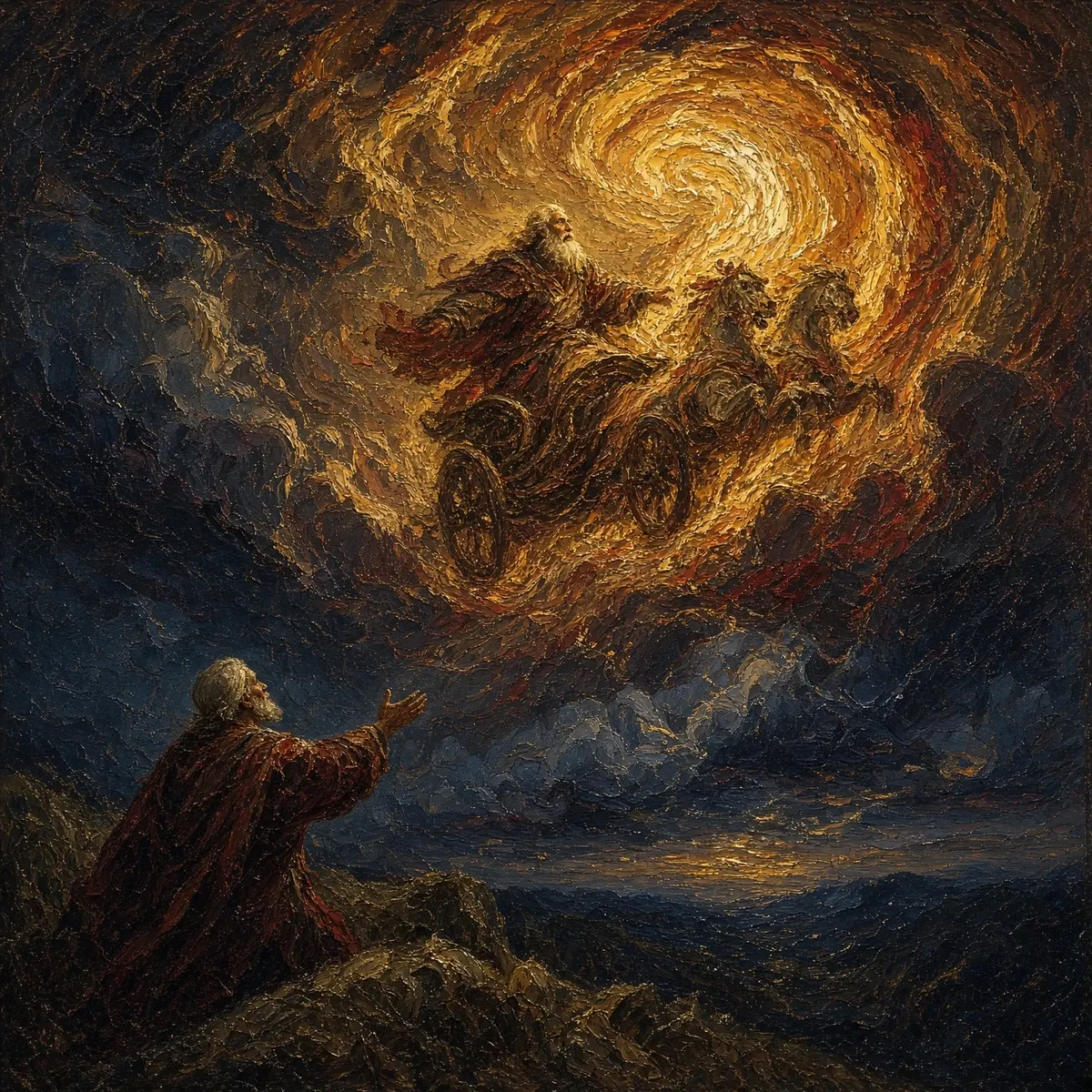
2 Kings 2:9-10
A double portion of thy spirit
The request is the inheritance share of a firstborn son, and the answer makes it conditional on seeing what is about to happen.
Verse by verse
- 2:9
Double portion: the Hebrew pi shenayim is also used for the firstborn inheritance in Deuteronomy 21:17.
- 2:9
Thy spirit concerns the prophetic endowment associated with Elijah, not a request for his departed ghost.
- 2:10
Seeing the removal is the stated condition. The passage does not say that eyesight itself produces the gift.
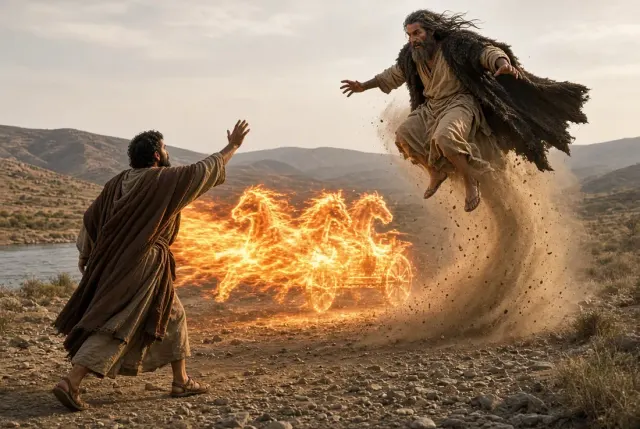
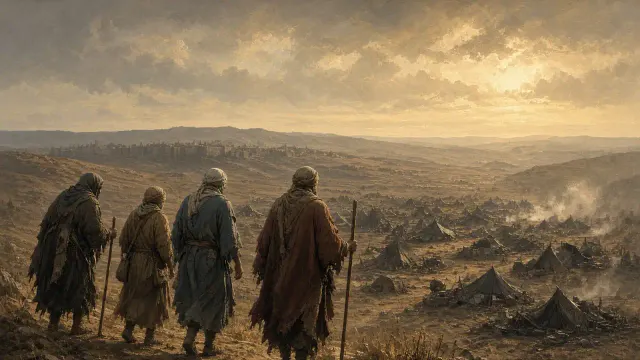
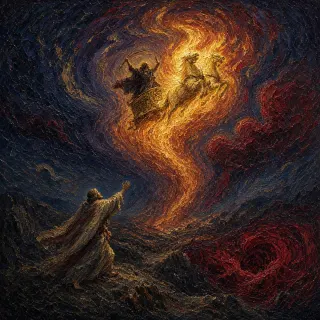

Before there is a chariot, there is an inheritance question. A double portion sounds like a request to outperform Elijah, but the phrase belongs to the world of heirs. Deuteronomy 21:17 gives the firstborn son a double portion. Elisha is asking to stand in the successor's place, not proposing a competition in which Elijah's miracles become the score to beat. The cry my father in verse 12 fits that family language precisely.
Elijah's answer also matters. The man who has just divided a river does not treat this as another item he can hand over. Thou hast asked a hard thing. His mantle can fall into another man's hands; the power behind his ministry is not his private possession to distribute. The condition concerns witnessing his removal, an event neither man is arranging. Elisha has followed through three invitations to remain behind, and now the decisive matter is whether he sees. The passage joins persistence, succession and a gift beyond the departing prophet's control. A coat can be inherited by picking it up. This requires more.